I hate superman. Enough said….
via: @marccortez
Scattered Thoughts on Theology and Ministry…
I hate superman. Enough said….
via: @marccortez
No creed but the Bible. You often hear this coming from the mouths of fundamentalists or ultraconservatives or even people who don’t really understand how creeds work and/or how church councils worked. Of course Scripture is the norming norm. Of course it is our ultimate foundation, but there are other things that help us shape our theology… the ecumenical councils, confessions of particular churches, even some theologians help us shape the way we read the bible and how we do theology. However, these things are always to be understood in light of scripture and as being helpful to read scripture.
Ah, but some people will want to object to using the creeds. They say that the creedal process was over politicized. That it was a political power struggle that led the church to affirm what it affirms today, so we can’t trust the creeds, we should only trust the Bible. Sorry friends, the ecumenical councils were political, I grant you that, but they were not merely political…. here is what Oliver Crisp (Professor of Systematic Theology at Fuller Seminary) has to say about this:
It is undeniable that the Christological controversies were hard and often bitterly fought, that some theologians were misunderstood or even misrepresented, and that politics played a significant role in the outcome. However, this fact alone says nothing one way about the truth value of the outcome. A decision can be reached for complex religious and political reasons and still be the right result. I suggest that God would not permit the church to come to a substantially mistaken account of the person of Christ and to encode this in a canonical decision in an ecumenical council, for what we thing about hte person of Christ touches the heart of Christian doctrine, and therefore the heart of the gospel. It is an impoverished doctrine of providence that claims otherwise. (Christology, 24)
So there you have it, those who claim we can’t trust the creeds because they were part of the political machinations of the early church are guilty of committing the genetic fallacy. And on top of that they have an impoverished view of God’s providence. Do you really think that God would have let us be wrong about such a key part of the Gospel for 2000 years? I sure hope not, and I certainly don’t think he would. Neither does Oliver Crisp.
So why did the Church Councils get the creeds right? God wouldn’t risk us getting them wrong. Its because the creeds are a core part of the gospel. If the creeds are wrong we risk getting the Gospel wrong, and God certainly wouldn’t take that risk….
I got my EBC paycheck last week, so here are the two books I bought with it….
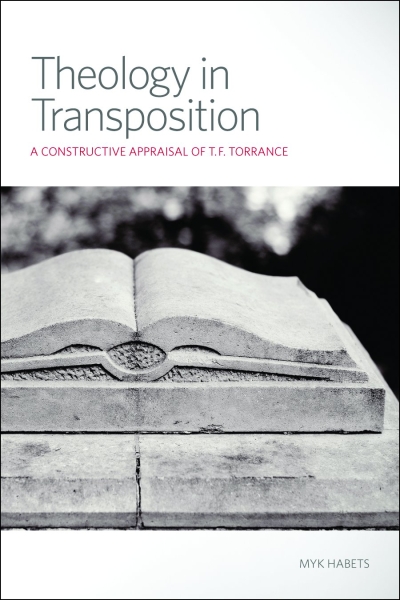
Books about T.F. Torrance are actually quite rare. As I move towards doing my Th.M I hope to do work on Torrance (or Edwards). Hopefully over the next few years the literature on Torrance will steadily grown. Until then we will have to make due with Elmer Colyer’s book on Torrance and now Myk Habets’ book. Here is the Amazon summary: T. F. Torrance was one of the most significant English–language theologians of the 20th century known extensively for his curatorship of the English translation of Barth’s Church Dogmatics but also for his own prodigious theological scholarship. The complexity and astonishing breadth of Torrance’s output, however, have made assessment and appropriation markedly difficult. This volume seeks to rectify that lack of assessment through careful exposition of the vital centers and interconnections within Torrance’s theology alongside constructive appraisal and critique of his contributions to contemporary theology.
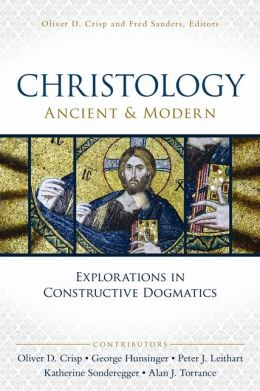
Last January the first annual LATC was held at Biola University. I was lucky enough to attend the festivities. Festivities is actually the best way to describe this conference. I have never seen this many people this excited for an academic theology conference. We laughed, we cried, and we worshipped (and that was just Alan Torrance’s session)! This is the way theology conferences are supposed to be. Now the plenary lectures plus a few of the breakout sessions are available in paper format. I missed Hunsinger’s talk, so I look forward to reading what he had to say. Here is the Amazon synopsis: A Fresh Look at the Doctrine of Christ,Essential for Modern Theological Work Christology was the central doctrine articulated by the early church councils, and it remains the subject of vigorous theological investigation today. The study of the doctrine of Christ is a field of broad ecumenical convergence, inviting theologians from all denominational settings to fruitful collaborative exploration. In the contemporary setting, it is especially crucial for theologians to investigate the scriptural witness afresh, to retrieve classical criteria and categories from the tradition, and to consider the generative pressure of soteriology for Christology proper. The first annual Los Angeles Theology Conference sought to make a positive contribution to contemporary dogmatics in intentional engagement with the Christian tradition. Christology, Ancient and Modern brings together conference proceedings, surveying the field and articulating the sources, norms, and criteria for constructive theological work in Christology.
Preston Sprinkle, Paul & Judaism Revisited – A Study of Divine and Human Agency in Salvation, InterVarsity Press, 2013, 249pp.

With the recent release of N.T. Wright’s Paul and the Faithfulness of God we can be sure that a plethora of books on Paul will soon hit the stands, however many of them will probably be overlooked. Luckily Preston Sprinkle’s latest book on Paul was released several months before PFG, therefore it won’t necessarily be read as a response to Wright’s work. It will be able to stand alone on its own merit.
As the title suggests, this is a study of Divine and Human Agency in salvation, however it doesn’t fall along the typical “Calvinist/Arminian” battle lines. Instead Preston draws takes us centuries before that debate and draws us into the Old Testament. Here are the two sides that Preston focuses on:
The Old Testament says that Israel will be restored when it repents (which we will call a Deuteronomic restoration motif), but also that God will instantiate restoration prior to repentance (which we will call a Prophetic restoration motif). [37]
Preston uses these two OT paradigms in order to shed light upon 2nd Temple Judaism (which Christianity finds its place at as well). He uses these two different paradigms in order to accomplish the goal of his book which is to:
Attempt to contribute to the discussion regarding continuity and discontinuity in the soteriological structures of Paul and Judaism; or more precisely, Paul and the Dead Sea Scrolls. [28]
In his attempt to discern continuity/discontinuity between Paul and DSS communities, Preston focus on 5 motifs and devotes one chapter to each of them:
Preston concludes that Paul doesn’t display total continuity with the DSS communities, but neither is there complete continuity. Thus New Perspective Readings of Paul miss the mark and so do the traditional Lutheran readings… Paul is a lot more complicated than we thought. This continuity/discontinuity often falls along Deuteronomic/Prophetic lines, with DSS leaning towards a Deuteronomic paradigm (Like Chronicles and of course Deuteronomy), and Paul leaning towards a Prophetic paradigm (like Jeremiah, Ezekiel, and Isaiah). In the end we see that Paul is situated thoroughly within the Prophetic tradition, in which God unilaterally brings about salvation to his people.
Pro’s
Con’s
I don’t have too many qualms with this book, or with his argument. I don’t know enough about DSS writings to make an educated argument against Preston’s reading of the texts. On another note, there is one point in his discussion of Galatians where Preston says that “the exile-restoration framework to my mind over reads Paul’s argument” (84). As someone who has found this framework very helpful in interpreting the NT I would have like to have known why he think this….
Conclusion
Preston’s book is significantly cheaper than PFG. It is also significantly shorter than PFG. If you are going to actually read a book on Paul this year (I highly doubt you are going to finish PFG) I recommend that you buy Paul & Judaism Revisited. It’s a great book for anybody who is a fan of NT use of the OT, it is a perfect example of how important understanding the OT is for understanding Paul. Its also a fairly original approach to Paul which brings a new perspective to Paul and the new perspective (new perspective inception!)….
p.s. If Preston keeps pumping out these books I am going to run out of money….
In here new book God, Sexuality, and the Self: An Essay on the Trinity Sarah Coakley outlines a new method for doing systematic theology. While I don’t have a really grasp on it yet, I am trying. Thankfully Coakley outlines 9 points which are of utmost importance to this new method. I will probably end up commenting on this method in the future, but for now I leave you with the 9 Hallmarks of Theologie Totale:
Fun Fact: The only countries in which Reformation Day is a national holiday are Chile and Slovenia. (Though in Chile it’s called Día Nacional de las Iglesias Evangélicas y Protestantes — National Day of the Evangelical and Protestant Churches.) – @TGC
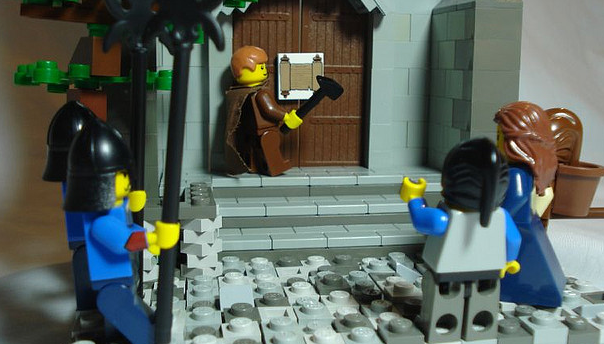
Happy Reformation Day to all of my protestant friends.
This quote was too good not to share, however it was too long for twitter…..
Here is what Sarah Coakley says about the task of theology:
Theology involves not merely the metaphysical task of adumbrating a vision of God, the world, and humanity, but simultaneously the epistemological task of cleansing, reordering, and redirecting the apparatuses of one’s own thinking, desiring, and seeing. (GSS 20)
In other words, theology’s task is not only to describe, its task is also to shape us. Theology is not simply information, theology is formation.
I am getting married in a few months. As I think more and more about it I get excited, and not just for the wedding night. I am really looking forward to “the first look.” It’s a tradition that has fallen out of vogue in the last several years, but I think it’s a beautiful tradition. I think it paints a beautiful picture of the gospel. In case you don’t know about it, the “first look” is the tradition where the groom doesn’t see the bride until she comes walking down the aisle. He avoids her all day long so that he won’t even accidentally catch a glimpse of her.

My future bride and I decided to do a “first look”. So there is that moment, the first look, when the I am going to see for the first time. I am going to get to my bride in all her glory. It’s the moment when I see her for the first time as my bride.
If you are ever at a wedding I invite you to pay attention to the groom at that moment. Look at his face, look at his expression. Stare into his eyes, its really a unique experience. I believe that it is actually a glimpse of the gospel. The look on the groom’s face paints a vivid picture of Jesus excitement to have us. But even that look of excitement on the groom’s face pales in comparison to how excited Jesus is to be with us! Jesus eagerly waits for us because we are his inheritance. The gospel says We were an inheritance so worthy that Jesus was even willing to give his life in order to get us. That is what the bible means when it says that Jesus purchased us with his blood.
Jesus desperately waits for the day when he will be forever united with his bride, with his church, that means that Jesus is eagerly awaiting the day when he will see you revealed in all of your sanctified glory.
Husbands, love your wives, just as Christ loved the church and gave himself up for her to make her holy, cleansing her by the washing with water through the word, and to present her to himself as a radiant church, without stain or wrinkle or any other blemish, but holy and blameless. In this same way, husbands ought to love their wives as their own bodies. He who loves his wife loves himself. After all, no one ever hated their own body, but they feed and care for their body, just as Christ does the church— for we are members of his body. “For this reason a man will leave his father and mother and be united to his wife, and the two will become one flesh.” This is a profound mystery—but I am talking about Christ and the church. (Ephesians 5:25-32)
A few weeks ago I started a new type of blog entry, “This Paycheck’s Book Purchases.” Each time I get paid I buy a couple of books and I share with you, the world, what I am reading and why I am excited to read those books. As I get married I am sure this type of blog entry will slowly fade away. The truth is, when I get married their will be less money spent on books and more money spent on bills….
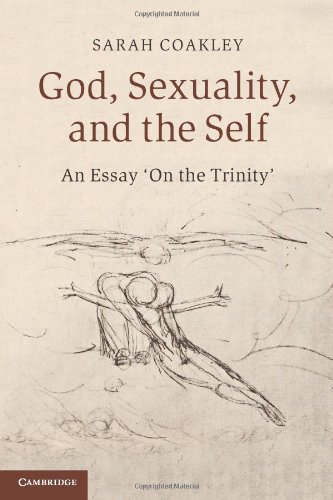
Ben Myers recommended this book to me and he seemed absolutely stoked on it. I don’t normally read these sort of books, but I guess its time to venture into unknown territory, especially with 2014 looking like its going to be the year of the Trinity (LATC14 & ETSFarWest), at least in Los Angeles. I think this will probably be an important book in those discussions, I wouldn’t be surprised if discussion about this book makes its way into these conferences. Here is the Amazon book summary: God, Sexuality and the Self is a new venture in systematic theology. Sarah Coakley invites the reader to re-conceive the relation of sexual desire and the desire for God and – through the lens of prayer practice – to chart the intrinsic connection of this relation to a theology of the Trinity. The goal is to integrate the demanding ascetical undertaking of prayer with the recovery of lost and neglected materials from the tradition and thus to reanimate doctrinal reflection both imaginatively and spiritually. What emerges is a vision of human longing for the triune God which is both edgy and compelling: Coakley’s théologie totale questions standard shibboleths on ‘sexuality’ and ‘gender’ and thereby suggests a way beyond current destructive impasses in the churches. The book is clearly and accessibly written and will be of great interest to all scholars and students of theology.
If you are like me you think you are the bees knees (what does that even mean?) and you hate it. You struggle with pride, you don’t want to be prideful but you find prideful thoughts creeping up on you. I saw Ed Stetzer refer to this book in a blog post and it seemed interesting to me. In fact it seemed to be excactly the kind of book I needed to read. If you work in ministry, have a job that serves others, or are a human being and you struggle with pride, this book is aimed at you. Here is the Amazon book summary: No matter how famous someone might be, the fact remains; most of the other seven billion people on Earth wouldn’t know him or her from the next person. Add this reality to one’s shrinking recognizability among the multiple billions down through history, and the worldly emphasis on standing out really falls flat; we’re all in this obscurity thing together. Ironically, the trouble with me and you and the rest of humanity is not a lack of self-confidence but that we have far too much self-importance. To live and die unnoticed would seem a grave injustice to many. It’s all too easy to think we’re somebody if our portfolio is strong, there are a few letters after our name, or we’re well-known at work, church, or school. As pride creeps in, we are tempted to want more: more recognition, more admiration, more influence, more, more, more. Few have ever given thought to wanting less. That’s why we need Embracing Obscurity. Putting the premise into immediate action, an established Christian author electing to remain anonymous writes about living and dying in simplicity, contending that true success, as modeled by Jesus, starts with humility, service, sacrifice, and surrender. Such a life involves mystery and banks on the hope that today is just a dress rehearsal for eternity. When we stop imitating the world and instead choose to embrace obscurity, real life — chock full of significance, purpose, and renewed passion — begins.
“I do not believe that Jesus wants Christians to use violence. And if I can be so blunt: I think that a large portion of the American Evangelical church has been seduced, whether knowingly or not, by nationalistic militarism. Yet our inspired Word of God aggressively critiques this very thing….” – Preston Sprinkle (Fight: A Christian Case for Non-Violence, 24)
Preston is absolutely right, the seduction is subtle. I realized that during my first year of seminary. I honestly don’t know how that happened. I grew up in a household that was personally affected by the horrors of American militarism. I have had family members assassinated by American Puppet governments. I won’t go into details, but if one knew what really went on behind the scenes (in Guatemala for instance), one would gag. Neverthless, this review isn’t about me and its definitely not about America. It’s a review about a book on non-violence from a Christian perspective. On the cover of the book, Francis Chan recommends that you read this book because you “may discover that much of your current belief system has been influenced by sources other than scripture.” Preston tries to take us back to Scripture, throwing off the weight of cultural influences that hinders us, in order to show us that scripture unabashedly advocates for Christians to embrace non-violence.
A Brief Overview
Preston begins the book with a definition of violence…. Violence is an interesting topic; I am currently writing a paper on violence in the theology of Jonathan Edwards, so we will get back to this later in the review.
Preston devotes four chapters to violence in the Old Testament. In my mind this is the most important part of the book. Most Christians live with Marcionite tendencies, the God of the OT isn’t the same God as the God of the NT. Now nobody would ever say that, but its often implied when people say things like “Oh but that was in the OT…” Either way, In chapter 3 Preston address violence in the Law. In chapter 4 Preston addresses Israel’s warfare policy. In chapter 5 Preston takes on the difficult “kill Everything that breathes” type passages. He concludes with a chapter on violence in the prophets. The conclusion is that the prophets “proclaim a message that in general moves away from violence and toward peace.” The Old Testament gives us a window into a reality that will be put on full display in the life of Jesus.
Preston also devotes 4 chapters to the New Testament; devoting two on the Gospels, one in the Epistles and one on Revelation. What he has to say about Revelation is quite instructive especially in light of Mark Driscoll’s article, “Is God a Pacifist?”.
Outside of Biblical Theology, Preston spends a chapter on the early church. This chapter clearly shows that among the church fathers there was widespread agreement, even among different theological lines, that violence is absolutely off limits for Christians. Preston makes a great point, that “while the opinions of the early church aren’t authoritative, where there is widespread agreement across different regions, we should pay special attention to what they are saying.” Us Protestants tend to overlook the importance of the Church Fathers, and we greatly suffer because of this. If only we would listen carefully to what they had to say we would be all the better for it. He concludes with two chapters on answering questions that are often brought up in discussions about non-violence, and he includes an appendix on Just war theory.
Positive Aspects
I would like to (kind of) briefly point out three things that Preston should be commended for in this book.
One Critique
I don’t really have anything negative to say about this book. However is one thing that I would have liked to have seen covered more in depth….
Violence. Give me violence!!! Just kidding, however I did want to see a fuller treatment of the topic of violence. Preston acknowledges that definitions of violence are manifold. There are probably as many definitions of violence on the internet, books, and journals as there are hipsters in Silver Lake, that is to say that there really are a lot. Now I don’t expect Preston to examine all these definitions, but it seems as though focusing on only one definition (a very good one at that) makes him susceptible to many objections. This definition of violence seems to assume that violence is bad. In other words it’s a value-laden definition….
This is an issue that Reformed theologian Hans Boersma takes on in his book Violence, Hospitality, and the Cross. In his discussion of violence he points out that many theologians fear implicating God in violence because they understand violence as only being a negative thing. Boersma says that: “the underlying assumption in many discussions of divine violence appears to be that violence is inherently evil and immoral…I suggest however that we need to test our sensibilities. In particular we need to ask whether violence is, under any and all circumstances, a morally negative thing.” In attempting to offer a value-free definition of violence, Boersma appropriates Donald X. Burt’s definition of a violent act as: “any act which contravenes the rights of another. It can also be described as an act which causes injury to the life, property, or person of a human being, oneself, or others.” How would a value-free definition of violence change this entire discussion? What if Boersma is right? What if violence really is neutral… I know that takes this discussion in a completely different direction, but it’s the kind of objection I have experienced “on the ground” while talking about non-violence with people at church. I have heard people say that “it is not wrong to cause injury to the life, property, or person of a human being” (i.e. do violence) for the right reasons. Since the definition is neutral we can engage in discussion about the appropriateness of violence. But the defintion that Sprinkle uses already closes off possibility of discussion. The definition he uses says “violence is destruction to a victim by means that overpower the victim’s consent.” Before we talk about “violence” we know that it is wrong to override anybody’s consent. So right from the gate we are forced to say that violence is always wrong (unless you believe that it is appropriate to override other people’s freedom).
I don’t necessarily disagree with the definition that Preston uses. I actually think it’s a really good definition, all I am saying is that I would have liked to have seen an more in depth treatment of violence. I wanted more “violence.”
Conclusion
It has already been said by other bloggers, but this book breaks paradigms. I have met a ton of Anabaptist pacifists, in fact all of my ethics professors at Fuller were Anabaptists, but I have never met a Reformed pacifist (other than myself and possibly one other guy). Even among people I work with, my pacifism is seen as an oddity, an interesting quirk, probably attributed to the fact that I went to Fuller Seminary. I partly agree, Fuller influenced/solidified the position I already held. My position was also birthed out of my family’s life experiences. I read Scripture the way I do because I was shaped to read it that way. Then Fight enters the scene… written by a guy who had completely different life experiences than my own, who was educated in a radically different kind of seminary than mine, yet we both land on the same position. That is what happens when one takes scripture seriously, and when you let the Bible speak for itself. The biblical case for non-violence is overwhelming. Yes there are “practical” objections, yes there are “political hiccups” that we run into. (Can a Christian president declare a just war? What if the war is unjust? I guess that depends on what your understanding of a president is. Where is the line between a president acting as an individual vs. a president acting as a representative of a country? Can one individual represent himself and a nation at once in an ontologically meaningful way?) Regardless of these types of questions, one thing is clear. We are not called to do “what works” we are called to faithfulness to Christ and his word. At the end of the day faithfulness to Christ is the most important filter for making a decision about where we fall on the violence vs. non-violence spectrum.
 CWoznicki Think Out Loud