This weekend at Soma we are having a worship night and incorporating a corporate confession of sin an a public assurance of forgiveness. Here is what we are saying:
[Confession of Sin]
Loving Father, we acknowledge and confess that our lives fall far short of your glory.
Have mercy and forgive us.
Lord, you have given your life for us, and poured out your Spirit,
yet we fail to return your love with all our heart.
Have mercy and change us.
Too often we are selfish and proud,
ignoring your voice and neglecting others.
Have mercy and cleanse us.
Lord, when we do not truly trust and obey you,
we are overwhelmed by self-pity, fear and worry.
Have mercy and deliver us.
In Christ we are given a sure hope, a secure love, and a new identity
yet we follow the false hopes and desires of this world.
Have mercy and forgive us.
[Assurance of Forgiveness]
There is good news! The Lord is compassionate and gracious, abounding in love and forgiving our sins. He has taken away our sins as far as the east is from the west! What has washed away our sins?
Nothing but the blood of Jesus!
What can make us whole again?
Nothing but the blood of Jesus!
Be assured, The Lord has forgiven our sins and made us clean. He has taken away our shame!
When I heard that Kyle Strobel was writing a book on the spiritual disciplines of Jonathan Edwards I immediately went on Amazon and pre-ordered it. As you well know, I am an avid Jonathan Edwards fan, and have devoted much of my seminary writing to Edwards (and other Reformed theologians like Barth and T.F. Torrance). I haven’t been studying Edwards for a very long time, I was only in seminary for 3 years, nevertheless one of my first papers in seminary was actually on the spiritual disciplines of Edwards. I wrote a paper outlining his Spiritual Formation in a Puritan context, what “practices” he practiced (is there a better word?), and what we can learn from his rhythm of spiritual formation. It was in writing this paper that I fell in love with Edwards, mainly because it forced me to engage with George Marsden’s behemoth biography of Edwards. And now I’m in the process of preparing to do a ThM with a research focus on Edwards alongside of Oliver Crisp (we are waiting for him to come back from his sabbatical in Fall of 2014). So, all to say, that the spiritual disciplines of Jonathan Edwards hold a special place in my heart.
Having laid out the fact that I am biased, and have a keen interest in the subject of this book let me share some thoughts on it.
Overview
Kyle Strobel’s book, Formed for the Glory of God: Learning from the Spiritual Practices of Jonathan Edwards, is broken up into two parts. The first is titled “A Journey into Beauty.” In this section of the book Strobel lays out the foundation of the Christian faith according to Edwards. He uses the metaphor of a journey or a path to illustrate Edwards God-centered theology. This journey is centered on the Beatific vision (something that contemporary evangelicals have either forgotten was a central part of our catholic faith or have simply chosen to ignore). Kyle says that the culmination of the journey “is standing before the God of love and beholding him as my Father, seeing him clearly and growing in knowledge of him for eternity.”[1] In the next chapter he cashes out what the beatific vision is really about, knowing God as glorious and knowing God as beautiful. And we only know God in these ways because we are “in” Christ. Knowing God in these ways, through Christ, is ultimately relational. It is no mere academic exercise. This is extremely important for understanding Edwards’ theology because Edwards’ practical theology is centered on “affections” (and by this I don’t mean the warm fuzzys). Edwards’ thoughts on affections are best captured in the truism “people are not simply thinking beings, but loving beings.” Our hearts will always gravitate towards something. When our hearts do that our will attempts to grasp it because we are vigorously captivated by it.[2] In turn our entire way of living is changed because our will is now centered upon that one object or person.
Part two is titled “Tools for the Journey.” In this section of the book Strobel assesses the “tools God has given us on this journey, asking what they are for and why we should practice them.”[3] He begins by explaining the fact that spiritual disciplines are means of grace. The means of grace are practices or actions given to the church which are not efficacious on their own right, rather they are actions through which we receive the Grace God has already given to us. In other words they are “spiritual postures to receive God’s grace.” This notion of putting ourselves in a posture of dependence is key for understanding Strobel’s discussion of Edwards’ disciplines. Again and again Strobel emphasizes that we don’t create grace or earn it through this disciplines; the Grace is already there, we simply put ourselves in a posture to receive the gift that God has already given to us, namely the gift of himself. Having laid this foundation Strobel explains some of Edwards’ practices. For instance he devotes an entire chapter to examining our own lives and an entire chapter to Mediation/Contemplation (which are slightly different). He concludes with a chapter on Sabbath, Fasting, Conferencing, Soliloquy, Silence and Solitude, and Prayer.
Thoughts on the Book
I want to highlight a couple of things that I believe Strobel did really well, and then make some constructive criticisms of the book.
Here are some of the things that Strobel did well:
The Discussion of the Christian Life: Strobel says that “we refuse to talk about spiritual practices until we have a firm grasp of the picture of the Christian life.”[4] Most people writing on spiritual disciplines these days don’t take the time to place the disciplines within the larger context of the Christian life. It almost seems as though these disciplines become the end of the journey, instead of the tools for the journey. Placing them with the context of our spiritual journey keeps us from falling into that trap. On top of this, Strobel did a great job explaining the Christian life from an angle that most people will not be familiar with. In my own experience working in ministry, I have never heard congregant explain their walk with Christ in the way Strobel explained it. Most people describe their journey as growth in becoming better people or something else like that. Strobel explains the journey as a journey towards the beatific vision, which can only occur in Christ. He says that the Christian life is a journey to see clearly. “It is a journey inaugurated with a sight of faith and a journey whose destination is perfection of that sight.”[5]
The Discussion of the Means of Grace: “Means of Grace” is a very reformed phrase, that most people aren’t accustomed to. Nevertheless, Strobel does a great job explaining what Means of Grace are. In my opinion this is the strongest part of the book. Where most people will see spiritual disciplines as self-help tools, or tools that will help them get closer to God so that God will love them more, the notion that disciplines are a means of grace combats these temptations. The disciplines that Edwards practiced, and Strobel recommends are the places that we come to receive the wonderful gift of grace that God has already given to us through his son Jesus. Spiritual disciplines are not a way of wrenching God’s arm into giving us more of himself. God has already fully given himself to us in Christ!
The Appendix: For people who will want to practice what Kyle preaches, this is an invaluable tool. Its clear and well organized. Anybody can turn to this section of the book and begin to lead themselves and others into the disciplines that Edwards practiced.
Its hard for me to really criticize this book because I loved it so much, and found it to be spot on with Edwards’ theology, nevertheless here are some constructive criticisms:
A Lack of Interaction With Edwards’ Historical Context: I would have liked to see Strobel interact with Edwards greater Reformed and Puritan context a bit more, especially in regard to how spiritual disciplines were regarded by continental reformed pastors and theologians and also by Puritans in the new world. What role did spiritual disciplines play in the lives of puritan pastors? Were spiritual disciplines a big part of reformed piety? Or is Edwards unique in this regard? The fact that Strobel didn’t include this sort of discussion in the book doesn’t hurt my opinion of the book, but I believe the book could have been strengthened by it. Perhaps he could have included it in the chapter about the means of grace.
A Lack of a “Spiritual Biography”: I also would have liked to see Strobel pull all of these practices into a short (perhaps chapter long) biography section. Strobel does a good job of picking apart these disciplines and giving Edwards’ theological postitions behind them, but it would have been a stronger book if Strobel would have written about how these practices shaped Edwards’ life and ministry. I can imagine a chapter where Strobel starts off by talking about Edwards’ periods of prayer and solitude (as well as group prayers) when he was a kid in the woods. Then he could have written about the key role these disciplines played while he was a Presbyterian pastor in New York. And so on… I think you get the point. I would have liked to see how these disciplines fit into the big picture of Edward’s life.
Conclusion
As you can tell I (mostly) have only good words for this book. Edwards and spiritual disciplines are two subjects that I absolutely love to study, and this book brilliantly combines both. If you are looking for an easy introduction into the practical theology of Edwards I highly recommend this book. If you are looking for a reformed take on spiritual disciplines, I recommend this book. If you are interested in spiritual disciplines and want some practical guidance on practicing them, I recommend this book. Basically, whoever you are and whatever you are interested in I recommend this book.
This year a new artist came on to the mainstream scene, although I wouldn’t call her full fledged mainstream just yet. Nevertheless this artist, who goes by the name “Lorde” has received extensive radio play, especially for her song “Royals.”
Lorde, whose real name is Ella Yelich-O’Connor, is a 16 year old singer-songwriter who combines unique musical style with incisive lyrics. Her lyrics are a sort of social commentary on the life of high schoolers. But this is no Justin Bieber. What she writes about is just as complex as the Arcade Fire’s commentary on suburban life in “The Suburbs.”
Lorde has been called a prodigy, and she might very well be. 16 year olds are usually writing music (if we can even call it that) about crushes, having fun on Friday, and the mall. Not so with Lorde. For this reason, and because I work with people from her generation, I wanted to take the next few days to write about her music.
This blog series “Thoughts on The Love Club” will examine a few of Lorde’s songs from a Christian perspective, with the hope of bringing to light how the gospel addresses the needs/hopes/and desires of millennial.
Today we will take a look at the first song of The Love Club EP: “Bravado.”
———————————————————————————–
All my life
I’ve been fighting a war
I can’t talk to you or your friends
It’s not only you
My heart jumps around when I’m alluded to
This will not do
Cause I was raised up
To be admired to be noticed
But when you’re withdrawn it’s the closest thing
To assault when all eyes are on you
This will not do
I’m faking glory
Lick my lips toss my hair
And send a smile over
And the stories brand new
But I can take it from here
I’ll find my own bravado
It’s a switch flipped
It’s a pill tipped back, it’s a moon eclipsed, whoa
And I can tell you that when the lights come on I’ll be ready for this
It’s in your blood stream
A collision of atoms that happens before your eyes
It’s a marathon run or a mountain you scale without thinking of size
I was frightened of every little thing that I thought was out to get me down
To trip me up and laugh at me
But I learnt not to want
The quiet of the room with no one around to find me out
I want the applause the approval the things that make me go
At first glance it seems to be a typical high school singer-songwriter song. Its about a crush. Its about a girl’s desire to get the crush to notice her. Its about how the girl feels when the crush doesn’t notice her. It’s a typical relationship song. A lot right Taylor Swift’s “You Belong With Me” right? Well not exactly. This song is less about relationships and more about Lorde’s desire to be noticed, adored, and loved. Whereas Taylor Swift keeps it surface level, “she feels crappy because her crush doesn’t notice her,” Lorde takes it down to another level. Lorde asks herself “why do I feel crappy when I am not noticed.” If I were to preach on this I would break it up into two categories:
Crushes as idols
Our need to be adored as a heart idol
Notice some of the key lines in this song:
Cause I was raised up
To be admired to be noticed
But when you’re withdrawn it’s the closest thing
To assault
She was raised up to be admired and noticed. When she doesn’t receive that admiration and approval its like being crushed, its like being assaulted. The desire to be admired and noticed is rooted into our human nature. But moreso than that early on we are taught that we ought to be admired that we ought to be noticed. Think of your early days in school, maybe pre-school or kindergarten. The “good kids” the ones who were well behaved or who got good grades were always awarded. This builds into us the notion that our value is inextricably linked to what we do. Or think of how people gravitate towards cute babies and children. These children are being accustomed to getting attention for their looks or their behavior. So we are raised up to be admired and noticed, this is usually not intentional, but its they way life really goes.
Notice what else she says:
I’m faking glory Lick my lips toss my hair And send a smile over
She is faking glory, and her glory is in her looks. Her glory is in how she kicks her lips, or tosses her hair, or its in the allure of her smile. As human beings we are drawn to glorious things. Its how we are built. We are designed to seek after God’s glory. We are designed to receive pleasure from God’s glory. As Piper would say, we are created to be Christian Hedonists. But sin blinds us. We don’t see God’s glory. So we look for glory in other places. This search for glory often results in seeking to make ourselves glorious. We make our selves glorious through our achievements, through our power, through our money, or possessions. We create a counterfeit glory with the hope that others will notice and worship us. We hope that others will see us as glorious and give us the admiration and approval we desire. Its really ironic though, that we receive the admiration and approval we seek when we submit to the glory of God himself.
Notice how she ends the song though:
I was frightened of every little thing that I thought was out to get me down
To trip me up and laugh at me
But I learnt not to want
The quiet of the room with no one around to find me out
I want the applause the approval the things that make me go
Putting your glory out there and not getting approved is heartwrenching. Rejection shakes us at our core. What do we do when we have experienced constant, ongoing rejection? We shut off our desire to be approved of and valued. Lorde says that she has taught herself not to desire approval. She has withdrawn into the “quiet room.” Rejection kills our ability to be intimate with others. Yet, despite her withdrawal, she can never get away from the desire for “the applause” or the “approval” that drives her. The truth is that we can try to numb ourselves to our feelings when we get rejected. We can shut ourselves down when people fail to recognize our “glory.” However doing this doesn’t solve our problem.
The first step to solve our “approval/glory deficit” is to admit the fact that there is a problem. In our hearts we desire to be made much of, to be glorified, in essence to be worshiped. Lorde points this out very clearly. We need to confess that this is a problem for many of us. Having done this, we need to recognize that there is only one who is worthy of glory, God himself. Once we recognize that God is the most glorious being in the universe, our desire to be glorified slowly begins to fade away (we call this sanctification). Only then, once we desire God’s glory above all else, will we experience the approval and value we so desperately desire. Because then we will realize that God, the glorious king of the universe, the one deserving of all glory, the one we call Father, loves us deeply. He loves us enough to send his son to die for our sins so that we might be reconciled to him.
It has actually been a while since I have posted any significant blog….I will explain why in a few days. Until then I hope that my reading list for the month of August will whet your appetite.
Theology
Karl Barth – Evangelical Theology (I didn’t get around to reading it last month)
T.F. Torrance – Incarnation
Preston Sprinkle – Fight
Apologetics
William Lane Craig – On Guard: Defending Your Faith with Reason and Precision
Ministry
Kyle Strobel – Formed for the Glory of God: Learning from the Spiritual Practices of Jonathan Edwards
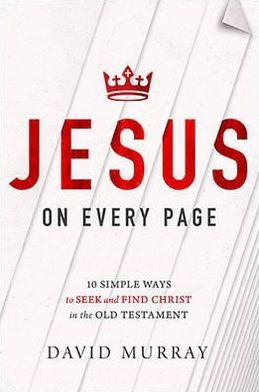
A few weeks ago Ed Stetzer began a series of blogs written by professors and pastors called Preaching Jesus from the Old Testament. The purpose of the series was to get people who have the responsibility of bringing the word week in and week out to their congregations to engage with these blog posts and to engage with different views on preaching Christ from the Old Testament. The second guest blogger was Dr. David Murray, Professor of Old Testament and Practical Theology at Puritan Reformed Theological Seminary. Professor David Murray was in the process of publishing a book called Jesus on Every Page: 10 Simple Ways to Seek and Find Christ in the Old Testament. I was fortunate enough to have been sent an advance reader’s copy of the book. I thoroughly enjoyed reading it and would definitely recommend it as a good starting point for lay people and up and coming preachers who want to begin wrestling with the issue of preaching Christ from the OT.
Today I would like to review Professor Murray’s book. I will summarize its key points, provide what I take to be the best insights in this book, and finally I will present a short critique of Murray’s hermeneutical presuppositions. Having said this, keep in mind the fact that I am reviewing an “uncorrected advance reader’s copy,” so the things reviewed might actually end up changing a bit in the published version.
Summary
The book is divided into two parts – Part 1:My Road to Emmaus and Part 2: Spiritual Heartburn. Part 1 reflects Murray’s journey towards finding Christ in the OT. Here is what Murray says:
In the first part of the book, I tell the story of my own Emmaus road – how the Lord gradually taught me to see more and more of Jesus in the Old Testament. (2)
His journey reflects the journey of many who are convinced that we must preach Christ from the OT. He reflects upon reasons why the OT is ignored among scholars and Christians. He also reflects upon the results of ignoring the OT. In the next few chapters he makes a case for finding and seeking Christ in the Old Testament. We should note that Murray is hesitant about saying “finding Christ in the OT,” he prefers to use the phrase “finding Jesus in the OT.” This is a bit puzzling because the incarnate second person of the trinity, Jesus Christ, is not actually in the OT. Jesus of Nazareth was not born yet. Nevertheless he makes a case for finding Christ in the OT by examining the words of Jesus, the teachings of Peter in 1 Peter 10:12, Paul’s position in Galatians 3-4 and 2 Corinthians 3, and concludes this part of the book by examining the apostle John’s theology of Christ in the OT.
Having established that we can find Christ in the OT, part two focuses on ten simple ways to seek and find Jesus in the OT. He shows how Jesus is revealed in Creation, in the lives of OT Characters, in Christ’s theophanies. Then Murray shows how Christ is found in different genres and sections of scripture. In chapter 10 he shows how Jesus is found in the OT Law, in chapter 11 he shows how Jesus is found in the OT historical books, in chapter 12 he shows how to find Jesus in the prophetic literature. Then Murray has an insightful chapter in discovering Jesus through OT types. This chapter that seems a bit out of place, in terms of the order and structure of the book. Personally I would have chosen to place it near the chapter on discovering Jesus in OT Characters, instead of placing it between chapter 12 which is examines prophetic literature and chapter 14 that examines Christ in the OT covenants. He concludes the book with two chapters on finding Christ in wisdom literature, he shows us how to find Christ in Proverbs and how to find Christ in OT poetry.
Positive Aspects of the Book
There are many things in this book for which Professor Murray should be commended:
The Inclusion of Discussion Questions. The fact that he included discussion questions will help people who have no familiarity with finding Christ in the OT to engage with this new concept. The questions are a good resource to make sure that people will engage with the material in a meaningful way as opposed to simply breezing through the book. These questions also make sure that the reader engages with Scripture itself rather than simply taking Murray’s words as authoritative. I could easily see myself using these questions as I process the concept of preaching Christ in the OT with some of the upcoming preachers in my ministry.
The Inclusion of His Own “Emmaus” Journey. I think that many who read this book will have a story similar to Murray’s (other than being asked to teach OT at a seminary… this sort of reflects my own journey though. The first time I taught at Eternity Bible College I was asked to teach the OT even though I had told Preston Sprinkle that I have focused my study on the Gospels). It helps that Murray included his own personal journey and his own personal objections to this method, because many will have similar objections when approaching this subject.
The Case for Preaching Christ from the OT. I honestly believe that he presents a clear and simple case for preaching Christ from the OT. Its based upon Scripture, and he doesn’t resort to proof-texting, which is something that many who want to preach Christ from the OT have resorted to doing in their own arguments.
His understanding of OT Literary Nuances. I especially appreciated his discussion of the ordering of the OT books in the Septuagint and the ordering of the OT books in the Masoretic text. How we order the books of the OT gives us a framework for understanding the OT itself. Murray shows that both ways of ordering the OT books actually points to Christ. The Septuagint leaves us hoping for the restoration of God’s people, which is found in Jesus alone. The Masoretic Text ends with Chronicles, basically showing that Israel is not as it should be, it awaits the day when God’s people will actually live and act as God’s people were intended to be.
His Chapter on Typology. Typology is dangerous. Murray teaches us how to use typology wisely without falling into the many traps that are associated with the use of typology. He wisely roots typology in the fact that the types are historical realities as opposed to simply spiritual realities (the trap of allegory). I really believe that this is the best short introduction to typology I have read. It is extremely helpful that he walks us through the process of using types to find Christ.
A Couple of Critiques
Let me lay out a couple of critiques that I had regarding Murray’s hermeneutical presuppositions.
Murray believes that Jesus used New Testament light to interpret the Old Testament Scriptures. In order to illustrate this belief he approvingly quotes Graeme Goldsworthy (15):
We do not start at Genesis 1 and work our way forward until we discover where it is all leading. Rather we first come to Christ, and he directs us to study the Old Testament in light of the gospel. The gospel will interpret the Old Testament by showing us its goal and meaning.
I’m am not to sure about using this method for interpreting Scripture, it seems to elevate one part of scripture as more authoritative over another. All of scripture is God-breathed, all of scripture is God’s revelation, all of Scripture reveals Christ. However, I really believe that we cannot know and understand Christ without the Old Testament. The Old Testament, without knowledge of the NT, gives us a worldview and the language that will be used in the NT. Without understanding what sacrifices mean in and of themselves in the OT, we don’t get what Jesus’ sacrifice is about. Without the OT understanding of priesthood taken on its own, we get a deficient view of how Jesus is the ultimate priest. Basically what I’m saying is that we shouldn’t privilege the NT over the OT, we need to be engaged in a dialectic between the NT and OT, with Christ being the center of interpretation.
My major critique of this book lies in Murray’s understanding of OT believer’s faith. In essence I think that Murray’s understanding of OT faith has OT believers believing way too much.
In his chapter on Christ in Poetry he lays out three thesis about OT faith (190):
No Old Testament believer enjoyed the extraordinary light that NT believers have since Jesus died and was resurrected, and the Holy Spirit was poured out at Pentecost.
Every Old Testament believer had sufficient light to trust in a future Messiah who would suffer, die, and be glorified.
Every Old Testament writer knew that his messages of salvation by grace through faith in the Messiah would be much clearer to future generations.
I can agree with thesis one and two, but I am not too sure about the third thesis. Its just not clear to me that justification by faith alone was being preached in the OT. It doesn’t even seem like an overwhelming concern to the NT writers either. Yes the doctrine is there, but the NT writers (as well as the OT writers) seem to be focused upon the fact that YHWH through the Messiah is a deliverer, that he is a sacrifice for sin, and that he will reign everywhere and forever. Much of what passes for preaching Christ out of the OT boils down to preaching a gospel of justification by faith alone from the OT instead of preaching a full orbed gospel of the messiah as the fulfillment of God’s OT promises. I believe that if we make belief in justification by faith alone a requirement for OT faith then we run into some trouble because the truth is that we are saved by faith in the messiah alone, not by “faith alone in the doctrine of faith in the messiah alone.”
Conclusion
There are a few presuppositions that Murray holds that I disagree with, but its nothing that would prevent me from recommending this book to others. Part One and the chapter on typology make this book worth purchasing. So as soon as this book is released on August 20th, go out and buy this book. I know I will buy a few copies of this book to give away to a few people whom I know are interested in this subject.
By the way thanks to LifeWay and Ed Stetzer for sending this book to me and thanks to Professor David Murray for being willing to give out advance reader’s copies of this book!
It can be intimidating to pick up a 1700 year old classic on philosophy or theology. C.S. Lewis would agree.
Lewis says that:
There is a strange idea abroad that in every subject the ancient books should be read only by the professionals, and that the amateur should content himself with modern books… if the average student wants to find out something about Platonism, the very last thing he thinks of doing is to take a translation of Plato off the library shelf and read the Symposium…. The error is rather an amiable one, for it springs from humility. The student is half afraid to meet one of the great philosophers face to face. He feels himself inadequate and thinks he will not understand him. But if he only knew, the great man, just because of his greatness, is much more intelligible than his modern commentator. The simplest student will be able to understand, if not all, yet a very great deal of what Plato said; but hardly anyone can understand some modern books on Platonism.
Half afraid to meet one of the great philosophers face to face, He feels inadequate.
I completely resonate with the hypothetical student that Lewis is talking about. Many times I have thought to myself: “I should really pick up some of the church fathers. Maybe read some Chrysostom or Iraneus. I need to read some of the modern classics. I have to read Schleiermacher. I need to dive into Jonathan Edwards’ stuff. I need to read some contemporary classics. I really need to pick up Barth’s Church Dogmatics. But all of these works seem so hard to read. Barth is impossible! Schleiermacher…those Germans are so complicated! Iraneus, I don’t even know where to start.”
So my natural inclination is to pick up some secondary work, to pick up Holmes or Jensen or Marsden on Edwards. To pick up McCormick or Torrance or Hunsinger on Barth. Trust me I have done this, often to much reward but also often to much frustration. The truth is that the people who write secondary works on these theologians will often focus on the minuatae and the disputed details and nuances of their works. If you want a general picture of what these theologians are all about go ad fontes!
I learned to go ad fontes while I was at UCLA, and I am glad that they instilled that value into me.
I learned to go ad fontes while I was at UCLA, and I am glad that they instilled that value into me. In our Greek Philosophy class we didn’t read about Plato or Aristotle, we read Plato and Aristotle. When we wrote papers about them we weren’t asked to regurgitate what the professor had taught us (a secondary source) we were asked to engage with and wrestle with one passage from a classic work. The same held true for our medieval philosophy class, we didn’t read “the foremost authorities” on Aquinas, Augustine, or Avicenna; we read Aquinas and Augustine and Avicenna. We wrote on Aqunias interpretation of Aristotle’s theory of universals by reading what Aquinas had to say about it in his Summa. We read what the “great philosophers” and theologians had to say. So don’t be afraid to meet them face to face. You will feel inadequate, but you aren’t. You will feel as though you will not understand them, but you will! It will take a bit of work, but the payoff is huge. Here are some tips to get you started:
Find a good and brief introduction/biography. You will find it easier and more enjoyable to read these greats if you know a little bit about their personal life. Also much of what they say will make a ton more sense if you have a tiny bit of background on their works. Basically you need a grid to read them through. I recommend the Very Short Introduction series. They have them on pretty much every great philosopher and theologian ever. It’s a good place to start, and its short enough and broad enough that it won’t taint your views on these greats.
Find a good and readable translation. This won’t be a big problem with Barth and Edwards since the translations are standardized and easy to find. But if you want to dig into the Church Fathers, find a good series. I really like the Popular Patristics Series, it has a good and readable translation plus it comes with a nice little introduction. And they are cheap! I recommend starting off with Athansius’ On the Incarnation its preface was written by C.S. Lewis back in 1944!
Don’t try to understand all the details. I think this is very important to remember. Much of more complicated details will go over your head but that is okay! You aren’t a ________ (Barth, Edwards, or Iranaeus) scholar yet! You are just starting to read _________ (Barth, Edwards, or Iranaeus)! Read in order to get the general drift of their writing!
Have fun! By going back to the sources you are accessing human wisdom that was important enough to last and make its way into your hands thousand or hundreds (or tens) of years later. Enjoy the fact that you can go ad fontes and drink from the fountains of wisdom found in these books!
A few days ago I heard about Domino’s Artisan Pizzas, maybe I’m late on this train but they look really good. They have an Italian Pepper & Sausage Pizza, a Tuscan Veggie and Salami Pizza, and a Spinach and Feta Pizza, just to name a few. They truly look delicious, but I really wonder about the use of the term “artisan.” First off, you can’t have an “Artisan Pizza,” an artisan is person who is devoted to a trade or handicraft, often making items in limited quantities using traditional methods. I’m pretty sure that these pizza’s aren’t making themselves, they are produced by an “artisan” (if that…) but the pizzas are certainly not artisans. That is just using the word incorrectly. Maybe it would be better to call them artisanal pizzas. Okay lets call them that. Now we have to ask ourselves are they really “artisanal pizzas?” I don’t think so. “Artisanal” has become a buzzword used to gain consumers. We have artisanal cheese from Kraft, artisanal beers from Budweiser, and now we have artisanal pizza from Dominos. Artisanal this, artisanal that; everything these days is “artisanal.” This either means that these multimillion dollar corporations have completely changed the way they produce their products or the word artisanal no longer means “an item created by someone who is devoted to a trade or handicraft, often making these items in limited quantities using traditional methods.”
Here is what is going on… “artisanal” now means delicious or fancy. In advertisement it no longer means what it used to mean. The definition is watered down. Artisanal pizza = fancy pizza. Artisanal pizza = delicious pizza with interesting toppings. Artisanal pizza in no way refers to the way the pizza was crafted. Thus “artisanal” has lost its meaning and has been replaced with a wide range of ambiguous adjectives. Here is the problem:
The watered down use of “artisanal” is a symptom of America’s shrinking vocabulary.
Our vocabulary is shrinking, and we are becoming more and more imprecise. Many of our words now cover a large range of meanings. Consider for instance the word “love.” I love pizza, I love my fiancé, I love books, I love the color of my carpet, I love my dog, God loves me. All these uses of the word love all have very nuanced differences, but instead of having words that represent these different nuances, we use one catchall word. So here is the real problem:
We are at a loss for words…. Our vocabulary is shrinking.
C.S. Lewis wrote about this in an essay titled “The Death of Words” which can be found in the September 1944 issue of the literary magazine The Spectator. He says that there are words which were now insulting which are now complimentary, like “democrat.” The word once had a definable sense, but now it is “merely a noise of vague approval.” His best example is the use of the word “gentleman.”
This was once a term which defined a social or heraldic fact. The question whether Snooks was a gentleman was almost as soluble as the question whether he was a barrister or a Master of Arts. The same question, asked forty years ago (when it was asked very often), admitted of no solution. The word has become merely eulogistic, and the qualities on which the eulogy was based varied from moment to moment even in the mind of the same speaker. This is one of the ways in which words die.
The same can be said of the words “abstract” or “concrete.” Abstract has come to mean “vague, shadowy, and unsubstantial;” it has become a word of reproach. If someone calls me an abstract thinker they probably think I have my head up in the clouds and have lost touch with reality. So abstract has lost its precise meaning and has developed a vague derogatory meaning. The converse could be said of the word “concrete.” It has come to refer to something that is “clearly defined and practicable”; it has become a word of praise. If I am called a practical person it means that I have my head upon my shoulders, and I am an effective person. The word has gained moral weight, whereas it was never meant to offer a critique of the person it is being used to describe. The list of these kinds of words goes on and on. Modern no longer has a chronological sense but instead it has come to mean something good or efficient. Progressive is better than traditional. Medieval no longer refers to something belonging to the medieval period, rather it means something barbarous or outdated. Lewis’ list of words goes on and on.
In our day it seems as though we are at a loss for words. Words that once had a specific referent have now come to be used to express one’s feelings. The best example is the word “evangelical.” The word “evangelical” has shifted, ever so slowly, from referring to someone who is a protestant Christian that places an emphasis upon the cross, personal conversion, and evangelism to referring to someone who has regressive outdated moral views. The same can be said for the word “fundamentalist.” Fundamentalists were those who held on to the fundamentals of the faith (inerrancy, the physical resurrection, penal substitutionary atonement, etc.). The referent for the word “fundamentalist” contained the set of those who subscribed to these tenets. Now the referent has been co-opted by the connotation. Fundamentalist connotes a staunchy, religious, right wing, conservative, Christian who is often intellectually deficient and is full of hate towards anyone unlike themselves.
We are at a loss for words. We are no longer able to use our words, and to choose our words wisely, but rather we have come to use certain words as catch-all phrases packed with moral judgments that were never packed into those words.
So go out and buy your “artisanal pizzas” from Dominos; but remember when you talk about “artisanal pizzas” you are watering down our language and you are making a moral judgment upon that pizza instead of using the word in its objective sense.
The title tells you exactly how I feel. Most continental philosophy seems incoherent to me, just a bunch of psuedo-philosophical gobbledy gook. Jibberish, pure jibberish.
Take for example the following excerpt from Zizek’s The Fragile Absolute:
The Event is the impossible Real of a structure, of its synchronous symbolic order, the engendering violent gesture which brings about the legal Order that renders this very gesture retroactively “illegal,” relegating it to the spectral repressed status of something that can never be fully acknowledged-symbolized-confessed. In short the synchronous structural Order is a kind of defence formation against its grounding Even which can be discerned only in the guise of a mythical spectral narrative. (FA 92)
Last time we looked at Athansius’ Four Reasons why Jesus died on a cross as opposed to some other way. Those responses were directed primarily at non-Christians and skeptics. Today we take a look at his response to “anyone from among us (who) asks, not as a lover of contention but as a lover of learning, why he endured the cross rather than some other way…”
Three Reasons Why Jesus Died on the Cross as Opposed to Some Other Way (Athanasius Response to Christians)
He came to bear the curse which lay upon us. (Section 25) Scripture says that Jesus “became a curse” for us. How could he become a curse for us if he had not accepted the death which was occasioned by the curse? The OT tells us “cursed is he who hangs from the tree.” Jesus became accursed for us.
He had to break down the wall of partition between Jews and Gentiles. (Section 25) “Only upon the cross does one die with hands stretched out.” In dying with his hands stretched out he is drawing Gentiles and Jews together to himself. As John says “When I am lifted up, I shall draw all to myself”
He defeated the prince of the power of the air (Section 25). In order for Christ to defeat Satan and his demons, who rule the air, Christ had to “purify the air, and open up for us the way to heaven.” Athansius says that “this must have been by death and by what other death would these things have happened except that which takes place in the air, I mean the cross? For only he that completes his life on the cross dies in the air.”
Once again some of these reasons are more convincing than other. I think reason one is a really good point. Reason two is a bit shaky, I think it reads a bit too much into the physical posture of Jesus and spells out metaphysical implications that might be a bit too big. But then again if we take seriously the metaphysical notion of being “in Christ” one might be inclined to believe reason two. Reason three seems too allegorical to be true, and it relies upon an ancient cosmology, namely one in which the devil literally lives in the air….
Nevertheless, Athanasius thinks that these “are solid arguments that the salvation of all had to take place in no other way than by the cross.”
A while ago I took an atonement seminar with Oliver Crisp, among the discussions that we had, one student, Gavin Ortlund (the son of Gospel Coalition Pastor Ray Ortlund) brought up a really interesting question: “Did Jesus have to die on a cross? Could it have been a guillotine (if they had those), or could he have gotten run over by a horse, or could he have just died of old age? Would those kinds of deaths been effective for our atonement?” Up until that point I had never thought of that question. I just assumed that because Jesus did die on the cross, he had to die on the cross. I guess that is why I’m not a great theologian, I don’t think of these kinds of questions. Luckily though, somebody else besides Gavin has. Athanasius, the patristic theologian, writes about it in “On the Incarnation.”
Four Reasons WhyJesus Died on a Cross as Opposed to Some Other Way (Athanasius’ Response to Non-Christians)
Here is how Athanasius begins his discussion:
Why, then, one might ask, if it were necessary for him to deliver the body to death on behalf of all, did he not lay it aside as a human being, instead of going so far as to be crucified?
It was not fitting for the Lord to die of illness. (Section 21) Could Jesus have died of cancer or tuberculosis etc (if that is even possible) and cause atonement to be made? Athanasius says no…“For it was neither fitting for the Lord to be ill, he who healed the illness of others, nor again for the body to be weakened, in which he strengthened the weakness of others.”
Jesus had to intentionally approach death in order to be victorious over it. (Section 22) Athanasius says that “it was not fitting for the Word of God, being Life, to give death to his own body by himself, so neither was it suitable to flee from what was given by others, but rather to follow it to destruction….Such action did not show weakness on the part of the Word, but rather made him known to be Savior and Life, in that he both waited for death to destroy it and hastened to complete the death given to him for the salvation of all…he accepted that death coming from human beings in order to destroy it completely when it came to his body.” Jesus’ death had to be intentional, not accidental (in the full sense of the word).
He had to have witnesses (Section 25). Could Jesus have died “away by himself privately and ‘in a corner” or in a desert place or a house anywhere at all, the suddenly appear again from the dead? Athanasius says no! “If these things had taken place in secret, how many pretexts would they (the Pharisees) have devised for disbelief? How then could the end of death, and the victory over it, be demonstrated, unless summoning it in the sight of all he proved it to be dead, being annulled thereafter by the incorruptibility of the body?” So basically Athanasisus says, it had to be a public death or else people would be able to have reasonable doubts about his actual resurrection. People might claim that he merely fainted or that it was all a hoax.
Jesus had to intentionally let death attack him in order to be victorious over it. Athanasius compares Jesus’ victory over death to a wrestler’s victory. He says that if a wrestler chooses his opponents, some will be suspicious of his choices. They will say that he was fearful of some opponents and that is why he did not choose to fight those one. A brave wrestler will allow the crowd to choose whom he will fight, that way the crowd knows the match is not “fixed” and the crowd will not doubt the wrestler’s bravery. Jesus faces death in the same way. Christ “did not contrived death, but he accepted and endured on the cross that inflicted by others, especially enemies… in order that the power of death might be completely annihilated.”
Some of these reasons are more convincing than the others. I think 3 and 4 are the strongest… but I will let you make that call.
Do you think that Jesus “had” to die on a cross (as opposed to some other way)? If so, why?


 CWoznicki Think Out Loud