Working Out and Being on Mission

I’m not one of those guys. Yes I played sports in High School. Yes I loved sports. Yes I spent all of my free time at the gym….

Bible Bowl Champs

I worked HARD at football b/c I didn’t have as much natural talent as some other guys. I worked HARD at soccer b/c I wasn’t as fast or accurate as some of the other guys. I worked my butt off to be good at sports. It didn’t come naturally by any means.

Here was my schedule – go to school – go to practice – Spend an hour after practice working out at the school gym – eat dinner – go work out at the gym – find time to get a 4.286 gpa. How the heck did I do that! As soon as I graduated high school I slowly found myself lacking the motivation to work out as much. Yes I would be able to go on crazy work out spurts. Call it being intense, call it binge working out, call it what you will, they never lasted more than 2-3 weeks before I fell back into laziness. Why?

I lacked motivation to maintain discipline!

Think about it. In High School I wanted to be the best, or at the very least competitive. I had a goal set before me. Even more importantly I wanted to help my team win the championship. (By the way we won league and made it to the CIF semi-finals in football.)

Tangible goals that I really believed in motivated me to stay disciplined!

I think the same holds true in Christianity. Why do so many of us struggle to spend time with God through scripture and prayer? Why do so many of us find it a chore to get up 30 minutes earlier to spend time with God but don’t have that same problem when it comes to working out?

At times I will enter my “workout binge” stage. Usually the goal is I want to lose a few pounds or I want to look really good. But those goals are shallow. Even I don’t believe in them enough to put all of my effort into fulfilling them. I think that happens with our time with God as well. We are told that its good to spend time with God, so we should make every effort to do it. We “binge devotion” i.e. read our bibles and pray for 2 weeks but then fall back into our old habits. That is partly b/c we are never given a tangible goal that we really believe in.

What is our tangible goal that we can really believe in? Whatever it is we have to believe that it is of utmost importance. In sports I believed that winning CIF was of utmost importance. Second we must believe that its something worth giving all of our time and energy towards. Third it must happen in community. If I didn’t have a team spurring me on I doubt that I would have been so disciplined in sports.

Football - Village

Is there something in our Christian faith that matches us with these three things? I certainly think there is. So what is that goal?

God’s glory among the nations is an “epic” enough goal to get our butts out of bed every morning to spend time with him.

What if each of us knew that without that time with him we wouldn’t accomplish our goal? What if we believed that those 30 minutes per day could change our lives and could change the world around us. What if we really believed that those 30 minutes could mean the difference between life and death for somebody in an unreached people group on the other side of the world.

God’s glory in the nations is a tangible goal that I can really believe in and give my life to. I don’t feel that way about “my own personal growth.”

Seeking transformation for the sake of transformation is a dead end. Seeking transformation for the sake of God’s glory among the nations is powerful motivation…

Doesn’t Predestination Make God Unloving?

The following is a part of an email exchange with a real student. He asks the question everybody is thinking of when we think about predestination….

—————————————————-

Here is the Question:

Hey Chris,

Here’s a question for you. I have heard it said that predestination is like a man falling in love with his bride-to-be or a man going into an orphanage and falling in love with the children he will later adopt. I get this imagery and it is a great way of explaining predestination. However, what struck me is what about everyone else? What about those other kids in the orphanage or those lonely single people out there? As I think this through, I wonder if people learning about who God is, might view God not as the “all-loving” God because he didn’t fall in love with the other orphans? I’m just wondering your thoughts on this. I hope what I’m saying makes sense.

Here is my answer:

Hey John,

That is a great question, and to be honest with you there is no really satisfying answer. It strikes us as unloving or cruel that God would choose to rescue some and choose not to rescue others. If it were up to us we think that we would choose all… at least that is what we would like to tell ourselves.

Having said that, I can give you an “intellectual” answer but I can’t give you an answer that will satisfy the emotions we feel around this question. So let me take a shot at giving you an “intellectual” answer….

Grace is at the core of what Paul is explaining when it comes to predestination. His understanding of grace is intimately linked to his understanding of sin and our condition as being dead. So if we are every going to “come to life” something from outside of us has to “bring us to life.” This is what we call regeneration. It seems, according to our own experiences, that God doesn’t do this for everybody. So it seems as though God chooses, ahead of time, whom he will regenerate. That is, he chooses whom he will have mercy on. I think so far that is pretty clear, however you asked if this understanding of predestination actually makes God not “all loving.” Here is what I think we need to remember: God owes us nothing. God has no obligation whatsoever to rescue any of us. If God chooses to rescue some, that doesn’t mean that he has caused their condemnation. They have caused their own condemnation: we are responsible for our own sin and dead condition. If we suffer the consequences of our sin, that doesn’t make God any less loving.

Now regarding the question of why God would choose some and not choose to choose others, we must remember that God is fully sovereign in his own decisions. He is free and not bound to do anything, even if “love” (or better yet our understanding of “love”) requires it. So any reason somebody will give as to why God chooses some and does not choose others is pure speculation.

Book Review – Wesley on the Christian Life: A Heart Renewed in Love by Fred Sanders

Trust me I am not one of those reformed guys. I’m young, I’m reformed, but I’m not restless. I love other Christian traditions, I’m not a reformed or nothing kind of guy but at times I have been tempted to have a superior attitude towards Methodism and the other Wesleyan traditions. Let me explain why, I think I have a good reason for it.

Back in 2012 I took a summer class with a visiting systematic theology professor from Asbury (a seminary rooted in the Methodist tradition). As we were making our way through Soteriology and a Wesleyan ordo salutis our Methodist professor explained that Wesley believed that you could lose your salvation. I think that is a very harmful doctrine but I certainly will not break communion with somebody who holds that sort of belief. What this professor said next about Wesley permanently gave me a bad impression of Wesley.  This professor said that Wesley believed that one is saved by faith (so good so far) but that one stays saved by one’s works (oh heck no). In essence Wesley was a 18th century covenantal nomist. Staying saved by one’s good works! In that moment I started turning my nose towards the Methodist/Wesleyan traditions. Thankfully Fred Sanders came along with Wesley on the Christian Life and readjusted my impression of Wesley and his theology.

Summary

The Theologians of the Christian Life series attempts to provide introductions to major teachers/theologians/pastors within the Protestant tradition all the while keeping an eye towards practical living. Wesley on the Christian Life: A Heart Renewed in Love is Fred Sanders contribution to this series. Towards the beginning of the book Sanders lays out two tasks he will attempt to complete in this book: 1) introduce Wesley’s theology and spirituality and 2) recommend a generally Wesleyan  approach to living a balanced Christian life.Wesley on the Christian Life

In this volume Sanders gives the reader a brief spiritual biography, an in depth understanding of Wesley’s “heart religion,” and a look at the role 1 John had on Wesley’s theology (he was a practical theologian who began with John and moved to Paul). Sanders then moves to what Sanders does best, systematic theology. He takes us on a journey into the confusing, strange, and often misinterpreted land of Wesley’s Soteriology. Often accused of being a crypto-catholic or denying imputed righteousness, Sanders shows that Wesley is far from being those two things. Wesley was a preacher of justification by faith alone. Also Wesley loved the law but the law stood upon a foundation of Grace. We are then treated to a brief chapter on the Means of Grace (once again we find that for Wesley Grace comes first, not our human efforts). Then we are taken back into the realm of Soteriology proper; Sanders unpacks Wesley’s doctrine of Christian perfection. Sanders concludes with two “ecumenical chapters” he shows that Wesley was concerned with maintain unity and fellowship with the catholic (not Roman) church and that Wesley is a resource for doing Trinitarian theology across ecumenical lines.

All in all, by taking us on a tour of Wesley’s theology, Sanders shows us that Wesley was a very practical theologian always concerned with guarding fellow Christians from the Scylla and Charybdis of formalism and antinomianism all the while cultivating true religion in the hearts of his fellow Christians

Pros

There are many things that I enjoyed about this book but I will only mention four:

  1. Sanders knows his audience well. This book is published under Crossway, a reformed-evangelical publisher which means that its primary audience will be reformed readers. If you know anything about Crossway you know that they are one of the biggest “gospel-centered” publishers, Sanders is very aware of this and constantly writes with an eye towards this particular audience. Thought the book Sanders makes an effort to relate Wesley’s theology to the Reformed and Calvinian traditions. For instance we find this quote by Wesley pop up around the book many times, “I do not differ from Calvin a hair’s breadth.” We also find a vast number of quotes by Calvinist heroes like Ryle, Spurgeon, and Whitefield giving their stamp of approval on Wesley. We also see that the appreciation runs both ways, Wesley is often portrayed as being a big fan of a lot of Calvinist authors, like Edwards and Goodwin.
  2. The book is filled with wisdom for “gospel centered” readers. I won’t elaborate upon this much but I found it delightful that Wesley offers so much wisdom for people who are gospel centered. Like any other way of thinking “gospel-centeredness” as a theological system often lacks in certain areas, it has it weaknesses. It tends to be nomophobic (it “fears” the Law) but Wesley offers a wise corrective. It tends to be divisive but Wesley makes a case for staying within one’s own communion. It tends to call into question the seriousness of other people’s conversion, Wesley suffered from this fault early on even to the point of calling into question whether he was saved before his Aldersgate experience, but Wesley eventually grew out of this way of thinking.
  3. Sanders presents Wesley as a great resource for doing evangelical theology. I particularly enjoyed the chapter on Wesley’s Trinitarian theology. One particular line really caught my eye: “Wesley’s Trinitarianism was also uniquely experiential” (245). There are two things I know (as generalizations) about evangelicals: 1) They have anemic theologies of the Trinity and 2) They are into having experiences. According to Sanders (he doesn’t really unpack the implications) Wesley’s Trinitarian theology is a resource the evangelical church really needs.
  4. A (sort of) clear explanation of Wesley’s “Christian Perfection.” This doctrine is utterly confusing (maybe Wesley shouldn’t have used the word “perfection”) and I must admit that I still don’t get it. Nevertheless Sanders presents a clear (as clear as I think you can get) explanation of this doctrine. After reading Sanders explanation I still don’t buy it, but at the very least I can now see Wesley’s motivation behind it.

Cons

I will only mention one thing that I found lacking in this book, part of the problem might be due to the intended audience though. Above I mentioned that, Sanders is very aware of his audience and constantly writes with an eye towards this particular reformed group. I am concerned that this particular slant might have caused Sanders to sugarcoat some things in Wesley that reformed people might have a hard time swallowing. In other words I think that Sanders might have made Wesley look more reformed than he really was. As one reviewer on The Gospel Coalition said, some of the similarities that Sanders draws between reformed theology and Wesley’s theology might not actually be similarities but “wishful thinking” on Sanders part. I don’t think Sanders is hoping that Wesley is more reformed than some of his interpreters have made him look, but I do think he is trying to make a case to his reformed/gospel-centered readers that Wesley isn’t all that bad and that we need to learn from him. I agree with the fact that we need to learn from Wesley but there would be things to learn from him even if he radically disagreed with reformed theology. In other words I don’t need a Wesley who is a crypto-Calvinist.

Conclusion

I love the heart behind the series and I love the heart behind this book (there I go, I guess I am a believer in Wesley’s “heart religion”). There is much to learn from Wesley whether or not you agree with his theology, Sanders makes a strong case for that. So should you buy this book and read it? Yes absolutely. There is something in here for everybody whether you are a lay person, a pastor, a theological student, “Young Restless and Reformed” or “Old  Relaxed and Wesleyan.”

(Note: I received this book from Crossway in exchange for an unbiased review.)

Becoming Sequoias and Doing College Ministry

In his book College Ministry in a Post-Christian Culture Stephen Lutz asks the reader two questions that frame the rest of his book. Even though they are questions directed at college/campus ministers I think they are great questions for anybody in ministry to constantly be asking themselves:

  1. Does the grounded, growing, fruitful tree describe you?
  2. Does the grounded, growing, fruitful tree describe your ministry? (30-31)

Stephen Lutz warns ministry leaders from becoming spiritual tumbleweeds, tossed about and shifted around by the winds of change. He suggests that we be like trees instead. We ought to strive to be like Sequoias who are known for their impressive mass and strength. We ought to be like Bristlecone Pines, known for their resiliency. We ought to be like the Trembling Giant aspen in Utah, a tree known for its reproductive capabilities.

Sequoia Tree

Helping your ministry become that sort of tree begins with you. What does it look like for you to be grounded, growing, and fruitful? Only once you have asked that question can you ask what it looks like for your ministry to be grounded, growing and fruitful.

I like to think that being grounded means standing firm in two particular calls

  1. The truth of God’s grace and our identity in Christ. (Gospel)
  2. The truth of God’s call upon our lives. (Mission)

Both of these are callings. The first is a call to come to Christ. The second is a call to go for Christ.

Any growth and fruit will flow out of knowing these two truths.

Music Review – good Kid. m.A.Ad City by Kendrick Lamar

Last time I explained why Kenrick Lamar should have won the Grammy for best rap album over Macklemore. Today we are going to take an in depth look at good Kid. m.A.Ad City.

The album is presented as a film student’s script. He is filming a short film depicting the life of our protagonist Kendrick aka KDot. The story unfolds over the course of 12 tracks. In essence it’s the story of a high school kid who falls in love with a girl who’s brothers are in an opposing gang. Even though KDot isn’t a gangster he gets jumped. The album is the tale of what led up to that situation. He concludes by expressing disillusionment with hood life as being something shallow. This disillusionment leds him to find fulfillment in turning his life over to God. Having turned the page on his old way of living he finds that the only “real” things in life are responsibility, taking care of your family, and most importantly God.

(Note: Some of the titles and themes below are explicit. I have done my best to censor these as far as possible.)

Track 1 – Sherane a.k.a Master Splinter’s Daughter

We start out with a group of young men praying a prayer of repentance, giving their lives to “The Lord Jesus Christ.”

I receive Jesus to take control of my life
And that I may live for him from this day forth
Thank you Lord Jesus for saving me with your precious blood
In Jesus name, Amen

The “director” of the film employs a device called a flashback (when do you even see that in albums!). The prayer is actually towards the end of the story, but it sets us up to understand the next several tracks. The story starts out with 11th grade KDot describing a girl he met at a party. The girl comes from the wrong side of town, and he probably shouldn’t be messing around with her, but he is a dumb high schooler and he isn’t thinking with his brain….

The summer had passed and now I’m liking her
Conversation we having probably enticing her
Who could imagine, maybe my actions would end up wifing her
Love or lust, regardless….

He is probably making a wrong choice going after this girl. He finds this out when he rolls up to her house only to find that there are two dudes in black hoodies waiting for him….

Then we are thrown into another flashback. We go to the beginning of Kendrick’s day.

Track 2 – B****, Don’t Kill My Vibe

There is an interlude between songs, with Kendrick’s mom calling him asking him to return the van that he borrowed from her. His dad asks for his dominoes back, and his mom complains about the dad and is stupid dominoes. He responds by telling her that she is killing his vibe.

Although this song best fits as commentary on Kendrick’s parents relationship shis song actually foreshadows what is going to happen with Kendrick and Sherane’s relationship, she is going to kill his vibe so to speak.

Track 3 – Backseat Freestyle

It’s the middle of the day and Kendrick and his homies are about to hang out, but first they are going to record a freestyle. Typical high school kids, they dream of being rappers. They dream of money, power, and respect. If you heard this song on its own on the radio you would laugh at how stupid and shallow Kendrick is, but within the context of this album’s story you see it’s a social commentary upon the state of rap and high school kid’s understanding of what being a rapper is all about. This song can only be described as “an ignorant high school kid’s bravado.”

Kendrick have a dream
[Hook:]
All my life I want money and power
Respect my mind or die from lead shower

This is young Kendrick’s mindset at the beginning of the story.

Track 4 – The Art of Peer Pressure

The day goes on. After recording some rhymes Kendrick and the homies spend the day hanging out. As the title implies, he explains how even good kids can start doing bad things when hanging out with their friends.

We seen three colors we didn’t like, then started interrogating
I never was a gangbanger
I mean I never was stranger to the folk neither, I really doubt it
Rush a ***** quick, and then we laugh about it
That’s ironic cause I’ve never been violent
until I’m with the homies

They ride around town hitting on girls, getting drunk, smoking weed, jumping people. None of this makes sense. On his own Kendrick was respectful of women, doesn’t smoke and isn’t violent, but none of this is true when he is with the homies.

The day caps off with with Kendrick and the homies breaking into a house and stealing some electronics, getting chased by the cops, and running away.

The song is followed by an interlude where everybody decides that they would all meet up again later at night to go to the big party. Kendrick says he will show up after he hooks up with Sherane.

Track 5 – Money Trees

This song takes a step back and examines Kendrick’s motivations for engaging in petty crimes, specifically robbery. These lyrics capture what he feels:

Dreams of living life like rappers do
Bump that new E-40 at the school
You know big ballin with my homies
Earl Stevens had us thinking rational
Back to reality we poor

Another casualty at war, ya….
Two bullets in my uncle tony head

Money Trees seem to be their only hope for making it out of the hell hole they call home. Jay Rock is featured on the song and he describes the hopelessness people feel in this setting and describes why so many people turn to illegal activities like selling drugs:

Imagine Rock up in the projects where they pick your pockets
Santa Claus didn’t miss them stockings, liquor spilling pistols popping
Baking soda YOLA whipping, ain’t no turkey on Thanksgiving

Pots with cocaine residue, everyday I’m hustling
What else is a thug to do when you eatin’ cheese from the government

Its truly a sad story. They live a neighborhood that even Santa Claus has forgotten. They are forced to earn a living through illegal activities because the government has overlooked the problems in these neighborhoods.

Track 6 – Poetic Justice

Once again there is an interlude where Kendrick’s mom leaves him a voicemail. In the background you hear Kendrick’s dad flirting with his mom. It’s a cute moment where you see how close his parents really are.

This song features Drake and it seems to be made to be released a single. It’s a typical rap-love song. But in the album it functions as more than that. Once again its actually placed in this part of the album to show us how Kendrick feels about Sherane as he is now on his way to visit her. His feelings for Sherane (love or lust?) are going to lead him to trouble.

Track 7 – good Kid

There is another interlude before this song starts. Except this time we are taken back to the point where he rolls up to Sherane’s house only to find that there are two dudes in black hoodies waiting for him….

“I’m gon’ ask you one more time homie, where is you from? Or it is a problem”
“Ay you over here for Sherane homie?”
“Yo I don’t care who you over here for, if he don’t tell where he come, it’s a wrap! Get out the van homie. Get out the car before I snatch you out.”

This song is the heart of the album. It tells what life is like being a good kid living in a mad city. If there is one song you hear on the album go listen to this song. (It was the song Kendrick performed with Imagine Dragons on the Grammys.)

No better picture to paint than me walking from bible study
And ****** called his homies because he had said he noticed my face
From a function that tooken place
They was wondering if I bang
Step on my neck and get blood on your Nike checks

You hired me as a victim
I quietly hope for change
When violence is the rhythm
Inspired me to obtain
The silence in this room
With 20 Xanies and ‘shrooms
Some grown-up candy I lost it
I feel it’s nothing to lose
The streets sure to release the worst side of my best
Don’t mind, cause now you ever in debt

Track 8 – m.A.A.d City

This song is the flip side of good Kid. It describes what the mad city is like. It doesn’t glorify the gangster lifestyle but it describes it in a realistic way. Innocent people are drawn into violence between gangs:

Were the bullets comin from
AK’s, AR’s, “aye y’all. Duck.”
That’s what momma said when we was eatin that free lunch
Aw man, *** damn, all hell broke loose
You killed my cousin back in ’94. **** yo truce

Kids are drawn to do illegal things because they will lead to a quick buck:

Fresh outta school cause I was a high school grad
Sleeping in the living room in my momma’s pad
Reality struck I seen the white car crash
Hit the light pole two hopped out on foot and dashed
My Pops said I needed a job I thought I believed him
Security guard for a month and ended up leaving
In fact I got fired because I was inspired by all of my friends
To stage a robbery the third Saturday I clocked in

Although not strictly a part of the storyline, this song helps us understand what Kendrick is going through. Kendrick, the normal “good” kid growing up in a mad city is drawn into the madness and has become a victim….

Track 9 – Swimming Pools (Drank)

This is another song that has drawn a lot of radio attention. In fact it has become a sort of drinking anthem, but the truth is the song is the farthest thing from a song that glorifies drinking.

Before the song starts there is another interlude. Kendrick is hanging out with his homies after he got jumped. His friends are trying to cheer him up by getting him drunk. What follows is “Swimming Pools.”

Throughout the song Kendrick gets more and more drunk. And his friends egg him on to drink more and more. Kendrick’s partying is actually his coping mechanism. He tries to escape his pain in alcohol, but nobody realizes how destructive it really is:

All I, all I, all I, all I have in life is my new appetite for failure
And I got hunger pain that grow insane; tell me do that sound familiar?
If it do then you’re like me, makin’ excuse that your relief
Is in the bottom of the bottle, and the greenest endo leaf
As the window open I release, everything that corrode inside of me
I see you joking, why you laugh? Don’t you feel bad? I probably sleep
And never ever wake up; never ever wake up, never ever wake up

Track 10 – Sing About Me, I’m Dying of Thirst

Another interlude keeps the story line moving forward. As Kendrick and his homies are passed out drunk on the front yard, they are the target of a drive by, and one of Kendrick’s friends is hit.

The song goes on to describe the destructive nature of gang life and tells about the victimization of women, especially those who have found themselves stuck in lives of prostitution with no apparent way out.

The song changes tempo and we hear Kendrick’s friends suggest they go back and get the guys who killed them. But Kendrick is tired of this dead end lifestyle. He is tired of running, he is thirsty for something more fulfilling.

Tired of running
Tired of hunting
My own kind
But retiring nothing
Tires are steady screeching, the driver is rubbing
Hands on the wheel, who said we wasn’t?
Dying of thirst

Dope on the corner
Look at the coroner
Daughter is dead
Mother is mourning her
Strayed bullets, AK bullets
Resuscitation was waiting patiently
But they couldn’t, bring her back
Who got the footage? channel 9
Cameras looking, it’s hard to channel your energy
When you know you’re crooked
Banana clip split his banana pudding
I’m like Tre, that’s Cuba Gooding
I know I’m good at
Dying of thirst

How many sins?
I’m running out
How many sins?
I lost count

Kendrick reveals that he is actually thirsty for a “fuller” life, he is searching for something that will actually quench his thirst. This is where he begins to turn to God for answers:

Tired of running, tired of running
I’m tired of tumbling, tired of running
I’m tired of tumbling Backwards

my mama say
“See a pastor, give me a promise
What if today was the rapture, and you completely tarnished
The truth will set you free, so to me be completely honest
You dying of thirst
You dying of thirst
So hop in that water, and pray that it works”

Track 11 – Real

Once again there is another interlude, this time featuring Maya Angelou. She then begins to reveal to them that they are dying of thirst and that they need to take a new path and let Jesus into their lives. She then leads them through a sinner’s prayer, the same one we heard in the beginning of the album.

Its apparent that Kendrick’s life changes after this experience. He meditates on the idols of the human heart:

You love red-bottom and gold they say queen
You love hand-bag on the waist of your jean
You love french tip and trip that pay for
You love bank slip that tell you we paid more
You love a good hand whenever the card dealt
But what love got to do with it when you don’t love yourself

You love fast cars and their present is old
You love fast women
You love keepin’ control
Of everything you love, you love beef
You love streets, you love runnin’, duckin’ police
You love your hood, might even love it to death
But what love got to do with it when you don’t love yourself?

He concludes by meditating on his own idols:

But what love got to do with it when I don’t love myself
To the point I should hate everything I do love
Should I hate living my life inside the club?
Should I hate her for watching me for that reason?
Should I hate him for telling me that I’m season?
Should I hate them for telling me ball out?
Should I hate street credibility I’m talkin’ about?
Hatin’ all money, power, respect in my will
I’m hatin’ the fact that none of that **** make me real

Mature Kendrick realizes that the stupid things he was rapping about in Backseat Freestyle are vain and empty. He started out by rapping:

All my life I want money and power respect….

He ends by saying that money, power, respect, doesn’t make him real.

The story ends with his father leaving him a voicemail, giving him a clue about what is real:

Any man can kill a man, that don’t make you a real. Realness is responsibility, realness is taking care of your family, realness is God…

Track 12 – Compton

The last song is Kendrick (the rapper, not the character) celebrating the fact that he has made it out of the maad city, and has reached the heights of superstardom. It doesn’t really fit the rest of the album but its there.

Conclusion

So I have taken you through the whole CD. Its an intricate story with characters that are complex, showing moments of moral uprightness and moments of depravity. They are “sinners who are probably going to sin again.” The best thing about this cd is that is real. It shows us that human beings are complex. It’s the story of humanity in all of its darkness and in all of its possibility. It shows what life is like without God and contrasts what life could be like with God.

All in all, do you want to know why Kendrick is my favorite rapper and why he should have won the Grammy? Because he writes stuff like this:

What’s my purpose?
Maybe this earth is, ain’t a good place to be
How far is Heaven? Let’s see
Is it in the clouds like they said it would be?
I wonder when I die will he give me receipts?
I wonder will the eyes of the Lord look at me?
Look at me, look at me, I’m a loser, I’m a winner
I’m good, I’m bad, I’m a Christian, I’m a sinner
I’m humble, I’m loud, I’m righteous, I’m a killer
What I’m doing, I’m saying that I’m human,


Kendrick Got Robbed at the Grammys

I love Christian commentary on all of the big awards shows. I’m serious, I really do. I’m not a huge fan of the deeply theological assessments but I do enjoy the witty tweets and one liners on Facebook. This year the Grammys generated some really witty tweets and one liners.

Church Curmudgeon:

I must say, the #GRAMMYs did put up a powerful argument against intelligent design.

So. Do you STILL want to engage the culture?

Fake J.D. Greear speaking of Lorde:

It’s good to see that girl from Addams Family has made something of herself. #grammys

So let me add my two cents to the conversation. My usual modus operandi is to make some theological commentary, but today I’m going to do something I have never done before…

I have done literary criticism on this blog and I have done film criticism, but today I am going to take a shot at music criticism. Specifically I am looking at the categories that both Macklemore and Kendrick Lamar were nominated. Here is my personal opinion (apparently its Macklemore’s opinion too):

Kendrick Lamar got robbed.

Kendrick Lamar and Macklemore were both nominated for album of the year. Kendrick Lamar and Macklemore were both nominated for new artist of the year. Kendrick Lamar and Macklemore were both nominated for rap album of the year. Kendrick Lamar and Macklemore were both nominated for best rap performance. Kendrick Lamar and Macklemore were both nominated for best rap song.

Kendrick Lamar did not win in any of those categories.

Now I know that Kendrick wasn’t going to win all of those. But the fact that he didn’t win any of those is an outrage. Everybody is talking about Kendrick. He has even gotten critical acclaim from the Christian Rap Blog – Rapzilla:

“Kendrick Lamar’s new album, “Good Kid, M.A.A.D City”, is brilliant, period.”

“Lyrically, dude is a beast and if you hear people talking about the “new Nas” it’s for a reason.”

“The Truth is: “Good Kid” and “Real” (both KL songs) are both more creative and spirit-filled than most of what I’ve heard from CHH (Christian hip Hop) this year.”

Even Lecrae has praise for him. A collaboration between Kendrick and Lecrae is currently in the works. The Respect runs both ways!

Now let me explain to you why good Kid. m.A.Ad city is so darn good.

Good Kid - Maad City

  1. First you have to understand what the album is, if you take each song on its own its easy to deplore it as a typical gangsta rap album, but good Kid. m.A.Ad city is actually what we call a “concept album.” In other words its an album that has one single theme or tells one unified/multilayered story. How many rappers put out concept albums? I challenge you to find one.
  2. Second, he captures the intricacies of real life. People aren’t flat out as bad as you can get, yet nobody is a saint either. Kendrick understands that human beings are extremely complex creatures with complex and often contradictory desires. He is aware of this truth in himself and in the people around him. On one song he says “I am a sinner, who’s probably going to sin again.” He says he is a “good” kid in a “maad” city. He understands why kids enter gangs. He understands why young girls are forced into prostitution. In essence he knows that the people we often label as “bad” or “evil” have been placed there, often unwillingly, by life’s circumstances.
  3. Third. Musically the album is tight. Great production, it was Dr. Dre who produced it. The mix is clean and crisp. Lyrics are insightful and witty.
  4. Fourth. He is a flat out a great rapper. People like the folks at MTV and radio personalities like Big Boy are calling him the best lyrical rapper out there right now. And don’t even get me started on his flow. It is insane. Did you see his collaboration with Imagine Dragons at the Grammys?
  5. He isn’t afraid to talk about things that are real for the people around him. While the Grammy’s are praising Macklemore for his “boldness” (aka what the people who run the grammys actually want to hear) Kendrick is rapping about the realities of life that people don’t want to hear about. People don’t want to hear about poverty, they don’t want to hear about how alchohol and partying is often done in an effort to numb the pain inside, they don’t want to hear about how destructive drug dealing can be, how 15 year old girls are forced onto the streets to help their families, how young girls are taken advantage of by family members, and more importantly that God can change a person’s life.  For instance take how he opens up  the album, he opens it up with a group of young guys saying a sinner’s prayer, putting their faith in Jesus. Who does that on a gangsta rap album? Listen to some of the songs, listen to the first and second parts of “Sing about me,” listen to “Real” and listen some of his older stuff like “No Makeup,” “Tammy’s Song,” “Keisha’s Song” all of these songs expose the idols of our hearts and boy are our idols ugly. Rap could use more people like Kendrick who aren’t afraid to talk about these sorts of things.

Those are just a few reasons why good Kid. m.A.Ad city is so good, but the best way to understand why this album is so great is to dive into the story that Kendrick tells throughout the album. In essence the album is an enthnographic report of what it looks like to live as a kid from a “good” home in a city filled with violence, sex, and hate. Neither gloryfing the “good” part nor the “mad” part. Kendrick shows the audience what life in Compton is really like. Life isn’t as horrible as the sort of life portrayed in Gangsta rap, but its not rosy either.  You can tell that this is the sort of message he is trying to portray, that’s why you get characters as diverse as youth pastors, devout grandmas, moralistic mothers, responsible fathers, good kids gone bad, prostitutes, sluts, gang banggers, drug deals, and kids trying to party.

Next time I will dive into exploring the album song by song.

Matters of the Heart

The head and the heart ought not conflict. Intellectual knowledge ought not conflict with our emotions and sentiments. If Christianity is true then its crazy not to have an emotional response to the truths of our faith.  John Wesley wholeheartedly believed that.

Fred Sanders explains that Wesley was not anti-intellectual, anti-theological, or anti creedal, but he did believe that one could become too focused on these things so that one might use them (intellect, theology, the creeds) as a way to avoid the presence of God. (Wesley on the Christian Life, 82). According to Sanders, Wesley believed that these things were necessary but not sufficient.

Listen to Wesley speak in his own words:

Neither does religion consist in orthodoxy or right opinions; which although they are not properly outward things, are not in the heart, but the understanding. A man may be orthodox in every point…. He may think justly concerning the incarnation of our Lord, concerning the blessed Trinity and every other doctrine… he may assent to all the three creeds…. Yet it is possible he may have no religion at all. He may be almost as orthodox, – as the devil and may all the while be as great a stranger as he to the religion of the heart…

Many have accused modern day evangelicalism of reducing faith to intellectual assent to a certain set of propositions. This may or may not be true, nevertheless at the very heart of modern evangelicalism lies the “heart” religion of revivalists like Whitefield and Wesley as well as pastors like Jonathan Edwards. Lets not forget our roots, true faith is orthodox but it is also a religion of the heart.

Book Review: The Theology of the Heidelberg Catechism by Lyle D. Bierma

The churches I have been a part of my whole life were not confessional by any stretch of the word; neither did they ever use a catechism. Most people in those churches probably didn’t even know what “catechism” meant. My first exposure to the word was in college. I picked up a Roman Catholic Catechism my first year of college. So I thought a catechism was a Roman Catholic thing. As I moved towards the reformed tradition in college I began to grow in appreciation of confessions and of catechisms. The Heidelberg Catechism is now one of my go to catechism for there is something beautiful to this catechism. There is a real sense of “heart” and relationship with God in it. (There I go revealing my pious roots!) When I saw this book on a catechism I really enjoy I thought it would be a worthwhile read. I was right.

Summary

During the 400th anniversary of this catechism, a lot of voices came out saying that the Heidelberg Catechism (HC) is a fantastic ecumenical statement of faith. However, the anniversary came and went, and so did the buzz about the document’s ecumenical nature. Yet recently there has been a revival of trying to interpret the HC as an ecumenical document. Much of this effort has taken place along several lines including the study of the historical context out of which the document arose and through a sort of text-criticism of the document. This book takes the second route.  As Bierma progress through a study of the texts behind the text he shows that in the HC “we encounter traces of the grafting of Reformed branches onto a Lutheran vine.” (11) Much like the church in the Palatinate, this confession has a Lutheran (specifically a Melanchthonian) foundation with Reformed elements/themes/language built on top.

Bierma spends seven chapters studying the text and the texts behind the text in order to show how he comes to believe his thesis. He shows that the HC draws upon 1-Luther’s Small Catechism, 2-Melanchthon’s AC, 3-Melanchthon’s Examen Ordinadorum, 4-Calvin’s Genevan Catechism, 5-the north-German Lasco catechisms, and 6- two confessions by Beza. The authors of the HC establish common ground finding middle positions, toning down controversial points, state view positively rather than polemically, and sometimes combing elements of various traditions (12).

Chapters are dedicated to 1-The Theme and Structure of the HC, 2-The Law and Gospel, 3-Providence and Predestination, 4-Christ and the Holy Spirit, 5-The Sacraments, 6-Covenant, and 7-Good Works.

Pros

  1. Bierma does a excellent job exploring the history of scholarship on the HC. I know about the theology of the HC, but I didn’t know much about the history of scholarship of the HC, so I found it truly enlightening.
  2. Bierma makes a strong, yet short, case for the HC being a proto-confessional document based upon the historical context of the HC. The university at Heidelberg was a pretty ecumenical university with a pretty ecumenical faculty. The committee that wrote up the document was pretty ecumenical as well. It included Melanchthonians, Zwinglians, and Calvinists. Also, Ursinus, who was the primary mover and shaker in the bunch strattles the line between being a Calvinist and a Bullingerian.  Not to mention he has Lutheran roots.
  3. As an added bonus, Bierma includes a version of the HC in the appendix.

Cons

I have one qualm with this book. Its actually a pretty serious one too. I am not sure that Bierma is engaged in a very practical project. As I was reading the book I was reminded a lot of Old Testament source-criticism; scholars searching for the text behind the text (JDEP). That project has been largely abandoned in favor of OT study that focuses on the text itself or on response to the text. That is not to say that its impossible to find texts behind texts, but in my opinion the prospects are bleek. When it comes to finding the text behind the text in the HC I think the prospects are bleek as well. Bierma shows that there are textual similarities between the HC and other Lutheran/Reformed documents, but its hard to show causal dependence upon them. Were the authors of the HC influenced by these texts? Probably. They grew up around them. That is like asking if I have been influenced by MLK’s “I have a dream speech.” However just because I write the phrase “I have a dream” in a sermon of mine that doesn’t mean that I am causally dependent upon MLK’s speech, I am constantly being culturally shaped in ways that I am not aware of. To imagine that you can understand my psyche, is a pretty bold claim. Its even bolder to claim that we can understand the psyche of people who lived 450+ years ago. All this to say, if we are looking for textual similarities, then Bierma has done us a huge favor in this book. But if we are looking for actual causal dependence, I’m not so sure I buy Bierma’s work.

Conclusion

I don’t mean to sound overly critical, but as I mentioned, I am wary of the possibility of discovering texts behind texts. Maybe that’s the result of my biblical studies professors. Maybe it’s a different case when it comes to dealing with theological texts. Maybe not though. Either way, I highly recommend this book for historical theologians. You aren’t going to find much about the theology of the HC itself, but you will find a lot about the historical-theological context of the HC. For this reason I recommend this book to historical theologians.

Note: I received this book courtesy of WJK and Netgalley. I was in no way obligated to give a positive/negative review.

The Cross + Guilty Feelings = Forgiveness!

The truth is that often we feel as though beating ourselves up and dwelling on our sin pleases God. You probably won’t admit this but if you really stop and think about it, you see the grain of truth in it. Its as though we think that God needs to be reminded of our sin.

But here is the problem with that….

 The problem with dwelling on “Sinner” as our identity is that it diminishes Jesus’ work on the cross.

Focusing on how broken and messed up you is basically saying that Jesus’ work on the cross wasn’t enough to rescue you. When you focus on your sin, and beat yourself up over it you are saying that Jesus’ work to forgive me wasn’t enough. You are saying that what I really need is:

The cross + guilty feelings

  That will earn my forgiveness!

But Christianity isn’t a guilt-laden religion. If you think part of what it means to be a Christian is to constantly live with feelings of guilt well I have got news for you. You got it all wrong.

Christianity isn’t a guilt-laden religion. Chrstianity is a freeing religion. It’s a religion that says that there is no more guilt. There is no more condemnation.

Christianity says that you have God’s full acceptance. It says that God is eternally pleased with you. The reason why is because you have been justified in the name of Christ and you are being sanctified through the work of the Holy Spirit.

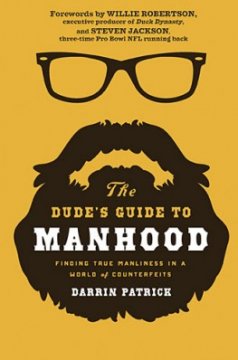
Book Review – The Dude’s Guide to Manhood by Darrin Patrick

You have seen them. They like to congregate around weight benches and mirrors. They wear their cutoffs so you can see their ink. They have their hair gelled even when they work out. They always have a can of Monster or Redbull with them. And they drive a lifted truck. They are “men.” Or shells of men to be a bit more accurate. Society around us has taught us that these guys are “men.” When in reality they are kids who stayed in adolescence a bit too long, maybe even perpetually. In The Dude’s Guide to Manhood Darrin Patrick tries to show us what real masculinity is all about. He provides a roadmap, so to speak, for those who have not been instructed in the ways of men.

Overview

The Dude's Guide to Manhood

We have a problem. “Men are simply unprepared to face the journey of manhood, in part because they have never been prepared in the first place…. We are on our own, and we don’t know where we are going” (XVI). Darrin is brutally honest with us, he is one of those guys, he didn’t have a great roadmap, thankfully though we won’t have to deal with that same problem since we have this book to help guide us.

Each of the chapters of this book deal with one aspect of what it means to be a man. Men are determined. Men are coachable. Men are disciplined. Men work. Men are content. Men are devoted to their woman. Men love their family. Men are connected in meaningful ways to other men. Men display the right emotions at the right time. Men fight. Men are heroic. And most importantly, men live in light of God’s grace.

Each chapter treats one of the topics I just mentioned. In each chapter you will probably find some personal anecdote, some movie quotes, some sociology, and maybe even a little bit of biblical material. Each chapter shows us how men have failed in one of those particular areas then it provides encouragement to step it up in that area.

Pros

  • He Knows His Pop Culture – Without a doubt, Darrin knows his pop culture. Which is great because he can illustrate his points well. At no point was I bored reading his description of books, movies, current events, etc.  You can tell he is a pastor and he has honed the craft of coming up with illustrations.
  • The Chapter About Jesus – I don’t mean to be snarky. Well maybe just a little bit, but the one chapter about Jesus was fantastic. He shows us how Jesus is the one true, perfect man. Jesus was perfectly determined, coachable, disciplined, hard working, content, concerned for his family, devoted, relationally connected, emotional, and strong. As Darrin walked through each of these areas I felt how “awe”-some Jesus really was. Unfortunately this part of the book was limited to only a few pages. Regardless of that fact, this chapter is a wonderful primer on how to shape and preach gospel centered, Christ exalting topical messages.

Cons

I will be honest with you. This book just didn’t do it for me. At worst I felt like I was reading a self-help book the whole time.

At best I felt like I had picked up one of those “Christian” self-help books that Family Christian stocks its shelves with.

Everything that Darrin says in the first 10 chapters could have been said by somebody who isn’t even a Christian. Yes, he sprinkles some scripture here and there, but none of those chapters felt as though they were rooted in the bible. I expected way more from Darrin. But maybe I missed the point of the book. On the back cover John Piper endorses this book and says “Buy a bundle, read one, and give the rest to believing and unbelieving guys you know.” Piper might be on to something, this book might actually be written for nominal Christians or people are not-yet Christians but are seeking. I could see myself handing this book to some friends I know who go to church every once in a while. They would really profit from it. But I can’t see myself giving this book to a mature, or growing for that matter, Christian guy. The chapter on Jesus and grace confirms my belief that this book isn’t really for Christians. Its almost as though Darrin ends the book with an altar call. Essentially the book is one long sermon on manhood: Here is what it is to be a man, you don’t live up, Jesus does live up so put your faith in Jesus.

Conclusion

This book was probably written for non-Christians or nominal Christians. If that is true I give it a 8/10. I would even recommend it to some people I know. However if you are a Christian guy, this book really isn’t for you. If this book is for Christians I give it a 5/10. It was well written, but it felt like a pseudo-Christian self-help book with a gospel message tacked on at the end because Darrin Patrick (the vice-president of Acts 29) needs to be “gospel-centered.”

Note:  I received this book free from the publisher through the BookSneeze.com book review bloggers program. I was not required to write a positive/negative review.