Preaching in a T.G.I.F. World

TGIF! We live in a TGIF world – what Leonard Sweet calls the “Twitter” – “Google” – “Instagram” – “Facebook” world. People do not only consume these forms of social media (the Google empire really is a form of social media), people are altered by these forms of media, and this alteration affects peoples habits and thought patterns. One of the drawbacks of this TGIF culture, according to Sweet, is that the straightforward 3 point – expository sermon which teaches some major principle, no longer works. Sweet’s point might be a bit to strong however he is certainly right in pointing out that the TGIF culture demands a change in communication strategy.

Giving Blood is Sweet’s call to the church to take a fresh look at how we preach to a post-modern culture. It’s a call to adapt what he calls “semiotic” and “EPIC” preaching.

Semiotic Preaching

What is semiotic preaching? Quite simply it is “the art of exegeting not the words or principles, but the images, metaphors, and stories (narraphors) of Scripture.”

Here is what Sweet says:

Semiotic preaching is a new form of biblical preaching, but what is being exegeted are age-old stories and images, or what we might call “narraphors” – narrative metaphor.

Semiotic preaching builds on the tradition of “preaching as storytelling.”

Narraphoric preaching breaks down resistance, enters the unconscious quickly and causes the participant to fall into the lap, or trap, of truth. Narraphors get us thinking about something we may not want to think about. They force us to look at life in new ways and they outwit our reasoned defenses.

EPIC Preaching

EPIC is an acronym which stands for “Experiential” – “Participatory” – “Image-Rich” – “Connective.” Preaching to post-moderns must not simply be about getting them to understand God, but to experience God. Preaching to post-moderns must move them from being passive recipients to active agents who initiate and make change. Preaching to post-moderns must be image-rich, preachers must take up the poet’s tools – image and imagination, rhyme and rhythm, simile, metaphor, and story. Preaching to post-moderns must be connective, invite people to connect with each other so they can better connect with Christ’s healing power and life-giving presence.

The Book

What is unique about Sweet’s book weaves these two “newer” principles of preaching into the traditional topics discussed in most preaching books: preparation, information gathering, nervousness, writers block, dealing with criticism, sermon construction, etc.

The most helpful parts of the book were his “Interactive” and his “Lab Practicum” sections. The interactive sections leads readers into exercises that will help make them better preachers and better observers of our TGIF culture. The exercises include everything from watching Youtube to reading a section of Eat, Pray, Love to listening to Three Doors Down. The Lab Practicums help shape preacher’s skills in particular areas of preaching.

Although I believe that Sweet over-exaggerates the extent that TGIF has permeated our culture; his suggestions regarding EPIC preaching should be readily adopted by any and all preachers.

Books Read in 2014

Happy New Year! The year is over and its time to release the list of books that I read last year. For those of you who are interested, here are all the books I read in 2014. It might help you see the type of books that could have made it into my Top 10 books of 2014.

87 Books Read in 2014!


January
1. The Pastor’s Family by Brian and Cara Crofts
2. Absence of Mind by Marilynne Robinson
3. Found in Him by Elyse Fitzpatrick
4. The Dude’s Guide to Manhood by Darrin Patrick
5. Encounters with Jesus by Tim Keller
6. The Theology of the Heidelberg Catechism by Lyle Bierma
7. Wesley on the Christian Life by Fred Sanders

February
8. Flesh by Hugh Halter – 2/6/14
9. Replant by Darrin Patrick and Mark Devine – 2/12/14
10. Christian Faith in the Old Testament by Garteth Cockerill – 2/17/14
11. Uncovered by Rod Tucker – 2/20/14
12. Political Theology by Fiorenza, Tanner, and Welker- 2/23/14
13. What is Biblical Theology? By James Hamilton -2/26/14
14. Warfare in the Old Testament by Boyd Seevers 2/28/14

March
15. How do we Know? An Introduction to Epistemology by Mark Foreman and James Dew 3/3/14
16. Primal Fire by Neil Cole 3/6/14
17. Visions of Vocation by Steven Garber 3/10/14
18. Prodigal Christianity by David Fitch 3/13/14
19. Evil and the Justice of God by N.T. Wright 3/13/14
20. The Truest Thing About You by Dave Lomas 3/13/14
21. Preaching in an Age of Distraction by 3/19/14
22. Missional Quest by Lance Ford and Brad Brisco 3/24/14
23. Desiring the Kingdom by James K.A. Smith 3/25/14

April
24. How Jesus Became God by Michael Bird 4/1/14
25. Who is Tampering with the Trinity by Millard Erickson 4/7/14
26. Christ and Reconciliation by Veli-Matti Karkkainen 4/14/14
27. The Severity of God by Paul Moser 4/19/14
28. Who’s Afraid of Post-Modernism by James K.A. Smith 4/22/14
29. The Soul by J.P. Moreland 4/25/14
30. Introduction to Doctrine by Louis Berkhof 4/29/14

May
31. From Jesus to the Church by Craig Evans 5/7/14
32. Interpreting the General Letters by Howard Bateman IV 5/11/14
33. The Cry for Spiritual Mothers & Fathers by Larry Kreider 5/16/14
34. Spiritual Formation in Emerging Adulthood by David Setran & Chris Kiesling 5/23/14
35. Jesus Against the Scribal Elite by Chris Keith 5/26/14
36. Eternal Wisdom from the Desert Fathers (various authors) 5/31/13

June
37. Jesus the Fool by Michael Frost 6/10/14
38. Christianity on Trial by Mark Lainer 6/15/14
39. Slow Church by Christopher Smith and John Pattison 6/21/14
40. Understanding the Mission of the Church by Scott Sunquist 6/25/14
41. Surprised by Scripture by N.T. Wright 6/27/14
42. Dispatches from the Front by Tim Keese 6/30/14

July
43. A Light to the Nations by Michael Goheen 7/12/14
44. Strange Glory by Charles Marsh 7/22/14
45. Church Dogmatics 1.1 by Karl Barth 7/29/14
46. Chasing God by Roger Huang 7/30/14
47. Risk is Right by John Piper 7/31/14

August
48. The Sticky Faith Guide for the Family by Kara Powell 8/6/14
49. Faith and Reason: Three Views by Steve Wilkens 8/12/14
50. Abraham Kuyper: A Short and Personal Introduction by Richard Mouw 8/15/14
51. Authentic Spiritual Mentoring by Larry Kreider 8/20/14
52. New Testament Essentials by Robbie Castleman 8/26/14
53. Slow Church by Christopher Smith and John Pattison 8/30/14

September
54. Dad is Fat by Jim Gaffigan 9/3/14
55. Citizens by Rob Peabody 9/6/14
56. Abraham Kuyper: Modern Calvinist, Christian Democrat by James Bratt 9/10/14
57. Deviant Calvinism by Oliver Crisp 9/13/14
58. Preventing Suicide by Karen Mason 9/16/14
59. Lectures on Calvinism by Abraham Kuyper 9/22/14
60. The Call to Discipleship by Karl Barth 9/24/14
61. Atonement, Law, and, Justice by Adonis Vidu 9/28/14

October
62. Kingdom Conspiracy by Scot McKnight 10/5/14
63. Walls Fall Down by Dudley Rutherford 10/16/14
64. Called by Mark Labberton 10/27/14

November
65. The Kuyper Center Review vol 4: Calvinism and Democracy by John Bowlin 11/1/14
66. Multiplying Missional Leaders by Mike Breen 11/1/14
67. Prepare Them to Shepherd by Brian Crofts 11/2/14
68. Rediscovering the Church Fathers by Michael Haykin 11/6/14
69. Forty Questions About Christians and Biblical Law by Thomas Schreiner 11/7/14
70. Reading Backwards by Richard Hays 11/12/14
71. Forever Love by Francis and Lisa Chan 11/14/14
72. Jesus Continued by J.D. Greear 11/17/14
73. Jonathan Edwards’s Bible by Stephen R.C. Nichols 11/24/14
74. Prayer by Tim Keller 11/24/14
75. The Philosophical Theology of Jonathan Edwards by Hyu Sung Lee 11/25/14
76. Revisiting Paul’s Doctrine of Justification by Peter Stuhlmacher 11/28/14

December
77. Frameworks by Eric Larson 12/3/14
78. Reformed Dogmatics Volume 1: Theology Proper by Geerhardus Vos 12/5/14
79. Divine Providence: Four Views by Dennis Jowers 12/9/14
80. Loving Jesus More by Philip Graham Ryken 12/10/14
81. Galatians and Christian Theology by Mark Elliott & Scott Hafeman & N.T. Wright 12/13/14
82. Brazos Theological Commentary: Colossians by Christopher Seitz 12/17/14
83. Experiencing the Trinity by Joe Thorn 12/18/14
84. Thinking Through Paul by Bruce Longenecker & Todd Still 12/20/14
85. Sabbath as Resistance by Walter Brueggemann 12/21/14
86. Reformed Dogmatics Volume 2: Anthropology by Geerhardus Vos 12/28/14
87. Christ Crucified by Donald Macleod 12/31/14

FREE: Sermons on Several Occasions by John Wesley on Logos

I have to divert your attention to Logos for a second, they are offering a free copy of John Wesley’s Sermons on Several Occassions. It consists of 141 sermons! This will definitely be an invaluable resource for preachers; with the tags in Logos you will be able to find awesome stuff from Wesley’s sermon for your own sermons.

When checking out at Logos.com, make sure you use coupon code WESLEYFB.

I don’t know how long this deal will last, so just download it now!

(HT: eChristianResources)

They Shall Call His Name “Immanuel”

What is the meaning of Christmas? Its quite simple – Matthew expresses it in just a couple of sentences in his gospel:

She will give birth to a son, and you are to give him the name Jesus, because he will save his people from their sins…they will call him “Immanuel” which means, “God with us.”

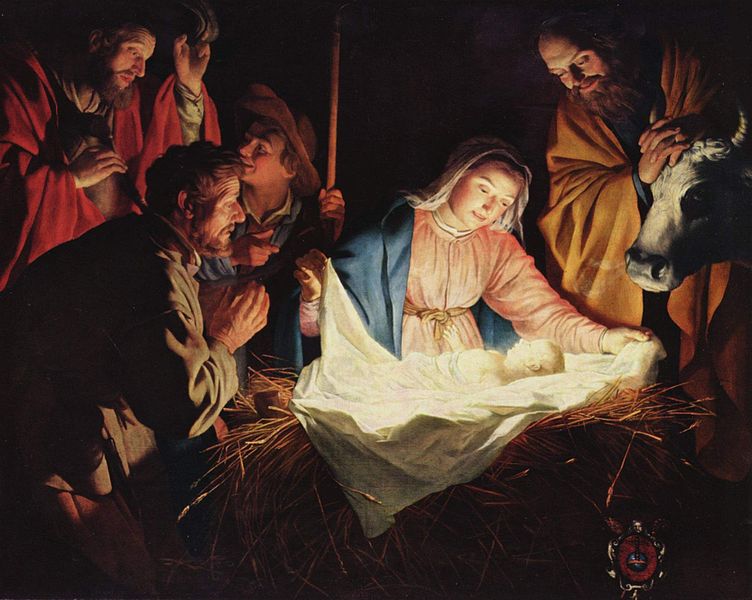
"Adoration of the Shepherds" by Gerard van Honthorst, 1622
“Adoration of the Shepherds” by Gerard van Honthorst, 1622

“God with us” will save his people from their sins. This is the true meaning of Christmas. But how does that happen? How does God being with us rescue us from our sins? T.F. Torrance sheds some light on how Jesus, “God With Us,” does this.

We must think of the work of the cross [salvation], therefore beginning immediately with his birth, increasing in his growth into manhood, and deepening in intensity as he entered his public ministry. His whole life is his passion, for his very incarnation as union with God and man is his passion, for his very incarnation as union of God and man is an intervention into the enmity between God and mankind….

That is the life of the Son of Man who grows up as the one and the many from cradle to manhood, and that is the life of the Son of Man as he presses toward the cross through all the years of his loving ministry of forgiveness and healing. If at last it was with joy that he endured the awful cross and all that it meant in the ultimate contradiction between God and humanity, then it was with joy too that he lived the life which in being lived carried him straight to the cross from the cradle. (Incarnation 110-111)

Merry Christmas!

Top Ten Books of 2014

Christmas is the best time of the year to make lists!

  • Santa Claus is checking his list of kids who were naughty and nice, deciding which kids are going to get presents and which kids are going to get coal.
  • The nice kids are making lists of toys they want. (God bless the greedy little children, every one!)
  • Grown ups are creating Amazon wish lists hoping that somebody will get them something. (Mine is up on Amazon, just in case you want to get me something…)
  • Mom is making a grocery list, outlining all the stuff she needs to buy in order to pull off the perfect Christmas dinner. (I’m okay with just Tamales.)

But maybe most importantly, bloggers are making their “Best Of….” Lists for 2014. So I present to you the most important list you will see this holiday Season….

Chris Woznicki’s Best Books of 2014!!!

Best of 2014

Here are my qualifications to make it on to this list:

  1. Published in 2014
  2. I would give that book to somebody else
  3. I would re-read the book
  4. It is not a crappy book

With that I give you my favorite books of the year across 10 different categories: Biblical Studies, Theology, Mission, Ministry, Biography, Reformed, Charismatic, Devotional, Most Important, and of course Book of the Year.

Biblical Studies – Reading Backwards by Richard Hays
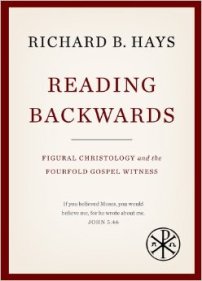
Reading Backwards

There were a lot of good biblical studies books that came out this year, including From Jesus to the Church by Craig Evans & How God Became Jesus by Michael Bird. However, the book that takes the top honor is Richard Hays’ Reading Backwards. In this series of printed lectures, Hays makes a most convincing case that the Gospel writers portraits of Jesus depend on a typological reading of the Old Testament. We have been waiting for this book for years!

Theology – Christ Crucified by Donald Macleod
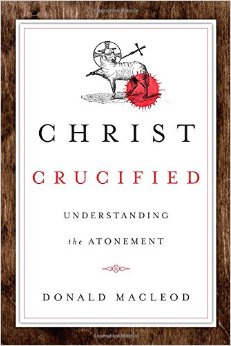
Christ Crucified

Originally the winner was supposed to be Atonement, Law, and Justice by Adonis Vidu – probably the most important book on atonement theory published in the last 5 years. However another book on the doctrine of atonement snuck its way into my list of books to read in 2014. I haven’t finished it yet (I’m halfway through), but the top honor goes to Donald McLeod’s Christ Crucified: Understanding the Atonement. Rarely does an academic theology book make me cry because of how it glorifies Christ. This book had me in tears (the good kind) because it helps me see the glorious wonder of the cross and of penal substitution.

Mission – Primal Fire by Neil Cole

Primal Fire

Primal Fire is one of the clearest, most encouraging, and most biblically-theologically based APEST book out there right now. Not to mention, it will also ignite a fire up under you to discover how you can best serve the church to reach the maturity that God has intended for it. You can find my review here. (Honorable mention goes to Dispatches from the Front by Tim Keese – this book will get you pumped on what God is doing in unreached areas.)

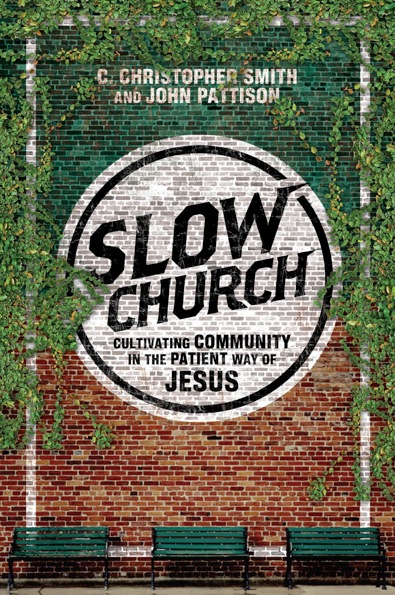
Ministry – Slow Church by Christopher Smith & John Pattison

Slow Church

I loved this book! Slow Church: Cultivating Community in the Patient Way of Jesus explores what it would look like for the church to embrace the “slow” way of life. Humans can’t thrive and flourish on a fast food diet – neither can the church thrive and flourish with a “fast church” mentality. Change is needed – the church needs to slough off its industrialized and Macdonald-ized approach to church. It needs to embrace a holistic, interconnected, organic, and local way of life grounded in a grand gospel. Slow Church helps us imagine what it would look like if the church were to do that. You can read my review here. (Also, my review of this book will be published in the next issue of Themlios.)

Biography – Strange Glory by Charles Marsh
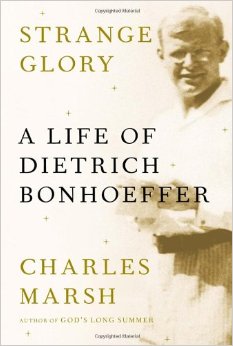
Strange Glory

This is an excellent and highly entertaining biography. It is very well written; at times it felt as though I were reading a novel, not a historical biography. But more importantly than that it is comprehensive, it goes beyond merely reporting the standard story, but instead strives to get into Bonhoeffer’s mind.  Marsh understands Bonhoeffer’s theology, and he seems to understand some of the things that really acted as driving forces in Bonhoeffer’s life. I recommended that you read this biography alongside of Eric Metaxas’ biography so that you will be able to form your own picture of who Bonhoeffer really was. You can read a full review here. (Honorable mention goes to Wesley on the Christian Life by Fred Sanders. Sanders’ book helped me to appreciate Wesley as a theologian of love.)

Reformed – Deviant Calvinism by Oliver Crisp
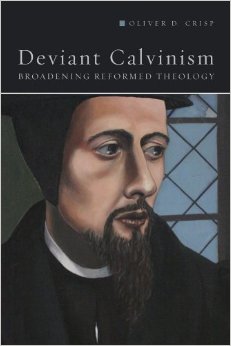
Deviant Calvinism - Crisp

I could not put this book down. I was so enthralled by it and the possibility moving past funadamentlistic neo-Puritianism (i.e. Johnny Mac and his cronies) that I read through it in a day and a half. Not only was it interesting though, it was very well argued. As is well known, Oliver Crisp is at the forefront of Analytic Theology – the theological method which applies the rigor and clarity of analytic philosophy to systematic theology. You can read the full review here.

Charismatic – Jesus Continued by J.D. Greear

Jesus Continued

Should I have categorized this book as being Charismatic? Probably not – but it is about the Holy Spirit! I loved this book so much. In fact I loved it so much that I have given away 15 copies of this book. I gave it to my Life Group leaders and to a few students who really needed it. Honestly this book could not have come at a better time for me. The Lord used it to speak so much truth into my life, truths that I have neglected or forgotten. It also stirred my heart for the possibility of revival. You can read the full review here.

Devotional – Prayer by Tim Keller
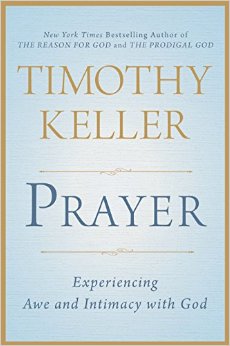
Prayer Tim Keller

Anything written by Keller is pure gold. Do you struggle with praying as consistently as you would like to? Would you like to experience God more personally in your quiet time? Do you want to have your heart awakened to the gospel? Are you tired of searching for the latest greatest spiritual discipline? If you answered yes to any of these questions – this book is for you. It grounds the discipline of prayer in the gospel and gives us practical ways to infuse our prayer habits with new life.

Most Important – Reformed Dogmatics Volume 1 by Geerhardus Vos
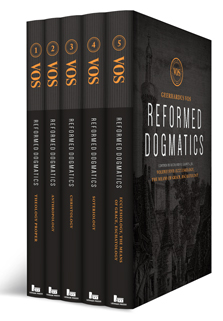
reformed-dogmatics1

Technically this isn’t a new book. It was published nearly 100 years ago. However this is the first time its been translated into English. Vos is an important figure in Neo-Calvinist theology, right behind Kuyper and Bavinck. I’m so grateful to have his Dogmatic Theology. Also, volume two has come out this year and the rest of the set will come out in the next year or so.

Book of the Year – Visions of Vocation by Steve Garber

Visions of Vocation

What the heck am I supposed to be doing with my life? Weaving together personal stories, literature, film, music, and scripture Garber helps us answer this question. He shows us what vocations are all about. He has written a book that will certainly inspire you to see your place in the world a bit differently. He not only aims at our heads, he aims at our hearts, drawing us into the story of what God is doing in this world. He invites us into the critical task of coming alongside of God as God himself give grace to a world that is broken and falling apart. Answering that invitation is what vocations are all about.

Earlier this year, when I wrote a review (here) I said:

I know its early in the year, but this book is so well written, so theologically powerful, and packs such a powerful devotional punch that it is definitely a frontrunner for my book of the year award.

It turns out that I stuck to my guns. This year was my favorite book of the year. If you buy only one book to read in 2015, buy this book!

Hail Mary, Given Grace [T.F. Torrance and Grace in the Annunciation]

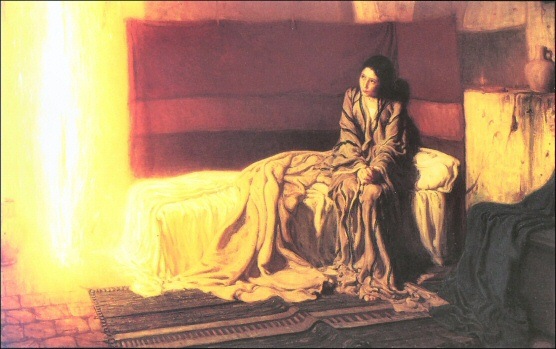
Tonight on Christmas Eve we celebrate the fact that to us a Savior was born. He was born in the little town of Bethlehem to a faith-filled virgin. Hear what T.F. Torrance has to say about Mary and the pattern of grace we see in the virgin birth…

The angel went to her and said "Hail, thou that art highly favoured, the Lord is with thee: blessed art thou among women."
The angel went to her and said “Hail, thou that art highly favoured, the Lord is with thee: blessed art thou among women.”

In the virgin birth we are given at the very beginning of Christ’s life a revelatory sign, which tells us what the divine act of grace is. Grace takes a form in the birth of Jesus which we may take as a pattern or norm for all our understanding of grace. Here God takes the initiative and approaches Mary through the word of his angelic messenger – the word proclaimed to Mary is the word of election or grace: she is chosen and told of God’s choice. She has nothing to do in this matter except what is done in her under the operation of the Spirit. What Mary does is simply to receive the word, to believe, which she does not in her own strength but in the strength given her by the Lord, and she is blessed because of that, not because of her virginity….

This is the normative pattern for the believer in his or her attitude toward the Word announced in the gospel, which tells men and women of the divine act of grace and decision taken already on their behalf in Christ. (Incarnation 101)

Thinking Through Paul

Good textbooks are hard to find. When I am looking for a textbook, I am looking for a book that is well balanced. It engages in critical discussion yet it is also thoroughly evangelical. Also I like it when textbooks move beyond mere rehearsal of recycled ideas or summary statements. I want a textbook that will help students think through complex issues. In this case of finding a textbook on Pauline literature I want a textbook that will help us think through Paul and begin to think like Paul. Bruce Longenecker & Todd Still have written book that does those two things.

When Longenecker and Still titled their textbook Thinking though Paul, they tried to capture a range of possible meanings within that short phrase. 1- think about Paul, and 2- thinking in a Pauline manner.

Why have we chosen to entitle this book Thinking Through Paul? Because it signals two perspectives that characterize its chapters. First “thinking though Paul” will involve thinking about Paul, sorting through his letters and considering what he was saying in them. From this vantage point, Paul is the object to be studied, to be “thought through,” to be explored. But at times a second sense of the phrase will predominate, in which “thinking through Paul” will involve “thinking in a Pauline manner,” seeing things from his perspective, thinking along his thought patterns. (13)

In this book Longenecker and Still emphasize the challenging, exciting, devotional aspect of thinking through Paul. For them there is a profound life changing aspect of thinking through Paul. And all of this is in a textbook!

The textbook covers all of Paul’s letters. Each chapter addresses:

1-Historical issues

2-Key passages in each letter

3-Flow of thought through the letter

Final section of the textbook moves to the synthesizing task of putting Paul’s theology together. As a teacher/student this was the most interesting aspect of the book. Also it was the most important part of the book for of reviewing its functionality as a textbook, primarily because it let me answer the question, “What are the presuppositions & the big picture narrative the authors are working with?”

Theology – Apocalyptic or Covenant?

Question – what is the center of the Paul’s letters? Justification, reconciliation, Jesus is Lord, being in Christ, Jewish/Gentile relations? The truth is that its really hard to say – it is probably better to talk about Paul’s central narrative. These two narratives have often been spelled out as covenant & apocalyptic. The authors attempt to avoid the approach that divorces the two. Very simply their position is…

The God of Israel has created a good creation that is currently under the influence of cosmic forces that run contrary to the ways of the creator God. These forces include the powers of Sin and Death, who have conscripted the human race (as evidenced in Adam) in their efforts to denude God of his creation. Through the death and resurrection of Jesus Christ, God has acted to redeem his good creation from the clutches of those powers. Being “in Christ” and living within the story of Jesus, Jesus-followers are participants in that process of divine triumph, whose lives are continually to be transformed by the Spirit as miniature advertisements and embodiments of the eschatological rectification of the whole created order, to the glory of God. (302)

Theology – Christology

Is the incarnation of Christ present in Paul’s theology, what does it mean for Paul to say that Christ is pre-existent? Some argue that Paul doesn’t have an explicitly high Christology (Like John). Longenecker & Still argue “Paul evidences moments of extremely high Christology.” (305) They demonstrate how Paul’s implicit Trinitarian theology draws Christ into Jewish Monotheism. On a related note, the authors also emphasize Paul’s familiarity with the Jesus Tradition, though they acknowledge that Paul’s knowledge would have come second-hand. They show how Paul’s theology is infused with the content of this tradition.

Theology – Faith In or Faith Of?

They make a convincing argument for reading pistis christou as “faithfulness of Christ.” Their argument is convincing because it helps make sense of Romans 1:17 which is notoriously hard to translate (by faith from first to last?). They argue that the “faithfulness of Christ” gives us a triangle of faithfulness/faith:

  •  God’s pistis or faithfulness (as in Romans 3:3)
  • Jesus’ pistis or faitfulness (as in Rom 3:22,25-26)
  • The pistis or faith of Christians (as in Rom 4)

Concluding Thoughts

Longenecker & Still’s work helps us see Paul the missionary/theologian as a letter writer who is skilled in moving from the macro-narrative of the gospel (according to them, the cosmic triumph of God through Jesus Christ) to the micro-narrative of believer’s lives. This is a fantastic textbook – it includes great illustrations, interesting side-bars, fun diagrams, and fantastic discussion questions at the end of each chapter. My only qualm with it is the paper. That might sound like nitpicking, but as I highlighted and took notes on pages I found that everything I was writing tended to smudge, that really stinks for students who like to take notes in their textbooks. Also, the high-gloss paper creates a lot of glare when you read it under bright lights. If you choose to ignore these small deficiencies and you use this book for a class you will definitely have a textbook that helps your students think through Paul in challenging ways.

Note: I received a copy of this book courtesy of NetGalley & Zondervan in exchange for an impartial review.

Experiencing The Trinity

The Trinitarian revival that has been experienced among academic theology has now started to trickle its way down into popular theology. This is a good thing! We can always get better at knowing God’s heart – and the way to really do that is to dive deeper into his Trinitarian character and nature. A couple of popular treatments of this doctrine come to mind – The Deep Things of God by Fred Sanders and Delighting in the Trinity by Michael Reeves; however these books still feel like theology books. What was needed was a book on the doctrine of the Trinity that feels more devotional…. Joe Thorn has written such a book.

Experiencing the Trinity

The book consists of a short introduction, describing why Thorn wrote this book and a few words describing the discipline of “preaching to yourself.” According to Thorn preaching God’s word to ourselves helps us find peace, joy, strength, and faith in God. However it is not necessarily a quick fix, at times we will suffer and experience sorrow, yet even these experiences can lead us closer to God. While in the midst of these experiences we need to keep our eyes on the truth – that is where preaching to ourselves comes into play.

Here is how Joe Thorn describes the nature of this book:

What follows are fifty daily readings that reflect on God and the gospel and how they overcome our fear, failure, pain, and unbelief. Much of this I preached to myself over the last couple of years, and all of it is directed toward my own heart… But if you find yourself with a heart like mine, weak, and in need of grace, I pray these readings will be an encouragement to you. For God offers his grace to people like us.

These 50 readings are divided according to each person of the Trinity: Father, Son, and Holy Spirit.

Under the Father section you will find “notes” on topics like – He is Creator, He is Patient, He is Unchanging, He is Jealous, He is Father.

Under the Son section you fill find “notes” on topics like – His Humanity, His Deity, His Poverty, His Temptation, His Obedience, His Suffering, His Reign, His Mission, His Glory.

Under the Spirit section you will find “notes” on topics like – He Indwells, He Fills, He leads, He Revives, He Sanctifies, He Gives Gifts.

This book certainly serves its purpose well. Though I didn’t take 50 days to read through it, I definitely did stop to meditate on the topics that spoke most to my heart. Thorn has written a wonderful devotional that takes a difficult theological concept – the Trinity – and brings it down to a point where our heart can be warmed by it. I really appreciated hearing the story of how he wrote the book – he was brutally honest – I appreciate that. Hearing his story really helped me to see how “preaching to yourself” can be a powerful spiritual discipline.

Note: I received an advanced readers copy of this book courtesy of Crossway in exchange for an impartial review.

Best New Testament Academic Books of 2014 (Gupta)

Every once in a while I decide its worth it to re-blog somebody else’s blog post. This is one of those times. I decided to do it primarily because I loved a lot of the books that Gupta mentioned (Thinking Through Paul, Jesus Against the Scribal Elite, Galatians and Christian Theology, and of course Reading Backwards) – and really because I won’t get as specific as he did in Biblical Studies categories. (I will just have a general Biblical Studies group in my Top 7 books of 2014.)