Book Review – Our Idea of God: An Introduction to Philosophical Theology by Thomas Morris (Pt. 4)

Last time we took a brief look at Thomas Morris’ argument in Our Idea of God: An Introduction to Philosophical Theology. Today I will wrap up this series by making a few critical observations regarding his method. If you want to read parts 1-3 of this series these links: Part 1, Part 2, and Part 3.

_________________________________________________

Critical Observations

Although one could argue against specific points he makes throughout the book, for example his libertarian account freedom in the chapter on God’s knowledge, I would like to make one critical observation regarding the method that he bases his book upon. As I have shown above Morris argues for a perfect being theology. In this way of doing theology, one fills out the concept of a perfect being by consulting our value intuitions. Using one’s intuitions to fill out our concept about God seems a bit worrisome. First, we must acknowledge that we live in an age of pluralism. We can no longer assume that what I believe is a great making property will be similar to what my neighbor believes is a great making. If as a society we are unable to come to a consensus about what a great making property is, then it seems like the task of describing God might seem hopeless. Thankfully Morris recognizes this problem, and makes it an assumption of this method that there will be some widespread agreement among people as to what these great making properties would be.[1]

So it seems as though Morris can sidestep this problem. By sidestepping the problem he is able to compose a list of great making properties that most people would agree with. One tentative set of attributes that Morris gives includes the properties of being conscious, being a free agent, being benevolent, having knowledge, having power, and being ontologically independent. Perhaps this list of properties is a list that most people would be in agreement with. It might even be the case set of properties is correct, and it really does list out several great making properties that God possesses. However, we might be wrong. I believe that Morris relies too much upon our intuition to form our concept of God. Using our intuition alone to form our concept of God is a dangerous thing, mainly because of the noetic effects of sin. Having ignored the noetic effects of sin, Morris is too optimistic about how far our intuition can actually get us. For all we know it might be the case that it is better to be unconscious than conscious, or to be evil instead of benevolent. Although these are probably exaggerations, we must not ignore that the noetic effects of sin might cause us to form an imprecise, and potentially harmfully incorrect concept of God.

Once again Morris provides a way out of this problem. He admits that our value intuitions might be skewed or distorted, thus we should allow revelation to overturn or correct our value intuitions.[2] I believe that it is a good thing that he allows revelation to overturn our potentially incorrect intuitions. But I believe that since he allows scripture to overturn our intuitions he ultimately undermines the project of perfect being theology.

In the beginning of the book he outlines several specializations of theology historical theology, biblical theology, systematic theology, and philosophical theology. Biblical theology finds it ideas in the Bible. Historical theology studies the development of doctrine and theology over the life of the Church. Systematic theology integrates these two and philosophical theology uses philosophical methods and techniques to do theology. Perfect being theology, a method for doing philosophical theology uses our intuition in addition to Biblical material. However it seems as though the Biblical material serves to correct our intuitions. Thus ultimately all our intuitions must be in accordance with scripture. Thus scripture is the only place where we can be sure of the great making properties we are using. If all our intuitions about great making properties are coming out of scripture then it seems as though we are really doing biblical theology. It no longer makes sense to say that we are using our own intuitions, we are using intuitions shaped by the biblical narrative. So the project of doing perfect being theology is actually the project of applying philosophical methods to biblical theology. That is not to say that applying philosophical methods to biblical theology is not a worthwhile project, however it is wrong to say that in doing perfect being theology we are doing something other than biblical theology.

If we believe that Morris is trying to propose a different way of doing theology then we must acknowledge that Morris fails in showing us a different way of doing theology. However if we believe that Morris is simply trying to show the reader how to approach biblical theology philosophically then we can say that he was successful in achieving his aims. Whatever the case might actually be Our Idea of God, is a book worth reading.


[1] Morris, Our Idea of God, 38.

[2] Morris, Our Idea of God, 43.

Book Review – Our Idea of God: An Introduction to Philosophical Theology by Thomas Morris (Pt. 3)

Last time we took a brief look at Thomas Morris’ argument in Our Idea of God: An Introduction to Philosophical Theology. Today I will highlight some of the things I believe he did well. If you want to read parts one and two click these links: Part 1 and Part 2.

_____________________________________________________

Here I would like to highlight three positive observations:

  • Morris is charitable in presenting competing positions. One such example of Morris’ charitable argumentation is his discussion on the necessary goodness of God in chapter three. Here he presents three arguments that other Christians have made for the necessary goodness of God. One such argument is the argument presented by William of Ockham. Morris presents Ockham’s argument, gives an objection to it, and then defends the plausibility of this argument. He explains why someone would be drawn to a position like that of Ockham’s. Although he goes on to show that Ockham’s argument fails, one can truly say that Morris was charitable to his opponent’s argument.
  • Morris does a good job of providing an example of how philosophical methods can clarify our conceptions of God. One such example of how philosophical methods can clarify our conception of God is found in chapter four “The Power of God.” In this chapter Morris takes up the “paradox of the stone,” which poses the question: “If God is omnipotent, then can he create a stone which he cannot lift?” If the answer is no, then God is not omnipotent, if the answer is yes then God is not omnipotent. So no matter how one responds to the paradox it seems as though God is not omnipotent. Morris suggests two ways in which we can show that the paradox is not in fact a problem. The first way to do this is to use philosophy of language. Using philosophy of language we can point out that the act described in the paradox is actually an incoherent act description, therefore the paradox does not in fact create any problems. The other solution is to think about what God can do in terms of powers instead of ability. By showing that omnipotence is about powers and not ability, Morris is able to find a way out of the paradox. In order to show the distinction between powers and abilities, Morris once again uses philosophical methods.
  • Morris is successful in showing how perfect being theology can be used to clarify our concept about God across various attributes that might not always seem to be related. For example, one might wonder how God’s goodness and God’s knowledge fit together. One might think that the only relation they have is that God has both of those properties. However because of the way Morris defines God, a being with the greatest possible array of compossible great making properties, we see why God must have both of those properties. In addition to showing that God must have these properties because they are great making properties, he shows the reader why we choose the set of compossible properties we attribute to God. For instance, Morris points out why power and goodness must go together. Morris says that “if he is perfectly good, we know he will endeavor to keep those promises. But unless he is sufficiently powerful we cannot be confident he will succeed…. To think of him as the greatest possible being is to think of that power as perfect.”[1]These three things along with his clear and organized arguments contribute to this book’s excellence.
Next time I will make some critical observations regarding Morris’ work in this book.


[1] Morris, Our Idea of God, 66.

Book Review – Our Idea of God: An Introduction to Philosophical Theology by Thomas Morris (Pt. 2)

Last time we began to look at  Thomas Morris’ book Our Idea of God: An Introduction to Philosophical Theology. Today I will present a brief sketch of what Morris does throughout the book, showing how the chapters contribute to his project of describing God.

Our Idea of God

____________________________________________________

Our Idea of God: A Rough Sketch

This book is divided up into nine chapters. The first two chapters are primarily methodological, the last seven chapters represent the natural progression of using the method which Morris proposes. Because it is the case that chapters three to nine follow from the what is argued for in chapters one and two, we must get a good grip on what Morris is arguing for in the first two chapters of his book. Thus we will concentrate on these two chapters.

Morris titles chapter 1 “The Project of Philosophical Theology.” He begins this chapter by laying out what theology is and how there are different areas and specializations within theology. He gives a pretty uncontroversial definition for what theology is, “rational discourse about God.”[1] This would seem uncontroversial if one were a realist about one’s theology or if one believed that “God” actually has a referent. However, as this book is directed at Christians these are issues he can sidestep. Among the various specializations of theology, Morris presents us with “philosophical theology.” He defines philosophical theology as the branch of theology that employs “the best philosophical methods and techniques for the purpose of gaining as much clarity as possible concerning the content of the major concepts, presuppositions, and tenets of theological commitment, as well as the many connections that exist among them.”[2] However he makes it clear that as a Christian the conclusions made using philosophical theology must also be biblically faithful.

The first question that he turns to is whether or not it is even possible to engage in rational and accurate discourse about God. This is an issue of epistemology. He lays out three positions which one could take regarding the possibility of theology. The first position is theological pessimism, the position that all attempts at engaging in rational discourse about God are bound to fail. The second position he presents is moderate theological pessimism, of which negative theology is a species. On this view, one can only make negations or denials about God. Any positive assertions about God are not true. Morris presents arguments against both of these positions and concludes that some form of theological optimism must be true. According to Morris, we can have knowledge about God and we can truly engage in rational discourse about God. Because it is the case that we can have knowledge about God and we can truly engage in rational discourse about God, the project of philosophical theology is a worthwhile project. By engaging in philosophical theology we are coming to know the God whom we worship.

Having argued that rational discourse about God is possible, Morris turns to method in chapter two: “The Concept of God.” He begins his discussion of method by proposing a problem, namely the problem of how we can come to arrive at an accurate and true idea of God. Since it is possible to engage in rational discourse about God, humans should attempt to construct a rational and true concept of who God is and what he is like. However, as history shows us, theists, and more specifically Christians, have had different methods for constructing their idea of God. Some have attempted to arrive at an accurate concept of God by using a method called “universal revelational theology.” Others have advocated for the use of the Bible alone, as our only reliable source of knowledge about God. Thus people who use “purely biblical theology” will not admit anything outside of the Bible to inform their concept of God. Still other theists have used what can be called a “creation theology.” These theists will use the concept of God as ultimate creator of reality, as a springboard for making other claims about God. Some however would argue that “creation theology” does not give us a robust enough conception of God, thus they try to augment their conception with other things. There are at least two ways to broaden the conception of God, as it is given through a “creation theology.” The first is to have a “comprehensive explanatory theology.” This method supplements creation theology with history. The second way to do this is to use a “perfect being theology.” It is this final method that Morris advocates for, and ends up using throughout the rest of the book to clarify the concept of God.

Perfect Being Theology begins with the proposition: “God is a being with the greatest possible array of compossible great making properties.”[3] He then clarifies this proposition by explaining what is meant by compossible and by “great making.” A “great making property” is any property which it is intrinsically good to have, thus endowing the bearer of the property with value or greatness. He defines compossible as any collection of properties that can all be had by the same individual at the same time.[4]

Having clarified the proposition, he explains that the task of perfect being theology is to fill out the concept we have of God as defined by this proposition. The perfect being theologian will fill out this proposition by creating a list of great making compossible properties. And this is exactly what Morris does throughout the book. Morris fills out the proposition by adding to it great making properties like: goodness, power, knowledge, existence, and eternality. He suggests that in order to fill out this conception we should “begin to consult our value intuitions.” We should ask ourselves “what properties can we intuitively recognize as great making properties?”[5] However, he concedes that revelation should be allowed to overturn, or correct, contrary value intuitions.

Morris proceeds to use this method to clarify his conception of God. In chapter three he shows how perfect being theology can help us understand what we mean when we say that God is good. In chapter four he uses perfect being theology to clarify what is mean by omnipotence. Chapter five answers the question of what it means for God’s knowledge to be complete, and takes on the problem of God’s foreknowledge and free will. Chapter six takes on issues of ontology and answers the question of what it means for God to be a necessary being. It also examines what it means for God to be simple. Chapter seven is an attempt to clarify what I means for God to be eternal. Here he lays out two competing positions (sempiternity and timelessness), and concludes that perfect being theology does not force us to believe one over the other. In chapter eight Morris covers the ideas of creation and dependence. Finally in chapter nine he takes on the metaphysical problems presented by the incarnation and the trinity, and argues that the best way to understand these concepts is compatible with perfect being theology.

Morris concludes by saying that we can in fact know and make progress in our thinking about the concept of God, and that the best way to do that is with perfect-being theology.

Next time I will make some comments on the positive aspects of this book.


[1] Morris, Our Idea of God, 15.

[2] Morris, Our Idea of God, 16.

[3] Morris, Our Idea of God, 35.

[4] Morris, Our Idea of God, 37.

[5] Morris, Our Idea of God, 38.

Book Review – Our Idea of God: An Introduction to Philosophical Theology by Thomas Morris (Pt. 1)

Thomas Morris’ book Our Idea of God: An Introduction to Philosophical Theology is not simply an introduction to philosophical theology. It is also an exercise in philosophical theology. From the outset of the book Morris tells the readers that this book is “meant to serve as an elementary introduction to philosophical theology.”[1] Yet at the same time it is also an attempt “to provide an example of how some simple straightforward philosophical methods of thinking can shed light on theological matters.”[2] How does Morris combine these two attempts? Morris does it by focusing on the attributes of God. Among these attributes are goodness, power, knowledge, and being, just to name a few. By philosophically engaging these attributes Morris presents what he takes to be a pretty good description of who God is and what God is like. But more importantly he presents us with a method for engaging with our ideas of God.

In this review I intend to do several things: 1-present a brief sketch of what Morris does throughout the book, showing how the chapters contribute to his project of describing God; 2-present what I take to have been done well by Morris; 3-make several critical observations regarding Morris’ argument.

I will spend the next several blogs doing the things described above.

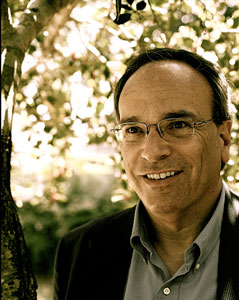
Thomas Morris was Professor of Philosophy at Notre Dame University for many years before moving into the role of a "public" philosopher, making philosophy accessible to the common reader.
Thomas Morris was Professor of Philosophy at Notre Dame University for many years before moving into the role of a “public” philosopher, making philosophy accessible to the common reader.


[1] Thomas Morris, Our Idea of God, (Vancouver: Regent College Publishing, 2002), 11.

[2] Morris, Our Idea of God, 11.

Justification Really is Just!

A few weeks ago I had a college student come set up a lunch meeting with me. The student is about to go to southeast Asia for a year to receive some missions training. So I meet up with this guy and figured that he wants to talk about missions; after all he knows that missions and theology are my two passions. So we get to making some small talk and begin to catch up on each other’s lives and what God is doing in each of us. Eventually it gets to the point where he point blank says “I actually wanted to talk to you about atonement.” I was sort of excited; I love discussing theories of atonement. So the student proceeds to tell me the problems that he has with it. Basically the problem isn’t really with atonement per se he has a problem with the imputation of righteousness. He laid out the problem by saying:

If God simply declares us as righteous, and we really aren’t righteous, merely seen as righteous, then it seems like God is unjust or is just blind. Justification doesn’t really seem just.

I had to agree with him. If our righteousness were merely a legal verdict (as some of my fellow reformed friends like to say) then we really do have a problem. We either have an unjust God who decides to overlook the fact that we really aren’t metaphysically righteous, or we have a judge who is blind and can’t see me standing behind Jesus as the verdict comes down.

So is there a way around this problem? Yes there is. You can do one of two things:

  • You bite the bullet and say that I really don’t have a metaphysical righteousness worthy of a “not-guilty” verdict. But God justifies me anyway because of Jesus’ death on the cross. (This is what a merely forensic/legal account does.)
  • You can say that I am in fact metaphysically righteous because of Jesus. So God justifies me. (The problem with this is that is sure doesn’t seem to be true. As I’m sitting at Starbucks writing this, I am getting angry because the people next to me are annoying. I’m certainly not being loving to those people.)

So what are we to do? T.F. Torrance provides a great solution to this dilemma. Here is what he says in his book Incarnation:

It is only through this union of our human nature with his divine nature that Jesus Christ gives us not only the negative righteousness of the remission of sins but also a share in the positive righteousness of his obedient and loving life lived in perfect filial relation on earth to the heavenly father. If we neglect this essential element in the vicarious humanity and obedience of the Son, then not only do the active and passive obedience of Christ fall apart but we are unable to understand justification in Christ as anything more than a merely external forensic non-imputation of sin.

Basically here is what Torrance is saying, “there needs to be a metaphysical union between me and Christ or else his righteousness (active and passive) are only forensically imputed to me. If there is a metaphysical union between me and Christ then Christ’s whole life lived, starting at his incarnation and all the way up to his ascension, is essentially mine. Thus I really am righteous!”

So Torrance’s solution to the problem of an unjust justification lies in his doctrine of the incarnation. In the incarnation human nature and divine nature are united. Because I participate in human nature (this sounds platonic…) I can, by faith, appropriate what Christ has done in his human and divine nature for me.

I hope this isn’t getting to complicated, but think of it this way:

I am actually united to Christ, its not just a metaphor, so what is true of Christ is actually true of me.

That is why justification really is just. Since I am united to Christ I really share in his righteousness, its not merely a legal verdict.

It’s not a coincidence! Yes it is….

When somebody starts of a sentence by saying, “this might be just be a coincidence, but…” I immediately get skeptical.

When somebody starts off a comment in class by saying “this might be a coincidence, but…” I immediately roll my eyes.

Its my experience that most of the time when people say “this might just be a coincidence,” it turns out that it really is just a coincidence. However they believe that they have stumbled upon some mystery that has been hidden from human knowledge for ages. Point in case, my Eastern Religions Class…..

As you know, I am going to Moorpark Junior College for the sake of reaching college students with the gospel and equipping other students to do the same. So I enrolled in one class, Philosophy M12 – Eastern Religions. I figured that this would be a great class for outreach, after all its not a required class so whoever is in it will likely genuinely be interested in religious things. I am bound to find some seekers. Good strategy. (At least I think it is).

Any way there is this one guy who is kind of annoying. He goes of on all sorts of tangents. Day one we are talking about Vedic culture, somehow this guy gets on a tangent on Nazi’s, Tibetan Artifacts, Thomas Jefferson, and 6’2’’ Blonde Chinese mummies. He is the guy who believes he is Nicholas Cage and his life is National Treasure. Right off the bat I knew that this guy would be hard to handle.

Well day two rolls along, and we are talking about the Brahmin in Hindu Religion. I’m sitting there absorbing the professor’s knowledge, and then I see this guy’s hand go up. Now I know that he is “that guy.” You know, “that guy.” Nick Cage (that’s what I’m going to call him from now on) starts of a his comment by saying, “This might just be a coincidence, but…” and I think to myself, “But what? But what? What revelation from the gods do you have for our class today?” 

So he begins to say:

“You know Brahmin and Abraham sound a lot alike, and they have the same letters, is it possible, it might just be a coincidence, but”

My mind says, “Yea buddy…. It is just a coincidence now put your hand down

“Could it be possible that Abraham was a derivation from Brahmin, and that Abraham was actually a Brahmin?”

“No buddy… its not possible. That’s dumb. Now put your hand down.”

“Because originally his name wasn’t Abraham it was Abram.”

“Nice observation bro! I’m glad you can spell!”

As you can probably tell… I have a hard time with this guy. The professor was really nice to him though and gently told him it wasn’t likely. Then the guy proceeded to argue for his side, and just I couldn’t resist any longer, I had to say something! So I made an appeal to linguistics, talked about the differences between Semitic languages (of which Hebrew is one) and Indo-European languages. The Professor responded by saying, “that is right, I guess that settles it…”

I guess it wasn’t very fair what I did to the guy, since I have studied this stuff way more than he has, but it just had to be done.

The moral of the story is that the next time you say “this might just be a coincidence, but…” please stop yourself because almost every time it is “just a coincidence.”

But wait! I’m not going to end this post by being a jerk! There is redemptive value to this story. I think I found my person of peace for the mission to Moorpark! Neil Cole has said quite a bit about identifying persons of peace. He says that person’s of peace must have influence in a community, they must be well known. Why they are well known really doesn’t matter. They can be famous or notorious. They can be known for how great they are or how big of a jerk they are. Case in point: Matthew the Tax Collector and the Samaritan Woman at the Well. Both of these people were well known for all the wrong reasons. After I got all bothered by this guy, It struck me that everybody knows this guy for being that guy. This means that he might make the perfect person of peace.

Honor thy Mother(land) and thy Father(land)

“America is not God’s nation. Let me make this clear… America is not the new Israel, nor is it a Christian nation. What the Old Testament does do is critiques the massive wave of Christian support for America’s unbridled militarism. Such alligance is misplaced; such support is unbiblical…..Seing America’s military strength as the hope of the world is an affront to God’s rule over the world. Its idolatry.” – Preston Sprinkle in Fight

Nationalism and Patriotism are quite different things. Growing up I didn’t understand this whatsoever. I vividly remember 9/11. I was in 8th grade when it happened. I remember the types of conversation I had with my friends in the days ensuing the tragedy. “If I were 18 I would join the army and kill those idiots.” “We have to pay them back.” “How dare they do this to America, don’t they know who we are!” There was a surge in nationalism during those days. People blindly turned to war as the solution (or revenge) for what had happened. Pay back through violence is how we made ourselves feel better for what had happened to us. I was one of those people who blindly followed along.

It wasn’t until my senior year of college that I really figured out my view of a Christian’s relationship to the government. Somehow I had picked up a Lutheran(ish) 2 Kingdoms view of politics.

Church and State

The Kingdom of the State was one thing, and the Kingdom of God was another. Certain things belonged to Caesar and certain things belonged to King Jesus. As  Christian I was a citizen of the State but also a citizen of God’s kingdom. This lead me to say things such as “As an American I support the war in Iraq, but as Christian I don’t.” Or “As a citizen I support torture for the sake of America’s safety, but as a Christian I believe it is wrong.” That was typical of my views…. “As an American I_________, but as a Christian I ___________.”  It was only when I began to dive into the Gospels and theology of the Kingdom, mainly through N.T. Wright that my views began to change. I began to see how ridiculous it was to hold a position as an American and hold the opposite position as a Christian. It was during this period, and my time at Fuller under Glen Stassen that I began to submit my political views to Jesus and the way of the Kingdom. My views became integrated. And then I realized that I could still love my country, but not support the things it does. I could be patriotic without being nationalistic.

Here is how Richard Mouw spells out the difference between the two in an essay titled “Patriotism”:

I had serious doubts about the war in Vietnam in my youth, and this was not a popular stance to take in the evangelical world in those days. Evangelical Christians were often super patriotic. “My country, right or wrong” was one their rallying cries.

I had real theological problems with that attitude. That kind of patriotism struck me as boarding on idolatry. The worship – or near-worship – of a nation is a serious problem from a biblical perspective…. Absolute loyalty is something that only God deserves from us.

There is nothing wrong with Patriotism… Indeed it can be a very healthy thing. The Bible often uses the word “honor” in describing what Christians should cultivate in their dealings with the nations in which they live. That’s the same word that is applied in the 10 commandments to our parental relations: “Honor your father and mother.” The link between parents and nation is a good one to think about. There is a natural connection. “Patriotism” comes from the word for “father.” We often speak of our “fatherland” or our “motherland.”

There is nothing wrong with feeling sentimental about our parents… When a mother gets a card from a son that says “You are the Greatest Mom in the World,” she has every right to simply enjoy the compliment… the hyperbole is OK. We all understand that is going on. And we all know that any woman who took the claim literally could be dangerous.

For similar reasons, there is nothing inappropriate as such in thinking of my own country as the Greatest Nation in the World. Sentimental hyperbole is one of the ways we express important affections. But there is a special danger when we say such things of our country. Nations have a tendency to believe that they really ARE the greatest. And nations, especially powerful nations like the United States, have lots of guns and bombs in their possession. Whey they start backing up their belief in their own greatness by using these bombs and guns against other nations, they can become a serious threat.” (Praying at Burger King pg. 116-119)

Mouw’s observation that “patriotism” comes from the same root as “father” is very insightful. We honor our mothers and fathers, but we do not obey when they ask us to do things that contradict what our Heavenly Father requires from us.

Nationalism is blind obedience and support of our nation rooted in the belief that our nation is the “greatest nation in the world.” Patriotism can say that we are “the greatest nation in the world,” however patriotism doesn’t really believe that we are the “greatest nation in the world.” Patriotism honors and cares for one’s nation in the same way one honors and cares for one’s mother and father.

Patriotism is what we are called to as Christians. It’s biblical. Nationalism, on the other hand is idolatry.

To say “As an American I_________, but as a Christian I ___________,” is nationalistic. It’s idolatrous. It’s believing that certain things belong to Caesar and other things belong to King Jesus. It fails to recognize that they only true king and ruler is Jesus. It fails to express the fact that our allegiance belongs to Jesus alone.

Why I’m Going Back to Junior College

The title is a bit deceptive, I am not going “back” to junior college; I am going to junior college for the first time. I have a masters from Fuller Seminary in theology and I graduated from UCLA with honors in philosophy. So why exactly am I going back to JC instead of going forward to do my Ph.D? It’s a long story, so let me explain….

When I went to UCLA I fell in love with the college experience. Freethinkers. Dialogue. Debate. Making of Meaning. All things that mark the college ethos. As a philosophy major, I dealt with the tough questions about life, and I walked alongside other undergraduates who were also asking the tough questions. I was fortunate enough to be able to walk alongside of these people and point them to Jesus.

There are three vivid gospel encounters I remember from my time at UCLA.

One day I was having lunch with a Filipino friend,  after graduating his plan was to go back to the Philippines and enter into politics (he came from a long line of politicians). As we were sitting in Ackerman, I remember him saying out of nowhere: “You really make me wonder about this Christianity thing…” I was thrown aback a little bit. Its not everyday that someone throws you a gospel alley-oop. I responded by asking him what he meant. He said that he grew up catholic but that he had abandoned his faith when he moved to the US. Then he told me “it really boggles my mind that you are so smart and you still believe in God.” I went on to explain why I was a Christian and what Jesus did for me in my life. He ended up telling me that he wanted to keep exploring, and maybe start going back to church.

The other encounter happened at a friend’s party. People were doing the typical college thing at this party: drinking beer and consuming illegal substances (pot brownies). So I was sitting at the dinning room table, talking to people as they kept asking me why I didn’t want any beer/brownies. I explained that I’m not into that stuff. Most people were cool with it, except for one guy who wanted to know why I really didn’t want to partake in the festivities. I responded by giving him my testimony, it revolved around watching my dad destroy his own life and our family through his alcoholism. I explained how I found Jesus in that period in my life, and I have been trying to follow Jesus faithfully since that time. As I shared the gospel and my testimony, the guy remembered who I was. I was that Christian guy from his philosophy classes. He went on to tell me that I wasn’t like the other Christians he knew. This guy grew up going to church in a small town of about 500 in the Midwest. He started to ask some tough questions about God and theology but people basically told him to shut up and stop asking questions. He was soon branded as a heretic because he questioned what they taught in Church. He came to realize that he needed to stop being so antagonistic because his questioning was alienating him from the rest of the town. So he and a friend from high school became closet atheists, vowing to “come out” once they left the town. This guy “came out” as an atheist when he came to UCLA. But he found my faith interesting. I wasn’t like the people he grew up with. I asked the tough questions, I engaged respectfully with the same philosophers (even the atheistic ones) that he loved. By the time the night ended he admitted that he has his doubts about his atheism, but the Church hurt him too much to go back. I encouraged him to seek, to ask questions, I told him that God isn’t afraid of your questioning. Others might be afraid of it, but God certainly doesn’t need anybody to defend him.

The third encounter happened during the Undergraduate Philosophy Club. I was an officer in the club, and I was in charge of creating the discussion curriculum. So I was in a position of authority in the class, respected for my faith and my knowledge of philosophical topics. I was the rare “smart Christian.” I was an anomaly. Anyway, one day while we were sitting discussing Spinoza the door flings open and a guy runs in screaming, “they are after me! They are coming to get me” and he hides under a table in the corner of the room. Needless to say, the room was in shock. I knew the guy, we had talked about Christianity and the sermon on the mount multiple times. The few times we had talked about Christianity he told me his life story. Turns out this guy was a bit older than most of us, he had dropped out of college multiple times because of drug problems, but he had been sober for a few years. What happened though was that everybody sat in his or her chair silently, not having a clue about what to do with this guy. So I walked over to him, and asked him if he was all right. He frantically told me that he had relapsed, and now “they” were out to get him. I tried to calm him down, but it was to no avail. So I did the only thing I knew to do in that moment, I prayed for the guy. Now I have no clue what I was thinking, stopping a philosophy meeting at a secular university to pray for a guy, but I did it anyway. I prayed that the Holy Spirit would bring him peace, that he would sense God’s love in the moment, and that God would remove any fear that he might be feeling. Miraculously the guy completely calmed down and sat silently and relaxed for the rest of the meeting. But I could tell the rest of the room was in shock. What just happened? Nobody really knew. All they knew was that I prayed for a guy and it seemed to work. All I knew was that God showed up and touched this guy.

I share these stories so that you will catch a glimpse of the fact that college is a prime place for doing ministry.

A few months ago I was talking to a missionary friend who came back from an Islamic country. He was sharing with me their strategy for reaching people. It involved a lot of relational time. Eating. Playing. Having meaningful conversations. Gatherings in central locations. Just plain doing community together.  He explained that these things were key to effective evangelism. As he shared, a light bulb turned on in my brain; college is a prime place for these activities! People eat together, drink together, play together, go to sporting events together, ask tough questions about life, try to figure out their identity, try to figure out what they believe, hang out together, they just plain do community together. The college campus is the ideal mission field! Everything that my missionary friend desired in a mission field is found in a college campus.

College campuses are ideal mission fields.

I have been doing college ministry for several years at my church. The ministry is called “Soma.” Our church is located in a prime position; We have three universities and four junior colleges within a 15 mile radius. Talk about having a huge field to harvest from!

One of my jobs in this ministry is to preach on a rotation. We have three regular speakers and I am one of them. Its cool having a team approach. One guy preaches about God the Father and the gifts of the Spirit a lot. Another guy preaches about community and identity in Christ a lot. And I preach about mission and the gospels a lot. It works about nicely. Its quite Trinitarian. As I preach about mission I have been challenging students to see their workplace and their college campuses as mission fields. Its been really cool to see students begin to catch the vision for missions. They really are beginning to live missional lives.

As I have been preaching about being missional God has put a new desire in my heart; He has been putting something on my heart that we as a ministry have never done before.

The Lord has been putting it on my heart to begin to help Soma students to plant simple churches on their college campuses.

You see, I believe that there is a difference between being evangelistic and being missional. What happens when people share the gospel and invite people to church is evangelistic. This is the paradigm that most of us grew up with. However to be missional is to move into the community and bring God’s presence there. It involves bringing the church to them as opposed to bringing them to the church. God has put it on my heart to bring the Church to these college campuses.

My plan is to follow the Spirit’s lead as he builds a simple church on campus. As that begins to happen, some students will be trained to do the same thing at the schools that they will transfer to when they leave Moorpark and go to CSUN, UCLA, UCSB, or (God forbid) USC. ( Go Bruins!)

The simple churches will multiply!

I believe that the Lord can do this. In fact I believe that the Lord wants to do this. The Lord wants his gospel to infiltrate Moorpark College. He wants to open up people’s eyes to see Jesus. He wants to replace these college student’s desires for the things of this world with the desire for himself.

I’m not going to lie, I am scared to do this. I am scared to plant a “church” on a college campus. I have never tried to do such a thing.

I’m scared of being ridiculed.

I’m scared of coming back with no results; returning to my church with nothing to show.

I’m scared that nobody will catch the vision for planting simple churches.

Basically, I am scared to fail. Its my pride that makes me afraid.

Thankfully the Lord has been working on my pride. Going back to Junior College is a step towards humility. But more importantly going back to junior college is a step towards bringing the gospel to a generation who desperately needs Jesus.

I invite you to pray with me and for me as I enter the mission field commonly know as Moorpark College.

Pray for the following things:

  • Gospel Partners: The harvest is large but the workers are few. Pray for workers!
  • Boldness: Pray that I would be bold and that my co-workers in the gospel would be bold too.
  • Favor: That we would find favor in the eyes of students and professors.
  • Softening of Hearts: That the Lord would convict people of sin and begin to implant a desire for Jesus within student’s hearts.
  • Christ-Centeredness: Pray that we could be focused upon Jesus, that we would hear his Spirit, and that we would be Kingdom minded.

I am not Charismatic man, I swear!

“I am not Charismatic man, I swear! I’m not into this scene, I’m just here with a friend. Yeah…”

Those are the words that came out of my friend’s mouth when I ran into him at a Pentecostal church meeting that my friends and I were visiting a few weeks ago. It almost felt like I was a parent who had just caught my kid with a small bag of weed in his sock drawer. “Its not mine Dad, I swear! I’m just holding it for a friend!” Shenanigans!

This moment, although funny at the time, revealed something. Among certain circles, being Pentecostal is frowned down upon. Yes, we might accept others being Pentecostal, especially if that person lives somewhere in the global south. But Pentecostalism isn’t for us “well educated people who know better than to get carried away by emotionalism.”

In his 2008 article titled “Thinking in Tongues” for “First Things” magazine, James K.A. Smith (a reformed/charismatic theologian) said:

Over the past decade, Pentecostalism has become something of an academic darling for historians, sociologists, anthropologists, and scholars of religious studies. Researchers ensconced in the secularized environs of the university have produced a flood of books and studies about the fantastic worlds of global Pentecostalism. And yet, while sometimes sympathetic and irenic, the academic interest in Pentecostalism has had the curious backhanded effect of disenchantment. The sociological fascination proves a cover for condescending incredulity, with Pentecostalism reduced to a sort of global snake-handling.

Smith goes on to say:

Although Pentecostalism sometimes gets a space on the table as a subject of study, it rarely gets a seat at the theological table as a contributor to the conversation, even among serious theologians.

Smith is absolutely correct. This was on full display in my interaction with my friend from Fuller. My friend knew me from Oliver Crisp’s “Doctrine of the Atonement Class,” as I was one of two M.A. students in this Ph.D seminar. So this guy’s perception of me, which he later shared with my friends from my church, was that I am the smartest M.A. student he knows. He said, and I’m not exaggerating, “this guy is the smartest master’s student I know, he is brilliant! He is absolutely brilliant. ”(I’m not going to lie, it was weird to hear him bragging about my intelligence in front of my other friends.) Anyway, this guy perceived me as being super smart, and hence he thought I would look down upon him for him engaging in some “charismatic” worship. He also knew that I was pretty Reformed. And Reformed people aren’t charismatic. So the cards were supposedly stacked against him. He felt as though I was supposed to judge him. After all, I am a “smart” “reformed” theologian… that is intimidating right? But why are those things incompatible with being Charismatic? Apparently this guy thought they were, and apparently he though that I, being a “smart reformed theologian” , would look down on him for being at a charismatic church gathering.

Why are the words, smart and charismatic or reformed and charismatic oxymorons? I don’t know. But hopefully one day these words will be seen as complimentary rather than opposite.

(If, by the way, you can’t tell, I am in fact Charismatic and Reformed.)

These are My Confessions

Here is another confession of sin and assurance of forgiveness that I took and revised/contextualized for Soma:

Confession of Sin
Leader: Loving Father our lives fall short of your glory. We confess that we have sinned against you in thought, word, and deed;
People: We have not loved you with all of our heart, soul, mind, and strength; we have not loved our neighbor as ourselves.
Leader: Our sins are too heavy to carry, too real to hide, and too deep to ignore.
People: Forgive what our lips tremble to name, what our hearts can no longer bear.
Deepen within us our sorrow for the wrong we have done, and the good we have left undone.
Leader:  Lord, We privately confess to you the sins of our hearts.
Individuals: [Privately Confess Your Sin to the Lord.]
All: Lord, you are full of compassion and gracious, slow to anger, and abounding in mercy; Forgive us!
Leader: Restore to us the joy of your salvation;
People: Speak to each of us, and let your truth live with us!
Leader: Strengthen us to walk in the Spirit and to depend on the Spirit,
People: Strengthen us to abide in Christ, and to be conformed to Christ.
All: Give us an experience of your grace that makes us bold for others, that we might joyfully tell our friends and neighbors of your beautiful mercy.

Assurance of Forgiveness
Leader: The Lord is compassionate and gracious, abounding in love and forgiving our sins. He has taken away our sins as far as the east is from the west!
Leader: What has washed away our sins?
All: Nothing but the blood of Jesus!
Leader: What can make us whole again?
All: Nothing but the blood of Jesus!
Leader: Be assured, The Lord has forgiven our sins and made us clean. He has given us his righteousness! He has taken away our shame!
People: Thanks be to God!