My Top 7 “Charismatic” Books

In light of the recent “Strange Fire” conference, here are a few Charismatic theology books that have helped to shape my own theology. They are in no particular order.

Surprised by the Power of the Spirit by Jack Deere

In this book, Jack Deere, a former professor at Dallas Theological Seminary & cessationist gives an account of how he became charismatic. He provides a biblical/exegetical argument in favor of the charismatic gifts and he provides arguments against the typical cessationist. He concludes with some practical steps towards growing in this area. I had all of the leaders in our college ministry read through this book as we began to move towards moving in the gifts in our own ministry.

surprised by the power of the spirit

Showing the Spirit: A Theological Exposition of 1 Cor. 12-14 by D. A. Carson.

D.A. Carson, one of the best exegetes of our generation takes us on a journey through the trecherous lands of 1 Corinthians 12-14. He also writes a little bit about how some charismatic/pentecostal churches misunderstand these passages.
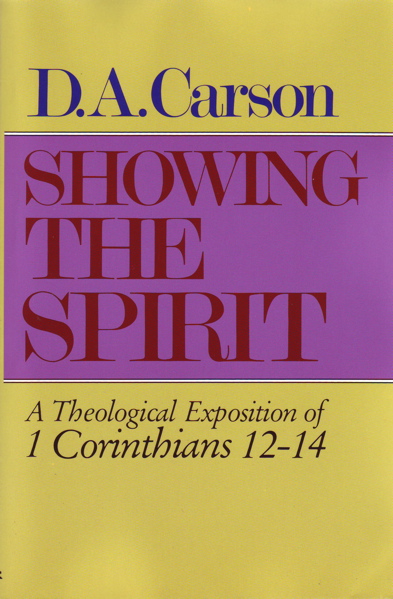
Showing the Spirit

The Beginner’s Guide to Spiritual Gifts by Sam Storms

The Charismatic Calvinist (no its not an oxymoron), provides a fantastic introduction to the Charismatic gifts. Much like Deere’s book, he relates his personal experience, provides exegetical arguments in favor of Charismatic gifts today, debunks some cessationist arguments, and provides some steps towards growing in these gifts; however he does all of this from the perspective reformed theology.
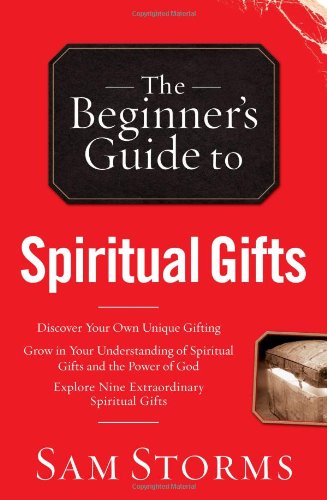
Beginners Guide to Spiritual Gifts

Hearing God by Dallas Willard

Although its not strictly a “charismatic” book, Dallas Willard, former philosophy professor at USC, writes about what it means when we say that we hear God.  How do we hear his voice? How can we be sure that what we think we hear is not our own subconscious? What role does the Bible play? These are the kinds of questions that Dallas addresses in this book.
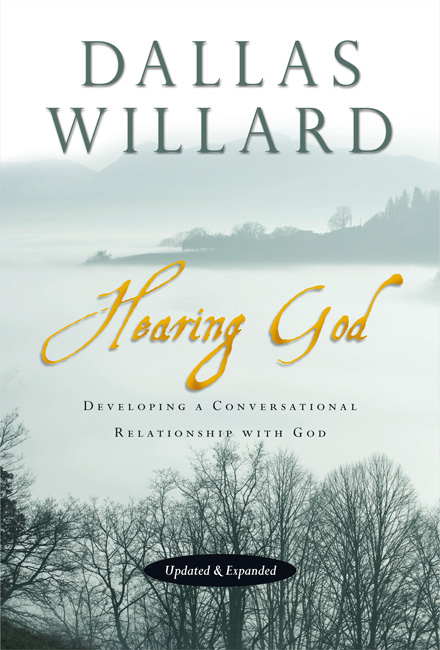
Hearing God

Surprised by the Voice of God by Jack Deere

Another great Deere book, he begins by describing the ways God revealed his thoughts to first-century Christians. Then he explains why God continues to speak to us using the same methods. Finally Deere tells how accurately God speaks through prophecies, dreams, visions, and other forms of divine communication. So all this to say, he gives a thoroughly academic argument for the notion that God still speaks today. He concludes with some practical advice for helping us grow in our ability to hear from God.
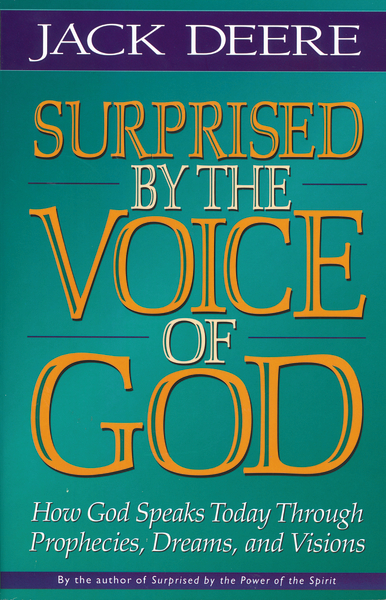
Suprised by the Voice of God

The Spirit Filled Church by Terry Virgo

If you are in ministry I recommend this book. Terry was the director of New Frontiers, a church planting movement that started in the UK but now has spread all over the world. Another Reformed Charismatic, Terry describes the foundation of the church as the Gospel and the spirit. He explains how his movement was founded on both of these things. This book provides great insight into what it looks like to move in the Spirit with an organized church context.

Spirit Filled Church

Paul, The Spirit, and the People of God by Gordon Fee

Based off of his exegetical masterpiece, God’s Empowering Presence, Gordon Fee (an assemblies of God theologian and biblical scholar), gives a brief overview of Paul’s theology of the Spirit. Ecclesiology, Soteriology, and Pneumatology collide in this book to form one of my favorite books on the Holy Spirit. It includes helpful chapters on the fruit of the Spirit, the gifts of the Spirit, and baptism of the Spirit.

Paul The Spirit and the People of God

There Are No Atheists

I have often heard it said that there are no such thing as atheists, even atheists believe in God. Now, no atheist would ever agree to this proposition, however I always believed that it was a clever play on words (to be an atheist = (literally) to be  “without” “god.” Hence you need to believe in God in order to deny that there is a God. Clever. Well along comes David Bentley Hart in The Experience of God and makes a clear argument why even atheists believe in God. Here is what he has to say:

It is an old maxim — one that infuriates many unbelievers, but that happens to be true nonetheless — that one cannot meaningfully reject belief in the God of classical theism. If one refuses to believe in God out of one’s love of the truth, one affirms the reality of God in that very act of rejection. Whatever image of God one abjures, it can never be more than an idol: a god, but not God; a theos, but no ho Theos; a being, not Being in its transcendent fullness. I will not argue the point here, however. I shall simply say that any dedication to truth as an absolute or even preeminent value is at best a paradoxical commitment for a person of naturalist bent…/ Anyone who sincerely believes that truth ought to be honored, and that the mind should desire to know the truth as a matter of unconditional  obligation, thereby assents to a very ancient metaphysical proposition: that the True is also the Good.

The Art of Pastoring

A while ago Religion News Service’s Jonathan Merritt ( @JonathanMerritt ) interviewed Eugene Peterson (author of The Message) about pastoral ministry. What Peterson had to say was a refreshing view into the iconic pastor’s life.

Here is what Peterson had to say about doing ministry (HT – Christianity Today) :

“… Pastoring is not a very glamorous job. It’s a very taking-out-the-laundry and changing-the-diapers kind of job. And I think I would try to disabuse them of any romantic ideas of what it is. As a pastor, you’ve got to be willing to take people as they are. And live with them where they are. And not impose your will on them. Because God has different ways of being with people, and you don’t always know what they are.

The one thing I think is at the root of a lot of pastors’ restlessness and dissatisfaction is impatience. They think if they get the right system, the right programs, the right place, the right location, the right demographics, it’ll be a snap. And for some people it is: if you’re a good actor, if you have a big smile, if you are an extrovert. In some ways, a religious crowd is the easiest crowd to gather in the world. Our country’s full of examples of that. But for most, pastoring is a very ordinary way to live. And it is difficult in many ways because your time is not your own, for the most part, and the whole culture is against you. This consumer culture, people grow up determining what they want to do by what they can consume. And the Christian gospel is just quite the opposite of that. And people don’t know that. And pastors don’t know that when they start out. We’ve got a whole culture that is programmed to please people, telling them what they want. And if you do that, you might end up with a big church, but you won’t be a pastor.”

Divine Simplicity Again

Here is what David Bentley Hart has to say about Divine Simplicity, the ever so crucial doctrine to our faith.

If God is to be understood as the unconditioned source of all things, rather than merely some very powerful but still ontologically dependent being, then any denial of divine simplicity is equivalent to a denial of God’s reality. This is obvious if one remembers what the argument from creature contingency to divine necessity implies. To be the first cause of the whole universal chain of per se causality, God must be wholly unconditioned in every sense. He cannot be composed of and so dependent upon several constituents, physical or metaphysical, as then he would himself be conditional.

This is quite a bold claim. I know several prominent theologians who deny divine simplicity i.e. James Torrance. It seems clear to me that the denial of Divine Simplicity creates many problems, but these other guys don’t see it as a problem. I’m still trying to figure out how they make their way around these potholes….

Mereology and Divine Simplicity

Hold on to your horses people, what is about to follow is a pretty technical discussion of a philosophical concept. At first you might say, “why the heck are you blogging about this?” Trust me. Follow along and it will make sense in the end.

Mereology – Study of Parts

In Parts, Peter Simon shows that in classical Mereology it is not possible that there be a universe with exactly four parts.  In order to understand why this is so, we must first understand what is meant by the technical term “Universe” which is denoted in Mereology by ‘U’.  After we understand what a “Universe” is we can use the notion of a sum in order to see why there cannot be a universe with exactly four parts in classical Mereology.

A universe is the unique individual of which all individuals are parts.  In this system of logic, the universe is not the thing occupied by individuals, it is simply the individuals considered as one individual.  If there were no individuals there would not be a universe.  As soon as individuals are introduced, there is a universe.

The notion of a sum in Mereology  is merely the idea that when there are two individuals (for example x and y) there is an individual which contains both individuals.  As Simon puts it: the mereological sum of two individuals x and y is defined as that individual which something overlaps if and only if it overlaps at least one of x and y.

Now that we have seen that it is individuals which make up a universe, and that two individuals added together are considered another individual we can move on to answer the challenge posed at the beginning of this blog.  Consider a universe with 1 individual.  How many individuals are there in this universe? 1.  Now consider a universe with two individuals, x and y, how many individuals are there in this universe? There is x, y, and according to the logic of summation xy is a third individual; there are 3 individuals.  Now consider a universe with the individuals x,y,z.  How many individuals are there? There are 7 individuals: x, y, z, xy, xz, yz, xyz.   Now consider a universe with w, x, y, z.  In this universe there are 15 individuals: w, x, y, z, wx, wy, wz, xy, xz, yz, wxy, wyz, wyz, xyz, wxyz.  By working this out we see that in any universe if there are c atoms, where c is any counting number then there are exactly (2 to the power of c) -1 individuals.  Thus there can never be a universe with 4 individuals.  There can be a universe with as little as 1 individual, 3 individuals, 7 individuals but never any less 7 but more than 3.

Why This Matters….

So why am I discussing “parts?” Because of Divine Simplicity. Throw away divine simplicity (the notion that lacking spatial and temporal parts, God is free of matter/form composition, potency/act composition, and existence/essence composition, that there is also no real distinction between God as subject of his attributes and his attributes. That God is thus in a sense identical to each of his attributes, which implies that each attribute is identical to every other one) and you bring mereology into the discussion of the Trinity. Without Divine Simplicity you get 7 individuals…. As I explained above in universe with the individuals x,y,z. There are 7 individuals: x, y, z, xy, xz, yz, xyz. Lets change the letters to F(ather), S(on), H(oly Spirit). Now you get F, S, H, FS, FH, SH, FHS. If these U’s have real ontological weight then we really have run into a HUGE mess. All because we threw away the notion of divine simplicity.

Captain Phillips – A “Theo-Political” Review

(Spoiler Alert: If you were alive in 2009 then you know how Captain Phillips ends. So if you weren’t paying attention to the news when this story happened you deserve to have the movie spoiled.)

Captain Phillips 

Over the last few days I have seen several reviews of Captain Phillips that point out that American Exceptionalism is celebrated in this film. Those who are critical of American Exceptionalism have decried the fact that this movie celebrates America’s unrivaled power and prowess in dealing with our enemies. They point out the fact that it celebrates the fact that in this story the American military saves the day, it’s a portrait of American militarism. Those who celeberate America’s unique role make a similar observation about the film.; at the end of the day America’s military saves the day. America’s power is unrivaled and our military prowess is exceptional. We should celebrate this. Both these positions miss something critical about the movie, namely that this film is not so simple. American isn’t the hero. America is not the villain. This movie isn’t even about America. Its about Captain Phillips……

Much like real life, this film shows the fact that life is more complicated than we realize. Its hard to tell who the “good guys” are and who the “bad guys are.” We tend to assume that Captain Phillips and the Maersk Alabama are the good guys, and the Somali pirates are the bad guys. At least that is what it looks like upon first glance, but that is simply not the case. The Maersk Alabama illustrates the negative aspects of capitalism. It represents greed and selfishness. Think back to the conversation that the Captain has with his crew after the initial pirate attack. There is a discussion about the inherent dangers of sailing this route. Neverthless, the company must run this shipping line. When the sailors complain about the dangers, Captain Phillips tells them that nobody forced them to sail this route, they signed up for it because they wanted the money. Money is the bottom line. Money is what leads these guys to put their lives in danger. The shipping company even refuses to pay for armed guards because it is an unnecessary expense! Money is what leads this company to risk the lives of these sailors. Our global economy doesn’t care about lives. Money is what matters at the end of the day.

You would think that the Somali pirates are the bad guys. They certainly do some bad things, but are they really the bad guys? The film gives several hints that they are not.  First off the Somali pirates are victims of the Somali warlords. There is a scene in the movie where Muse is telling Captain Phillips of a $6 million pay day a few months prior to these events. When the captain asks him why he is still a pirate if he made $6 million Muse tells him to shut up. The audience knows that these grunts won’t ever see that money. The warlords will use the money to fuel their violent agenda. These pirates are just a pawn in the powers that be wargames. There is another scene in which Captain Phillips asks the pirates why they don’t do something more productive with their life; he asks them “is being a pirate or a fisherman the only thing you can do?” The answer to that question is sadly yes. Why is the answer yes? Economic oppression, American intervention into the region, Civil War, political oppression, western handouts. The factors that limit a Somalian’s prospects at success are endless. Their victimization has led people like Muse to compromise their morals for the sake of survival.  To add insult to injury, the possibility of being fishermen is really off the table too. Muse mentions this in a dialogue between him and the captain. Muse mentions that foreign fishing companies have begun to fish off the Somali coast. Their fishing technology has stripped the sea of its resources, leaving the Somali’s with no fish to catch. The Somali’s were victims of economic greed. Who asked the Somali’s if they could fish off their shores?

So who is the bad guy in this movie? The pirates are violent and don’t have respect for people’s lives. The American economic interests are harming the Somali’s and leading them to do violent things. The truth is that everybody is to blame. The only person who is not guilty is Captain Phillips. Captain Phillips is the only “good guy” in this movie. Now I don’t know whether or not captain Phillips is a Christian or not, but he displays a lot of Christ like behavior. Foretelling his cruxifixion Jesus says “greater love has no one than this: to lay down one’s life for one’s friends.” Self-sacrifice for the sake of others is the greatest expression of love. Captain Phillips is a real life illustration of this kind of love; he willingly steps into the lifeboat with the pirates in order to save his crew. And that is only one of the instances of his self-sacrifice for his crew. Jesus also says “You have heard it said, love your neighbor and hate your enemy. Bu I tell you love your enemies and pray for those who persecute you.” Throughout the film captain Phillips looks out for the best interest of his crew (loving his neighbors) but he also looks out for the best interests of those who captured him! There are several scenes where he tries to offer medical care to the hurt pirates. Especially moving was the scene where he tries to bandage the 16 year old pirate’s foot. There is no reason why he should do this for him, Captain Phillips should let the pirate day, after all they have taken him hostage. However the captain genuinely cares for this boy. He doesn’t want to see him suffer. Maybe the kid reminds him of his own son, or maybe he really cares for him because he is “just a kid.” Neverthless, Captain Phillips loves his enemies.

So when its all said and done we need to remember that this film doesn’t try to give a positive or negative assessment of America or Somalia, it tries to tell the story of a heroic man called Captain Phillips.

This Paycheck’s Book Purchases (October 12th)

Every time I get paid I buy a couple of books. Right now I am buying as many books as I can read in a two week span because I know that once I get married my book budget is really going to shrink. Anyway, this pay period I bought three books. I think my purchases were pretty well rounded; I bought one pastoral book, one biblical studies book, and one philosophy/theology book. So here is my list of this pay period’s paycheck book purchases.

The Pastor’s Justification – Jared Wilson

Pastors Justification

I appreciate pretty much everything Wilson writes, so I am really looking forward to what he has to say about finding my identity in Christ while being a minister. Here is the Amazon summary of the book: Ministry can be brutal. As leaders, we face discouragement, frustration, and exhaustion—and many times we face it alone. Helping us to refocus our gaze on the gospel, pastor Jared Wilson offers here practical insights, real-life anecdotes, and in-your-face truth related to the ups and downs of pastoral ministry. Honest yet hopeful, this creative fusion of biblical exposition and personal confession will help pastors weather the storms of ministry by rooting their identity in Christ.

Paul and Judaism Revisited – Preston Sprinkle

Paul and Judaism Revisited

I know Preston and I love his wisdom in approaching the issues brought up by the new perspective. I also felt like it was appropriate to read this before N.T. Wright’s tome comes out. Here is the Amazon summary of the book: Ever since E. P. Sanders published Paul and Palestinian Judaism in 1977, students of Paul have been probing, weighing and debating the similarities and dissimilarities between the understandings of salvation in Judaism and in Paul. Do they really share a common notion of divine and human agency? Or do they differ at a deep level? And if so, how? Broadly speaking, the answers have lined up on either side of the old perspective and new perspective divide. But can we move beyond this impasse? Preston Sprinkle reviews the state of the question and then tackles the problem. Buried in the Old Testament’s Deuteronomic and prophetic perspectives on divine and human agency, he finds a key that starts to turn the rusted lock on Paul’s critique of Judaism. Here is a proposal that offers a new line of investigation and thinking about a crucial issue in Pauline theology.

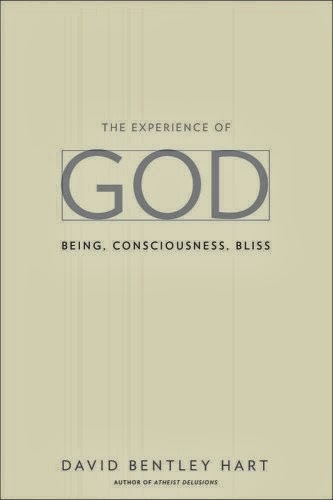
Experience of God – David Bentley Hart

The Experience of God

The (small) Barthian in me recoils at the prospects of natural theology, however this book looks intriguing. Here is the Amazon summary of the book: Despite the recent ferocious public debate about belief, the concept most central to the discussion—God—frequently remains vaguely and obscurely described. Are those engaged in these arguments even talking about the same thing? In a wide-ranging response to this confusion, esteemed scholar David Bentley Hart pursues a clarification of how the word “God” functions in the world’s great theistic faiths.

“Words are Hard” – St. Basil

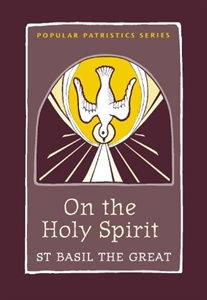
St. Basil actually coined the phrase “words are hard.” Well not really, however he did think that some people are not too talented in the way they use their words and in the way they understand words. This is especially evident in his book On the Holy Spirit. In the first part of the book (and the last) he writes on prepositions. Those tricky little parts of speech that trip us up so often. Basil argues against the heretics interpretation of scripture that makes heavy use of prepositions. He accuses them of reading prepositions in the way pagan philosophers use them (it mostly has to do with prepositions being associated with causes.” All to say, St. Basil thinks that “words” are hard for these heretics because they don’t know how to use prepositions. The other thing we learn is that words really do matter and that semantics/philosophy of language are two fields that are actually important to theology….

Here is St. Basil the Great on the use of words (it almost feels like philosophy of language to me):

Likeness to God however cannot be had without knowledge, and knowledge comes from teaching. Speech, thought is the beginning of teaching, and the parts of speech are syllables and words. So, the investigation of syllables does not fall outside the goal of our calling.

Indeed it is not the case that because questions seem insignificant they should be overlooked. Rather, because the truth is hard to grasp, we must search for it in every way. For if the acquisition of piety grows gradually just like the arts, those progressing toward knowledge must overlook nothing. So, if someone should overlook the first elements because they are small, he will never reach perfect wisdom…..

For if one iota or a single tittle of the Law will not pass away, how safe is it for us to pass over even the smallest matters?

What you want us to examine is both little and great, little in the brevity of its utterance (an on account that it is likewise easily neglected), and great in the power of its meaning. It is like the mustard tree, which, although it is the smallest of shrub seeds, rises to its own proper height when it is suitably cultivated and the power within it unfolds.

I see then that the prize in small words is the greatest, and for the hope of the reward I do not shrink from labor, because I know that the investigation will be fruitful and that lasting good will come to those who listen. (On the Holy Spirit 1,2)

As you can see for St. Basil, words are hard but words matter a lot.

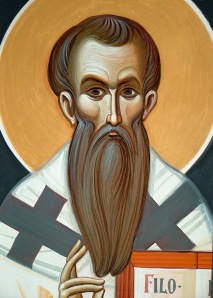
St. Basil the Great
St. Basil the Great

St. Basil on Loaded Questions

In the classroom I often come across the ever annoying phenomenon we call the “loaded question.” You know the one I am talking about, its the argumentative question, the question where the student already knows the answer but is actually trying to make a point. Its the type of question where the student flat out disagrees with you but doesn’t have the courage to say it, rather he has to word it in such a way so that it doesn’t seem as combative as it really is. Luckily I haven’t found myself on the receiving end of those types of questions too often, neverthless I have been in a classroom setting where the student blasts the professor with a loaded question, needless to say, its quite annoying. Yet I am not the only one who considers loaded questions annoying, St. Basil the Great does too!

Check out what St. Basil has to say about asking questions well and, not so well:

I admire your proposing questions not for the sake of testing, as many now do, but to discover the truth itself. For now a great many people listen to and question us to find fault, but it is most difficult to find a soul that loves learning and seeks the truth as a remedy for ignorance. For the questions of may contain a hidden and elaborate bait, like the hunter’s snare and the military ambush. These are the people who throw out words, not so that they may receive something useful from them, but so that they may seem to have a just pretext for war if they find answers that do not accord with their own liking. (On the Holy Spirit 1,1)

As you can see, St. Basil isn’t a fan of people who ask questions in order to find fault. The type of questions he admires come from people who genuinely want to know the truth. I like those kinds of questions too….

On the Holy Spirit - Basil

N.T. Wright on Reading the Psalms Through a Kingdom Lens

Last time we saw that N.T. Wright challenges us to read the Psalms Pneumatologically. Wright also challenges us to read the Psalms in light of the Kingdom that Jesus began to establish in the gospels.

Go back to Psalm 72 and see how those worldwide promises about David’s coming kingdom are fulfilled in the New Testament (as for instance in Matthew 28:16-20 or Romans 15:7-13), up to and including the stunning concluding line: “Blessed be his glorious name forever; may his glory fill the whole earth. Amen and Amen.” (v. 19)

So once again I challenge you to read the Psalms in light of what we know in the NT. Read Psalm 72 knowing these promises are being and will be fulfilled in Christ. How does that change how you treasure these passages?

Endow the king with your justice, O God,
the royal son with your righteousness.
May he judge your people in righteousness,
your afflicted ones with justice.

May the mountains bring prosperity to the people,
the hills the fruit of righteousness.
May he defend the afflicted among the people
and save the children of the needy;
may he crush the oppressor.
May he endure as long as the sun,
as long as the moon, through all generations.
May he be like rain falling on a mown field,
like showers watering the earth.
In his days may the righteous flourish
and prosperity abound till the moon is no more.

May he rule from sea to sea
and from the River to the ends of the earth.
May the desert tribes bow before him
and his enemies lick the dust.
10 May the kings of Tarshish and of distant shores
bring tribute to him.
May the kings of Sheba and Seba
present him gifts.
11 May all kings bow down to him
and all nations serve him.