Top Seven Books of 2013

It’s the most wonderful time of the year!
There’ll books for reviewing
And blogs to be posting
When the end of  ’13 is near
It’s the most wonderful time of the year!

Yes its that time of the year again. No it’s not Christmas. Its book review season! It’s the time of the year when everybody puts out their favorite books of the year. And in true blogger form I am submitting my own list of favorite books.

Last year, I stuck with books published in 2012. I am sticking to that rule too (no not books published in 2012!), but books published this current year. That means that any book I read that was published in 2013 is eligible for this list.

Here are my qualifications to make it on to this list:

  1. Published in 2013
  2. I would give that book to somebody else
  3. I would re-read the book
  4. It is not a crappy book

With that I give you my favorite books of the year across 7 different categories:

Biblical Studies – Paul and Judaism Revisited by Preston Sprinkle

Paul and Judaism Revisited

It’s the year of the Wright. I mean Paul. Oops. Preston enters the foray with this book. I have reviewed this book at length a few months ago, so let me just sum things up. In Paul and Judaism Revisited Preston Sprinkle presents us with a new lens for comparing Paul and 2nd Temple Judaism: Prophetic and Deuteronomic Literature. This was my “Biblical Studies” book of the year because it was the biblical studies book that sparked the most ideas for papers for me. Lets just say, it might be useful to bring this lens into systematic theology…..

Devotional – Pastor’s Justification by Jared Wilson

Pastors Justification

Early this year I went through a bit of a dry ministry season. You could say that I found myself in a ministry slump. By God’s grace this book helped pull me out of it. Wilson breaks his book up into two parts; 1)An exposition of 1 Peter 5:1-11 and then 2)The 5 Sola’s. This book forced me really check myself and my motivations for doing ministry. The Lord used this book to expose some real idols and some dangerous ministry habits I was forming; so even though it seems to be a ministry book, think of it more like a devotional for pastors.

Ministry – Reading for Preaching by Cornelius Plantinga
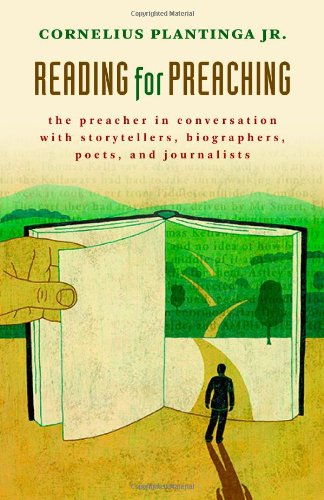
Reading for Preaching

This book is pretty short, which means you will have time to do some more “reading for preaching.” Here Plantinga presents the advantages for preachers to have a regular reading program, this includes fiction, biographies, articles, poetry, news, etc. The best part about this book is that he practices what he preaches, his writing is suffused with the “literature” he recommends the preachers dive into. It personally encouraged me to develop my own preaching through reading more fiction.

Mission – Why Cities Matter by Stephen Um and Justin Buzzard
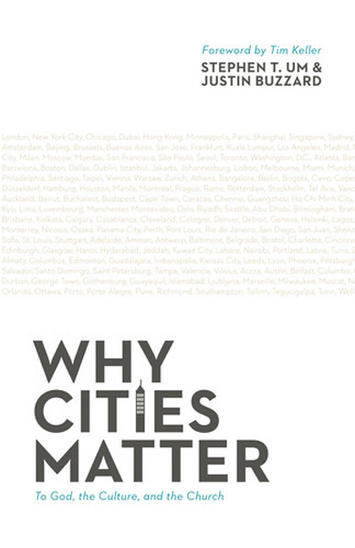
Why Cities Matter

I bought this book on a whim for my kindle, thinking that I probably wouldn’t get to it this year, but boy am I glad that I did get to it. As the title implies, cities matter, they matter a lot to God and to God’s mission, so they should matter to us to. I already buy into their thesis so they didn’t need to convince me, nevertheless their chapters on asking the right questions and contextualization are brilliant. Those questions are such great tool for anybody starting up a ministry in a city, whether they are church planting or starting up a college ministry.

Philosophy/Apologetics – The Experience of God by David Bentley Hart
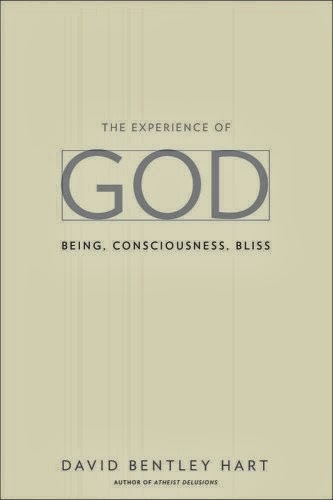
The Experience of God

The Barthian in my cringes a bit when thinking about natural theology, thankfully that tendency has been tempered a bit, probably partly due to this book. Part philosophical theology, part natural theology, part apologetics, part attack against the new atheists, this book is all a work of genius. There is something about Hart that makes him so convincing, maybe its his cockiness maybe its his wit, but when you read him you can’t help but find yourself marveling at how smart this guy really is. The book tackles the question: What do we mean when we use the word “God?” By breaking our experience of God into three topics 1)Being, 2)Consciousness, 3)Bliss, he clarifies what we mean by God and argues that the God of traditional theism is the best way to explain our “experience of God.”

Theology – God, Sexuality, and the Self: An Essay on the Trinity by Sarah Coakley
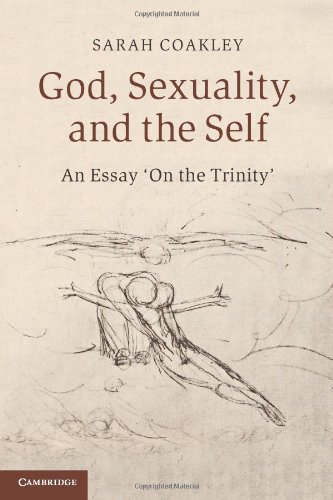
God Sexuality and the Self

For some reason this was the hardest category for me this year. I kept going back and forth between four books: Myk Habet’s Theology in Transposition, Fred Sander’s and Oliver Crisp’s Christology: Ancient and Modern, Mouw and Sweeny’s The Suffering and Victorious Christ, and this book. I settled on this book because it was the most original of the three. Now I’m not the type of person who think “original” or “new” things are better, nor do I line up theological with Coakley in some major places, however her method is absolutely fascinating. There is a lot of potential in this book. And I am guessing it will end up being a book that you will have to engage with when talking about Trinitarian theology. And even more importantly her thesis that human sexuality is actually meant to point towards human desire for God is actually a really beautiful truth.

Best Book of 2013 – In Search of Deep Faith by Jim Belcher
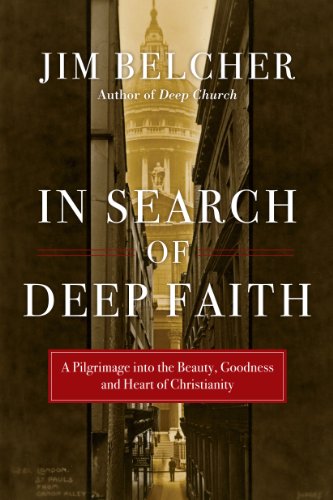
In Search of Deep Faith

Funny story, I never intended to read this book. It wasn’t even on my radar. But Jim Belcher tweeted out that he needed some reviewers, I responded, IVP sent me a free copy, and the rest is history. I was blown away by this book. I was finding myself in a dry season so Belcher’s book came along at a perfect time. In the book there are stories upon stories of “heroes” of the faith; there is just something about reading biographical material that awakens a deep sense of faith within you. This book has parts that are devotional, theological, historical, ministerial and its all weaved into a great literary presentation to boot. In other words its all you could ask for in a book. For that reason I decided that this book was my book of the year.

What were some of your favorite books this year? I would love to hear your thoughts!
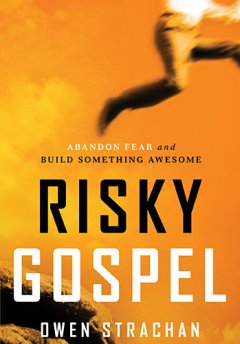
Book Review – Risky Gospel by Owen Strachan

There is a seed of courage hidden (often deeply, it is true) in the heart of the fattest and most timid hobbit, waiting for some final and desperate danger to make it grow.  – Tolkien

Centuries of peace have made hobbits fat and timid. The same holds true for most Christians. We forget that we are part of a cosmic battle, we live as though we are in a time of peace; yet Jesus is establishing his already-not yet Kingdom on this planet and we have important roles to play in that battle. What Christendom is missing is a sense of risk…

Risking what we hold dear for the sake of the Kingdom will awaken seeds of courage in our hearts.

In his most recent book Owen Strachan attempts to awaken that courage in our hearts by pointing us to “Gospel Risk.” Gospel Risk means “trading in small things that produce a shallow defeated life for the life shaped by the gospel, one devoted to God and his glory.” (66) In essence it means investing in God-honoring, kingdom expanding pursuits like evangelism, our spiritual walk, family life, church, and our public presence.

Risky Gospel

Strachan starts off by painting an all to real picture of what the typical Christian’s life is like… It is stressed, it lacks boldness, it stays in the neutral zone, seeks to keep expectations low, is afraid of change, and overall lacks real-kingdom building endeavors. Now don’t read this as being a rehash of David Platt’s radical – Strachan is an anti-Platt – I says that “ordinary life” (think the 2.5 Kids, a dog, and 2 cars) can be just as risky as the “radical” life. Just because you live a typical middle class American life doesn’t mean you can’t take risks for the sake of the kingdom.

Where do we get the power to take these sorts of risks?

  1. Strength comes from the goodness of God (216)
  2. Strength comes from the power of Christ’s cross and resurrection (216)
  3. Strength comes from the Holy Spirit who lives in you. (216)

Where do we take these risks? Strachan devotes one chapter to each of the following “risky” areas:

  1. Spiritual Disciplines
  2. Family Life
  3. Work
  4. Church
  5. Evangelism
  6. Public Witness

Pro’s

  1. This book is timely – Working with college students I constantly see students “playing it safe,” which for a college student means being unambitious about their walk with Christ, their careers, and even their dating relationships. I see this especially in young guys; they seem to coast through life with no sense of direction. In fact I have a couple of college students in mind that I know should absolutely read this book.
  2. Grounded in our Identity in Christ – Reading a good amount of gospel-centered stuff I have noticed that many gospel centered authors tend to over-emphasize the fact that we are still broken, jacked up sinners but that isn’t the case with Strachan. Yes we are sinners, but even more fundamentally we are new creations. “We are reconciled to God. This is our fundamental identity.” (54) “You are not only a new creation. You are not only freed from sin. You’re a conqueror through Christ.” (56)
  3. Extremely Practical – Usually I shy away from overly practical books/sermons in favor of things that move the affections. But Strachan does a fantastic job of moving the affections and embolden us while also giving practical ways we can grow in our boldness.


Con’s

  1. The Chapter on Public Witness  – I have no real qualm with the general message of this book however the chapter on Public Witness is a bit shaky in my opinion. At times Strachan seems to align himself with the “moral majority” type of political engagement that most young evangelicals have disavowed. Although he doesn’t take it that far, he calls for Christians to act as a moral preservative in society by writing local papers, participating in campaigns, petitions, sponsoring Christian candidates, etc. (191) I’m glad he points out that Christianity is not a private religion, but its not a civic religion either. I can’t imagine Paul writing to his local tetrarch asking him to pass a law that designates food that is sacrificed to idols. I don’t imagine our brothers and sisters in China petitioning for changes in public policy either. His position doesn’t ruin the book for me though, I think we are too cowardly in our public witness, we need boldness, but the boldness we need looks a lot different than the boldness he is describing.

Conclusion

If you are tired of living like a fat timid hobbit and want to go on the adventure that you were created by God for, this book provides some great encouragement to do just that….

Disclosure of Material Connection: I received this book free from the publisher through the BookSneeze.com® <http://BookSneeze.com> book review bloggers program. I was not required to write a positive review. The opinions I have expressed are my own. I am disclosing this in accordance with the Federal Trade Commission’s 16 CFR, Part 255 <http://www.access.gpo.gov/nara/cfr/waisidx_03/16cfr255_03.html> : “Guides Concerning the Use of Endorsements and Testimonials in Advertising.”

Book Review – The Kingdom of God by Morgan & Peterson

“Seek first the Kingdom of God….” Jesus was a man who practiced what he preached. He lived, ate, breathed the kingdom. He advanced it through his ministry and he opened the doors to it through his death on the cross on our behalf. In other words Jesus was all about the Kingdom of God.

Christopher Morgan and Robert Peterson. The Kingdom of God, Crossway, 2013.

The Kingdom of God

The “Kingdom of God” has been the central focus of theology for many protestants over the last several decades and for good reason. Jesus emphasizes the Kingdom throughout the Gospels, theologians have widely speculated about the nature of the kingdom, and have given even wider speculations about how the kingdom relates to eschatology. (I’m looking at you my dispensationalist friends). Along comes this book by Morgan and Peterson, they seek to give some clarity about the Kingdom of God. To do so they have collected essays by some well noted scholar to treat five different areas: 1) Historical, 2) Biblical, 3) Theological, and 4) Ethical. By adopting these perspectives they attempt to “move closer to a comprehensive exposition of the kingdom (Loc 217).

Overview

This book has 9 Chapters: One on history, two on the Old Testament, three on the New Testament, 2 on systematic theology, and one on Ethics.

  • Chapter 1 – Stephen Nichols writes a chapter on historical perspectives on the Kingdom of God.
  • Chapters 2-3 – Bruce Waltke takes on the task of articulating an OT theology of the Kingdom. True to his reformed theology he pays special attention to the role of covenants in the Kingdom.
  • Chapters 4-5 – Robert Yarbrough takes us through Matthew and Mark as a way to lay out the basic themes of the Kingdom in the NT. Then he gives us a brief overview of the Kingdom by reading Mark-The Epistles. Think of this as a survey of the NT.
  • Chapter 6 – Still focused on biblical theology, Clinton Arnold tackles The Kingdom and Satan. He presents an excellent overview of what role miracles play in the kingdom, and what place satan and his demons have in it as well.
  • Chapter 7– Ecclesiology meets Kingdom theology in this essay by Greg Allison. People often conflate the Kingdom with the Church. Allison gives us good reasons why that is a terrible mistake to make.
  • Chapter 8 – Gerald Bray takes on Eschatology and the Kingdom. This isn’t your typical “speculate about world events” kind of eschatology. This is Systematic eschatology, focused on the nature of time, eternity, and the ascension.
  • Chapter 9 – Anthony Bradley shows us what justice has to do with the Kingdom.

Pro’s

  1. Clinton Arnold’s Essay – This was my highlight in reading this book. Unlike some people who see Jesus’s miracles as merely authenticating his divinity (as though nobody else ever performed a miracle…) he shows that miracles are a foretaste of the kingdom. He also give a thorough evangelical treatment of demonology.
  2. The NT Survey Chapters – If I ever make my way out of teaching Pauline studies and teach the Gospels or an NT Survey I could see myself making use of this book. I would certainly make use of Yarbrough’s chapter on the Kingdom in Mark through the Epistles.
  3. The Book’s Price/Value – If you get the paperback it will set you back about $14. That isn’t too bad, but if you get it on the kindle (which I did) its only $0.99! For $0.99 a collection of essays by first rate evangelical scholars is a hard deal to pass up. With this book you get a lot of bang for your buck.

Con’s

  1. Anthony Bradley’s Essay – I don’t know how else to say this, but this essay just doesn’t fit this volume. I know its about “Kingdom Ethics” but He never really makes the connection between why his ethical injunctions are the necessary overflow of Kingdom theology.
  2. An Undefined Audience – I am not exactly sure whom this book is for. Its fairly academic (if that means dry and full of footnotes) so I assume its for academia. However its so basic that it doesn’t add anything to the pool of scholarly resources. It also seems too basic for even seminary students. Is the target audience college undergraduates? I’m not sure. This book would certainly work as a textbook for a college bible class. But that isn’t the way this book was promoted.

Conclusion

At $0.99 I don’t regret buying this book. I didn’t really learn much though (except for Clinton Arnold’s essay). So personally I wouldn’t shell out the $14 for the paperback. However I would make this book required reading in a biblical theology class for undergraduates.

Give them the Tools they Need!

Today would like to hit on one aspect of the small group coach-leader relationship: equipping. If you are a small group coach you probably know building a relationship with your leaders is super important but you don’t necessarily want to get stuck there. Pastor Bill Donahue from Willow Creek makes this point when he says that “It is easy to make the mistake of turning the coach-leader relationship into nothing more than a deep friendship.” I definitely agree with him. Because it is so easy to do that we need to maintain a healthy balance between shepherding and equipping.

Equipping can be a hard thing. In fact thinking about equipping can be a bit intimidating. After all its not like we are small group experts. Nor do we have access to unlimited resources. Often times it’s hard enough to find where to start the equipping process. So today would like to offer you a few ideas about tools you can use to equip your leaders.

  • Your Past Experiences: If you are reading this you probably have been doing small groups for quite some time now. Thus you probably have a lot of stories of small groups that went really well and of small groups that didn’t go so well. Also you know what worked and didn’t work in those small groups. So I would begin by having your leaders think through what is working and what isn’t working in their own small group. Then I would relate that to your own experiences. In addition to that, you have probably experienced a lot of the situations that your leaders are going through in their own small group. Whether it is someone breaking up in the small group, a fight with parents, or some sort of addiction; you have probably encountered it, thus you can speak wisdom out of your own experience with that issue.
  • Wisdom from Other Leaders: Hopefully you have a bunch of wise leaders around you. Whether it is the other coaches or a pastor, or even other small group leaders; there is always something to gain from others. As you work to cultivate community within the leadership, you will begin to be encouraged by what is going on in the other groups. Also you will learn from the other leaders’ experiences. In addition to learning from the experiences of other leaders don’t be afraid to ask your director or pastor about any specific issue that might come up.
  • Books or Articles: Personally this is my favorite way to resource. I love reading. And by love I mean LOOOOOVE!  I know reading isn’t for everyone, therefore giving people articles to read won’t always work, however as you read books and articles you will gain wisdom from that author and you will be able to impart that wisdom to your leader. If you are looking for a book/article on a specific topic feel free to ask me, I will do my best to look it up for you.

Discuss:

  • What other sorts of tools have you turned to in order to equip the people that you lead?

Mushy Brains, Dry Brains

It sounds like the title of story book for hungry little zombie children. Don’t worry though its not, I haven’t broken the ground on the genre just yet. Mushy Brains, Dry Brains, is actually how I feel after reading certain books.

brain-books

The other day I was talking to a friend who teaches at Eternity Bible College about what books we enjoyed the most this year. As we got to talking it became clear that both of us have experienced the sort of spiritual dryness that accompanies reading a ton of academic books. He said that he tries to correct the imbalance by reading some “devotional” type books along the way, however many devotional books are just so lame! They are filled with fluff and bad theology, and they leave your brain mushy. I felt the same way. I told him that I try to read 1 ministry/devotional book for each academic book I read (and maybe about 5 fiction books per year). I found that this helps. But I think there is a real problem. Why can’t there be books that don’t leave your brain feeling dry or mushy?

Why can’t there book books that are both academic and devotional? Why can’t there be books that touch both the head and the heart?

I think there are certainly some of those kinds of books out there. So with that I give you my list of 8 awesome books (I’m limiting myself to “modern” books) that will not leave your brain feeling dry or mushy.

  1. Jesus and the Victory of God by N.T. Wright – This book changed my life. It was also the book that brought me into historical Jesus studies. Now I would say that most historical Jesus studies deflate the reader spiritually. Not this one though. Wright presents such a compelling picture of Jesus and his mission, more specifically a picture of Jesus as the promised King of the OT that you won’t be able to keep yourself from putting the book down in order to worship Jesus on the spot. It might be a hard read for some, but its well worth the effort.
  2. The Mediation of Christ by T.F. Torrance – This is a condensed version of Torrance’s theology on the person and work of Christ. It’s a systematic explanation of the gospel: The second person of the trinity took on human flesh, uniting the divine nature with human nature in order to bring reconciliation between the two. The reconciliation which began in a manger climaxes on the cross and extends into eternity as the God-Man reigns at the right hand of the Father. Again, the way he presents his theology of incarnation and atonement will cause you to worship. In fact I found myself shedding a few tears while reading this academic book.
  3. Holy Scripture by John Webster – Its exactly what it sounds like, a dogmatic account sketching out a doctrine of Holy Scripture. It is not meant to be a comprehensive account of Holy Scripture, thus it is just a sketch. Also it is a piece of dogmatic theology, thus it is a piece of theology which exists within the bounds of recognized church dogma. As I read Webster’s theology I was personally edified, and was drawn into a deeper fellowship with the God whose communicative actions was what this book was all about. Ultimately Webster embodies what the proper task of the theologian: to instruct, guide, and form the disciples of Jesus Christ.
  4. Jonathan Edwards: A Life by George Marsden – This is the authoritative biography on Edwards.  In my opinion there is something moving about reading biographies of spiritual giants that just builds up our faith. Although its academic (and long), this biography encouraged me to be a better shepherd and to love God with my mind just like Edwards did.
  5. Surprised by Hope by N.T. Wright – This book changed my life. It brought me into Kingdom theology, and I have lived there ever since. In it Wright paints a picture of what Christian eschatology is all about, through deep exegesis and sweeping big picture theology Wright writes that our life desperately matters for the next life. He concludes the book with some thoughts on what a robust eschatology does for the mission of the church.
  6. Prayer by Karl Barth – I know a lot of evangelicals cringe when it comes to Barth, but not me. This is one of the books that reassured me that I made the right choice in accepting (some of) Barth’s theology. Who would have thought, the guy who wrote a 6 million word long dogmatic theology could have written such a beautiful and moving book on the theology of prayer and the role of prayer in the life of the church. There is a lot of gold in this little book.
  7. Atonement by T.F. Torrance – No book has done more to shape my Christology and understanding of the gospel than this book. Torrance follows other reformed guys like McCleod Campbell and Jon Edwards, as well as church fathers like Athanasius in understanding the atonement through the vicarious humanity of Christ. More than anybody else, Torrance’s work here is theology that preaches. Pick this long book up and I guarantee you will have a deeper understanding and appreciation of the gospel. It’s a bit complicated, but if you can grasp what he is saying it will move you to tears, and more importantly it will move you to worship your Savior.
  8. The Gospel of the Kingdom by George Eldon Ladd – Biblical Studies was not a friendly field for evangelicals when Ladd was writing, it was dominated by liberals and fundamentalists, but Ladd broke the glass ceiling so to speak. This is a great intro to Kingdom theology, but more importantly for me, I was personally challenged to live according to the way of the Kingdom while I was reading this. I can vividly remember where I was when I read some of the most challenging parts. I was in a car on the 395 on the way back from Mammoth. As I was reading I put the book down to pray that I would truly be kingdom focused. This book will do that to you.

What are your favorite academic books with “heart?” I would love to hear your answers. Comment below!

Why Christmas Needs Fog and Lasers – Or Some Implications of the Incarnation

I normally don’t do this sort of thing, but I know I just had to say something. The truth is, I’m not big on twitter feuds, blog feuds, family feuds, or the medieval feudal system, but when something says something that I feel has the potential to undercut an important element of our faith, I know I have to say something. So here is me saying “something” about a tweet that Jared Wilson tweeted out….

Here is Jared Wilson’s tweet from 12/16:

Churches, you don’t need to create “Christmas experiences.” Save money & your staff from burnout & still save souls by preaching the gospel. – Jared Wilson

I completely agree with Jared, Christmas is the beginning of the gospel. In fact, some reformed theologians (Torrance and Edwards) would argue that the gospel (i.e. the atonement) begins at Christmas. So yes, we don’t need to create “Christmas Experiences;” we need to preach the gospel in all of its beauty. So this Christmas preach the fact that the second member of the trinity became incarnate in order to save a fallen humanity from its sins. Preach that gospel!

Wilson followed that tweet up by another tweet:

It’s the Incarnation. It doesn’t need fog and lasers. – Jared Wilson

Lasers and Fog

That is where I take issue with Wilson; his view of the Incarnation. We do need fog and lasers. Without going into much detail, Christmas celebrates the fact that God himself took on human flesh. As Oliver Crisp once said:

In the Incarnation, God the Son stoops down to gather up our humanity, becoming one of us so that he may reconcile us to God. He takes up our humanity in addition to his divinity – he unites what makes us human to what makes him divine.

The Son took up our humanity in a specific time and place, 1st Century Palestine; he ate food, he slept, he got tired, he learned. He lived as a 1st century Jew, eating Jewish food, singing Jewish songs, dancing Jewish dances at weddings, celebrating Jewish festivals. Jesus didn’t sit in a dark room meditating for 33 years. Jesus lived out a fully human, fully Jewish life. What does this mean for us? It means that God values the human condition. God doesn’t simply value abstract humanity, he values humanity as it is found in its historical situation. God values the human condition as something that is good (note: I’m not saying humans aren’t sinful). Humanity in all of its glorious existential conditions is valuable in God’s eyes; the fact that God decided to join himself to a human nature in a specific context shows this.  So the fact is, God values our human natures and how our humanity is expressed in our cultural endeavors.

Now I turn to the lasers and fog… As human beings God created us to be sensually simulated creatures. We are stimulated by taste, sound, touch, sight, etc. Jesus was also stimulated by these things. These things are good. To deny the fact that visual, auditory, gustatory stimulation is a good thing is to deny the fact God knew what he was doing in creating us. To deny the fact that we should use and enjoy these senses, even while glorifying God at church is to deny the very thing that God took on to himself, namely our human nature.

All this to say:

  1. We must take the fact that we as physical beings were designed to respond to certain sorts of visual and auditory stimulation.
  2. The fact that God became incarnate shows that God values human beings as physical creatures designed to respond to stimuli and as creatures that are located in specific cultures, times and places.
  3. To deny this, i.e. to deny the (possible) goodness of lasers and fog machines, is to deny the truth of the incarnation.

California Theology Conference – Call For Papers

I know its very short notice, but I recently came across a call for papers from a Religion in California Conference sponsored by UC Berkeley; if you are interested here is the information, sorry for the late notice, the deadline is in just a few days….

We invite proposals for a symposium on “Religion in California” to be held at the University of California, Berkeley, in April 2014. This California American Studies Association (CASA) special symposium is co-sponsored with Berkeley’s Religion, Politics, and Globalization Program (RPGP), the Theological Engagement with California’s Culture Project (TECC), the
Berkeley Center for the Study of Religion (BCSR), and Graduate Theological Union.

The symposium will feature a keynote discussion with Dr. Matthew Avery Sutton (author of Aimee Semple McPherson and the Resurrection of Christian America), Dr. Lois A. Lorentzen (co-editor of On the Corner of Bliss and Nirvana) and Rev. Dr. Joy Moore (Associate Dean of African American Church Studies, Fuller Theological Seminary).

We invite individual proposals that deal with any aspect of religion in California, but we are particularly interested in works that interact with the path breaking scholarship of Sutton and Lorentzen et. al. and/or theological features within the state. Proposals that focus upon some combination of immigration and movement, politics and social movements, and/or theology and culture will be preferred. Proposals should range from 250 to 1,000 words and will be considered through December 15, 2013. Selected participants will be notified by January 1, 2014.

The symposium will be relatively small with panels held on Friday, April 25. Participants will be expected to attend several selected panels and also participate in the opening keynote discussion on Thursday, April 24 and the closing conversation on Friday, April 25.

Please direct any questions and submit proposals to: Lynne GerberEdward J. Blum, and/or Jason Sexton.


5 Essentials of Discipleship

If you were going to start discipling a 21 year old college student, which five things would you aim for? Probably something about identity in Christ, service, understanding the bible, understanding the need to evangelize, how to pray, and other things along those lines right? Well let me suggest 5 different things… I would love to hear your feedback!

I was recently given an article with no name on it, so I don’t know who wrote it, but apparently the author is a pastor from a church called Mosaic, so I am assuming its Erwin McManus. Here are the 5 essentials of discipleship that he lists:

  1. Gratitude
  2. Humility
  3. Wholeness
  4. Integrity
  5. Leadership

1- Gratitude: It begins with gratitude for the cross. Gratitude for the cross sets us up to be grateful for all the things that God has done in our lives, but it also teaches us to be grateful towards us others. How grateful are they for the cross? How grateful are they about their family, job, position in life, etc?

2-Humility: Once you see gratitude peek through the next step is humility. Is there pride within your disciple? If so what sorts of things do they boast in? How do you address their pride?

3-Wholeness: The author defines it in a weird way, he says wholeness is “giving more than you take.” That doesn’t really seem like wholeness to me, but a person who is functionally broken doesn’t usually have the resources to give more than they take, so I guess it makes sense. Is this person quick to give or are they primarily a receiver?

4-Integrity: Can this person be trusted? Are they genuine in serving? It’s a tough topic to wrap your head around, but a person with integrity is not two-faced, when they serve they don’t have ulterior motives.

5-Leadership: This is the end goal in discipling, getting them to a point where they can take the lead in discipling others. As Thomas Wood says, leaders don’t reproduce disciples, they reproduce other leaders. Are you setting them up for leadership when you disciple them? Or are you setting up to be dependent upon you for the rest of their walk with Christ?

So what would you add to this list? What would you take out? Or am I completely off the mark?

Book Review – In Search of Deep Faith by Jim Belcher

Jim Belcher, In Search of Deep Faith: A Pligrimage into the Beauty, Goodnes, and Heart of Christianity, IVP, 2013, 318pp.

In Search of Deep Faith

I read Deep Church when I started doing vocational ministry and it absolutely shaped my approach to ministry so I began to read this book with very high expectations. It’s safe to say that my expectations were met, and even exceeded.

As the title implies this book is about a “Pilgrimage,” specifically a pilgrimage in search of deep faith. Belcher’s pilgrimage takes him on a journey to ensure that his “roots are deeper,” his “maps are better,” and his “destination is clearer.” (291) Roots, Journey, and Destination are what this book is about.

As you begin reading, you are immediately thrown in to a tense situation; you find Belcher and his family stuck in an RV in a shady part of Poland, looking for Bonhoeffer’s secret seminary at Finkenwalde. The rest of the book is filled with that same sort of suspense you encounter in the first few pages, except the suspense isn’t limited to his family’s adventures throughout Europe; the suspense comes from the stories of several historical figures he introduces us to.

Summary

The book is broken up into three parts: 1) Rediscovering our Roots, 2) Life as  Journey and the Need for a Map, and 3) Seeing our Destination.

  1. Rediscovering our Roots: These chapters emphasize the need for making our faith our own, and how making our faith deep bears upon our daily lives. Here we hear the stories of his family’s move to Oxford, but also the stories of the Oxford Martyrs. We also hear the story of Sheldon Vanauken’s search for beauty. Belcher also recounts the story of Dr. Jekyll & Mr. Hyde, he explains that this story teaches us about our own struggle between desiring holiness and desiring our sin. He ends this section with the story of William Wilberforce.
  2. Life as Journey and the Need for a Map: These chapters expand the metaphor of the Christian life as a pilgrimage, and show us that we need a “map” so to speak if we are to walk faithfully on that pilgrimage. He uses the stories of Vincent Van Gogh, Andre Trocme, and Corrie ten Boom as examples of people who didn’t have a “map” (van Gogh) and people who had the “map” to guide them in their journeys.
  3. Seeing Our Destination: You can’t be on a pilgrimage if you don’t have a destination… Here Belcher emphasizes the need to know our “destination.” In times of trouble knowing our destination gives us strength to persevere.  Belcher uses the stories of Dietrich Bonhoeffer and Maria von Trapp (The Sound of Music) as examples of people who knew their destination. He concludes his journey with a trip to Heidleberg, the source of the Heidelberg Catechism. This final chapter is the clearest articulation of how the Gospel and the destination it points us to shapes our lives.

Pro’s

  1. It’s a Great Introduction to Church History – I would not have expected it, but this book is actually a great primer on European church history, spanning the time from the reformation up until the 20th century. If you know somebody who could use an exciting introduction to church history then this is the book for you.
  2. It’s a Great Book on Parenting – Throughout the book one of Belcher’s concerns is instilling a deep faith into his children. I got a taste of how difficult that actually is, to be honest it freaked me out, but at the same time it gave me hope that its possible to pass on a deep and meaningful faith in Christ to our children.
  3. It’s Very Well Written – At the end of the book Belcher credits several author’s influence upon his writing, as you read you can tell that he has really worked on his writing skills. Yes, Belcher was a good author in Deep Church, but his writing skills have really improved. He crafts suspenseful stories and makes his points in a very clear manner. His writing kept me engaged the whole time.

Con’s

  1. There are no real con’s – Some people might have some issues with his reformed leanings. Others might have some issues with him using Vincent van Gogh as a sort of “spiritual hero.” But there really isn’t anything to complain about here….

Conclusion

In a season of my spiritual life where I have been feeling spiritually dry and aimless, God used this book and Jim Belcher to encourage me to stay excited about moving forward on the journey God has put me on. The stories of Thomas Cranmer, Corrie ten Boom, Dietrich Bonhoeffer, William Wilberforce, and even Maria von Trapp encouraged me. Seeing their deep faith, which was grounded in the truths of the Gospel is sure to encourage anybody who reads this book. With that, I highly recommend this book. Whether you have been a Christian for a long time or whether you are just beginning to explore Christianity there is something for everybody who has decided to take a journey into Deep Faith.

(Note: I was given a free review copy by IVP and was under no obligation to give it a positive review.)

These are a Few of C.S. Lewis’s Favorite Things (To The Melody of The Sound of Music)

Raindrops on roses and whiskers on kittens
Bright copper kettles and warm woolen mittens
Brown paper packages tied up with strings
These are a few of my favorite things

Cute Kitten

Okay, lets be honest, those are not a few of my favorite things. I don’t really like cats. I do kind of like warm woolen mittens. I prefer books and coffee and gourmet food. Those are a few of my favorite things. The truth is, all of us have our own “favorite things” and C.S. Lewis was no exception.

I have been reading a fantastic book by Jim Belcher titled In Search of Deep Faith: A Pilgrimage into the Beauty, Goodness, and Heart of Christianity over the last few days, and in it I came across a quote by C.S. Lewis where Lewis describes some of his favorite things to a dear friend named Arthur Greeves. Here are a few of C.S. Lewis’s favorite thigns:

My happiest hours are spend with three or four old friends in old clothes tramping together and putting up in small pubs – or else sitting up till the small hours in someone’s college rooms, talking nonsense, poetry, theology, metaphysics over beer, tea, and pipes.

So now you know…. C.S. Lewis was a hipster. Pubs, old clothes, beer, poetry, theology, metaphysics, talking nonsense, and tea. A hipster indeed.