I Have a New Name! And So Do You!

I have been married for a few days now, so I sort of consider myself an expert on marriage, therefore its time to start blogging about my wisdom.

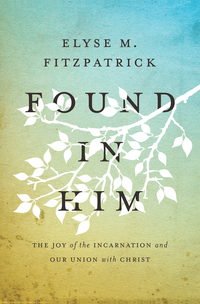
Haha yeah right. I’m not so presumptuous, but I have been thinking about marriage and our relationship with Christ quite a bit. Elyse Fitzpatrick’s Found in Him has been helping me to do that

One of the metaphors that scripture uses to describe the church’s relationship to Christ is that the church is Christ’s bride. It’s a very powerful metaphor. Its packed and contains many many layers of meaning.  Fitzpatrick takes us deeper into that metaphor in a passage that I enjoyed a lot:

Until recent times, everyone bore the name of his or her family of origin. The tradition of brides taking their husband’s last name is still carried on in America today, although it is fading away…. Because we are Jesus’ bride he has given us his name.  (181)

Fitzpatrick goes on to say what this means for us:

Through marriage Jesus Christ bestows upon us his righteous reputation, but his new name we’ve been given is more than a superficial reputation pasted over a dirty face, or a diamond ring forced onto a filthy finger. Its an actual change in identity. We have his reputation. We have a reputation that is as if we had his character, and it is that character that is being worked in us. (183)

When someone gets married they take on the other person’s family, history, reputation and name. It includes the good and the bad. When we become the bride of Christ we take on all those same things, except this time its all good. That’s a wonderful truth to dwell upon.

Book Review – Found in Him by Elyse Fitzpatrick

My love of the doctrine of our union with Christ began about a year ago. I was taking a class on the atonement with Oliver Crisp, and I was assigned to present a paper on T.F. Torrance’s Atonement. It was supposed to be an exposition and critique of Torrance’s doctrine of the atonement. However I found Torrance’s understanding of atonement so compelling that it was hard to form a substantial criticism of it. In that book I found the a glorious presentation of the gospel through the lens of our union with Christ, more specifically through the hypostatic union. Torrance argues that the mechanism of our salvation is the vicarious humanity of Christ. It is a glorious truth, and Fitzpatrick relies quite a bit upon Torrance’s theology in this book.

Then I came upon James Torrance’s Worship, Community, and the Triune God of Grace. In it, I found everything from Thomas Torrance’s work applied to a ministry context. The doctrine was made practical!

Finally I have come upon another practical exposition of the doctrine of the incarnation and union with Christ, this time coming from the hands of Elyse Fitzpatrick a professional biblical counselor. I knew I had to get my hands on it. Boy am I sure glad that I did!

Found in Him

Overview

When most people think about doctrine they think about a set of cold, heart-freezing propositions. The truth couldn’t be further from this, Fitzpatrick proves that this is so. She takes us deep into two separate but very related doctrines: Incarnation and Union with Christ. She shows us how these truths relate to us personally and how they affect our lives.

Fitzpatrick spends the first six chapters on the doctrine of Incarnation. This is the wondrous doctrine that Martin Chemnitz wrote was the “greatest and sweetest” consolation that we can know.  (20)

In the second part of the book she spends four chapters on the awe-some doctrine of union. This is the same doctrine that John Murray wrote was “the central truth of the whole doctrine of salvation not only in its application but also in its once-for-all accomplishment in the finished work of Christ.” (21) Fitzpatrick takes us on a journey into the practical application of our union with Christ as individuals and as a body, his bride.

If you ever wondered if doctrine could ever be fodder for biblical counseling, look no further. Incarnation and Union with Christ are invaluable tools for counseling people and Fitzpatrick shows us how to do that.

The Pros

  1. Theologically Robust – I have already mentioned this above, but its rare to find a book that is both theologically deep and heart moving. It boggles my mind why that is so since theology should always lead to doxology. Nevertheless Elyse Fitzpatrick takes us deep into the doctrine of the Incarnation – Christ’s birth, his condescension, his perfect life, his passion, his ascension – and deep into the doctrine of our union with Christ.
  2. Pastoral Passages – There are many great pastoral passages in this book, at times I feel as though I am being preached to or personally spoken to. For instance on page 180 she tells the reader “He is not waiting to visit wrath upon you. No, his compassion toward us is warm and tender. Over and over he woos us, reaching out hands of love to embrace us in full marital bliss.” On page 199 she says to us “You can rest, finally rest. Sweet pure rest is yours through the work that Jesus has already done.” The whole book is filled with sweet truths like these that make you want to pause and give God thanks for what he has done for us through Christ.

The Cons

I had a few issues with this book theologically, but its nothing that would keep me from strongly recommending this book. The first issue is with her theology of sin. On page 201 she says “Just think for a moment about the sins you struggle with, whatever thy may be. I guarantee that at their root is a desire to approve of yourself, to have others approve of you, or to anesthetize your soul to the reality of your failure to be okay.” This might be true at times, but reducing sin down to an attempt to justify oneself or find one’s own righteousness seems to be a reductionist view of sin. Sin is more a more complicated beast…. The second issue is with her theology of gender. I have interacted a lot with feminist theology (I sympathize with the issues but I am not sympathetic with the project, for a great assessment ant critique see Linda Peacore’s The Role of Women’s Experience in Feminist Theologies of Atonement) so I am quite sensitive to those sorts of issues. On page 173 Fitzpatrick says something that I believe many feminist theologians would love “The truth is that in Christ we must all think of ourselves as feminine….” Many feminist theologians would see this as “leveling the playing field” between men and women, shifting the priority of perspective from male to female. Great. I don’t think that is necessary, but okay. Then a few sentences later she says something bothered me quite a bit. “God himself is they archetype of masculinity, and every way that we think about true masculinity flows from the nature of who he is.  He is what it means to be masculine….” Stop right there. God is the essence of masculinity. That is flat out wrong. God is not gendered. God has traits that we have called “masculine” an he has traits that we have called “feminine.” In fact scripture does talk about how God is also the feminine archetype. God is like a mother nursing us. God is like a hen, taking care of her chicks. Although Scripture does use Father as its primary way of talking about God, we need to be careful of anthropomorphizing this attribute.

Conclusion

Robustly theological. Pastorally sensitive. This book belongs on every pastor and preacher’s library. I would even venture to say that this book belongs on every biblical counselor’s library as well. In addition to being a helpful resource for teaching and counseling, you will also find this book to be personally moving. The pages are filled with the sweet truths of a multi-faceted gospel – incarnation, passion, ascension, union, justification, sanctification – if you let those truths sink in then you will be drawn to worship and rest in the one who has united himself to us, at least that’s what it did for me when I read it.

Note: I received this book free of charge from Crossway in exchange for a review. I was under no obligation to write a positive or negative review of this book.

I am Getting Married Tomorrow!

Tomorrow is the big day! We have been together for four years and now its the right time to tie the knot!

Amelia and Chris

This is my last blog post for a few weeks, as I will be busy… on my honeymoon. I wanted to leave you, the reading audience with some thoughts on marriage. Actually just one thought:

Our life together is a sign of Christ’s love to this broken world.

That is what marriage is all about. Marriage is a demonstration of the gospel. If you want to understand the gospel look at marriage, its the best symbol we have for marriage. With that I leave you with a marriage prayer that I wrote (I took the a prayer from the Book of Common Prayer and I modified it). If you are at the ceremony tomorrow, you will hear this prayer. I invite you to pray it over Amelia and I as well.

Lord we pray that their wills may be knit together in your will, and their spirits in your Spirit, that they may grow in love and peace with you and one another all the days of their life.

Give them grace, when they hurt each other, to recognize and acknowledge their fault, and to seek each others forgiveness and yours.

Make their life together a sign of Christ’s love to this broken world. May Christ’s kingdom be expanded through them, may unity overcome estrangement, forgiveness heal guilt, and joy conquer despair.

In Christ’s name we pray. Amen.

Book Review – The Pastor’s Family by Brian and Cara Croft

In just three short days I will be married. It blows my mind even thinking about that. Thankfully God has blessed me with a beautiful, loving, kingdom minded, missions focused, hungry for social justice, gospel loving woman to marry. I am truly blessed. Yet one of my biggest fears is that I will let work aka ministry hurt my marriage. I can stray towards being a workaholic, school-aholic, or even a ministry-aholic. I need to guard myself. So its timely that I came across this book called The Pastor’s Family by Brian and Cara Croft…..

Here is the problem:

The pastor and his family tend to face pressures that span a number of professions.” – up at crack of dawn, serve and protect others, witness pain and suffering, work long hours. (pg. 9)

Here is what the pastor needs to do:

“The pastor needs a lot of help to think clearly about his life, priorities, and well-being.” (pg. 10)

Here is where the book comes in:

This is a book written for men who have answered the call to serve the church of God as preachers, teachers, leaders, and shepherds…. How do you faithfully serve the church while serving your family? (pg. 13)

How to balance ministry and family….

Wait I got that wrong, it shold say How to prioritize family over ministry. Prioritizing family over ministry is something they don’t teach you in seminary and the sad truth is that there aren’t a lot of good models to learn from out there. In fact there are tons of stories about the bad examples. Some of the most famous pastors/preachers/missionaries weren’t great husbands: Whitefield, Wesley, Carey, and Barth (just to name a few).

Thankfully Brian and Cara Croft have written a book to help people like me, those are struggling or might struggle to keep family their priority.

The book is broken up into three parts

  1. The Pastor’s Heart
  2. The Pastor’s Wife
  3. The Pastor’s Children

Overview

In part one Brian gets to the core of our problem: our hearts. Why do pastor’s struggle with neglecting their families? Its probably because they are seeking approval from others, trying to look good, wanting to be successful, desiring to be significant, trying to keep up with other’s expectations. In other words they struggle with a sinful heart. They (we) look to people and our accomplishments to fulfill our deepest heart desire, at the cost of neglecting our family. Neglect of family shows that we don’t get the gospel. We may be able to verbalize the gospel, but we haven’t internalized it. We haven’t really grasped that we are justified, accepted, and loved. We need to know the Gospel!

In part two Brian and Cara share their wisdom about doing ministry while married. I learned so much about how a pastor’s wife feels. She will probably deal with unrealistic expectations from the congregation, she might have to struggle with loneliness, she might feel overlooked or overshadowed by her husband, she might deal with the pain of having people talking behind her back, and she will also have to balance ministry and family. Thankfully Brian offers some practical tips for taking care of your wife. He tells us to encourage her, disciple her, and pray for her. Basically love her like Christ loved the church.

I loved this section so much that I am going to buy a paper copy and give it to my soon to be wife.

Part three is about kids. I don’t have kids so I will skip this section, but basically there is a chapter on the dad’s role in shepherding your kids, a chapter on shepherding your kids together, and a chapter on neglecting your kids.

Some Highlights

  • Great discussion questions for the husband and wife
  • An insightful chapter into the mind of a pastor’s wife
  • Candid reflections on the each of the three subjects written by other people with ministry experience
  • A very transparent reflection on dealing with depression as a pastor’s wife
  • A section giving advice to guys who will soon become pastors

Shortcomings

  • There were no real shortcomings… the only thing is that I wish it had a section for young guys who are doing ministry and are about to get married. Basically people in my own position!

Conclusion

This book is timely. I’m just starting out working full time in ministry and I am about to get married. I can definitely see myself going through this book with my wife. I highly recommend any pastor, missionary, seminary teacher, volunteer ministry leader go through this book with his wife. It can only help to strengthen your marriage and make you a more effective couple for the kingdom.

Note: I received this book free of charge through NetGalley and was under no obligation to give a positive or negative review.

Why Cities (and Colleges) Matter

College Campuses are microcosms of the city. Let me explain….

A few weeks ago I read through Stephen Um and Justin Buzzard’s Why Cities Matter, since then I have read it one more time. I can’t recommend it highly enough. As I was reading it, similarities between a city and a college campus kept popping up. So as somebody who does college ministry I knew I had to pay attention to what Um and Buzzard were saying.

UCLA Aerial View - It even looks like a city!
UCLA Aerial View – It even looks like a city!

Sidenote: If you are doing urban ministry or college ministry I highly recommend this book. The chapters on contextualization, urban narratives, and ministry vision are brilliant. Plus it includes some great questions at the end of each chapter that will help you process through the things you are learning.

Anyway, I want to point out three thing about cities that Um and Buzzard talk about that are very similar to college campuses.

  1. Cities are magnets – they have an ability to attract
  2. Cities are amplifiers – they have the ability to “turn up the volume”
  3. Cities are engines – they have the ability to drive our world

Magnets – Um and Buzzard talk about how cities attract all sorts of people. They attract aspirational people, they attract, marginalized/unconventional people, they attract people who are looking for a fresh start.

College campuses are magnets too. Last semester I enrolled in a community college world religions class, I wanted to do some outreach and learn how a typical college student things. In this class I met all sorts of people. I met people with lofty goals, they wanted to make a difference through their education or they wanted to make a ton of money. These are the aspirational people. I met some marginalized/unconventional people – students who were the first in their family to go to college, students whose parents worked the fields as migrant workers in Moorpark and Fillmore. I met students with learning disabilities, artsy students, stoner students, and even retirees. I also met the third category of people – people looking for a fresh start. There were veterans, young ones and old ones. There were people who lost their job in the economy and were looking for a new career.

College Campuses are Magnets

Amplifiers – Um and Buzzard say that “world class cities function as amplifiers for the skills, talents, and ideas of their citizens.” They do through their clustered density and their connective diversity.

Are college campuses Amplifiers? Not all of them are. Moorpark College certainly isn’t, and CSUN has some potential for it, but UCLA certainly is. The truth is, research universities do act as amplifiers, even though not all colleges do. When ideas bump up against eachother innovations spring up and improvements are made. The result is that flourishing and sharpening occurs. Think about a medical research lab, competing scientists work with/against each other to improve medical technology. At an even more basic level think about a philosophy class you have taken, discussion generates new ideas, bad ideas are weeded out and the cream of the crop emerges.

College Campuses are Amplfiers

Engines – Um and Buzzard ask, “what happens when people cluster into densely packed, diverse cities? When the volume gets turned up on human ingenuity and invention?” They suggest the answer is that “cities, when thriving, act as engines that capitalize on amplified human resources in order to drive our world” (48). They tell us that cities take the “collective talents, skills, and creativity of their citizens and translate them into world-driving technology, industry, and cultural development.” (48)

Oviatt Library - CSUN
Oviatt Library – CSUN

If you went to a research university you know that the same is true of a university. UCLA for instance is a driving force in creating technology that drives forward Los Angeles’ economy, its also a hub for cultural development. We could say the same thing about CSUN and the San Fernando Valley. Consider for instance the new performing arts center that was recently built at CSUN. The valley has now become a cultural hub (or at least the area around CSUN has the potential to become one). Walk down Reseda blvd, you will find tons of diverse restaurants and shops. The area near CSUN is now the place to be. Culture is flourishing in the valley around CSUN. Business flourishes and culture thrives around these universities.

College Campuses are Engines

Given the fact that universities and colleges are so similar to cities (I could definitely say more, and I probably will in the future), college ministries and parachurch ministries should start paying attention to what urban experts are saying about doing ministry in the city. Of course they aren’t exactly parallel, but there is certainly much to learn from our brothers working the front lines in that context.

Book Review – Prelude to Philosophy by Mark Foreman

My story is all too common. I was going on a mission trip to Uganda and I had sent support letters to my old high school teachers. In my letter I explained what God had been doing in my life and how he had led me to study philosophy at UCLA. That is when all the warnings started to come in. I vividly remember one letter I got back, it simply said “Beware of losing your faith. Colossians 2:8” As I said my experience iPrelude to Philosophys all too common. Lots of Christians are averse or afraid of philosophy. Mark Foreman’s Prelude to Philosophy shows us why Christians shouldn’t be afraid, but rather why they should purse a philosophical mindset.

Overview

The book is broken up into two major sections. First comes a sort of prolegomena of philosophy. Foreman deals with questions like: What is philosophy? Why is philosophy important? Why is philosophy important for Christians? What does philosophy study? The second part deals with the methods of philosophy – logic, reasoning, fallacies, how to approach arguments – you might consider this a toolbox for actually doing philosophy. He concludes with a short epilogue on the virtues necessary for being a Christian philosopher.

Pros

  • Its very relevant – Foreman opens up the book by saying that “there is no doubt about it: philosophy has a major public relations problem.” He is absolutely correct. Many Christians are wary of philosophy without good reasons. The fact is that Christian hesitation about philosophy comes out of a fundamentalist tradition of anti-intellectualism. This tradition is insulated from other world views (even other Christian traditions), is marked by Biblicism, and at times advocates for blind faith. This has caused many Christians who were raised in this tradition, or have an affinity towards this tradition, to fear doing philosophy. Foreman shows us why those fears are completely unfounded. This book addresses a very relevant need among Christians today.
  • He shows the huge potential that philosophy has for the Christian faith – If theology is the queen of the sciences then philosophy is the handmaiden to theology. That is what the Church has believed for the past 1700 years, that is until the enlightenment. Neverthless, the truth still holds. Philosophy is very relevant for Christianity. Philosophy informs Christian hermeneutics, theology, apologetics, polemics, and evangelism (pg. 89-93). Not only that, but philosophy helps cultivate a philosophical mindset among Christians. Mark suggests that there is a biblical mandate to develop a philosophical mindset, he draws this mandate out of Colossians 2:8.  This mandate involves three elements: 1) appreciation of the role reasoning plays in evaluating philosophies, 2)construction of a Christian system of philosophy, and 3) refutation of contrary philosophies (pg. 80). All this to say, we Christians need philosophy

Cons

  • Part one feels disjointed from part two – this isn’t really an issue I have with the content, rather its an issue I have with the structure. To me it almost feels like two separate books. The first part is about the nature of philosophy, the second is about logic and reason. Foreman could have easily split these two sections into two smaller books. This isn’t something that makes me like the book any less, but my level of interest changed as I approached the sections on logic and reason.
  • It needs more on the vocation of a philosopher – If you want and introduction on what it means to be a Christian academic philosopher don’t look here, look at Plantinga’s “Advice to Christian Philosophers.” I know that Foreman wasn’t writing to students struggling with a desire to become professional philosophers, he is writing for people who are struggling with the concept of philosophy in general, but part of easing the hesitations of novices of philosophy could have included a short section on how professional Christian philosophers are actually involved in doing ministry. Sidebar: somebody really needs to write a book about what it means to be a Christian professional philosopher. I know that there are a lot of articles and papers out there on that particular vocation, but we need a full fledged book on the subject.

Conclusion

My favorite part of the book was the prologue – the virtues of a Christian philosopher. Its in this section that we see Mark Foreman’s heart really shine through. Christian philosophers ought to love truth, be diligent, be intellectually honest, treat others with fairness and respect, have intellectual fortitude, possess epistemic humility, and be teachable. Reading through this book its apparent to me that Foreman embodies these virtues. If there are any doubts that philosophy is for Christians just read this book, I am not talking about the content of it, I am talking about the heart behind it. Foreman has a pastoral tone, guiding, teaching, shepherding philosophical novices through the difficult terrain of philosophy.

Foreman is a gentle shepherd, leading philosophical novices through the difficult terrain of philosophy.

If you are a college student about to take some philosophy classes pick up this book. If you are a Christian who has some doubts about philosophy pick up this book. If you are a college professor teaching an introduction to philosophy class, pick up then assign this book. If you are a college pastor who has students who are about to begin majoring in philosophy read this book then give them a copy. If you have been doing philosophy for a long time, pick up this book. I have spent a lot of time doing philosophy in a secular setting and philosophical theology in a Christian setting, and I can say that I thoroughly enjoyed this book even though it is just an “introduction.”

Note: I received this book free of charge from Intervarsity Press in exchange for a review. I was under no compulsion to give it a positive or negative review.

A Scottish Prayer for the New Year

I have been very influenced by the Scottish tradition of Reformed theology, especially through the Torrance family. With that I offer to you a prayer for the New Year from the Scottish Book of Common Prayer (1912):

Immortal Lord God, who inhabitest eternity, and hast brought us, thine unworthy servants, to the beginning of another year: Pardon, we most humbly beseech thee, our transgressions in the past, and graciously abide with us all the days, of our life; guard and direct us in all trials and temptations, that by thy blessing we may grow in grace as we grow in years, and at the last may finish our course with joy; through Jesus Christ our Lord. Amen.

May the Lord bless you, take you deeper into an understanding of his gospel, and use you for the sake of his kingdom in 2014.

I Think I Broke It… My Goal For Reading This Year

One of my friends set a goal for himself in 2012, to read 40 books. When I heard he beat it I thought “woah thats a great goal to have, I bet I could beat it.” So I set out to beat his 40 and read 50 books this year. Lets just say I broke my record. Here are all the books I completed in 2013. (Note: These were all books that I finished, there are more that I didn’t get all the way through.)

And the total is…..

106 books read in 2013

  1. Deep and Wide – Andy Stanley
  2. The Meaning of Marriage – Tim Keller
  3. Gospel Deeps – Jared Wilson
  4. Word Biblical Themes: Philippians – Hawthorne
  5. Risk is Right – John Piper
  6. Forsaken – Thomas McCall
  7. Worship, Community, and the Triune God of Grace – James Torrance
  8. The Heavenly Man – Brother Yun
  9. Stop Asking Jesus into Your Heart – J.D. Greear

10. You Can Change – Tim Chester

11. Comeback Churches – Ed Stetzer

12. The Cross Centered Life – CJ Mahaney

13. The Quest for the Trinity – Stephen Holmes

14. How To Read T.F. Torrance – Stephen Colyer

15. Follow Me – David Platt

16. The Art of Neighboring – Jay Pathak & Dave Runyon

17. The Prophet Jesus and the Renewal of Israel – Richard Horsley

18. Consulting the Faithful – Richard Mouw

19. Athanasius – Peter Leithart

20. Ezekiel: A Commentary in the Wesleyan Tradition – Brad Kelle

21. The Lost World of Genesis One – John Walton

22. The Trellis and the Vine – Colin Marshall & Tony Payne

23. Exiles: Living Missionally in a Post-Christian Culture – Michael Frost

24. Insourcing: Bringing Discipleship Back to the Local Church – Randy Pope

25. The Greatest Story Never Told – Leonard Sweet

26. Hopeful Imagination – Walter Brueggemann

27. Discipleshift – Jim Putman & Bobby Harrington

28. La Mente de Christo – Ben Gutierrez

29. Eucharist: A Guide for the Perplexed – Ralph McMichael

30. Doubting – Alister McGrath

31. Housekeeping – Marylinne Robinson

32. Mere Apologetics – Alister McGrath

33. The Three Loves – Larry Krieder & Jimmy Siebert

34. A Short Life of Jonathan Edwards – George Marsden

35. The Way of the Heart – Henri Nouwen

36. Word, Spirit, Power – RT Kendall & Charles Carrin & Jack Taylor

37. The Alchemist – Paulo Coellho

38. On the Incarnation – Athanasius

39. The Blueprint – Jaeson Ma

40. Spiritual Parenting – Michelle Anthony

41. On Stories – C.S. Lewis

42. World War Z – Max Brooks

43. Zizek: A (Very) Critical Introduction – Marcus Pound

44. Jesus on Every Page – David Murray

45. Is Jesus in the Old Testament? – Ian Duguid

46. This Momentary Marriage – John Piper

47. The Book of the Dun Cow – Walter Wangerin

48. An Unhurried Life – Alan Fadling

49. Every Good Endeavor – Tim Keller

50. Work: The Meaning of Life – Lester DeKoster

51. Formed for the Glory of God – Kyle Strobel

52. On Guard – William Lane Craig

53. Incarnation – T.F. Torrance

54. Letters to a Young Calvinist – James K.A. Smith

55. Praying at Burger King – Richard Mouw

56. Fight – Preston Sprinkle

57. Big God – Britt Merrick

58. Is There a God? – Richard Swinburne

59. A Manuscript Found in Accra – Paul Coellho

60. NICNT 1 and 2 Thessalonians – Leon Morris

61. The Jesus Driven Ministry – Ajith Fernando

62. A Shorter Summa – Thomas Aquinas

63. Tyndale NT Commentary: 1 Corinthians – Leon Morris

64. Evil and the Cross – Henri Blocher

65. The Beginner’s Guide to Signs, Wonders, and the Supernatural Life – James Goll

66. Evangelical Theology – Karl Barth

67. Mentoring Millennials – Daniel Egeler

68. Reverence – Paul Woodruff

69. The Case for the Psalms – N.T. Wright

70. Planting a House Church – Larry Kreider & Floyd McClung

71. Hero of Heroes – Ian Duguid

72. On the Holy Spirit – St. Basil

73. The Apostle Paul – Pope Benedict

74. The Experience of God – David Bentley Hart

75. The Pastor’s Justification – Jared Wilson

76. Embracing Obscurity – Anonymous

77. Paul and Judaism Revisited – Preston Sprinkle

78. God, Sexuality, and the Self: An Essay on the Trinity – Sarah Coakley

79. Changing the World Through Discipleship – Robert Herbert

80. Does God Desire All to be Saved? – John Piper

81. Christology: Ancient and Modern – Oliver Crisp and Fred Sanders

82. Theology in Transposition: A Constructive Appraisal of T.F. Torrance – Myk Habets

83. The Message of 2 Corinthians – Paul Barnett

84. Preaching Christ Today: The Gospel and Scientific Thinking – T.F. Torrance

85. Justification Reconsidered – Stephen Westerholm

86. Scholasticism: Personalities and Problems of Medieval Philosoph – Josef Pieper

87. Jonathan Edward’s Bible – Stephen R.C. Nichols

88. Psalms – Walter Brueggemann

89. Gospel Centered Ministry – D.A. Carson & Tim Keller

90. Reading for Preaching – Cornelius Plantinga Jr.

91. Crazy Busy – Kevin Deyoung

92. Existentialism is a Humanism – Jean Paul Sartre

93. Meno – Plato

94. A Little Book for New Theologians – Kelly Kapic

95. The Gambler – Fydor Dostoyevsky

96. In Search of Deep Faith – Jim Belcher

97. Number the Stars- Lois Lowry

98. The Humanity of God – Karl Barth

99.  Because of Winn Dixie – Kate DiCamillo

100. Tolkien’s Virtues – Mark Eddy Smith

101. Good, Evil and the Existence of God – Perry

102. Why Cities Matter – Stephen Um & Justin Buzzard

103. The Kingdom of God – Christopher Morgan & Robert Peterson

104. Risky Gospel – Owen Strachan

105. Clear Winter Nights – Trevin Wax

106. Prelude to Philosophy – Mark Foreman
Book Review – Clear Winter Nights by Trevin Wax

Let me preface this by saying that I don’t read a ton of fiction, but I recently read Cornelius Plantinga’s Reading for Preaching and I became convinced that as a preacher I need to read more fiction. So when I came across Trevin Wax’s Clear Winter Nights I knew I should pick it up. I knew Trevin was a blogger and really enjoyed reading his blogs but I had no idea what to expect from him as a fiction author, lets just say I was delightfully surprised.

Clear Winter Nights

Now this book is no masterpiece. It is no Gilead (even though it has an old pastor imparting wisdom to a young family member), but hey I didn’t really expect it to be. What I was expecting though was a story about dealing with doubts. It’s a story of dealing with the type of doubts many young Christians face coming out of college. Trevin portrayed these doubts pretty well. I do college ministry and I have had to walk through these types of questions and doubts with many students over the years.

Summary (No Spoilers)

It’s the story of Chris, a young college graduate who is dealing with “questions.” He really has the world ahead of him: ministry opportunities, a great fiancé, and a heritage of faith; but something has happened to him. Doubts have began to creep in. He no longer knows what to believe, or even if he still believes. He has grown tired of faking like he has it all together. He wants to finally let his guard down, but he doesn’t feel safe doing so. That is until he spends a weekend with his grandpa, Gil, who used to be the pastor of a Baptist church. What follows is a weekend of honest questions (both Chris and Gil are asking the questions) and honest answers.

Pro’s

  1. It’s compelling & realistic – Chris deals with all sorts of questions ranging from Christian hypocrisy, the crusades, homosexuality, anti-intellectualism, and even the nature of the gospel. If I had a nickel for every time a college student brought up one of those questions to me I would have many nickels…. I love the fact that Trevin Wax really seems to have a pulse on current objections and hesitations that a college aged student would have about Christianity.
  2. It’s a great apologetics handbook – I don’t know if Trevin Wax was trying to write up an apologetics handbook, but that is sort of what he did. They say that one learns best by watching others do that thing, well in this book we get to watch Pastor Gil doing apologetics for his grandson Chris. On pages 74-78 you see Pastor Gil in action defending the Christian claim to exclusivity.  On pages 101-113 you get a lesson on apologetics and homosexuality. I didn’t expect to learn from this book, but I definitely did.
  3. Its full of great quotes – Here are a few: “The greater your acknowledgement of your sinfulness, the greater your appreciation of God’s grace.” (68) “Fix the worship problem, and evangelism starts coming naturally.” (78) “Don’t be true to yourself. The self you’d be true to is rotten to the core.” (112) And there are many more great quotes, but I will let your read them yourself.

Con’s

  1. Its too clean – I don’t mean I want profanity and sex and violence, I mean that the resolution is too clean. I don’t want to spoil the ending, but I don’t really believe the end of the book.
  2. Chris lacks depth – Let me explain. There are some characters in certain books and movies that are utterly predictable. They are walking stereotypes. Chris is one of those characters. Pastor Gil on the other hand is not. He is a character with flesh and blood. Pastor Gil has “depth” so to speak. Usually in a fictional story you want the main character to be the 3D character and the other supporting characters to be 2D, but in this book it seemed as though the main character had less depth than the supporting character.
  3. It starts off like a typical Christian film – Some of you might not think that is a bad thing, but trust me it is. I have seen many Christian movies that start off like this book: attractive young college guy takes a walk with his cute petite blonde girlfriend, he expresses his doubts about the faith he grew up with, she cries, and he goes on a journey to rediscover his faith. That’s the typical first scene of many Christian films, thankfully Clear Winter Nights departs from that cliché script after the first few pages.

Conclusion

I was not disappointed by this book but maybe that is because I didn’t have very high expectations. Nevertheless I do recommend this book with one caveat…

Let me just end with two things:

  1. If you are looking for a great story with a lot of depth, you won’t find it here. The story is predicatble and the characters aren’t very deep. All that to say, I can’t recommend it as a great story or a great work of fiction.
  2. If you are looking for good theology in story form, read this book. A lot of people have been talking about doing theology as narrative lately, Trevin Wax takes his shot at it, and is quite successful. He treats many theological topics, and puts them into dialogue form. For that reason I recommend this book, its useful for anybody dealing with the sorts of issues that Chris is dealing with in this book.
I received this book for free from WaterBrook Multnomah Publishing Group for this review, and was under no compulsion to write a positive or negative review.

O’ Holy Night

Tonight we celebrate the wonderful truth that King Jesus was born as a humble child, but that even in his humble manger he lays as the King of Creation. We celebrate that the fact that His gospel is a gospel that brings peace between us and God, between us and other people, and between us and creation. King Jesus will set all wrongs to right and put an end to all oppression…

The only appropriate response to King Jesus is to fall on our knees before him and declare his power and glory forever.

O Holy Night!
The stars are brightly shining,
It is the night of our dear Saviours birth;
Long lay the world in sin and error pining,
‘Til He appeared and the soul felt its worth.
A thrill of hope the weary world rejoices,
For yonder breaks a new and glorious morn;
Fall on your knees,
Oh, hear the angels voices!
O night divine, O night when Christ was born!
O night, O holy night,
O night divine!

V2
Led by the light of faith serenely beaming,
With glowing hearts by His cradle we stand;
So led by light of a star sweetly gleaming,
Here came the wise men from Orient land.
The King of kings lay thus in lowly manger,
In all our trials born to be our Friend;
He knows our need,
To our weakness is no stranger.
Behold your King, before Him lowly bend!

V3
Truly He taught us to love one another;
His law is love and His gospel is peace;
Chains shall He break, for the slave is our brother,
And in His name all oppression shall cease.
Sweet hymns of joy in grateful chorus raise we,
Let all within us praise His holy name;
Christ is the Lord,
Oh, praise His name forever!
His powr and glory evermore proclaim!