In a few weeks Scot McKnight’s new book, The Kingdom Conspiracy, will come out. I got my hands on it a bit early and I really want to recommend it to you. I really think it will speak loudly to a generation who is more enamored with doing “kingdom” work than “church” work. Here is a brief excerpt:
All true kingdom mission is church mission. For many today it is far easier to be committed to social justice in South Africa, to the restoration of communities on the Gulf Shore following Katrina, to cleaning up form the devastating tornadoes of the Plains, or to fighting sexual trafficking in any country than it is to be committed to building community and establishing fellowship in one’s local church… It is more glamorous to do social activism because building a local church is hard. It involves people who struggle with one another, it involves persuading others of the desires of your heart to help the homeless, it means caring for people where they are and not where you want them to be, it involves daily routines, and it only rarely leads to the highs of “short-term mission” experiences. But local church is what Jesus came to build, so the local church’s mission shapes kingdom mission.
There are several topics that have dominated theological discussions over the past several years. Prominent among these discussions is the topic of the atonement. Although the atonement has been a popular theological topic among non-evangelical Christians for some time now, it is only in the last decade or so that the atonement has become a hot button issue for evangelicals. Usually the discussion among evangelical theologians about the atonement has revolved around debates over penal substitution (PSA). Opponents of PSA have claimed that it “paints a picture of God as a bloodthirsty tyrant or a cosmic child abuser.” Although Adonis Vidu does not spend a lot of time addressing PSA – he believes that these objections are misguided – he roots his apologetic for traditional atonement theories in the doctrine of divine simplicity.
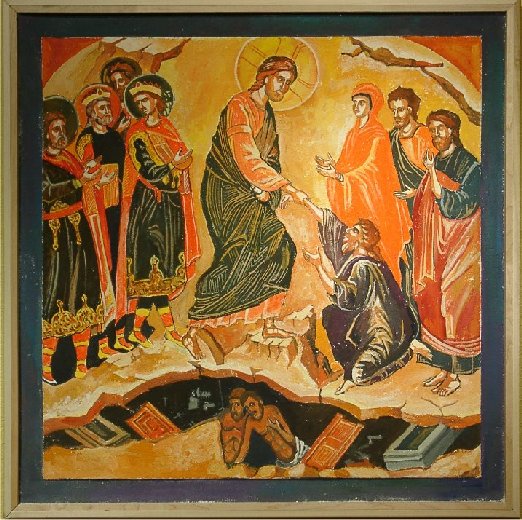
Vidu’s primary thesis in this book is that “the history of atonement thinking could be read as an ongoing conversation with the history of thinking about justice and the law.” He is clear on the fact that he does not think justice theories explain the development of atonement theory, rather that theologians are influenced by contemporary theories of justice and that contemporary atonement theories also influence theories of justice. In order to show the relationship between theories of justice and atonement theories Vidu takes the reader on at +2,000 year long journey detailing various theories of justice and their relationship to atonement theories. He begins by tracing the contours of justice and divine forgiveness in ancient Greece and Rome, however this is primarily for the purpose of setting up a discussion of Patristic thoughts on justice, the law, and Christos Victor (or dramatic theories of atonement). Here he covers Gregory of Nyssa and Augustine’s understanding of law and of atonement. Vidu goes on to address what he calls the “Legal Revolution” during the medieval period. During this period law became more professionalized than ever, and canon law came to the forefront. This created a shift from the patristic age, which saw justice as primarily about reconciliation to seeing justice as objective and commensurate with divine justice. This leads to the “legal based” atonement theories of Anselm and Aquinas, though Dun Scotus bucks this trend. However Dun Scotus deviation from the norm can still be understood as participating within the same overall conversation – except he concludes that law is completely arbitrary, so atonement need not have occurred in a way that “satisfies” the conditions of justice. Vidu also discusses Abelard’s atonement theory, which contrary to popular belief still has justice at its center point. Eventually we get to the Reformation, here the relationship between Law and Atonement becomes even more complicated – due to diverging views of the nature and purpose of the Mosaic law. This variance in views on the Mosaic law leads to a split between how Luther (crudely anti-law) and Calvin (crudely pro-law) understand the atonement. Modernity however represents a completely different shift in the conversation. During modernity morality was severed from legality and law began to be defined primarily as the will of the people. This led to the search for atonement theories which emphasized morality over the legal nature of atonement. Finally we get to the postmodern period which Vidu believes is tied together by its rejection of violence within atonement. Post-modernism has rejected any and all violence and has rejected law as a form of perpetuating violence, and therefore tries to disentangle God from this violence, thereby rejecting violent atonement theories.
“The history of atonement thinking could be read as an ongoing conversation with the history of thinking about justice and the law.” – Adonis Vidu
The most interesting chapter in the book is the final chapter, Adonis Vidu’s discussion of atonement theory and divine simplicity. In this chapter he argues that tradition by and large has always affirmed Divine Simplicity the upshot of this affirmation is that it will affect the way we describe divine action. Unlike all other agents God’s actions spring uniquely from his nature, in the sense that they have unity in ways that are unlike human agents. Human agents are fragmented in a sense, we often feel “a strife of attributes,” God however experiences no such strife because God is simple. That is, there is no action of God that is more just than loving or more loving than just, etc. because all of God’s actions are motivated by all of God’s attributes, which just are God’s being. Vidu notes that this has several implications for atonement theory:
1) God never enacts certain attributes more than others – God simply is his attributes. This makes the opposition of love and wrath impossible. While his attributes remain distinct they are never in competition
2)There is unity in divine action. This means that the Father cannot stand against the Son, etc. The Godhead is the subject of each divine action, the works of the trinity are undivided.
3) God is not moved from wrath to mercy. Divine simplicity and immutability does not allow this. There can be no change in how God feels about humanity, only his treatment of humanity has changed.
The final upshot of his thesis is that since God – being simple – acts in different ways than human beings do, we cannot strictly speak about law, justice, and atonement as tough God were simply some really big, wise, powerful human being. God’s justice, and how he enacts justice, is different than our justice and how we enact it. At best we can speak of God’s justice analogically, not univocally.
Overall this was a very fascinating book. A couple of my biggest takeaways were that…
1)The Patristic theologians (contrary to popular belief) really were concerned about justice, though their understanding of justice is different than ours.
2)Abelard’s moral exemplar theory (unlike modern moral exemplar theories) really is concerned about justice too.
3) Divine simplicity is vital to the doctrine of atonement.
If you are looking for a book that is both a survey of atonement theories in their historical and cultural contexts as well as a constructive contribution to the atonement conversation then look no further, because you get both of those things in Atonement, Law, and Justice. This book is definitely a contender for my top books of 2014 list.
This is definitely the most interesting book on the doctrine of atonement published this year.
Note: I received this book courtesy of the publisher in exchange for an impartial review.
This past week in my class on Romans and Galatians my students answered the following prompt:
Who do you believe Paul is talking about in the famous passage in Romans 7:7-25? Provide reasons and evidence for your answer (see Kruse commentary, 314-21).
This weekend, Preston Sprinkle (Professor & Vice-President of Eternity Boise) addressed this same issue on his blog. Its an insightful blog post, and I would highly recommend reading it. Here is a short excerpt of his post (see the link to the whole blog below…)
John Piper just gave a presentation at the Desiring God conference, where he argued (in part of his talk) that Romans 7 (specifically vv. 14-25) describes a believer rather than an unbeliever. And as much as I love John Piper and side with him on most theological points, I think his interpretation here is wrong.[See now this blog by Adrian Warnock, who also attended the session.] Let me first address some of his arguments and then lay out why I believe the text makes the “believer” interpretation very difficult.
First, Piper points out that the person in question “delight[s] in the Law of God, in my inner being” (7:22) and he argues that an unbeliever does not delight in the Law of God. But actually, a first-century Jew would most absolutely delight in the “Law of God” (= the Law of Moses). Circumcision, food laws, observing the Sabbath—what first century Jew would not delight in these things? (Remember, Paul is addressing those who “know the Law;” cf. 7:1). The phrase “Law of God” is not talking about just general obedience to God, but specifically the Law of Moses. The problem Paul addresses here is not lack of allegiance to Moses’ Law, but the lack of deliverance provided by the old covenant Law.
When it comes to atonement theologies people often break them up into classic, satisfaction, and subjective categories. However it might be better to classify atonement theories according to whom the atonement is directed towards. For instance, Patristic atonement theories tend to say that Christ’s work aims at achieving something in regard to the “powers.” Anselmian theories tend to have a God-ward orientation. God is the one who is “satisfied” or whose justice is met. Finally, Abelardian theories tend to (primarily) argue that atonement does something primarily to us human beings. So we might want to ask of Luther – where is atonement directed?
The following passage gives us some insight:
For, by Himself to overcome the world’s sin, death, and the curse, and God’s wrath, this is not the work of any created being, but of almighty God. Therefore He who of Himself overcame these must actually in his nature be God. For against these so mighty powers, sin, death, and the curse, which of themselves have dominion in the world and in all creation, another and a higher power must appear, which can be none other than God. To destroy sin, to smite death, to take away the curse by Himself, to bestow righteousness, bring life to light, and give the blessing: to annihilate the former and to create the latter: this is the work of God’s omnipotence alone. But when the Scripture ascribes to Christ all this, then is he Himself the Life, and Righteousness, and Blessing – that is in his nature and His essence He is God…. When therefore we teach that men are justified through Christ, and Christ is the conqueror of sin, death, and the everlasting curse, then at the same time we testify that He is in his nature God. – Commentary on Galatians 3:13
There are a couple things to note from this passage:
The Presence of “Powers” – For Luther these powers are sin, death, and the curse. Much like classic theories, the problem is our bondage to these powers.
The Importance of Incarnation for Atonement – Most Patristic theologians believed that atonement started the moment Christ became incarnate. (See Irenaeus and T.F. Torrance’s appropriation of his theology.) Its interesting to note that for Luther atonement depends quite simply upon the battle waged by the divine nature against the powers. This is expressed very clearly when Luther says that “a higher power must appear, which can be none other than God….” i.e. for Christ to accomplish the victory he must be in his very nature God.
Victory not Payment – Again this is very clear, the powers have to be defeated. We are under bondage to the powers. However quite unlike the classical theories, the powers aren’t demonic, they are sin, death, and the curse (and elsewhere the Law).
From this passage alone it seems as though Luther doesn’t favor a “God-ward” atonement, rather it is a version of atonement aimed at achieving something in regard to the powers.
Doug Sweeney shares some thoughts on Dane Ortlund’s new book on Jonathan Edwards:
OK, I know what you’re thinking. We’ve had a spate of books on Edwards intended to edify believers in the past several years. But give this new volume a chance. Dane C. Ortlund is an excellent theologian from Wheaton College. He has written on Edwards before. He knows Edwards’ thought well. Plus, he focuses here on what he calls “the organizing theme” of Edwards’ approach to Christian living: beauty. I love it. “To become a Christian is to become alive to beauty,” Ortlund claims. “This is the contribution to Christianity that Jonathan Edwards makes and no one has made better” (p. 23).
In thirteen chapters, Ortlund walks his readers through the major elements of Edwards’ understanding of faithful practice, from conversion to joy and gentleness, Bible reading to prayer, good works to pining for heaven, showing that all of these are inspired in the hearts of true Christians by the beauty of the divine in the Godhead and the world.
Ortlund is a friend, as are the editors of the series in which this book takes its place (Stephen Nichols and Justin Taylor). We consulted on its contents, so I’d better keep things short in the name of fair play.
I’ll conclude with my endorsement, printed on the book itself: “The supreme value of reading Edwards is that we are ushered into a universe brimming with beauty,” writes Ortlund (p. 15). I couldn’t agree more…..
A few days ago I posted some thoughts on what I think Paul meant by “the righteousness of God” in Romans 3:21-26
21 But now, apart from law, the righteousness of God has been disclosed, and is attested by the law and the prophets, 22 the righteousness of God through faith in Jesus Christ for all who believe. For there is no distinction, 23 since all have sinned and fall short of the glory of God; 24 they are now justified by his grace as a gift, through the redemption that is in Christ Jesus, 25 whom God put forward as a sacrifice of atonement by his blood, effective through faith. He did this to show his righteousness, because in his divine forbearance he had passed over the sins previously committed; 26 it was to prove at the present time that he himself is righteous and that he justifies the one who has faith in Jesus.
When I asked my EBC students – what does Paul mean by “righteousness of God” it seemed like they kept getting tripped up by this phrase. So I tried to provide some clarification as to what Paul really meant. What I noticed was that their answers were mainly based on some historical views of what God’s righteousness is. These are more-so “theological” views rather than “exegetical views.” They might be right and true, but they aren’t what this passage is talking about…
Here are a couple of historical views as to what Paul meant by “the righteousness of God” in Romans 3:21-26
1) God’s Justice – This view, popular prior to the Reformation, tended to refer to the righteousness of God as his justice particularly in the context of his role as a judge over sinful humanity.
Judgement Day
While this certainly is a part of God’s righteousness, we should not think of God’s righteousness as simply his judgment upon guilt. God certainly is the righteous judge but he is so much more than that!
2) The Righteousness Imputed to Believers – Martin Luther really popularized the idea that the righteousness of God is God’s gracious gift of righteousness that is given to all those who believe in Jesus Christ. This is the sort of righteousness that emerges from God’s own righteousness, it is imparted to those who have faith, and God recons those who possess this alien righteousness as justified. Note what Luther himself says:
For God does not want to save us by our own righteousness but by an extraneous righteousness which does not originate in ourselves but comes to us from beyond ourselves, which does not arise on our earth but comes from heaven. Therefore we must come to know this righteousness which is utterly external and foreign to us. That is why our personal righteousness must be uprooted.
-Martin Luther’s Lectures on Romans
Martin Luther’s Superb Sense of Fashion is displayed in his choice of hats.
This conception of “the righteousness of God” is definitely the most common among evangelicals. However, despite that this concept certainly exists within scripture, Romans 3:21 doesn’t not refer to this sort of righteousness.
3) God’s Saving Activity – Ernst Kasemman popularize the notion that the phrase “the righteousness of God” connotes God’s active sovereignty over the whole cosmos, especially God’s power rescue and restore creation. As Bruce Longenecker says, “The righteousness of God is shorthand for talking about God’s act of cosmic rectification, in which God is exercising his victory over the forces of chaos that roam through his creation and set it in disrepair” (Thinking Through Paul). This reading fits well with how the term is used in the OT, during 2nd temple Judaism, and Paul’s narrative theology.
It is my opinion that this third option is the one that best fits what Paul is talking about in Romans 3….
Which of these three interpretations do you lean towards?
Karen Swallow Prior, professor of English at Liberty University and Research Fellow with the Ethics and Religious Liberty Commission of the Southern Baptist Convention, begins each semester by exhorting her students to see the connections between the life of the intellect and the life of faith. She makes a sharp case for why Christians must be readers and writers.
Even in a world supposedly driven by pictures and sounds, books continue to be one of the most important ways we shape culture. Here are three highlights from this article:
1) Christianity is a religion of the written word. Christianity gives a primary place to the word over the image: God’s highest form of communication with us is through the written word (from the Ten Commandments to Holy Scripture to Jesus as the Word); God cautions us about the power of visual images or “graven images” (see Neil Postman’s Amusing Ourselves to Death), and the Protestant Reformation reinforced the primacy of words over images); Christianity is responsible for preserving and disseminating the written word and literacy throughout the world as the invention of the printing press was motivated by the desire of Christians to get the Bible into the hands of the people. The word both spoken and written is central to our faith in countless ways.
2) When we take delight in literary creations, we imitate God. God took delight in his creation in looking upon it and declaring that “it was good.” It is good to take pleasure and enjoyment in our good creations, including literary ones.
3) Literary Christians are better equipped to engage a postmodern culture. Postmodernism is characterized by an emphasis on language and “story”; for many today the aesthetic experience has replaced the religious experience. Christians who understand this can more effectively engage the current culture.
Every issue of First Things Magazine includes a section titled “While We’re At It.” In it editor R.R. Reno writes short, witty, and smart comments on current events. The section is filled with commentary that is too short to be an article but a little too long to be tweetable. Today I give you the best of this month’s “While We’re At It.”
Wilson has a take on other First Things regulars. Carl Trueman: “No one after tasting Old Calvinism desires new, for he says ‘the Old is better.’” I think that’s best understood as the Scotch whiskey principle of theology. Peter Leithart: “I wouldn’t have a problem with Protestants if they were all like me.” Wait isn’t that the first principle of Protestantism?
Union Theological Seminary here in New York has taken a stand. It’s divesting from fossil fuels. Investment chairman Michael Johnston intones, “Climate change is affecting this globe. It’s killing people, and its going to destroy what the world looks like as we know it. As a seminary we have a moral obligation to no longer profit from the production of fossil fuels.” Presumable that means divesting from companies that are engaged directly in coal, gas, and oil exploration and production, not their use. After all, the latter would entail divesting from the modern economy as a hole since so many companies gain a distinct advantage from using gas powered trucks rather than horse-drawn wagons, thus profiting from the production of fossil fuels.
Conceits about “fossil fuel” divestment aside, what comes through loud and clear is moral self-congratulation. Seminary President Serene Jones: “As a seminary dedicated to social justice, we have a critical call to live out our values in the world. Climate change poses a catastrophic threat, and as stewards of God’s creation we simply must act.” Indeed, and one thinks of the catastrophic threat posed by our all-too-human anger, bitterness, greed, lust, and will to power. But worry not, rumor has it that the trustees of Union Theological Seminary are considering resolution to divest from the human condition. (Note: I case you missed the punch line – they already have with the denial of original sin.)
F.A. Hayek observed that conservatism has little of no place – or at least no positive place – for change. “It has for this reason, been the fate of conservatism to be dragged along a path not of its own choosing.” True, but do we ever reliably go down paths of our own choosing? Take life as an example. The path toward death isn’t one I’ve chosen, and dragging my feet to slow my way toward that destination strikes me as exactly the right reaction. When it comes to death, I’m very reactionary.
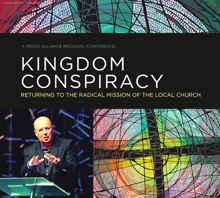 to the restoration of communities on the Gulf Shore following Katrina, to cleaning up form the devastating tornadoes of the Plains, or to fighting sexual trafficking in any country than it is to be committed to building community and establishing fellowship in one’s local church… It is more glamorous to do social activism because building a local church is hard. It involves people who struggle with one another, it involves persuading others of the desires of your heart to help the homeless, it means caring for people where they are and not where you want them to be, it involves daily routines, and it only rarely leads to the highs of “short-term mission” experiences. But local church is what Jesus came to build, so the local church’s mission shapes kingdom mission.
 contemporary theories of justice and that contemporary atonement theories also influence theories of justice. In order to show the relationship between theories of justice and atonement theories Vidu takes the reader on at +2,000 year long journey detailing various theories of justice and their relationship to atonement theories. He begins by tracing the contours of justice and divine forgiveness in ancient Greece and Rome, however this is primarily for the purpose of setting up a discussion of Patristic thoughts on justice, the law, and Christos Victor (or dramatic theories of atonement). Here he covers Gregory of Nyssa and Augustine’s understanding of law and of atonement. Vidu goes on to address what he calls the “Legal Revolution” during the medieval period. During this period law became more professionalized than ever, and canon law came to the forefront. This created a shift from the patristic age, which saw justice as primarily about reconciliation to seeing justice as objective and commensurate with divine justice. This leads to the “legal based” atonement theories of Anselm and Aquinas, though Dun Scotus bucks this trend. However Dun Scotus deviation from the norm can still be understood as participating within the same overall conversation – except he concludes that law is completely arbitrary, so atonement need not have occurred in a way that “satisfies” the conditions of justice. Vidu also discusses Abelard’s atonement theory, which contrary to popular belief still has justice at its center point. Eventually we get to the Reformation, here the relationship between Law and Atonement becomes even more complicated – due to diverging views of the nature and purpose of the Mosaic law. This variance in views on the Mosaic law leads to a split between how Luther (crudely anti-law) and Calvin (crudely pro-law) understand the atonement. Modernity however represents a completely different shift in the conversation. During modernity morality was severed from legality and law began to be defined primarily as the will of the people. This led to the search for atonement theories which emphasized morality over the legal nature of atonement. Finally we get to the postmodern period which Vidu believes is tied together by its rejection of violence within atonement. Post-modernism has rejected any and all violence and has rejected law as a form of perpetuating violence, and therefore tries to disentangle God from this violence, thereby rejecting violent atonement theories.



 CWoznicki Think Out Loud