Calvinism and Democracy

In 2012 a group of scholars gathered at Princeton Theological Seminary for a conference titled, “Calvinism and Democracy.” The purpose of this conference was to reflect upon the neo-Calvinist legacy, to explore its theological roots, and to assess in what ways this tradition might provide resources for democratic criticism and renewal. The Kuyper Center Review (Volume Four): Calvinism and Democracy represents the published proceedings of this conference.

Although this collection of essays covers a wide range of topics there are two themes that tie all eleven essays together: 1) The notion that democracy today is facing a crisis and 2) The fact that neo-Calvinism has always had a complicated relationship with democracy. Despite these unifying themes this variegated collection of essays lacks coherence. Since there does not seem to be a strong organizing principle behind the arrangement of these essays, for the sake of the review I will divide these essays into three categories: historical essays on Abraham Kuyper, prescriptive essays based upon Kuyper’s theology, and essays examining other theologians.

The historical essays include contributions by seasoned Kuyper scholars George Harinck and Harry Van Dyke, as well as an essay by Clifford Anderson. Harinck contributes the first essay in this collection by exploring the reasons behind neo-Calvinism’s complicated relationship with democracy. Anderson makes perceptive observations regarding the logic behind liberalism and democracy. He argues that the Kuyperian notion of divine sovereignty rather than popular sovereignty allows us to hold these two ideologies together. Finally, Van Dyke makes two contributions; the first is a translation of correspondence between Willem Groen van Prinster and Kuyper regarding Kuyper’s election to parliament. The second is an essay addressing the nature of Kuyper’s democracy and his role as an emancipator of the kleine luyden in the Netherlands.

However, this collection does not limit itself to looking back at neo-Calvinism’s historical and theological roots; in the group of prescriptive essays Jeffrey Stout, Michael Bräutigam, and Michael DeMoor look to Kuyper as a resource for democratic criticism and renewal. Stout turns to Kuyper’s The Social Problem and the Christian Religion in order to prescribe a course of action for addressing the problems of poverty, domination, and exploitation. Bräutigam makes the case that Kuyper’s distinction between the church as an institution and as an organism “provides a significant motif for Christian political involvement” (p. 67). Finally, DeMoor calls upon other political theologians to develop a specifically neo-Calvinist conception of deliberative democracy rooted in the God’s sovereignty.

The final group of essays are focused on theologians other than Kuyper. David Little argues that Calvinist theology has made “a significant, if sometimes very ambivalent contribution” to the rise of modern constitutionalism (p. 24). He makes this argument by turning to the political theology of John Calvin, John Cotton, and Roger Williams. In “Distinctively Common,” Clay Cooke utilizes the thought of Herman Bavinck to develop ways to hold on to Christian peculiarity and the common good in the public square. James Eglinton also looks to Bavinck’s theology and shows how Bavinck could support the democratic development of the Netherlands while insisting that churches ought to be organized around principles that differ from democracy. Finally, Brant Himes shows how Kuyper’s and Dietrich Bonhoeffer’s Christology and doctrines of creation enable them live our their convictions that Christianity demands “public discipleship.”

Calvinism and Democracy is a superb collection of essays that will serve to stimulate further theological and political reflection upon its subject matter. Many of these essays provide avenues for further scholarly research. For instance Clay Cooke’s essay suggests that Bavinck sees cruciformity as a political virtue. One might want to further investigate what it looks like in practice to engage in politics in a cruciform manner. Michael Bräutigam’s essay “The Christian as Homo Politicus” explains how Kuyper used new forms of media to stimulate political action among the kleine luyden. It would certainly be a worthwhile project to see how new forms of social media, including twitter and blogs, could be used to continue Kuyper’s legacy of stimulating political action within the church. In addition to stimulating further research, this collection will also serve ministers who are attempting to form their own theology of political action within the church. Clay Cooke’s and Michael Bräutigam’s essays will be especially helpful. Both essays move beyond mere theory and develop practical courses of action for the church.

Despite possessing these strengths, this collection certainly has its flaws. One weakness of the collection as a whole is its lack of organization. There is no apparent logic as to how the individual essays were organized within the collection. Several essays also have major flaws. For instance, DeMoor’s essay does not make any significant contribution to neo-Calvinist scholarship, here merely calls for someone else to develop a neo-Calvinist model of deliberative democracy. The essay would have been stronger if he had developed it a model himself. Little’s essay also has a serious flaw; although he addresses John Cotton’s and Roger Williams’s political theories he never specifically addresses their distinctive Calvinist theology. This certainly undermines his thesis. Despite these drawbacks Calvinism and Democracy is a valuable collection that will stimulate further scholarly work and encourage ministers to develop their own theology of political action.

Jonathan Edwards on the Atonement (Review)

It is well known that some of Edward’s followers, sometimes known as the New Divinity, advocated for a view of atonement known as the “governmental theory” or according to Oliver Crisp, penal non-substitution.  This view (in its orthodox form) was first proposed by Hugo Grotius. He suggested that Christ acted as a penal example, demonstrating God’s aversion to sin and paying respect to God’s law. One Edwardsean, Amasa Park picked up this governmental theory and ran full speed with it, even outlining the theory in nine propositions.

Even though its commonly accepted that the New Divinity saw themselves as developing jonathanedwardsontheatonement__76739-1490203753-315-315their governmental theory in light of Edwards’s doctrine, academic debates rage as to whether Edwards’s followers were actually following Edwards’s trajectory in this area or whether they significantly departed from his thought.  For example, B.B. Warfield argued that the Edwardseans forsook Edwards’s teachings. John Gerstner argued that they though they followed Edwards but had no justification in saying so. Finally, and more recently, Oliver Crisp has argued that Edwards knew and approved of these Edwardsean ideas. Brandon Crawford, author of Jonathan Edwards on the Atonement, enters into this debate by offering an in depth account of Edwards’s theory of atonement. His hope is that by focusing on Edwards we will be in a better position to evaluate how his legacy was received.

In order to carry out his aims Crawford begins by setting the historical context of Edwards’s doctrine of atonement. He does this by surveying early and medieval accounts (ch. 1), Reformation and Puritan accounts (ch. 2), and alternative perspectives in the Reformation and Puritan eras (ch. 3). A few questions arose in my mind as I read this section. Did he try to survey too many perspectives? Probably. What makes “alternative perspectives” to be “alternative?” I’m not sure. I also had a few critiques of these sections. One major one is that I think he reads penal substitution too heavily into his early sources. Yes, PSA is there in some form, but not in the full blown sense Crawford wants it to be. I think his overemphasis on the presence of PSA is an important move for Crawford. He needs PSA to be the standard atonement theory in order to say that in downplaying or ignoring PSA the Edwardseans were being unfaithful to orthodoxy.

After three chapters of historical context Crawford finally gets to the heart of the matter: Edwards’s doctrine of atonement. He begins with a chapter addressing Edwards’s theology of God’s glory. Although it is an accurate overview of the topic he hardly engages with any scholarship on the topic, he also doesn’t do a great job of connecting the topic of this chapter to the main topic of the book: atonement. The connection is there but it is not very explicit. The next two chapters present Edwards’s account of salvation history and his definition of sin (ch.5) and the Penal Substitutionary nature of Edwards’s doctrine (Ch. 6). This latter chapter was the most interesting. Here he shows that Edwards conceived of atonement mainly as 1) Penal Substitution and 2) Penal Example. Crawford says, “Edwards believed that Christ’s death also served as a penal example, publicly vindicating God’s honor and law, which God also required before sin’s penalty could be fully satisfied.” (119) Crawford concludes:

Edwards’s doctrine of atonement, then, included two prominent concepts: Christ as penal substitute and Christ as penal example. As the two concepts are placed side by side it becomes apparent that these ideas were not contradictory in Edwards’s mind, but complementary.

Crawford follows up on this chapter with a chapter addressing other themes in Edwards’s doctrine of atonement. However, chapter 6 sticks out as the most significant, at least in my mind, for addressing the debate about Edwards’s legacy.

Crawford’s conclusion about Edwards’s legacy is that Edwards was classically Reformed and that his followers deviated from Edwards’s reformed orthodoxy. According to Crawford, Edwards bears some responsibility for this, as he “may not have sufficiently guarded against the separation of the substitution and governmental components of his system… Yet Edwards does not bear all of the responsibility. He is not responsible for how his words may have been misunderstood by his successors after they took possessions of his manuscripts.” (140). This is a fair and even-keeled conclusion, which I think is argued for persuasively in chapter 6. However, I think it could have been argued for in a journal article rather than in a whole book.

Note: I received this book from the publisher in exchange for an impartial review.

10 Reasons You Should Go to Seminary

I recently came across an older blog post by Scot McKnight about going to seminary. McKnight is one of my favorite authors and biblical scholars. He also teaches at a seminary. I respect the guy a ton! So if he says, “here are 10 reasons you should go to seminary” I listen, and I think you should too.

Here are some reasons for going to seminary:

1. Gift enhancement. Seminaries will not “gift” a person but seminaries can almost always enhance the gifts God has given to a person. I have argued for years that seminaries work best when they are populated by ministers and not by folks who think or want, but aren’t sure, if they are gifted or called. What seminaries do well is enhance gifts.

2. Biblical and Theological enhancement. Seminary students will study the Bible, the whole Bible, and that will be a first for some. And, they already have a theology; seminaries can enhance that theology, both by way of subtraction (getting rid of some careless ideas) and addition (adding better ideas). Students have the opportunity to study great theologians, and pity the seminary that assigns textbook-ish theology books, and I’m thinking here of Athanasius and Augustine, Aquinas and Anselm, Luther and Calvin (and the Anabaptists like Hubmaier), and then into the modern era with Barth and Moltmann.

3. Personal enhancement. There was a day when seminaries assumed seminary students would be praying and reading the Bible and practicing the disciplines and attending church … they assumed formation was already underway. No more. Increasingly, seminaries are making spiritual formation — personal enhancement — a part of each course in the curriculum. I will be. 

4. Dedicated time. Let’s face it, to develop theologically as a minister you need time, and that’s what seminary does. In sociological terms, seminary can be a time of encapsulation: you are isolated from your work, your church, and you are holed up in a class with other students and a professor, and you wander into quiet libraries and you study — it is that dedicated time that seminaries can offer. Most pastors aren’t afforded the luxury to study in big chunks of time, so going to seminary, even if it is as a commuter, offers dedicated time. It probably won’t happen without dedicated time.

5. Access to specialists. One of the problems with seminaries is that they can take on the flavor of a research institution and its professors want to be left alone to do historical and technical research and write books and articles and monographs for the academic guild. I am proud to say at Northern, the aim is for the professors to be both specialist enough to be able to work in the guild but who are shaping their lives toward pastors, toward ministry, and toward the church. Seminaries provide specialists to ministers who need specialists on the topics of the day.

6. Theological diversity. Some seminaries (names omitted) prefer to have faculty who all think alike. I’m 100% persuaded diversity, theological diversity, is the name of the game for seminaries. No two pastors think exactly alike and no two professors think alike, and having theological diversity (within some creedal constraint) that interacts with one another sets a pattern for ministry for years to come. Taking classes from professors who don’t agree with you, or who think differently, will make you a better minister.

That is just 6/10! You can read the rest here.

By the way… I think Fuller Seminary is a great option. Just saying!

8007842726_9f6f472557
This is a picture of Fuller Seminary’s library – oh and also  of California’s year-round beautiful weather.

(Review) Beyond the Modern Age

In Beyond the Modern Age: An Archaeology of Contemporary Culture Bob Goudzwaard (Free University Amsterdam) and Craig Bartholomew (Redeemer College) provide an in-depth examination and critique of four modern worldviews. These four worldviews are: 1) the classical modern worldview, 2) the structural-critical worldview, 3) the cultural-critical worldview, and 4) postmodernism. In formulating their critique they lean on the work of Philip Reiff on culture and religion, Rene Girard on desire, and Len Goodman & Abraham Kuyper on pluralism. 513vpc01u1l-_sx322_bo1204203200_With this arsenal of contemporary thinkers, they proceed to put forth a positive proposal for a worldview which can contend with modern worldviews. This is a worldview which is thoroughly Christian but also fits well within our increasingly pluralistic world.

So what does this proposed Christianity for public life look like? The authors propose that Christianity which will be able to engage in our pluralistic world, and compete among the panoply of worldviews will be marked by the following:

  1. It will be self-critical, willing to take a close look at itself, explore how it has been positively and negatively shaped by modernity, and resubmit itself to the authority of Scripture and tradition.
  2. It will see clearly the relevance of the gospel for the whole of creation, for the whole of society and not just the individual soul or the institutional church.
  3. It will be genuinely committed to the flourishing of all creation.
  4. It will have a preferential option for the poor.
  5. It will take spiritual formation seriously.
  6. It will attempt to “live the solution.”

Their positive proposal is essentially and expansion upon points 3, 4, and 6. The problem of modernity, as they see it, boils down to an interconnectedness between population growth, environmental crisis, material production and consumption, economic crisis, decreasing global security, and deepening world poverty. The four modern worldviews have proposed solutions to these problems, however, they have not only failed to provide an adequate solution, some of these worldviews exacerbate the problems! Their answer to these problems is to set forth a solution in light of Reiff’s work on the sacred in culture, Girard’s work on desire, and the preferred option for the poor. They call this solution an economy of care. An economy of care flips upside down what modernist economies say is the “bottom line”:

Suppose our first priority is not dynamic economic growth but rather the ability to safeguard time, provide justice for the poor, protect and restore the environment, create more opportunities for meaningful employment, and care for the vulnerable. There is nothing to prevent these needs from becoming the starting point in an economic approach rather than expansion of material prosperity at all costs. (235)

They call this approach an “economy of care.” Although it may sound crazy, they are convinced that it is not simply wishful thinking. The authors point to several small scale instances in which an economy of care has worked for local communities. They also point to how an economy of care has had an impact upon the well-being and even economy of Holland. A Dutch study has shown that long term an economy of care would have a more favorable impact than either the market economy or welfare state on 1) employment levels, 2) quality of work, 3) the environment, 4) energy saving, 5) capital transfer to the South, and 6) government deficits. (254) And this economy of care could be implemented if “the Dutch people were willing to maintain average income and consumption levels at their present level and if they agreed to cooperate in orienting society, as a whole and in parts to these broader ends.” (254) All this to say, an economy of care seems not only plausible, but realistic! That is until we start thinking about the sinful condition of humanity. Maybe its my Calvinist bent (or maybe my realism), but I tend to believe that people are actually pretty selfish. Maybe they aren’t selfish with people they love and know, but they are certainly selfish about people that bear no relation to them. Not only that but people have a near future bias. In other words, people are prone to taking actions which serve their near futures rather than their further out futures. This means, that even though it may be irrational, people in general will be less likely to make sacrifices in the near future for the sake of a more secure future further out. Think about how people treat their health. Most people are more likely to not workout now because its painful for the near future even though rationally they know it is best for their far out future. If we can’t even get people to work out, how will we convince people to sacrifice their economic good in the near future for the sake of their far-out future, and more so, for the sake of the far-out future of other generations and of people from other nations and states! There is absolutely no reason to do so. That is, unless, there is a stronger drive compelling them to do so. Something like the gospel. The gospel has the power to reshape our desires, to shift our desires from self-centered and near-future oriented, to other-centered and eschatologically focused. The gospel really does have power. This book shows that the gospel really could have an impact on the flourishing of this world, and if taken seriously, provides a stronger alternative to the current worldview that are available.


Note: I received this book from the publisher in exchange for an impartial review.


(Review) The Tech-Wise Family by Andy Crouch

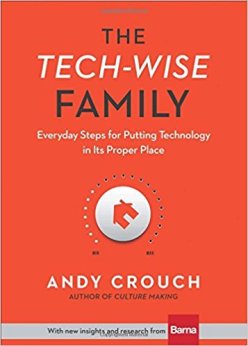
My wife and I have a beautiful 16 month old daughter. She loves to play around and she really loves to read. Given my profession, the fact that she loves books brings joy to my heart! Although she loves books, probably more than any other form of entertainment, Mothers Dayher mother and I still have the difficult task of figuring out how much technology we want to let her have access to at this early stage of her life. Should she have access to our phones? Should she be able to look at photos on them? Play games on them? Use the camera? Or what about the computer, she gravitates towards it! She hits the keys like she’s typing up something really important. And then, there is the ever important question, how much TV is too much TV? These are all questions that we as young parents are trying to figure out. Thankfully, Andy Crouch, author of some of my favorite books including Culture Making and Strong and Weak, has written a new book titled The Tech-Wise Family: Everyday Steps for Putting Technology in Its Proper Place.
One of the most helpful features of this book are his 10 commandments:

  1. We develop wisdom and courage together as a family.
  2. We want to create more than we consume. So we fill the center of our home with things that reward skill and active engagement.
  3. We are designed for a rhythm of work and rest. So one hour a day, one day a week, and one week a year, we turn off our devices and worship, feast, play and rest together.
  4. We wake up before our devices do, and they “go to bed” before we do.
  5. We aim for “no screens before double digits” at school and at home.
  6. We use screens for a purpose, and we use them together, rather than using them aimlessly and alone.
  7. Car time is conversation time.
  8. Spouses have one another’s passwords, and parents have total access to children’s devices.
  9. We learn to sing together, rather than let recoreded and amplified music take over our lives and worship.
  10. We show up in person for the big events of life. We learn how to be human by being fully present at our moments of greatest vulnerability. We hope to die in one another’s arms.

As a parent I found commandment #2 and the chapter about it especially interesting. He stresses that children are driven to create – if we nudge them in that direction. However too often, cheap technology squelches that drive to create. “For a child’s creative development, the inexpenseive, deep, organic thing is far better than the expensive, broad, electronic thing. And yet we are constantly tempted to give them toys that work on their own – that buzz and beep and light up without developing any skill.” (80) Chapter 6 – which treats the topic of boredom was also especially helpful. Apparently the English word for boredom does not appear until the 1850’s and its root word “bore” appears only a century earlier. Crouch argues that the technology that promises to free 41vj8hqrnkl-_sx355_bo1204203200_us from boredom actually makes it worse, it makes us more prone to seek distraction. Its even worse for kids! Crouch concludes that “the more you entertain children, the more bored they will get.” (141) That is powerful stuff! A short-term solution can actually become a long term problem. In this chapter he takes aim at the practice of sitting kids in front of videos in order to entertain them, or keep them busy while mom and dad try to get some work done around the house. Talk about convicting!  Videos he says, are designed to fill a screen with a level of vividness and velocity that does not exist in the real world – or only very rarely. Some entertainment is created to never require too much concentration or contemplation, it grabs our attention and constantly stimulates our desire and delight with novelty. It desensitizes us. In light of all of this it gets harder and harder to stay entertained. The ordinary, in turn, becomes boring. Dirt, grass, trees, fields, birds, all the things that require attention, the things that you see more of when you slow down and look closer, become boring. I certainly don’t want that for my daughter! I want her to delight in the magic that is God’s creation! I don’t want to stifle her creativity with quick solutions, and I don’t want her to lose her awe of the ordinary. This book serves as a fine warning to me, which will keep me from ignorantly falling into practices which counteract my desires for her.
As you can probably tell, this book has made a significant impact on the way I think about technology and parenting. If you are a parent, I highly recommend this book. Even if you are not, this book might help you bring some discipline into your technology filled life.

Note: I received this book in exchange for an impartial review.

(Review) Flesh and Blood: A Dogmatic Sketch Concerning the Fallen Nature View of Christ’s Human Nature

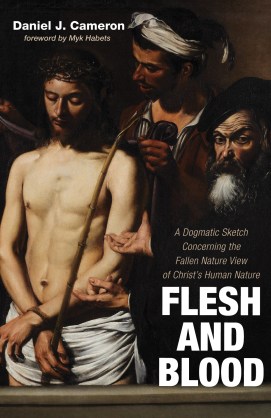
Christ has a fallen human nature. That is the claim that Daniel Cameron, adjunct instructor at Trinity Christian College wants to defend in his short book titled: Flesh and Blood: A Dogmatic Sketch Concerning the Fallen Nature View of Christ’s Human Nature.

According to many Christians, that statement is not only wrong, but it seems to be heretical. Why is that? Well, supposedly, affirming the fallen nature of Christ would sacrifice the sinlessness of Jesus, and thus undermine the gospel itself. However Cameron is not unique in making this claim, far from it! He takes his cue from T.F. Torrance himself. The logic that undergirds Torrance’s position is the non-assumptus principle, i.e. the unassumed is unhealed. According to Torrance, if Christ does not assume our fallen human nature, then Christ cannot heal and sanctify it. This position is obviously contentious. In fact in recent years Kevin Chiarot, Oliver Crisp, and Luke Stamps have attempted to show that it is impossible to say that Christ did in fact assumePrint a human nature and maintain the integrity of the gospel. Its in the midst of these discussions that Daniel Cameron attempts to articulate a defense of the Fallen Nature view, the result of which is five really short chapters on the topic.
Chapter one is a brief introduction to the topic. The second chapter looks into what exactly it means to say that the Divine Son assumed a fallen human nature. Chapter three looks at the pros of the unfallen human nature view, drawing from the work of Oliver Crisp, Kevin Chiarot, and Luke Stamps. Chapter four proposes a way to retain what is helpful from the fallen and unfallen views while avoiding the potentially harmful consequences of the fallen view. Chapter five closes by noting what role the Holy Spirit may play in the fallen nature view.

Cameron’s conclusion is that there is in fact a way to affirm the fallen nature view while avoiding the harmful consequences of it. He believes that we can affirm the fact that Christ had a fallen human nature and that Christ was both impeccable and not corrupt and not loathsome in the sight of God. Thus according to Cameron, we can say that Christ had a fallen human nature, and that Christ “truly and really atoned for our sins as the spotless Lamb of God who takes away the sins of the world.” (71)

Despite Cameron’s interesting and well thought out defense I remain unconvinced of his position. There are several reasons why. 1) The Fallenness view is a hard deviation from the tradition of the church. While this may not in and of itself be a problem, I believe it represents a rather large obstacle. The church tradition might be wrong…. but a lot more needs to be shown why we should abandon tradition. 2) As Luke Stamps has put it, the fallenness seems “to ignore the fact that we can affirm what might be called the fallen experience of Jesus without positing a fallen nature to him.” (You Asked, Gospel Coalition) I still remain unconvinced by Cameron that this is not the case. 3) Cameron works with an anemic view of sin. Cameron says that Christ can have a fallen nature and not be loathsome in the sight of God, but I remain unconvinced. I think Veli-Matti Kärkkäinen is right when he says that “only the revisionist modernist view of sin makes it possible to attribute a sinful and fallen human nature to Christ and at the same time consider him sinless because of lack of sinful acts.” (Christ and Reconciliation, 174) Our sinful state, is an ontological reality prior to, but inseparable from our sinful acts. Our fallen nature, and not just our sinful acts, makes us “loathsome” to God and in need of reconciliation. If this is actually the case, which I believe it is, then the fallen nature view suffers from a major problem of making Christ “loathsome” to God.

Despite these three issues I have with the fallen nature view, I can certainly say that this is a fantastic introduction to the Torranceian idea of Christ having a fallen nature. If you want to get a clear picture of what Torrance’s view is, and what some of the major objections are to his view, as well as a cogent defense of this view, then this is the place to start. If you want a summary of Torrance’s view and a critique of the view then I would recommend Kevin Chiarot’s The Unassumed is the Unhealed. Nevertheless, Flesh and Blood is a fine place to start.

Note: I received this book from the publisher in exchange for an impartial review.

(Review) Embodied Hope by Kelly Kapic

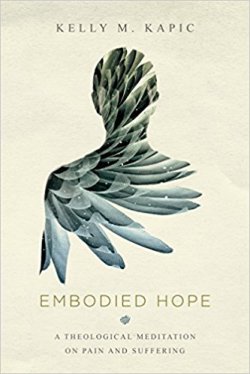
The problem of evil has been solved. Well, at least the logical problem of evil has been, which for the lived experience of most human beings is radically insufficient. Pain and suffering present a radically real problem for many people. People die, get sick, and deal with chronic pain. For some, these realities pose a major stumbling block to seeing God as good. Kelly Kapic, the author of Embodied Hope has experienced these realities first hand. His wife has dealt with the ravages and emotional toll of physical suffering. In light of this he has chosen to write a book which is both theological and pastoral, exploring the truths about God and ourselves which have bearing upon this problem of pain and 51a5lkxgr8l-_sx331_bo1204203200_suffering.

Naturally, the problem of evil is a really large topic, thus Kapic chooses to limit himself in two ways: First, he chooses to address Christians who suffer. Thus this book isn’t meant as a global defense against the existential problem of evil, or evil in general. It is aimed ad Christians who experience suffering. Second, he chooses to deal with suffering associated specifically with serious illness or physical pain.

The book is roughly divided into three parts. Part one deals with the limitations of easy answers often given to the problem of suffering and he deals with the nature of biblical lament. Here he also explores what it means to be embodied creatures. Part two turns to Christology in order to address some of these issues. Kapic believes that “Only by looking to this man [Christ] can we reorient our experience of suffering in a way that is truly Christian.” (15) In part three Kapic relates ecclesiology to the problem of suffering. He says that in the body of Christ we “discover a pattern for Christian discipleship that allows for genuine struggle, communal support, and transformative affection.” (15)

As someone who would consider myself to be a “pastor-theologian” I can really appreciate the nature of this work. Kapic works hard to make sure that our theological reflections are not separated from our pastoral practice. I found Kapic’s chapter on the Incarnation to be especially strong in maintaining this bond. Here he examines the theology of Athanasius and Warfield and concludes that,

The physicality of the Messiah takes us to the heart of the gospel and God’s promise, not just of sympathy but of rescue. God has come, come near, come to be God with us and God for us!” (75)

This is a powerful truth with major pastoral implications. Much incarnational theology has swung towards saying that the most important part of the incarnation is that Christ now has solidarity with us. This is certainly true, and pastorally significant, but solidarity without rescuing doesn’t offer much hope!

His chapter on confession was also enlightening. I have rarely seen a chapter on confession in a book addressing suffering. If I have, they are often very poorly written, wrongly teaching that our sickness/suffering is always tied to some hidden sin. So what does confession have to do with healing? Confession before others can help us disentangle our pain from the idea of personal punishment, it liberates us from shame and condemnation, it allows us to meet Christ in the other, and allows us to make ourselves truly vulnerable to the healing presence of God. This is truly powerful stuff!

So who should pick up this book? Undoubtedly, pastors! I mentioned above that this is a great example of pastoral theology. Kapic doesn’t present anything “new” here, or anything particularly interesting to academic theologians. However, he does an amazing job of making theology “real” for pastors and laypersons. I often hear that systematic theology is irrelevant or that it’s a nice intellectual pursuit, but here Kapic shows us that is simply untrue. The sort of historical theology  and systematic theology he is engaging in this book is supremely relevant to the life of anyone who calls themselves a Christian.

Note: I received this book from the publisher in exchange for an impartial review.

The Philosophy of the Hebrew Bible

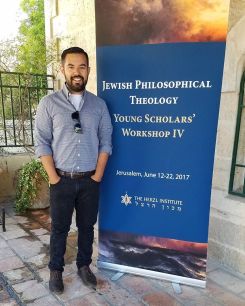
I no longer find myself sitting in the bright, sunny, and (awfully) hot Mediterranean climate of Pasadena, rather I find myself sitting in the bright, sunny, and (awfully) hot Mediterranean climate of Jerusalem. So why am I here? To engage with a similar sort of project that the AT project is engaged with at Fuller Seminary; I am here to think through the relationship between Scripture, analytic philosophy, and the life of faith.

Jerusalem

On June 12th-23rd a group of Christian and Jewish scholars whose expertise range from biblical studies, to political philosophy, to analytic theology gathered to discuss Yoram Hazony’s book, The Philosophy of Hebrew Scripture.

In this book Hazony contends that western culture has made a major mistake in not seeing the Hebrew Bible as a significant philosophical work. Plato’s Republic, Aristotle’s Metaphysics, and Plotinus’s Enneads are all part of the Western philosophical cannon, but why isn’t the Hebrew bible? Hazony argues the reason this is so is because the Hebrew Bible has been deemed a “work of revelation” as opposed to a “work of reason.”


YSSAccording to Hazony the texts of the Hebrew Scriptures are “in fact closer to being works of reason than anything else.” (Hazony, 3) He laments the fact that Western culture, due to Christian influence, has read the reason-revelation-dichotomy into the Hebrew scriptures. This dichotomy, in turn, has affected the standing of Hebrew Scriptures within public spheres. By turning back to conceiving the Hebrew Scriptures as a work of reason, Hazony hopes to restore its standing in public dialogue. Not only does Hazony argue that the Hebrew Scriptures are works of reason, rather he argues that “Hebrew Scriptures can (and should) be read as works of philosophy, with an aim to discovering what they have to say to the broader discourse concerning the nature of the world and the just life for man.” (4)

Hazony’s attempt at constructing a philosophy of Hebrew Scriptures has two major parts, which respectively, make up the structure of his work as an introduction to the philosophy of Hebrew Scripture. First, Hazony provides a methodological framework by which we can begin to read the Hebrew Scriptures as works of philosophy. He then proceeds to provide some examples of how the authors of scripture were engaging philosophical discourse. This latter part addresses topics like metaphysics, epistemology, and political philosophy. In addressing such topics, he provides plenty of fodder for further reflection by philosophers and analytic theologians.

Dome of the Rock

Over the next few days I hope to write a bit more about the sort of project Hazony is engaged in, so you can expect a few blogs either on the ideas in the book, or ideas that have come out of this workshop and the conference following the workshop.

The Jonathan Edwards Encyclopedia

Jonathan Edwards (1703–1758) is widely acknowledged to be one of America’s most important theologians and considered a fountainhead of American evangelicalism. He not only played an important role in his own time but also influenced the generations that followed in profound ways.

Many thanks to the Jonathan Edwards Center at Yale University and Wm. B. Eerdmans Publishing Co. for this landmark volume.

Features include:

  • More than four hundred entries
  • Wide-ranging perspective on Edwards
  • Succinct synopses of topics large and small from his life, thought, and work
  • Summaries of Edwards’s ideas as well as descriptions of the people and events of his times are all easy to find
  • Suggestions for further reading point to ways to explore topics in greater depth.

Comprehensive and reliable, with contributions from the premier Edwards scholars in the world, this encyclopedia will be the standard reference work on one of the most extraordinary figures in American history.

Eerdmans, 700 pages, hardcover, ISBN-13: 978-0802869524

Pre-order now from Amazon.com at guaranteed price discount of $45.77 $60.00

HT: JESociety

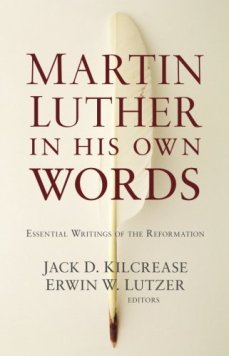
Book Giveaway – Martin Luther in His Own Words

Its that time again, time to win a free book! This time around I am giving away a free copy of Martin Luther in His Own Words! You can read my review of the book here.

41kmkyfseql


To win a copy of the book all you need to do is one of the following:

  • Tweet out the link to this blog post or the review and mention @Cwoznicki
  • Retweet my tweet about the giveaway
  • Like this post on WordPress
  • Like this post on Facebook
  • Comment below on how this book would benefit you

You will get one entry for each of these things that you do.

I will be selecting one winner soon. Good luck!

Note: You need to live within the continental US to be eligible to win a copy of this book.