Call For Papers: Thomas Aquinas and the Crisis of Christology

See the CFP below:

The Aquinas Center for Theological Renewal at Ave Maria University and the Thomistic Institute of the Pontifical Faculty of the Immaculate Conception at the Dominican House of Studies present a conference on “Thomas Aquinas and the Crisis of Christology”, sponsored by the Henkels Lecture Fund, to be held on February 7-8, 2020 at Ave Maria University.

Our conference has this mission:

“But who do you say that I am?” At the decisive turning point in the Gospel, Jesus asks this question. Simon Peter answers correctly at first, but is soon corrected when he protests the revelation of the Cross. Christians in every age are called to confess right faith in Jesus, who suffered, died, and rose for our salvation. This conference considers a wide range of scriptural, historical, and systematic attempts at answering Jesus’ question and engages in the thinking of Thomas Aquinas on it. His teaching on Christ reflects a master of the sacred page who attended adroitly to the scriptural narrative of Christ’s actions and sufferings, pioneered in the West the recovery of ancient conciliar teaching, innovated in his Christological pedagogy, and elucidated Trinitarian, anthropological, sacramental, moral, and eschatological dimensions of Christology. Studying the mystery of Christ in dialogue with Aquinas can assist us in today’s crisis of Christology.

A number of acclaimed theologians are slated to deliver keynote and plenary addresses.

Keynote addresses:

  • Bruce Marshall, Southern Methodist University
  • Thomas Joseph White, O.P., Angelicum University

Plenary Addresses:

  • Richard Baukham, University of St. Andrews
  • Oliver Crisp, Fuller Theological Seminary
  • Nathan Eubank, University of Notre Dame
  • Anthony Giambrone, O.P., École biblique et archéologique française de Jérusalem
  • Dominic Langevin, O.P., Dominican House of Studies
  • Dominic Legge, O.P., Dominican House of Studies
  • Guy Mansini, O.S.B., Ave Maria University
  • Matthew Ramage, Benedictine College
  • Daria Spezzano, Providence College

The Aquinas Center invites scholars and professionals to submit abstracts for a 20-minute presentation.

Brief proposals should be submitted to graduatetheology@avemaria.edu by August 1, 2019.

Notification of acceptance will be given by December 1, 2019.

For more information about the conference as the date approaches, visit www.aveconferences.com/aquinas-christology.

I Have Decided To Start Working on a Different Degree…

 Some of you are aware of my journey about how I got involved in Analytic Theology. When I graduated from UCLA in 2010 I knew that I enjoyed doing philosophy, but still had a burden for the mission Dei in my heart. So I figured I should do philosophy of religion that way I could be on mission at a secular university. But I knew that in order to do that well I would have to know theology well, so I enrolled at Fuller Seminary. During that time my call was sharpened and I didn’t make my way back to philosophy in a secular setting, rather I started employing philosophy for the sake of theology which was being done for the sake of building up the church.  That’s why I’m doing my PhD in systematic theology. There is, however, a part of the story I don’t often tell people….

Remember, the burden I had for mission? Well that burden was pretty strong. Before graduating from UCLA I was pretty torn about whether I should do missions or philosophy. (Weird options, right?) I remember driving on Sunset Blvd, talking to my girlfriend at the time (4 years later she would become my wife) and telling her: “I feel 39280_10100140683376206_7821230_nlike I have to do missions. I’m going to enroll at Fuller’s Intercultural Studies (i.e. Missions) program. Make sure I finish it and don’t give up on it, because after a lot of prayer I feel like God wants me to do this degree.” Well it was a nice plan. When it came down to application time I applied to the Theology program because I wanted to do philosophy. Within a week I switched back to Intercultural Studies. A year later, after taking some classes with Oliver Crisp, I switched back to Theology, and I graduated with an MA Theology. I never finished the Intercultural Studies degree, despite the fact that I took more than year of ICS courses.

I bring this up because I’m finally going to fulfill what I thought was God’s indication that I should get a degree in ICS. Thanks to my friend, Mark Hamilton, who suggested that I look into how many classes I would have left to finish the ICS program I am now on my way towards getting the degree. It turns our I only had 4 classes left to graduate with an MA Intercultural Studies. That ends up being one really intense quarter! Or, what I’m actually going to do is take 1 course each quarter, while concurrently working on my PhD in systematic theology. The timing worked out great because Fuller has a 10 year limit on how long your classes count towards a degree and that 10 year mark is 4 quarters away! So, even thought it looked like Amelia didn’t make sure that I finished the degree, it turns out I will graduate with an MA Intercultural Studies Spring of 2020! I start my first class next week!

What is God up to in Younglife Uganda?

I sat there under a large umbrella sipping on my Stoney Tangawizi, aka the strongest ginger ale that will ever grace anyone’s taste buds. Sheltered from the hot Equatorial sun I waited 45 minutes for a man named Simon Peter, whom I had never met. But I was in no rush, I was chilling with some friends from Kampala Community Church. Just then I get a message on Whatsapp from Simon saying that he had arrived. I however was sitting in the parking lot and no one had slipped past me! So I call him and it turned out that Simon had gone to another “community church” and that he was no on his way to the right place.

About 10 minutes later a grey 14 passenger van pulls up to the church and out steps an older man with graying hair. He looks as though he has had plenty of life experience. He walks over and greets me, “Welcome to the motherland!” After some initial introductions I hop into the van and we make our way through Kampala’s rush hour. Coming from LA I know traffic, but this, this, is traffic! We make small talk for a while but the real

LRM_EXPORT_885398053323817_20190522_131341364
Simon Peter Okira and his wife Harriet

conversation began once we arrived at our destination: a recently built mall. I had been there before so I knew exactly where to go. There is a fantastic cafe called “Maision de Qualité: Cafesserie,” they make the best milkshakes. Simon orders a coffee and I get a banana milkshake and then we start chatting.

Simon had originally come from a part of Eastern Uganda called “Palissa.” Around 2003 Simon had caught the vision for relational evangelism. He believed that teenagers could be reached for Christ if only they were shown genuine and authentic love.  So he started a thing called “prayer groups.” For us it would seem as though “prayer groups” are for people who are commited Christians, people who have the spiritual fortitude to pray for an hour+ at a time. However these “prayer groups” weren’t for those who were following Christ, it was for those who had never decided to trust Jesus with their life. So Simon started these prayer groups among high schools. He began to see fruit, new prayer groups would pop up all over town at different schools. It was definetly helpful that Palissa was an educational hub, meaning that kids from all over the rural parts of East Africa would come to this town for their schooling. Around 2005 he met someone from Tanzania who had the same heart for a “new wave of revival” among African teenagers. They got together and started to recuirt new leaders and build a sustainable structure for this ministry. Eventually he met some people from YoungLife and they noticecd that what he was doing looked a lot like what Younglife was trying to do in Africa, except Simon had come up with it on his own! They invited him to Tanzania to see “club” and “camp” and Simon felt as though this was precisely the way that the “new wave of revival” would begin in Uganda.

Simon is passionate about multiplying leaders. He developed a thing called the “leadership tree” which is now used in Younglife all over Africa. Its essentially the 2 Timothy 2:2 model of discipleship. He tells me that this model works because, “you can only lead people to where you know.”

You can only lead people to where you know! – Ugandan Proverb

Younglife in Uganda, however, isn’t just stories of multiplication and success. They experience what so many Younglife areas all over the world experience: losing leaders. Some of these leaders lose their faith and step away from Christ. Other leaders stay grounded in their faith but as life presses against them the first thing to go is their service with Younglife. Most people in the States probably don’t get how difficult this really is. Sure we have pressing concerns that might lead us to step back from our commitments to serve, but things are different here in Africa. Simple things like where your next meal will come from, where you will rest your head at night aren’t certain for many leaders here. At times the choice is meet your own basic human needs or serve in Younglife. It’s a hard decision, but the reality is that it’s impossible to serve if your necessities aren’t met. Dead people aren’t good leaders. That’s just a fact. This harsh reality has led Simon to emphasize three things when leading leaders. He tells them that all leaders need three thigns: They need a sense of belonging, a sense of benefit, and a meaningful task. Without these three things in a proper balance leaders drop off. The benefit, for leaders, sometimes involves knowing that they have a spiritual family who will come alongside of them and meet their holistic needs. Simon tells me a story of one leader who as put in this hard position. The guy was a fantastic leader, he loved the kids and the kids really followed him, but he was going to have to step away from leading for a time in order to put food on his own table. So Simon and some of the other leaders came together and pitched in to buy him a computer. That computer was precisely what this leader needed to start his small business. The act of meeting this simple physical need showed the leader that he belonged and that he mattered. It also enabled him to keep leading.

Younglife in Africa has the same DNA as Younglife in the US or in Canada or in Ukraine. It’s DNA is global, but the ways in which that DNA is expressed can vary from context to context. One way that it differs is that some clubs aren’t affiliated with schools. In Africa they call these “neighborhoods.” They focus on teenagers who have dropped out of school or who don’t go to a boarding school. Another difference can be seen in how they need to develop creative ways to reach girls and raise up women leaders. Younglife tries to overcome a culture which can devalue girls and show that girls and women really matter. They have value and they can be leaders too. One of the challenges, especially in rural parts of the country is that families don’t want to let their girls go to club. They are afraid that if they let them go to club that is led by a man that the girls will be sexually assaulted. They also prevent their girls from going to club because they see it as a waste of time. Girls should learn to take care of the home, that is their duty. One way that Younglife has figured out how to reach these girls is by tweaking their concept of club. They are beginning to form special “girls clubs” in which women leaders teach the girls the home skills that their parents want them to learn. Simon tells me of one club in which club consists of learning traditional cooking and baking styles. These Younglife leaders are figuring out how to reach a segment of society that hasn’t been given much freedom and on top of that they are giving these girls valuable skills that will be useful in their communities.

I could probably go on and on about what is going on in Younglife Uganda, but I will save that for another day….

In the next few blog posts I will profile some of the area directors who work in the capital city of Kampala.

Training Pastors in Uganda

I mentioned in my last post that I will be going to Africa Renewal University, which is in Kampala, Uganda to teach an MA level Systematic Theology course. Our church has an awesome partnership with the school. We recently helped support 20 Sudanese students as they are working towards their BA in Theology. Its so great to know that these students from Sudan are getting equipped for ministry! This is what I have to look forward to when I arrive in Uganda.

Dr. David Fugoyo – Africa Renewal University from The Church at Rocky Peak on Vimeo.


I’m Going to Uganda!

It has been 12 long years since my first trip to Uganda, and a lot has changed since then!  Just over a decade ago I had started college at UCLA and began to serve at The Church at Rocky Peak. Now I’ve been married to my beautiful wife Amelia for five years, I’m almost done with my PhD in Theology, I’m teaching at a Christian College, we have a wonderful daughter named Shiloh, and the most recent change is that Amelia and I are having our second child! (Really Amelia is “having” the baby – I’m just trying to be supportive!)

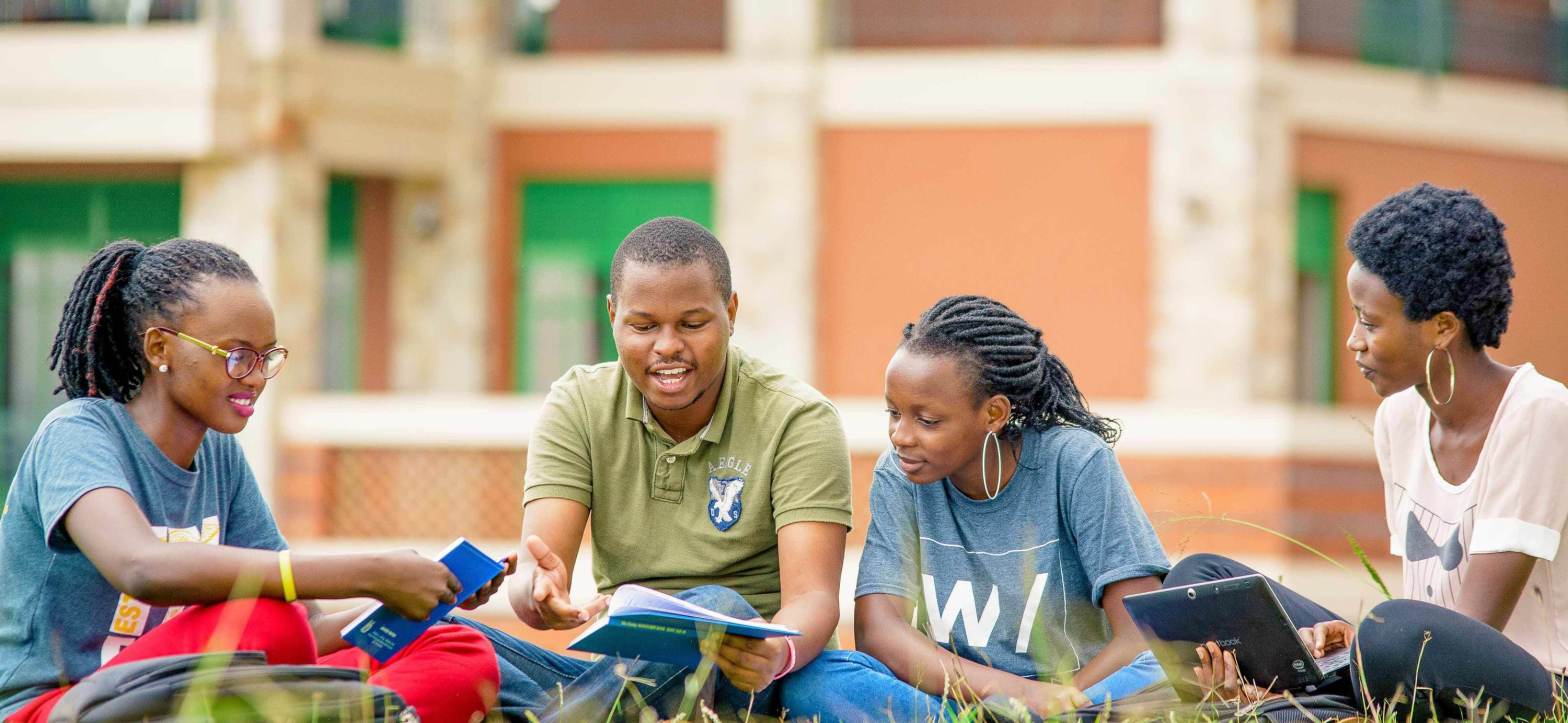
This year I’ve been given a very special opportunity to serve in Africa: a Christian University that trains pastors in Uganda approached me with a need. The school—Africa Renewal University—just started a new Master’s program for pastors, and they need professors who, at the minimum, have PhD Candidacy. When the president of the university approached me with the need I was immediately excited. After working with college students Rocky Peak I have been trying to process God’s call on my life. The 12487292_10207190080862950_2668944689785593214_oimage that comes to my mind when I think about my call is that of a person who equips others. Matthew 13:52 has been especially dear to me. On this trip I will get to equip pastors from all over East Africa to share the gospel and equip their churches. My class will even include pastors from war-torn Sudan! This school is crucial to the future of so many ministers in Uganda. One of the greatest needs in Uganda is education, and this school provides that for numerous pastors and leaders.

I will be leaving for Uganda on May 17th. I will be teaching a week long class, then the college and young adult ministry from Rocky Peak will join me on May 27th. The team will return June 4th. While there we will help the local church plant a new church near the local public university.

As you know, I have a huge heart for Uganda and the churches over there. This will actually be my fifth time going and I am very excited to return to this country which holds such a special place in my heart!

Ugana Blog 1.jpg

As I prepare to go to Uganda I really need your help. You can get involved and help me out in a few ways:

  1. I need your prayer support! This is actually the most important part. Pray for the team and I, that the Gospel would be heard, and that we may be able to make an impact in the Ugandan’s lives. Pray for the students going on this trip, as for many of them it will be their first mission trip and first time out of the country. Pray for the pastors who will be trained. Pray for me as I teach these pastors. And pray for my family back home.
  2. I would like to ask for your financial support. The cost for the entire trip is $3,000 per person. This includes airfare, accommodations, and in country travel. The funds will be accepted up until the team’s departure on May 27th. This is your chance to go on this trip vicariously through me. You can send me as you representative!


I honestly believe that the training of pastors in Uganda will make a huge impact on Africa for years to come. I can’t wait to see what God is doing to do through this trip! So please prayerfully consider how you can partner with me and the team in getting the gospel out in Uganda. Thank you very much for any financial support that you can give, remember no amount is too small or unappreciated! Please make your checks out to “Rocky Peak” and write “Uganda” in the memo section. You can give electronically by following this link: https://rockypeak.infellowship.com/UserLogin/Index?ReturnUrl=%2fForms%2f416931  


Blessings,
Chris Woznicki


If I am not able to participate in this trip, your contribution will still be used for this outreach. If the trip is cancelled, your contribution will be used for other mission purposes at the discretion of church leadership.  Because of restrictions in the Internal Revenue Code, Rocky Peak is unable to return this contribution for any reason.  Thank you for understanding and for your heart to support the spreading of the Good News through Rocky Peak’s mission’s ministry.

Non-Reductive Physicalism – Some Problems (Part 2)

Yesterday, I mentioned one challenge that non-reductive physicalists face. Today I’d like to mention two more.

The Problem of the Intermediate State…

A second challenge that the nonreductive physicalist faces is the problem of the intermediate state and the afterlife. All physicalist accounts face the problem of a “gappy existence” during the intermediate state. That is, if humans are merely composed of matter, then it seems as though the intermediate state—a state in which a material human does not exist—presents a problem for the persistence of identity of that person. The nonreductive physicalist has a few options for avoiding this problem of a “gappy existence.” First, they could just deny the intermediate state. This seems like the least attractive solution as it pushes against a key element of the biblical tradition. Second, they could posit a view according to which the body of the dead person continues to exist in the intermediate state. This is the view entertained, but not adopted, by Peter van Inwagen. He suggest that perhaps God creates a simulacra of deceased person, leaves this simulacra in the grave and then takes the dead person to heaven. This is an odd view for it posits that God is decieving us every time someone dies. Another version of an account in which the body of the person continues to exist in the intermediate state is the “falling elevator view” advocated for by a number of philosophers. In this view, the moment a person dies, an act of fission occurs. Part of the body stays on earth but another part is taken up to be with God. One problem with this view is that there is no basis for thinking that an act of fission occurs upon death. A third, and perhaps the best option for the non-reductive physicalist to avoid the “gappy existence” problem is the view according to which God stores the configuration or memory of the deceased person so that upon the resurrection God reinstantiates the configuration of mental states into a person. In other words, God remembers the information about the dead person and instantiates it in the eschaton. In such a view, there is a gap in the person’s existence, but the gap doesn’t undercut the identity of the person persists through death and into the eschaton. The problem with this view concerns the uniqueness of the new person. After all, it seems as though God could create many copies of humans with the same exact configuration of mental states as the original person. At that point, it would be impossible to differentiate between those persons and thus it would be impossible to say which one is identical to the deceased person.

The Definition of “Matter”

A final challenge that nonreductive physicalism faces is one brought up by Veli-Matti Kärkkäinen. In Creation and Humanity he points out that a number of scientists are beginning to question the definition of matter. Accordingly, it is no longer as clear that matter and mind are as different as we once thought. If this is correct, then it seems as the impetus for adopting physicalism is severely undermined. This is because we might be able to affirm dualism or some kind of multi-dimensional monism, like that of Polkinghorne or Kärkkäinen.

Non-Reductive Physicalism – Some Problems (Part 1)

Holding to non-Reductive physicalism has some benefits….

First, it takes seriously the dualist’s intuition—and the biblical data—that we cannot be reduced to the material; that is, we are more than merely matter. Second, it might avoid the reductionist pitfall of eliminating moral responsibility. Some people, like Nancey Murphy, have argued that can provide an account of moral responsibility by appealing to evaluative action loops. Maybe she’s right, maybe she’s wrong. Third, the nonreductive physicalist takes very seriously the deliverances of contemporary neuroscience. Whereas some versions of dualism can be accused of failing to account for why our conscious and mental life is so intimately tied to our brain and neural states, the non-reductive physicalist does not face this accusation. Finally, because the nonreductive physicalist takes a physicalist position, she is in a better position to dialogue with scientists and philosophers. This is because the majority of scientists and philosophers hold to some kind of physicalism and reject dualism. Despite the benefits of this view, however, the nonreductive physicalist position faces some challenges.

One challenge that nonreductive physicalism faces has been articulated by Jaegwon Kim. According to Kim, nonreductive physicalism leads to an incoherence. Kim’s argument goes as follows:

  1. According to nonreductive physicalists, a mental event M leads to some physical action P*.
  2. M under traditional accounts of causation is the cause of P*.
  3. M supervenes on some material base, P.
  4. P under traditional accounts of causation is the cause of P*.
  5. Therefore, M is the cause of P* and P is the cause of P*.
  6. Overdetermination of causes is incoherent.
  7. Given 5 and 6, the nonreductive physicalist view is incoherent.

A nonreductive physicalist might respond to Kim’s argument in several ways. She might deny the traditional account of causation. This seems like a steep price to pay. She might deny that overdetermination of causes is incoherent. Yet this is precisely what physicalists say is the problem of dualism. (E.g. My body and my mind cause my left arm to raise. This is incoherent because it is an overdetermination of causes.) Finally, she might say that neither M nor P is the cause of P* but that the entire system which is constituted by M and P is actually the cause of P*. Such a response would need to be further fleshed out to be convincing. In light of these possible responses, Kim’s point still stands, the nonreductive physicalist will need to develop their account of causation to make nonreductive physicalism plausible.

There are a few more problems that I see with the non-reductive physicalist view. I’ll point them out in another post.

Priests of Creation and a Dead Mountain Lion

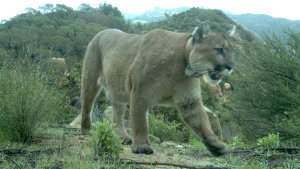
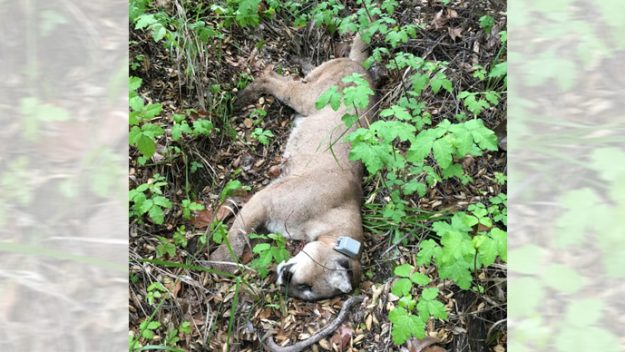
Yesterday I heard some heartbreaking news: P-47, a 3-year-old mountain lion has died in the Santa Monica Mountains after being infected with rat poison. P-47 was one of the largest mountain lion observed in the National Park Services study in Los Angeles.

p-47

This got me thinking about humanity’s vocation in relation to creation. In studying T.F. Torrance I have come to the conclusion that (part of) humanity’s vocation as “priests of creation” is encapsulated in four tasks:

1) Discerning order within creation, 2) instituting order where order has not fully developed, and 3) rectifying disorder in creation; all 4) for the purpose of glorifying God.

What might it look like to fulfill this four-fold human vocation? Let me use this sad news about P-47 to spur some discussion about what it would look like to live as “priests of creation.”

First lets assume that biodiversity is part of God’s good creation.[2] In order to encourage and maintain bio-diversity scientists will need to engage in discerning type activities. They will need to examine how many species there are on earth, where these species are found, and what constitutes a healthy population. They will also need to discern what factors threaten biodiversity. In California, for example, scientists are currently attempting to discern the factors that have contributed to the lack of genetic diversity among the population of mountain lions in hills of Los Angeles. Some of the factors include habitation loss and degradation, the construction of freeways and roads, and the use of certain anticoagulant rodenticides.

Once the issues have been discerned, plans for instituting order and rectifying the disorder brought about by human causes will need to be developed. There are a number

23975240799_0c62bf7a94_k
P-46 and P-47 as cubs.

of strategies for preserving biodiversity. The environmental ethicist Fred Van Dyke lists five: “(1)Purchasing or gaining operational control of land of conservation value, (2) regulating the use of land and water for conservation purposes, (3) influencing land and water use through non-regulatory means, (4) regulating the use of wild plants and animals, or (5) directly managing or manipulating wild or captive populations in ways that reduce or eliminate extinction threats.”[4] In Los Angeles, these strategies are enacted through: 1)the purchase of portions of the Santa Monica Mountains by the Santa Monica Mountains Conservation, 2) California’s Transit authority’s efforts to develop increased connectivity between regions that are divided by the 101 freeway, and 3) state legislators banning certain rodenticides that are especially lethal to mountain lions. The above example of discerning/instituting order and rectifying disorder in regards to mountain lion genetic diversity for the sake of God’s glory exemplifies Daniel Block’s statement that “a redeemed cosmos includes all creatures, with all their territorial and biological diversity, giving eternal praise to the Creator.”[6]

To some, the fact that I’m writing about the theological responsibility to care for mountain lions might seem odd. To others it makes perfect sense. I think that there is a very strong biblical case for creation care grounded in the concept of the image of God. As Richard Middleton says, “The imago Dei designates the royal office or calling of human beings as God’s representatives and agents in the world, granted authorized power to share in God’s rule or administration of earth’s resources and creatures.” The mountain lions of Los Angeles are part included in the number of those creatures.  They are also included in the number of creatures described in Revelation 5:13:

Then I heard every creature in heaven and on earth and under the earth and on the sea, and all that is in them, saying:

“To him who sits on the throne and to the Lamb
    be praise and honor and glory and power,
for ever and ever!”


[1] Biodiversity refers to “the variability among living organisms, including, inter alia, terrestrial, marine, and other aquatic ecosystems, and the ecological complexities of which they are a part; this includes diversity within species, between species, and of ecosystems.” Secretariat of the Convention on Biological Diversity, Handbook of the Convention on Biological Diversity, 3rd Edition, (Montreal: Secretariat of the Convention on Biological Diversity, 2005), 5. I would add genetic diversity to this list of bio-diversity.

[2] See Daniel Block’s biblical argument in “To Serve and to Keep: Toward a Biblical Understanding of Humanity’s Responsibility in the Face of the Biodiversity Crisis,” in Keeping God’s Earth: The Global Environment in Biblical Perspective, ed. Noah Toly and Daniel Block (Downers Grove: InterVarsity Press, 2010), 116–40.

[4] Fred Van Dyke, “The Diversity of Life: Its Loss and Conservation” in Keeping God’s Earth: The Global Environment in Biblical Perspective, ed. Noah Toly and Daniel Block (Downers Grove: InterVarsity Press, 2010), 103–104.

[6] Block, “To Serve and to Keep,” 121.

Theology and Science at the Tyndale Conference

This year’s “Christian Doctrine Section” of the Tyndale Fellowship Conference is being organized by Jason Sexton and Tom Noble. It is dedicated to the topic of “Theology and Science.” The program differs a bit from how the conference was previously conducted. Instead of the regular 45-50 minute paper, the organizers are arranging each portion of the program as a panel. Each paper will be presented in 10 mins, with the exception of McCall’s plenary lecture.
Below you will find the schedule of speakers and their topics. I have to say that Fuller, and Southern California in general, is well represented!

Tyndale Lecture:

Thomas H. McCall (Trinity Evangelical Divinity School), ‘The Same Story from the “Two Books?” Concord, Conflict, and Coherence in Science and Theology.


Section 1:

Chair: Jason Sexton (California State University)

Matthew Owen (Gonzaga), Quantifying Irreducible Consciousness: A Thomistic Approach

Mihretu Guta (Biola University, Azusa Pacific University): Artificial Intelligence and Metaphysical Limitations

Stephen Evensen (Biola), Christ, Creation, and Natural Law

Luman Wing (Aberdeen), Epigenetic and Theological Perspectives on Addiction

Ian Church (Hillsdale College), Evil Intuitions?: Experimental Philosophy and the Problem of Evil


Section 2:

Chair: Matthew Jones (London School of Theology)

Joanna Leidenhag (St Andrews), On Overcoming the Culture-Nature Divide: Should The Creation Project Endorse Panpsychism?

Ryan Haecker (Cambridge), God in the Machine: Theological Mechanics and Artificial Intelligence

Lydia Jaeger (Institut Biblique de Nogent, France), Christ and the Human Person

Koert Verhagen (St Andrews), The Present Materiality of Christ: An Ecclesial Supplement to Marilyn McCord Adams’ “For Better for Worse Solidarity”


Section 3:

Chair: David Rollings

Jonathan Rutledge (St Andrews), On Scientific Approaches to Defining Theology

Alexander Irving (St Stephens Norwich), Creation as an Article of Faith: The Freedom of Creation and the Jurisdiction of the Natural Sciences

Sarah Beattie (University of Divinity, Melbourne), ‘No Way Back’: From Eden to Interstellar Space

Nathan White (Institute for Faith and Resilience), Theological Anthropology in an Age of Digital Hermeneutics: Means of Reading as Formative of Self”


Section 4:

Chair: Thomas Noble (Nazarene Theological College)

Veli-Matti Kärkkäinen (Fuller Seminary), Original Sin after the Evolutionary Origin of Humanity: An Interdisciplinary Theological Constructive Proposal

Andrew Davison (Cambridge), Biological Mutualism and Thomistic Philosophical Thinking about Contemporary Scientific Issues

Andrew Briggs (Oxford), Reflections on It Keeps Me Seeking


Section 5:

Chair: Joanna Leidenhag (St Andrews)

Nathan Bossoh (University College London), From Natural Theology to Methodological Naturalism and the Role of the Media in our Understanding of Scientific Practice

Jeahong Oh (Aberdeen), Theological Significance of Fregean Semantics on Dialogue Between Science and Religion

Christopher Woznicki (Fuller Seminary), Priests of Creation: T.F. Torrance’s Theological Anthropology as a Basis for Scientific Inquiry

James Shin (Fuller Seminary), A Good Creation in the Image of Christ as a Trinitarian Project


Section 6:

Chair: Jason Sexton (California State University)

Thomas H. McCall (Trinity Evangelical Divinity School) and Andrew Torrance (St Andrews), Reflections on The Creation Project

Priests of Creation – A Reflection for Earth Day

Man has been called to be a kind of midwife to creation, in assisting nature out of its divinely given abundance constant only to give birth to new forms of life and richer patterns of order. – T.F. Torrance, The Goodness and Dignity of Man

On this day, Earth Day 2019, I want to suggest–by drawing on the work of T.F. Torrance– that humanity’s task is to act as the “priests of creation.” By this I mean that humans serve a mediating role between God and creation. Humans fulfill this mediating role by 1)discerning order within creation, 2)instituting order where order has not fully developed, and 3) rectifying disorder in creation all 4) for the purpose of glorifying God.

Discerning Order

Creation is both contingent and orderly. As a contingent thing, creation simultaneously points towards God and away from God. It displays dependence upon some transcendent source while at the same time displaying a level of freedom. The fact that creation is contingent points to the fact that God created as free act of love and grace. As an orderly being, creation contains a particular sense of rationality which is gifted to it by the Logos. When the natural sciences explore creation, they are faced with the contingent and ordered nature of creation, as Torrance says, scientific theories “are formulated only under the dictates of the rational order found immanent in the universe.”  How is the rational order discovered? When humans open themselves up the universe, “allowing their minds to tune into” the order that is present there. When they do this the universe “divulges the secrets of its vast range of intelligibility.”

When the order of the universe is discerned it becomes increasingly clear that there is a transcendent source of this contingent entity, not only that, but once the order is associated with the Word. The one who studies creation comes to understand that God not only upholds and sustains created reality but that God has arranged creation in such a way as to “serve his supreme purpose of love in the communion of the creation with the creator.” Thus the task of discerning the order of God’s creation allows the inquirers to gain clarity about God’s purpose of communing with his creation. This is the end of creation, communion with God, discerning the order latent in creation allows humans to perceive God’s creative ends.

In addition to providing a window into God’s creative ends, discerning the order of creation allows humans to perform the other tasks of being priests, namely instituting order and re-ordering disordered creation. It is only when God’s intended order is discerned that humans can begin to envision God’s desired order for creation, the proper ways to bring about more order, and how to re-order a disorder creation. A simple example of this three-fold manifestation of discerning order concerns issues of global climate change. In order to re-order the disordered climate, humans must discern God’s desired order for creation and the best ways to establish that proper order.

Instituting Order

Biblical scholars are almost unanimous in believing that the notion of the “image of God” in Genesis 1 and 2 is tied to a particular function. This function is best described as that of being “vice-regents” or “stewards” of creation. As stewards of creation, humans have been created for the purpose of developing and cultivating creation in such a way that it can serve as the dwelling place—i.e. cosmic temple—for God’s presence. Torrance himself says, “man has been called to be a kind of midwife to creation, in assisting nature out of its divinely given abundance constant only to give birth to new forms of life and richer patterns of order.” When humans institute these forms of order, “the marvelous rationality, symmetry, harmony, and beauty of God’s creation are being brought to light and given expression in such a way that the whole universe is found to be a glorious hymn to the Creator.”

For Torrance the task of instituting order in creation is not only grounded in the functional image of God. It is also grounded in his understanding of the way the universe is ordered. Torrance believes that the universe has various levels of order and that the lower levels of order derive meaning from higher levels of order. Human beings stand at the top level of this order. Thus, it is through human beings that “the universe knows and unfolds itself in developing rational order and expression.”

Humans institute order in various ways, including, for example, developing culture. Much has been written about this idea from Reformed (i.e. Kuyperian) perspective about the cultural mandate. Additionally, Eric Flett has provided a through argument for a Torrancian understanding of cultural development. Humans also institute order by helping nature flourish according to its God given order. Two issues that ought to be considered in this priestly task include: 1) The specific ways that humans can help nature flourish and 2) How the task of instituting order (especially by technological means) can quickly turn into creating more disorder in creation.

Rectifying Disorder

Despite the fact that God has made creation to be ordered, it currently suffers from disorder. As the ones who are tasked to bring order to creation, human beings have the special task of instituting order where disorder has taken a hold of creation. As Torrance explains, it is humanity’s task “to save the natural order through remedial and integrative activity, bringing back order where there is disorder and peace where there is disharmony.” Torrance provides two examples of how humans can re-order disorder. First, humans can help develop ways to prevent and cure disease and suffering, not only among human beings but among animals as well. Second, humans can work to reverse the “ecological chaos” brought about by humanity’s exploitation of the natural order.

For the Glory of God

These three “order” related tasks enable creation to sing “a glorious hymn to the Creator. As humans discover the complex intelligibility of creation, they discern the Christological basis of creation. As they discern its contingence, they come to understand that God brought it about because of his grace and love. When creation is developed by human beings, it points to the one who inculcated within it the very possibility of being ordered in complex ways. When disordered creation is rectified, it participates, proleptically, in the reordering which is grounded in the saving work of Christ.