Upcoming Conference on the Philosophy and Theology of Hope

For those of you who are interested in philosophy and/or theology I would like to let you know that there is an awesome local philosophical-theology conference coming up in the L.A. area.

Claremont Philosophy Conference Hope 2014

Here is the description:

Hope: Re-examinations of an Elusive Phenomenon

Hope is an elusive phenomenon. For some it is Pandora’s most mischievous evil, for others it is a divine gift and one of the highest human virtues. It is difficult to pin down but its traces seem to be present everywhere in human life and practice. Many are of two minds about whether this is a good thing or bad thing. Christianity as a comprehensive practice of hope cannot be imagined without it: Christians are not believers of dogmas but practitioners of hope. In other religious traditions the topic of hope is virtually absent or even critically rejected and opposed. Some see hope as the most humane expression of a deep-seated human refusal to put up with evil and suffering in this world, others object to it as an escapist reluctance and lack of courage to face up to the realities of the world as it is.

Hope is an elusive phenomenon. For some it is Pandora’s most mischievous evil, for others it is a divine gift and one of the highest human virtues. It is difficult to pin down but its traces seem to be present everywhere in human life and practice. Many are of two minds about whether this is a good thing or bad thing. Christianity as a comprehensive practice of hope cannot be imagined without it: Christians are not believers of dogmas but practitioners of hope. In other religious traditions the topic of hope is virtually absent or even critically rejected and opposed. Some see hope as the most humane expression of a deep-seated human refusal to put up with evil and suffering in this world, others object to it as an escapist reluctance and lack of courage to face up to the realities of the world as it is.

Half a century ago hope was at the center of attention in philosophy and theology. Ernst Bloch’s The Principle of Hope (1938-1947/1986), Jürgen Moltmann’s Theology of Hope (1964/1967), or Josef Pieper’s FaithHope–Love (1986/1997) are landmarks of the 20th century debate on hope. However, in recent years philosophers and theologians have been curiously silent on the subject of hope and the discussion has shifted to positive psychology and psychotherapy, utopian studies and cultural anthropology, politics and economy. This has opened up interesting new vistas. It is time to revisit the subject of hope, and to put hope back on the philosophical and theological agenda.

This is what this conference seeks to do, and there are many open questions. What is the phenomenon called hope? Is it the same topic that is studied in the various approaches to hope in psychology and politics, economy and theology? How does hope differ from belief and faith, trust and desire, expectation and confidence, optimism and utopianism? Is hope an emotional state or a feeling or a virtue? Does the absence of hope equal the presence of anxiety, fear or despair, or is there a human attitude or state that overcomes the opposition between hope and despair without being either of them? What is hope’s relation to promise and time, knowledge and action, self and community? Where are the limits of hope and what are its distortions? How is it to be distinguished form self-deception and error, wishful thinking and the irrational refusal to accept the world as it is? Does hope hinder religious believers from facing the tasks and challenges of the present life by orienting them towards a life to come? Is it a form of escapism to be shunned or a power of change to be appreciated? These and related questions we will explore at the 35th Philosophy of Religion Conference at Claremont, California, on February 14-15, 2014.

Speakers will include: Keynote speaker – Jürgen Moltmann (Tübingen), William Abraham (SMU), Nancy Bedford (Garrett-Evangelical Seminary), John Cottingham (Heythrop College, University of London), M. Jamie Ferreira (Virginia), Arne Grøn (Copenhagen), Serene Jones (Union Theological Seminary), Alan Mittleman (Jewish Theological Seminary of America), Hirokazu Miyazaki (Cornell), Ola Sigurdson (Gothenburg), Claudia Welz (Copenhagen)

Catching Fire Pt. 1 – A Christological (?) Movie Review

As someone who wanders the wasteland that is Christian blogging I have come across tons and tons of blogs about The Hunger Games movies. I have even seen some devotionals based on The Hunger Games (what ever happened to basing devotionals off the Bible?).  Most of these blogs point out the Christological features of Katniss Everdeen. She comes from a backwoods, blue collar town on the outskirts of the empire. Jesus comes from a backwoods blue collar (fishers and stone workers) town on the outskirts of the Roman Empire. Katniss lives in a time of revolutionaries, all of them failed. Jesus lived in a time of revolutionaries all, except the Maccabean family, failed as well. Katniss sacrifices herself for the ones she loves. Jesus sacrifices himself for the world that he loves. Katniss ends up brining down the Capital and its hegemony. Jesus ends up bringing down not Rome but the Kingdom of the prince of the air; Jesus defeats sin, death, and Satan as George Eldon Ladd once said. Not to mention that in the case of Katniss and Jesus there are “deaths” (in the case of Christ a real death and in the case of Katniss a sort of death) that end in life. Christological parallels abound, or so some bloggers would like us to think.

On the other hand there are some bloggers who like to point out that Katniss is far from being a Christ figure, she actually embodies human frailty and sinfulness. She is the very embodiment of selfishness. She toys with Peeta’s and Gale’s hearts. She refuses to assume responsibility. She even kills people. Throughout the book you get the image of a narcissistic self-centered teenage girl, with archery skills to die for….

Catching Fire

So how does this movie portray Katniss? Is she the noble self-sacrificing hero? Yes! Is she the self-centered narcissistic teenage girl? Yes! Is she a leader doing her part to take down the empire? Yes! Is she the coward who shys away from responsibility because its too costly? Absolutely.  Contradictions abound in this movie. Katniss displays glimpses of being a Christ figure. Yet at the same time she also shows us the depth of human weakness and sinfulness. So what shall we say about Katniss? Katniss is a human being riddled with contradictions, much like us.

In Justification reconsidered Stephen Westerholm argues that Paul had a pessimistic view of human moral capacity. He argues that Augustine’s, Luther, and Calvin see human beings as capable of doing good, this is part of what it means to be made in the image of God. As Christians we know that Christ is the full image of God, so when we say that we are made in the image of God it means that in some sense we are made like Christ. Yet Westerholm makes an important observation about the great tradition, namely that on one level particular deeds done by untransformed human beings are good, but on a deeper level these deeds are not truly good. That is without God, humans are incapable of true goodness. This is an important feature to remember about unredeemed humanity. We are capable of Christ like acts, but these acts are not meritorious. Yes we are totally depraved, but that does not mean we cannot do good acts before human beings (contrast this with doing good acts coram deo).

Nobody understands this dualism more than Dostoyevsky. In The Gambler Tolstoy presents us with one of the most vivid portrayals of the attractions and pitfalls of gambling (as well as infatuation and pride).  The main character, Alexey Ivanonitch gambles in a fictional German city, here we see the transformation from a man who has never gambled to a true gambler. In one of the early chapters Alexey enters the casino for the first time, he says that “it all struck me as so dirty, somehow, morally horrid and dirty….” He describes gambling as a “most foolish and imprudent pursuit.” However, at the same time he says that  he felt “as I went into the hall of all this covetousness” that all this “covetous filth” was in a sense congenial and convenient.  He suffers from a “plebeian desire to win.” At once he finds the casino morally repugnant but attractive. Disgusting but congenial.  Is Alexey being double minded? Yes he is, but that is simply what it means to be an unredeemed human being. See, Katniss too suffers from this unredeemed double mindedness. Just like us human beings she struggles and vacillates between doing the good that she knows she ought to do and not  the things that she knows she ought to do. Of course Katniss is not as complex as Dostoyevsky’s characters, neither should we expect her to be, nevertheless Katniss embodies what it means to be a human being made in God’s image. She has potential for Christlikeness but is totally depraved. She has potential for good, and at times we see her doing good, but at the end of the day she is just like we once were, sinners at the core. Thankfully though, because of Christ’s work on the cross on our behalf, he has taken up all our humanity into himself and redeemed and transformed us. Because of his death for our sake we are justified, and (don’t forget this) we are renewed in Christ’s image so that we don’t have to be double minded like Katniss.

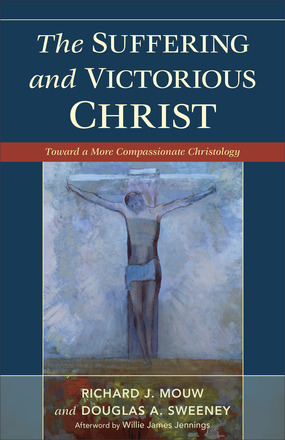
Book Review – The Suffering and Victorious Christ by Richard Mouw and Douglas Sweeney

Richard Mouw and Douglas Sweeney, The Suffering and Victorious Christ: Toward a More Compassionate Christology, Baker, 2013, 108pp.

The Suffering and Victorious Christ

As evangelical Christians become more and more aware of the fact that Christian theology is not simply a western endeavor we will begin to so see more and more interaction between American Evangelical theology and Non-Western theology, in other words we will begin to see that our American theology is also a contextualized theology. As we slowly being to realize American theology is also a contextualized theology we will come to see that there is no such thing as “American Theology.” Who do we mean by “American?” Do we mean Latino-Americans, African Americans, Asian Americans, Native Americans? What about people like me, who are mixed, with parents from different cultures and continents? How will traditional Anglo-American theology, specifically Christology address these segments of the Christian church? Douglas Sweeney and Richard Mouw provide us with an example of how that might go….

The Suffering and Victorious Christ was birthed  out of a Christology conference held in Japan in 2010. During the conference it became clearer that

“Western militarism led Americans to highlight God and Jesus’ Christ’s power, stringent holiness, and victory over sin far above their passion condescension to our weakness, and identification with human suffering” (2)

On the other hand Asian theologies have consistently emphasized the suffering and brokenness of Christ. Mouw and Sweeny say that they are “not convinced that violence, triumphalism, and denial of the suffering of God are essential to the Reformation traditions.” With that they engage in a project of digging through their respective traditions (Reformed and Lutheran) for a more compassionate Christology. At the forefront of their minds is a missional concern, people need to hear that God identifies with them in their suffering, they don’t only need to hear about God’s wrath against sin….

Mouw and Sweeney mine their traditions for Christological gold, through the study of hymns, sermons, and personal narratives as well as more traditional theological resources, they show that the Reformed and Lutheran tradition can serve as a basis for a Christus dolor, not simply a Christus Victor. They set up their purpose in light of contextual theology. On page 9, they say that their question is

“How can we articulate a more compassionate and globally relevant Christology in terms that are faithful to and consistent with the Reformation traditions we claim, but are also disciplined by the concerns and expersience of our Asian and non-European brothers and sisters?”

Overview

In order to answer this question they begin by dealing with resources from their own theological heritages. Mouw begins by examining the Reformed theologian, John Williamson Nevin, a central figure in Mercersburg theology. Sweeney then devotes a chapter to Lutheran theologian Franz Pieper, who predicates suffering of God himself by talking about the suffering of God in Christ. This chapter is followed by a brief interlude on Roman Catholic theology and incarnational presence. After this interlude Mouw adds another chapter on Reformed theology and the suffering of Christ. Hodge, Berkhof, and Faber are the central foci of this chapter. Mouw argues that the seeds of a compassionate Christology were there, but what is needed is an emphasis on a compassionate Christology. Mouw and Sweeney then devote a chapter to a less traditional theological resource, narratives and hymns. They examine African American slave experiences of suffering and the role of Christ’s suffering in their making sense of their situation. They point out that the slaves believed that Christ, and Christ alone understood their suffering. They believed that he suffered with them and like them. The Christus dolor is a Christ that suffering slaves could identify with. They conclude with some words of warning, stating that the exploitation of Christus dolor can be just as dangerous as the exploitation of Christus victor. We need scriptural guidance to form our Christology. In their conclusion they offer some words of encouragement for those who seek to form more global and compassionate Christologies.

Assessment

In one sense this is an act of constructive Christology, yet in another sense it is a report of what different traditions have to say regarding a particular subject. Given that it is partially a constructive project and a report, its difficult to asses this book. For instance, I have qualms with some parts of Lutheran Christology, but this is not the place to address those issues. Others will have issues with Reformed Christology, but again this is not the sort of critique that the book invites. The type of critique that this book invites is regarding whether or not the project that Mouw and Sweeney are engaged in is possible in principle and whether or not it is a worthwhile project. Some will surely respond that theology ought not be contextual. Theology is objective so speaking about contextual theology brings the subject into subjectivity. However I don’t think that is the case. Mouw and Sweeney rightly point out that “diverse circumstances…require different emphases in the way they configure theology, they can – and should – nonetheless expresses as hared theology that unites them in the body of Christ. (91)” So there is certainly room for manifold theologies that have a different emphasis, yet talk about the same thing, because they are talking about Christ. So to those that say that contextual theology is in principle misdirected, I simply say “you are wrong.” Regarding the second question, whether or not Mouw and Sweeney are engaged in a worthwhile project, we must answer that they are. The fact is that we Americans have often ignored the suffering Christ and instead have chosen to focus only on the victorious Christ…

The other day I was preaching on Matthew 5:10, I was preaching about persecution and how Christ identifies with us in our suffering and in our persecution. At the end of the sermon a college student who was visiting from another church came up to me to thank me for preaching on God’s suffering. He said that he has never heard a sermon about that. We simply don’t like to talk about suffering in church.

For some reason we Americans don’t like to think about God suffering, maybe its because we think comfort is a mark of godliness.

Nevertheless it is a fact that the God-Man (however you want to cash that out, either in a Reformed fashion or a Lutheran fashion) suffered for us and in our place. Christ was a man of sorrows, well acquainted with pain. And if we choose not to address that part of Christ’s person and work we are missing a central part of the gospel.

According to Alvin Plantinga You Should Read These Three Books

I recently came across an interview with Alvin Plantinga done in 2011. In it he was asked some questions about what brought him back, where he thinks the current state of Calvin College is, and some questions about philosophy. When asked what three books every Calvin alum should read he responded with the following books:

Plato’s Republic. We ought to have more opportunities for people of all ages to engage that text. Another is Jonathan Edwards’ A Treatise Concerning Religious Affections. I didn’t read this volume until I was 50; I should have read it when I was 20. Most people only know Edwards through his fiery sermon “Sinners in the Hands of an Angry God,” because it is often included in anthologies. Every minister in the time of Edwards had to have a “fire and brimstone” sermon in his back pocket. But this sermon is so unlike Edwards and the rest of his work. He was a thoughtful and loving teacher and scholar. The third book would be Augustine’s Confessions.

Plato, Jonathan Edwards, and Augustine. I think that is quite a list. I completely agree with him, those are three books any well educated person should read.

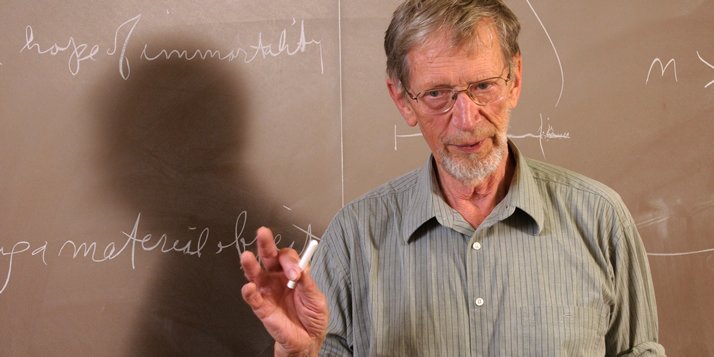
Alvin Plantinga
Alvin Plantinga

This Paycheck’s Book Purchases (November 22nd)

My time is running out, marriage is a few short weeks away and I will never be able to buy a book again. Here are the ones I bought with this pay check

Jonathan Edwards’s Bible: The Relationship of the Old and New Testaments by Stephen Nichols

I love Jonathan Edwards. I love typology. I love studying the New Testament use of the Old Testament. I also love Oliver Crisp. Having said that you should probably know by now why I bought this book. It is a book on Jonathan Edwards’s understanding typology and how the NT relates to the OT, with a forward written by Oliver Crisp. Enough said.

Here is the Wipf & Stock book description: New England colonial pastor and theologian Jonathan Edwards (1703-58) was well aware of the threat that Deist philosophy posed to the unity of the Bible as Christian Scriptures, yet remarkably, his own theology of the Bible has never before been examined. In the context of his entire corpus this study pays particular attention to the detailed notes Edwards left for “The Harmony of the Old and New Testament,” a “great work” hitherto largely ignored by scholars. Following examination of his “Harmony” notes, a case study of salvation in the Old Testament challenges the current “dispositional” account of Edwards’s soteriology and argues instead that the colonial Reformed theologian held there to be one object of saving faith in Old and New Testaments, namely, Christ.

Reading for Preaching: The Preacher in Conversation with Storytellers, Biographers, Poets, and Journalists by Cornelius Plantinga Jr.

I preach about 1/2 of the sermons at the college ministry I serve at. Over the years my preaching has gotten better (hopefully). I know I have a pretty intuitive grasp of scripture & I always try to make my sermons point back to Christ. All to say, the content good. However the packaging of my content isn’t so great. I think it can feel stuffy & a bit over-academic. My sermons don’t have much flare. Depending on who you are, that might not seem like much a problem, stick to the text use no illustrations, blah blah blah. But I don’t think that is the best route to take. You don’t want your people to doze off before you give them the real meat of the sermon.  This book offers an argument for how reading, especially non-theological works can make your preaching better. Plus anything written by Cornelius Plantinga is solid gold.

Here is the Amazon description: Plantinga — himself a master preacher — shows how a wide reading program can benefit preachers. First, he says, good reading generates delight, and the preacher who enters the world of delight goes with God. Good reading can also help tune the preacher’s ear for language — his or her primary tool. General reading can enlarge the preacher’s sympathies for people and situations that she or he had previously known nothing about. And, above all, the preacher who reads widely has the chance to become wise.

Preaching Christ Today: The Gospel and Scientific Thinking by T.F. Torrance

I recently raided Archives bookstore at Fuller Seminary, snatching up a bunch of Torrance for a really good price. As I mentioned before I will probably do some further research on Torrance in the future (Th.M or Ph.D) so I want to get a jump on Torrencian literature. On Amazon this book goes for $30, but I bought it for $5.

The description on Amazon isn’t very descriptive though: Biblical scholar, former professor, and author Thomas Torrance suggests that great preaching today not only includes a faithful presentation of the Christian gospel, but that such presentation be expressed in ways that can be appreciated within the modern scientific understanding of the created universe upon which God has impressed his Word.

Book Review – Justification Reconsidered by Stephen Westerholm

Of making many books [on Paul] there is no end, and much study [of Pauline theology] wearies the body. – Ecclesiastes 12:12 Woznicki Paraphrase

Stephen Westerholm, Justification Reconsidered – Rethinking a Pauline Theme, Eerdmans, 2013, 104pp.

Justification Reconsidered

I am currently thinking about two books on Paul, the first book is about 1700 pages long and the truth is most people probably will never read the whole thing (despite the fact that at one point it was in the top 1000 on Amazon). The second book doesn’t even hit the 100 page mark (it ends at 99 pages of text); its easily accessible and extremely cheap compared to the 1700 page book. Which one are you going to read? In case you were wondering which one I picked up, I picked up the 99 page book (if somebody wants to get me PFG for Christmas I would really appreciate that). The short book is Stephen Westerholm’s Justification Reconsidered.

Justification Reconsidered  isn’t so much a book, but more so a collection of loosely related essays on the topic of Justification. Each essay takes its particular angle at the doctrine or the scholarship of the doctrine and argues for a more traditional account of justification contra the New Perspective.

Westerholm says that the aim of his book is to “both update and to make more widely accessible earlier work I have done.” If you aren’t familiar with his earlier work, basically he engages in a project of questioning revisionist claims about Paul. That doesn’t mean that he blindly sides with the more traditional perspective, but he doesn’t full on abandon that side either. That also doesn’t mean that he values what the New Perspective brings, but he doesn’t fall head over heels for it either. In other words Westerholm tries (difficult as it might be) to allow Paul to speak for himself….

Overview

Chapter 1 introduces the revisionist problem for those who aren’t acquainted with it. Here he interacts with Stendahl’s “Introspective Conscience of the West” and makes a biblical argument that Paul and his audience were actually concerned about their “guilt” and their standing before  God.  Their central question was “in the face of coming judgment can anyone find salvation? How can sinners find a gracious God? So the ancients were in fact concerned about their guilt and the wrath that was to come for their guilt, justification claims that it is possible to stand rightly before God. Of course this standing come from God himself who has provided righteousness through Christ.

Chapter 2 interacts with Sander’s Paul and Palestinian Judaism. He challenges Sander’s notion that Palestinian Judaism was fundamentally a religion of Grace, much like Christianity. Westerholm thinks that Sanders perspective is a bit skewed. Yes biblical Judaism is a religion of grace, but 2nd temple Judaism was not the same as biblical Judaism. Even more importantly though is that Paul’s understanding of grace is radically different from the understanding of grace present in 2nd temple Jewish texts.

Chapter 3 deals with theological anthropology. According to Westerholm, Paul had a pessimistic view of human moral capacity. This is quite the opposite of his opponent in this chapter, who believes that human beings both can and cannot do good. This chapter is an interesting exercise in historical hermeneutics; he examines Augustine’s, Luther’s, and Calvin’s views on the human capability of doing good. Westerholm sides with the Catholic tradition, that on one level particular deeds done by untransformed human beings are good, but on a deeper level these deeds are not truly good. That is without God, humans are incapable of true goodness.

Chapter 4 turns to the use of the words “justify” and “righteousness.” Here he argues against Wright’s definitions (pre PFG) of these words. By looking at the OT, Westerholm argues that “righteousness simply does not mean, and cannot mean membership in a covenant. Likewise it does not mean and by its very nature cannot mean, a status conveyed by the decision of a court.” (63)

In Chapter 5 Westerholm argues against the commonly held view among New Perspective scholars that “works of the law” refers to the “boundary markers” that distinguish Jews from Gentiles. He argues for a broader understanding of “works.”

The last Chapter is a refutation of Douglas Campbell’s The Deliverance of God. Campbell argues that “justification theory” portrays God as a severe enforcer of rigid contractual moral obligations.” Campbell argues that “justification theory” is not biblical, that Paul actually didn’t have a “justification theory” but rather that the “real Paul” was concerned with apocalyptic redemption. Westerholm tears Campbell’s thesis apart, pointing out its Marcionite tendencies as well as pointing out that Justification is just one of the ways that Paul talks about salvation.

Positive Aspects

  1. Its Readability – The book is well organized, and since each chapter is a self-contained unit, its easy to find exactly what you want to read about. I could see the chapters in this book sparking some college term papers…
  2. Its Balance – As I mentioned above, Westerholm isn’t bound to the Old Lutheran view but neither is he drawn to the New Perspective, I believe he finds an appropriate balance between tradition and newer scholarship. Rooted in the Great tradition of Augustine, Luther, and the other reformers Westerholm shows young scholars that history and tradition are nothing to be ashamed of, we don’t have to choose “tradition” or “scholarship.” As somebody who is interested in theological retrieval (from Church Fathers, Edwards, & Calvin) Westerholm serves as a great model.
  3. Its Function as an Introduction to Controversies – Westerholm engages with most of the major Paul Scholars and recent articles on Paul: Kister Stendahl, E.P. Sanders, James Dunn, N.T. Wright, and Douglas Campbell. These are all authors of key secondary literature on Paul. They are the authors you must read if you are going to engage in Pauline scholarship. Here you get a good introduction to their thought, as well as a refutation of their positions.

Questions

I don’t have any major qualms with Westerholm’s positions throughout this book, but I do have several questions. Is Paul’s understanding of “works of the law” really closer to Luther’s “good works?” To say this seems to rip Paul’s thought out of its Jewish context and place it in early modern Europe… Are the Gentiles really concerned with  the question “how can anyone find salvation?” I will grant it to Westerholm that they were certainly concerned about God’s wrath, but is that really a question that plagued their mind? Are they as introspective as Luther? Is anybody really as introspective as Luther was? Yes there certainly was a concern about God’s wrath, but to what extent?

My last question is my hardest question…. On page viii Westerholm says that “justification is one way in which Paul depicts human salvation.” This begs the question, is it merely a way that Paul talks about salvation or is it really what is happening?

In discussions about Penal Substitutionary Atonement some have argued that PSA is merely one way to talk about what happens on the cross (among others like Christus Victor, Satisfaction, Moral Example), these same people have argued for a Kaleidoscopic model where non one model actually maps on to reality completely, but rather captures some essential truth about the atonement. Shall we understand justification in the same way? Is justification in Paul one of many models that don’t fully map on to the reality of our relationship with God or is it the real deal so to speak? That sort of question is beyond the scope of the book, and beyond the scope of this review as well, but I think it would be an interesting topic to address.

Conclusion

The book is short, its cheap, its readable, it’s a great introduction to the NPP, and more importantly it does a good job defending a traditional view against some important players in the revisionist camp. For this reason alone, its worth the read.

The Strange Fire Rationalists

I know a ton has already been written about the guys (I say guys intentionally because they didn’t have a single female representative of their position) over at strange fire, but I want to point something out that I think not many people have noticed, namely that these guys look a lot like 18th century deists.

Yes, the Strange Fire guys functionally behave like deists.

Let me explain. In The Reasonableness of Christianity John Locke engages in a project of making the Christian religion palatable to modern sensibilities, so he argues that Christianity (at its core/at the kernel of truth) is very rational. Locke argues that you don’t need to believe all sorts of metaphysical/spiritual claims about Jesus in order to be called a Christian, all you need to do is confess that Jesus is the messiah, who was foretold in the Old Testament prophecies and that his mission was authenticated by miracles.

John locke

So far he doesn’t seem much like the strange fire guys. In fact the strange fire guys would throw a fit if you removed the metaphysical/spiritual claims about Jesus.

Enter Anthony Collins, a disciple of Locke. Locke basically says that Christianity is true if an only if the prophecies are true. The prophecies are not true, therefore Christianity is not true. Collins takes Locke’s claims + enlightenment rationalism to the logical conclusion… Jesus is a good moral teacher (if that….)

Here is my point, Locke and Collins reduce Jesus Divinity to external proofs. Prophecies must be authenticated if Jesus is God. Miracles must be authenticated if Jesus is God. Belief in Jesus divinity is based on a foundation that we don’t have access to (what happened to the testimonium Spiritus Sancti internum?) This my friends is a problem.

So these deists have reduced Jesus miracles to proofs of Jesus divinity; there is nothing about Jesus compassion, there is nothing about the miracles being signs of the kingdom, the miracles being foretastes of the kingdom, or even mention of the fact that other people who were not divine did miracles too….

Enter the Strange Fire guys, specifically Tom Pennington. He argues that:

When we come to the New Testament we discover this same pattern. The primary purpose of Jesus’ miracles was to confirm his credentials as God’s final and ultimate messenger (John 5:36; 6:14; 7:31; 10:24-26, 37-38). Jesus’ miracles were not primarily a tool for effective evangelism or about alleviating human suffering. The main reason the Holy Spirit empowered Jesus to perform miracles was to confirm that he was everything he claimed to be and that he spoke the words of God (Acts 2:22). Jesus gave this same power to the apostles, and their miracles served exactly the same purpose (Acts 14:3; cf. Hebrews 2:3-4). [Challies Blog]

Tom Pennington

Note: Locke says Jesus mission was authenticated by miracles. Note: Pennington says that the primary purpose of miracles was to confirm his credentials as God’s final and ultimate messenger.

Here is the problem: Deists and Strange Fire people have a weird understanding of why Jesus did miracles. They both believe that the only reason miracles are done are for the sake of authentication. In other words miracles are a strong enough foundation for religious beliefs. The Deists and the Strange Fire people have left their overly simplistic foundationalism exposed.

The moral of the story: If you believe that the only reason miracles are done is to prove one is Divine (or speaks Divinely authenticated words) then it makes sense that the gifts have ended. However, that is not what miracles are actually about.

Book Review – Small Faith; Great God by N.T. Wright

I went back and looked at my old “blogspot” the other day. I found this review I wrote about N.T. Wright’s book “Small Faith; Great God.” So today I present to you a really old book review!

Small faith - Big God

N.T. Wright’s book is actually the second edition of a very old book of his. It is composed of modified sermons he preached while he was in school at Oxford. This book is composed of 3 parts: 1-“Faith in a Great God” which sets the foundation for this book. Here he covers what faith is, the God we have put our faith in, and how our faith brings us into relationship with God rather than experiencing his wrath for our sins. Part 2- “Faith to Live and Love”, is just that how Faith in God allows us to love others. He is very “gospel-centered” in this portion of the book. It is because of what Christ did on the Cross that we can live a life of faith and love. Part 3: “Faith to Walk in the Dark” deals with faith and hope. It is because we have faith in the God who sacrificed himself on the Cross that we have ope in the midst of darkness. We are comforted because we have faith in a great God who has a “history of coming through” in tough times. Over-all this is Wright’s most “gospel-centered” book thus far. On a different note, this book is particularly interesting because you can see how Wright’s theology has developed over the years. Even though the original version of this book is over 40 years old, we can see traces of Wright’s mature theology in this delightful and dare I say devotional book.

In Awe of Jesus (Pt. 2)

Yesterday I shared a short excerpt from T.F. Torrance’s book Preaching Christ Today: The Gospel and Scientific Thinking. Today I want to share another excerpt where he shares why he is in awe of Jesus. Again I want to point out the fact that we are witnessing real gospel-preaching in the midst of an academic lecture. Here the head meets the heart. Truth leads to worship….

What I find always most breathtaking, however, is that in Jesus the Lord God almighty, the Maker of heaven and earth and of all things visible and invisible stoops down to be so fully one with us that he speaks to us in our human language, and indeed, as Calvin used to say, babbles to us in ways that even children can understand.

Torrance is in awe of the fact that the God of the Universe, the creator of all things loves us so much that he comes down to our own level so that we might know him, love him, and eternally live with him. As my lead pastor likes to say, “Jesus left the best gated community in the entire universe in order to rescue us…”


In Awe of Jesus (Pt. 1)

Thinking about Jesus should really make us feel awe, because Jesus is awesome (in the truest sense of the word)… In his short book Preaching Christ Today: The Gospel and Scientific Thinking T.F. Torrance shares a little bit about why he is in awe of Jesus:

It has been my custom since I was a child to read through the Bible once or twice a year, and when I come to the Gospels I am always overwhelmed with the thought that here in Jesus it is God himself who has come among us, not just a man indwelt by the Spirit of God like an OT prophet, but actually as a man. I can never get over this astonishing fact… What overwhelms me is the sheer humanness of Jesus, Jesus as the baby at Bethlehem, Jesus sitting tired and thirsty at the well outside Samaria, Jesus exhausted by the crowds, Jesus recuperating his strength through sleep at the back of a ship on the see of Galilee, Jesus hungry for figs on the way up to Jerusalem, Jesus weeping at the grave of Lazarus, Jesus thirsting for water on the cross – for that precisely is God with us and one of us….

The sheer humanity of Jesus is overwhelming. In fact its when I realized this (through historical Jesus study) that my faith made leaps and bounds. The fact that the God of the universe lived a fully human life, that he knows what it means to be human like me absolutely blows my mind.

I also love the fact that a theologian of the status of T.F. Torrance was in awe of God, that he never lost that his “heart” so to speak to his “head.” In fact the stuff in his “head” led him to even greater depths of worship in his heart. Truth leads to worship for T.F. Torrance and I would venture to say for the entire Torrance family. The Torrance family’s theology is one marked by intense intellectualism that is never divorced from faith and matters of the heart. If only all theologians learned from their example then theology wouldn’t get such a bad rap among certain segments of evangelicalism.