Jonathan Edwards’s Bible

I recently reviewed Stephen Nichols’s Jonathan Edwards’s Bible: The Relationship of the Old and New Testaments for the McMaster Journal of Theology and Ministry. Here is an excerpt:

In the recent resurgence of scholarship on Jonathan Edwards nearly every facet of his complex ministry has been explored. Edwards has been studied as a philosopher, scientist, religious psychologist, and revivalist; however Jonathan Edwards’s ministry as an interpreter of Scripture has largely been left unexplored. Stephen Nichols’s study, Jonathan Edwards’s Bible: The Relationship of the Old and New Testaments, seeks to fill this gap in Edwardsean scholarship by giving attention the largely neglected, “The Harmony of the Old and New Testament…..”

You can read the rest of the review here.

Death… But Life!

Remember, this was the outcome of the Easter story, the history of Jesus Christ, just as death as the wages of sin was its beginning. With Christ’s resurrection from the dead God’s free gift, eternal life, entered the world. He, the dear son, he, the faithful and obedient servant, he who was willing to make our sin his own and to die our death in replacement of us, he Jesus Christ, was raised from the dead and recalled from the tomb by the Father. He was robed in eternal life. But now remember also, dear brothers and sisters, that God so acted in Jesus Christ in order that we, truly all of us, without exception, may share in this free gift of life eternal. His story now becomes ours, just as before ours became his. This was accomplished when the Easter story reached its climax. This was the great “but” and “onward” wherby our sin and with it our death was relegated to the past. This was and this is the light mentioned already in the story of creation. “God said, let there be light! and there was light.” There was light for us all in the story of Easter, in the event of Jesus Christ. There all of us, mankind itself, were made free for eternal life. The Lord is risen! He is risen indeed! In him and with him, we too are risen indeed.

-Karl Barth (from the Easter sermon “Death – But Life!”)

Building “Teams that Thrive”

I’m not going to lie to you… I really don’t enjoy reading on organizational leadership. I have a really hard time making my way through them. I would rather read a dense theology book any day. So for most of my career in ministry I have avoided leadership books like the plague – only reading them when I had to (i.e. forced by my leaders at the church I work at).

In my opinion, church leadership books were a necessary evil.

As lately, as me and my team are trying to move our college ministry forward into the future that God has for it, I have come to realize that leadership books aren’t actually a necessary evil. They just are necessary. But they aren’t just necessary – they are actually important.

Teams and ministries that truly thrive, and not just survive, are teams that believe collaborative leadership is important and they put in the hard work to get better as a team.

Teams that Thrive: Five Disciplines of Collaborative Church Leadership covers it all. It begins by making a case for why we should even read a book about leadership, then they make a case for why the biblical model for leadership is teams not individuals. Then they lead us to evaluate how our team is doing. Then they get to what I believe is the most important part of the book:

5 Disciplines of Teams that Thrive

  • Focus on Purpose
  • Leverage Differences in Team Membership
  • Rely on Inspiration More than Control to Lead
  • Intentionally Structure Your Decision-Making Process
  • Build a Culture of Collaboration

It was the first discipline that really spoke to me the most. To a certain extent I already knew the other four (though they were good reminders). However I have never really thought of how vital it is to be able to articulate in a clear, compelling, challenging, calling oriented, consistently held way what your purpose as a leadership team is. As Bird and Hartwig say:

Without a 5C purpose, a team will never reach its potential or be able to set meaningful performance goals, which transform the broad purpose into specific and measurable performance challenges, focus the team on pursuing results, facilitate decision making and constructive conflict, and drive the development of an approach to get the work done. (105)

Clearly articulating your purpose will help narrow your team’s scope, it creates space for staff and volunteers to contribute at a high level, it compels people to contribute their best, it inspires and energizes the team, it clarifies the team’s unique contribution to the church, and it brings the team together.

As I look at our ministry, I realize that we haven’t clearly articulate our purpose as a leadership team. And now as a result of this book I see how important that actually is. One thing that I loved about this book was that it actually laid out some practical “2 Minute Tips” on how to take steps towards accomplishing these things and cultivating teams that thrive. These “two-minute tips” are invaluable. They really helped to get my creative juices flowing!

Overall – here are my thoughts – if you don’t really like leadership books… stop that right now. You need to at the very least consider how you might strengthen your organizational leadership. For the sake of your church, just do it! A great place to start would be Bird and Hartwig’s Teams that Thrive.

Jesus Must Taste Death

In the words of Donald Macleod:

But above all, Jesus must “taste” death” not simply die, but taste it (Heb 2:9). This is why he took a long time dying, and this is why he had to die unanesthetized. He had to walk, as his people do, through the valley of the shadow of death, tasting the fear of it and the encroachments of it and the power of it, and then yielding himself to it consciously and deliberately. His life did not ebb away, slowly and peacefully, ending with a pathetic death-rattle. Instead he shouts in triumph, “It is finished!”, and then dismisses his spirit into the loving hands of God his Father (Luke 23:46) [Christ Crucified, 35]

Today, on good Friday we remember that Jesus “tasted death” on our behalf and by doing that allowed us to participate in his triumph.

H2O Sushi & Izakaya

Last week I walked into a new sushi bar & Izakaya spot (Izakaya is a type of communal drinking establishment similar to a pub) for lunch.  As you walk into this spot the first thing you note is the customer service. For a mall spot (its in the trendier north end of the Northridge mall) the service was great. Maybe this was because the spot was new…. Either way the host was super friendly and we got the traditional greeting from the chefs. The next thing you notice is the decor – its definitely trying hard to be a trendy-lounge type spot; which makes scene since it is an Izakaya spot. However lets get down to what you really want to know about – the quality of the sushi.

Another H2O Shushi and Izakaya Restaurant – however the decor is very similar.

I have eaten some good sushi throughout my life. I have paid top dollar for it and I have also gone to Shoguns in Northridge. All that to say I have run the gamut when it comes to sushi. This place falls somewhere in between. The price is definitely on the lower end of things. Not quite Shogun prices but not Go’s Mart prices either. However you are definitely getting good quality sushi for the price – actually I would say excellent quality sushi for the price.

Here is what I got:

  • Mackerel – (ordered Spanish mackerel but they were out…). It was a bit to lemony and had a strange consistency.
  • Yellowtail Toro – wow! High quality fish, melted in my mouth.
  • Spicy Albacore Roll – usually most places serve spicy tuna (which is tuna mush) but this place had spicy albacore. It was one of my favorite rolls we tried. And it was only $4
  • Miso soup – watered down, it seems like they used a powder instead of a paste to make this.
  • Ginger – fresh, and I mean fresh!
  • Wasabi – none of that fake stuff. You could tell it was made from the root. Super high quality!

Overall – I liked the service and decor. The sushi was really good. And I can’t wait to try their happy hour. Only downside is that they don’t have an alcohol license yet, so you can’t get sake with your sushi. (And what kind of Izakaya spot doesn’t have drinks!)

Logos Free Book of the Month – OT Commentaries

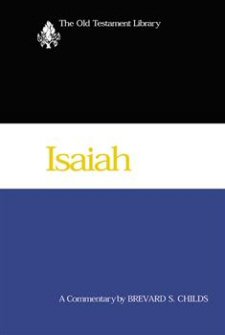
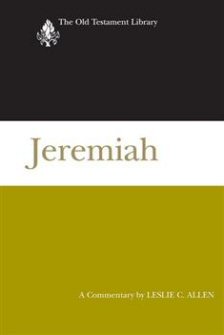
Every month Logos Bible Software offers a free book and an additional book for just 99 cents. This month’s pair is an awesome pair of OT commentaries – one on Isaiah and the other on Jeremiah – written by excellent OT scholars.

The Old Testament Library Series: Isaiah by Brevard S. Childs (Price: Free!)

In this important addition to the Old Testament Library, renowned scholar Brevard S. Childs writes on the Old Testament’s most important theological book. He furnishes a fresh translation from the Hebrew and discusses questions of text, philology, historical background, and literary architecture, and then proceeds with a critically informed, theological interpretation of the text.

The Old Testament Library Series: Jeremiah by Leslie C. Allen (Price: $0.99)

This book of Jeremiah offers a remarkable range of literature, including prose, poetry, homilies, oracles, and proverbs. This commentary understands the book as a work of religious literature, to be examined in its final form, yet with careful attention to the historical contexts of writing and development through which the text took shape. Jeremiah proclaimed a message of coming judgment, because of the people’s unfaithful worship, and yet also emphasized the call to know Yahweh and to live as God’s faithful people. Through it all, Leslie C. Allen identifies a trajectory of grace, in which the proclamations of doom can be understood within the context of promises for a renewed future.

You can find both books here.

Music Monday – Of Want and Misery: The Nothing that Kills

This week I went back to listen to some of the music I used to listen to in high school. And boy did I find some gems. For instance, this song – – Of Want and Misery: The Nothing that Kills — by As Cities Burn from Son, I Loved You at Your Darkest album. Yes its screamo, but boy is it beautiful. It tells the story of romance between a lover that pursues and the beloved who chases after things that won’t fufill. It has one killer line at the end – “And this is romance….” Truly all romantic stories actually point us to the true romance: The Gospel.

I watched you float away on a wave of want and misery
now I’ve got to find you
I watched you float away on whatever caught your eye
now I’ve got to find you
’cause I’ve got to keep your head above the water
while the current pulls me under

I will hang my life in the space between the noose and your neck
I won’t let you die just yet

I will love you even when you won’t let me
and you will kill me by doing nothing
but I know it’s not you, my dear,
I know it’s not you
I know it’s not you, my dear,
it’s the nothing that kills

I can’t save you
control is something out of mine
no, I can’t save you
control is something out of my control

I will love you even when you won’t let me
and you will kill me by doing nothing
but I know it’s not you, my dear,
I know it’s not you
I know it’s not you, my dear,
it’s the nothing that kills

I can’t save you but I will love you
no, I can’t save you but I will love you
I’d like to think that this is love
lost in second chances without end
this is romance

Missional Preaching in a Post-Christendom World

How can preaching inspire and shape a church to share the goodness of God in Jesus Christ with neighbors near and far, in words and deeds? How can reaching equip and send the people of God to be the people of God in the world and for the world? Because the only way the world will possibly believe this good news is if they see a community of people who live it and invite them to live in it too. This is the hope of missional preaching. (The Mission of Preaching, 28)

At the beginning of the year I sensed that the Lord wanted me to spend some more time studying and improving my skills in preaching. This goes hand in hand with the larger call upon my life to help equip the church for mission. When I saw that Patrick Johnson wrote a book titled The Mission of Preaching: Equipping the Community for Faithful Witness I knew that I was supposed to read this book.

Summary

Without a doubt the Western church lives in an era for which we are largely unprepared. We now life in a missionary context. I could tell you story after story about this. The fact is that nowadays many people are no longer even de-churched rather they are completely un-churched. This simple fact forces us to consider how preaching in this missionary context differs from preaching in a Christendom context. Johnson suggests that we need to reconsider homiletics in light of this missionary context. He proposes a missional homiletic:

Preaching confesses Jesus Christ through a missional interpretation of scripture in order to equip the congregation for its confession to the world.

Johnson fleshes out what this means through three chapters. He begins by examining the work of three homileticians who see preaching as a form of bearing testimony or bearing witness. Each of these proposals have their own strengths and weaknesses but in Johnson’s opinion, their greatest strength is that they all make a strong case for preaching as a form of testimony. Johnson also devotes a chapter to Barth’s missional theology. Barth’s Trinitarian theology forms a sort of foundation for an ecclesiology which emphasizes the missional nature of the church. For Barth, the commission given to the Church and to individual Christians is to bear witness to Christ. This forms the basis for a missional church and missional preaching. Johnson also devotes a chapter to studying the literature produced by various leaders in the missional church movement. He focuses primarily on Treasures in Clay Jars: Patterns in Missional faithfulness. From this book he describes various patterns and characteristics of the missional church. This serves as a further basis for his development of the missional homiletic.

Johnson wraps up his discussion of missional homiletics by reminding the reader that a missional hermeneutic must interpret scripture through the lens of Jesus Christ, it must take seriously the formative intent of scripture, it must address the vocational locatedness of the local congregation. All of this must be done in service of equipping the congregation for its confession in the world. As the preacher preaches scripture in light of this hermeneutic, he or she will be in a better position to act as a witness to Christ that equips his/her congregation to be effective witnesses for Christ in whatever context they find themselves in.

Pros:

I absolutely loved this book! It was very well researched, i.e. it engages with various views on the purpose of preaching. It is theologically sophisticated, dealing in depth with Karl Barth’s theology. And most helpfully for preachers like me, it is extremely practical. Now this book doesn’t give a bunch of how to steps to missional preaching, it does provide patterns and images of what missional preaching might look like. In other words it provides great examples in order to stoke the preachers imagination as to what missional preaching will look like. What I appreciate most about this book is that it is one of the few books that specifically treat this ever so necessary topic – preaching in a missionary context. If I could I would put this book in every young preacher’s hands. More and more preachers are going to have to deal with the reality of preaching in this post-Christendom world, and they will most definitely need guidance for how to face this new challenge.

Cons:

There is very little to critique in this book. One could critique some of the position of those that Johnson interacts with (for instance how several of the homileticians Johnson studies prioritize the authority of the preacher’s interaction with scripture over the authority of scripture itself), however that would not be very productive. My biggest critique of this book is the absence of any interaction with Karl Barth’s lectures on homiletics. If Barth really holds to a missional hermeneutic, this should certainly show up in these Barth’s lectures on homiletics. Johnson should have devoted some space to these lectures.

Conclusion

This post-Christendom context that we find ourselves in today will require change, not only in the preacher himself and how he preaches, but also in his understanding of the purpose of preaching. The preacher will have to add to his other preaching identities (herald, pastor, witness) the identity of equipper. This book will help him to do that. Hopefully those who read this book will be better equipped themselves to equip the church for the sake of mission.

Faith, Freedom, and The Spirit

Several years ago Paul Molnar wrote a book on Divine Freedom and the doctrine of the Immanent Trinity – now he adds to his works on the Trinity by offering us a book on Freedom and the economic Trinity (specifically in Barth, Torrance, and contemporary theology).

Summary

Molnar’s aim in this book is to explore divine and human relations within the economy of salvation with a major emphasis being placed upon the work of the Holy Spirit. He seeks to demonstrate how our experience of and knowledge of God changes when it is considered in light of the sphere of faith in God’s Word and Spirit as revealed within the economy.

He focuses in on the Holy Spirit as the thing which enables us to have faith in and know God. However his religious epistemology is not merely grounded in our experience of God in the economy. He argues that any articulation of who God is and what our relationship with God is like must begin by articulating who God is in himself (immanent Trinity) in order to even speak clearly about who God is for us what God does in the economy of salvation. Otherwise we allow history and experience dictate the content of our theology. When this happens the result is that God and revelation tend to become indistinguishable from own own experience within the economy. According to Molnar this is a problem that many recent interpreters of Barth (including Bruce McCormack and Ben Myers) run into.

There are several ways Molnar sees this in recent interpretations of Barth. One is the discussion about Trinity and election. Molnar argues that one cannot reverse the direction between election and Trinity without doing damage to our knowledge of Christ’s true deity and humanity. Those who take election to be first are out of line with what Barth thought. (Molnar thinks that Barth did not change his Christology – still believed God would be God without incarnation or even without creation.) To reverse Trinity and election undermines God’s freedom for us and our freedom which is only enabled by God himself. Also rejecting the Logos Asarkos (which some recent Barth interpreters do) undermines Jesus’ deity and makes God dependent upon history.

Human freedom is the freedom to live by the grace of God. If God’s grace is not free (as historicized theology makes it) then we are not truly free. Thus our freedom is based upon God’s own freedom.

Thoughts

Molnar makes a powerful argument for traditional historic positions on the doctrine of God. Whereas many Barth scholars have moved towards a more revisionist reading of our faith Molnar keeps us grounded in the historic doctrines of the church. Specifically he steers us away from historicized versions of the doctrine of the Trinity and Christology. He ensures that God is in no way dependent upon creation or reconciliation for his own identity. This allows us to speak of a Triune God who is truly free. This will be a must read book for anyone interested in the Election/Trinity debate and recent discussions which seek to get rid of the Logos Asarkos. This book deserves to be read by anyone interested in staying faithful to the historic understanding of who God really is.

Note: I received this book from the publisher in exchange for an impartial review.

Does Karl Barth Hold to a Version of Penal Substitution?

It’s a sort of tricky question. How does Barth understand Penal Substitution? I was once told that Barth definitely saw PSA in Isaiah, but that he believed that it is not taught in the New Testament. The debate sort of rages on – does Barth have some version of Penal Substitution? And if he does how does it differ from typical evangelical versions of PSA? And if he doesn’t – can Barth be a resource for formulating a version of PSA? These are all important questions.

In his recent book Faith, Freedom, and the Sprit, Paul Molnar addresses a passage which I believe hints at some sort of version of PSA in Barth. But I will let you decide for yourself:

Barth always stresses that Jesus acts both divinely and humanly so that we never have simply a human or divine being in Jesus. Jesus’ sacrifice for us “is of course, a human action –but in and with the human action it is also a divine action, in which… the true and effective sacrifice is made” (IV/1, p.280)

Up until this point there is nothing that would hint at PSA. All that is being explicated is that atonement happens in both directions – it comes from God and Man. Molnar goes on to say:

In Jesus we see the true meaning of suffering and death. While there was suffering and death in Israel, in Jesus these become “the work of God himself” (IV, p.175)

At this point there is nothing surprising here. Atonement is being explained as the death of death. Sin and guilt and death themselves are put to death on the cross. Nothing (yet) about Jesus being punished. All that we know at this point is that the Son exists in solidarity with the humanity of Israel in its suffering.

Now here stuff gets tricky:

“The Son of God in his unity with man exists in solidarity with the humanity of Israel suffering under the mighty hand of God” (IV/1, p.175)

Molnar says that “As such he suffers Israel’s suffering as “children chastised by their Father”; in him God entered the vicious circle of human suffering allowing the divine sentence to fall on himself… “He, the electing eternal God, willed himself to be rejected and therefore perishing man” (IV/1, p.177).

Molnar seems to think that the suffering of Christ is in solidarity (some form of substitution) with humanity under the hand of God. This constitutes the act of sacrifice. If Molnar is right (which I think he might be), then we have an interesting take on Barth’s PSA.