Exposed – Remember the Cross

Yesterday in our Masks mini-series we talked about “Masks” and how we put them on to hide from ourselves, from God, and especially from other people.  I offered you the second step to taking off your mask – today I offer you last and most important step…

Remember the Cross

Chances are that when you take of your mask people won’t actually reject you. Because everybody deals with crap, and they probably assume that you do to. But even if they do reject you – who cares! Who cares if they reject you. Who cares if they are disappointed. Who cares if they don’t want to be in community with you!

You are probably thinking:

What do you mean who cares?!?!? I care!!!

Well Jesus doesn’t care. Jesus paid for those sins that you are afraid to expose and his opinion is the only opinion in the entire universe that matters. At the end of the day – everybody might reject you, abandon you, hate you, ridicule you, but Jesus won’t. You might disappoint others but Jesus won’t be disappointed. There is something very freeing about living in that truth – of knowing that you are secure in Jesus because of the cross… of knowing that there is nothing you can do or be that will separate you from the love of God. If you really believe that – if you really believe the cross – if you really believe the gospel, then you can be free to walk around and think – I don’t care what you think about me! I know how the king and creator of the universe feels about me – And that is good enough for me!

Exposed – Fear of Man

Yesterday in our Masks mini-series we talked about “Masks” and how we put them on to hide from ourselves, from God, and especially from other people.  I offered you the first step to taking off your mask – today I offer you the second step:

Recognize Fear of Man

Masks

We protect ourselves from rejection because we are sure we will be rejected if others really see what’s inside.

So we fake it.

Think about it this way do you have a room that is an absolute mess? If you do, you would not want people to walk into your room unannounced right?

When you hear somebody is coming over unexpectedly, you probably start hiding things – you throw all of your junk into drawers, you hide the dirty socks on the floor, you put all of your junk into a pile in the closet or hide it under the bed. By doing that you make sure that nobody thinks “EWW! This person is an absolute pig.” And you have kept your dignity, but really the mess is still there – its just that nobody can see it.

By keeping up the appearance of being clean – you save yourself from judgment and rejection. By doing this you avoid the fear of being rejected, which make sense – because being rejected sucks.

However I’m talking about an all consuming fear that keeps us from being real. We tend to fake it because we see people as bigger than God and we fear the consequences of people knowing what we are really like. We are afraid that we will be humiliated, laughted at, rejected, ridiculed, or even despised. We are afraid that we will lose those friendships or relationships.

So in that moment when you are about to be real you stop and consider the consequences – and you decide that instead of risking rejection you are going to play it safe and keep it hidden…

We need to realize that the biggest reason we hide is because we fear people more than we fear God….

So if you are going to take off your Mask you need to realize that the reason you even put on a mask in the first place is your fear of man…

Next time we will look at the last and most important thing you need to do before you can take off your mask.

Exposed – We Are All Messed Up!

Yesterday we talked about “Masks” and how we put them on to hide from ourselves, from God, and especially from other people. In a sense Everyday is Halloween. So over the next few days I am going to offer you three things you need to do to get past the fear of taking off your mask. Today I offer you the first step to taking off your mask…

Realize Everyone Else is a Mess Too!

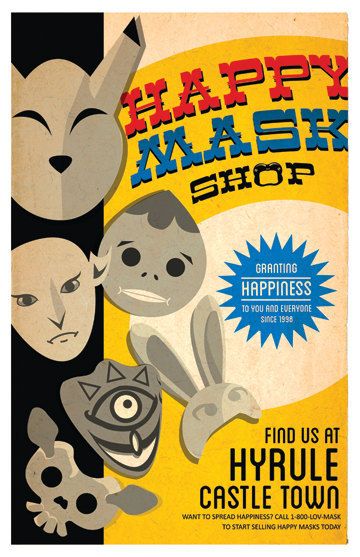
Put on that Happy Mask and pretend its all OK!
Put on that Happy Mask and pretend its all OK! You are guaranteed to feel happy or your money back guaranteed!


I’m a mess – you are a mess – we are all messes okay? We all struggle with stuff – we all battle sin. That is why Paul tells us in 1 Corinthians 10:13:

No temptation has seized you except what is common to man.

If you are struggling with something – chances are somebody else you know is struggling too. Here is a silly example: The other day somebody came to me and said that they always feel bad during worship and I asked them why?

“It really looks like you are into worship everytime… It seems like you are really enjoying yourself.”

 And they replied –

Yeah sometimes…. When I worship I don’t feel as mature as everyone else.

I feel like everyone is so spiritual and focused on God during worship.

But every time we worship I can’t stop thinking about things I really shouldn’t be thinking about.

 And I ask – “So what are you thinking about…”

Cheesburgers – they reply

And I’m like NO WAY – Me too!

That’s silly – but its real – chances are somebody is struggling with the same thing you are; whether that is some addiction or thoughts of burgers – there is somebody out there, probably somebody you know that is trying to hide the same exact things you are trying to hide.

So you need to realize that everyone has something they are hiding – everyone is a mess.

Exposed – What’s Under Your Mask?

“Do you not know that there comes a midnight hour when everyone has thrown off his mask? Do you believe that life will always let itself be mocked? Do you think you can slip away a little before midnight to avoid this? Or are you not terrified by it? – Soren Kierkegaard

What’s Under Your Mask?

Masks - Famous Movies

Today I’m kicking off a mini-series called “Masks” – The Things We Hide Behind. With Halloween coming many of us will be wearing masks or costumes – and for most people it’s a ton of fun. For one night – you get to pretend to be something your really aren’t.

However – for many people Halloween isn’t the only day we put on masks. For many people putting on a mask is a regular part of your morning ritual…

Eat breakfast – Brush your teeth

Do your hair – Grab your backpack

But before you walk out that door…

You put on that mask and head to school or work or wherever you go.

And all day long – you will wear a mask to cover up certain parts of you that you don’t want anybody to see. We do that to hide from ourselves, from God, and especially from other people. In a sense Everyday is Halloween. So over the next few days I am going to offer you three things you need to do to get past the fear of taking off your mask.

Context Context Context!

I’m in the middle of studying for our next sermon series at Soma which is a series on Philippians. Philippians is certainly one of the most beloved books of the NT. In fact, I have several friends who have even memorized it! One of the reasons why its so beloved is because it contains a plethora of memorable verses, probably more than any other Pauline letter. Take for example the following short list:

  • For me to live is Christ and to die is gain.
  • You attitude should be the same as that of Christ Jesus.
  • Rejoice in the Lord always. I will say it again: Rejoice!
  • And the peace of God, which transcends all understanding, will guard your hearts and your minds in Christ Jesus.
  • I can do everything through him who gives me strength.
  • And my God will meet all your needs according to his glorious riches in Christ Jesus.

How many times have you heard somebody say one of these phrases when times got tough? I certainly have – however from personal experience, I have certainly see how these famous verses take on a life of there own apart from anything that Paul is actually saying in the book. Without proper context these verses, especially the ones about rejoicing always and God providing everything  become at worst proof texts for a full blow prosperity gospel or at best a pseudo-prosperity gospel.

Without proper context, these verses get watered down into a full blown or pseudo-prosperity gospel.

Careful study of Philippians shows that these verses are the furthest thing from a form of the prosperity gospel, or name-it-claim-it, or wishful, positive Christian thinking. Paul can say these things, not because he can find the positive in every situation and not because he hopes that God will bail him out, no, Paul can say these things because he knows that he has the ultimate treasure and comfort, i.e. knowing Christ and being in Christ.

Bavinck’s Virtue Ethics

In “Distinctively Common” an essay by Clay Cooke – a PhD candidate at Fuller Seminary and Free University of Amsterdam – he notes that Herman Bavinck has a unique Reformed take on virtue ethics.  Bavinck believes that

“We can profit from Aristotelian thought, and without doubt Aristotle’s ethics is basically the best philosophical ethics.”                    –(Notes from Gereformeerde Ethiek van Profess. Dr. H. Bavinck)

In the notes to the lecture that Jelle Michiels De Jong took from one of Bavinck’s lectures it seems pretty clear than he lends his fervent support towards the general structure of virtue ethics. However, he also takes a critical view of virtue ethics. I believe that Bavinck’s eager but critical appropriation of this ethical system serves as an example for Christians who wish to take the best of culture while at the same time recognizing the incompatibility of certain beliefs with our faith. In other words – Bavinck’s approach to virtue ethics is both critical yet appreciative – we ought to learn to be both critical and appreciative of other man made cultural systems.

According to Cooke – Bavnick expressly rejects the Aristotelian claim that people can achieve the human telos by means of their own agency. This is quite in line with his reformed theology which asserts that the development of virtue is only acquired by grace. A Reformed version of virtue ethics will need to prioritize grace in the process of moral formation. It will need to make explicit the fact that one does not become virtuous by means of mere habituation or practice of the virtues, rather one become virtuous (or a person of christian character) when God’s grace enables us to perform those actions which create virtuous lives.

Another aspect of Reformed virtue ethics which will remain distinctive from Aristotelian virtue ethics is that Reformed virtue ethics will aim at Christ-like cruciformity as its telos. This isn’t strictly a reformed view, rather it is a Christian view, however how one understands what cruciformity will actively look like will certainly be shaped by one’s understanding of the reformed tradition.

Walls Fall Down (Book Review)

In life you will certainly come against obstacles, trials, or problems that will make you feel overwhelmed, defeated, or just plain horrible. As a Pastor of a large church in LA pastor Dudley Rutherford has certainly see his fair share of couples who are going through marital troubles, parents whose children have gotten caught up in worldly ways, people who have lost it all in this financial crisis, people who are in bondage to porn or to drugs and alcohol, and families who have lost loved ones – so without a doubt pastor Dudley knows that everybody in this world is struggling in some way or another. Dudley has written a book for these people. He believes that if people were to follow God’s instructions to Joshua before the battle of Jericho, then people would have the same results that Joshua and the Israelites did – “any obstacle, trial, or problem you are facing will crumble at your feet.”

In his book, Dudley offers 7 spiritual strategies to make the walls before you fall down:

  1. Stand in awe of God and know his is good and sovereign.
  2. Place your trust in God’s unique plan for your life.
  3. Endeavor to honor him in all that you do.
  4. Immerse yourself in a culture of like-minded people.
  5. Be consistent with your Christian walk.
  6. Obey God’s commands because there is a direct correlation between your obedience and his blessing on your life.
  7. Embrace God’s perfect timing regarding your current trail and know that a season of joy and victory is coming.

According to Dudley, if you follow these seven principles the walls that stand before you will fall to the floor and you will experience complete and total victory.

Review

I will be completely honest with you… I had a hard time getting through this book. It seemed to me that it was continual fluff. Essentially it is a Christian self-help book that promises that “if you do these things – God will help you out in your tough situation.” Despite the fact that its filled with a “think positive, positive things will come your way” and “here are 7 surefire steps to success” type message there are a few glimmers of hope in this book. The first principle emphasizes God’s sovereignty and wisdom, it accurately teaches that God is in control and that we can have peace in any situation knowing that he is good and in control. Dudley also briefly mentions that our definition of victory might not be God’s definition of victory – he sites Paul and his life as an example. In the world’s eyes Paul’s life doesn’t look so victorious, but in God’s eyes Paul ultimately experienced victory. I wish Dudley would have began this book with this truth. Unless you define victory people will tend to define victory according to cultural norms, in this case the American dream. This is extremely dangerous for believers because it will either lead them to chase false victories or it will lead them to feel like God has abandoned them because they aren’t experience the “good life” (at least according to upper-middle class standards).

Overall, I can’t say that I’m too excited about this book. I believe that the message that is contained in this book is necessary for every believer to hear – That God always wins – but the self-help nature of this book makes me hesitant from really recommending it to anybody.

[Note: I received this book courtesy of Thomas Nelson publishers in exchange for an honest review.]

The Benefits of Believing in Predestination

Yesterday in our mini-series on the Calvinist version of predestination we took a look at how Calvin responded to some objections to his doctrine of predestination. Today, as we conclude this mini-series, we will see how he not only took a defensive stance when it came to this doctrine but how he also argued vigorously in favor of it.

The Benefits  of Believing in Predestination

It is apparent that Calvin believes that predestination is not unjust. However he does not limit himself to arguing defensively for the doctrine, he also makes a positive argument for it. Calvin believes that one way that Satan assaults believers is to make them question their election (3.24.4). This doctrine has the positive effect of reassuring the believer that she is elect. In revealing this doctrine through scripture, God assures us of our election. By looking at Christ, the one in whom we find certainty of our election (3.24.5), our fears are soothed, our restlessness is calmed, and our fatigued senses are tranquilized, in our election we find rest (3.24.4). Calvin also argues for this doctrine by showing that because we can be sure of our election in Christ, we can be sure that God hears our prayers (3.24.5). Finally this doctrine also spurs us on towards obedience. In election His justice humbles us and teaches us to look up to his mercy, when see his justice and mercy we are aroused and stimulated to live a holy life (224).

Although this doctrine can be difficult to accept, Calvin is right in emphasizing that it is Scriptural and that God’s justice is inscrutable. He is also right in saying that this doctrine has tremendous benefits. Regardless of whether or not you agree with his version of predestination, because of the reasons mentioned in this post and the last few posts we must not be quick to dismiss this difficult and controversial doctrine.

(Note: All quotes come from the anthology, The Protestant Reformation edited by Hans Hildebrand.)


Four Reasons Why Calvinism is Just Plain Wrong

Yesterday in our mini-series on the Calvinist version of predestination we tackled the question – “According to John Calvin what is predestination?” Today we take a look at the question…

Is Predestination Unjust?

In Book Three chapter 23 Calvin responds to four objections regarding the injustice of the doctrine of predestination. Let us look at these four objections and his responses. By doing this we will see a common thread between each of these responses.

Calvinism twists the character of God.

The first objection to the doctrine of predestination, specifically reprobation, is that it twists the character of God. This objection is articulated in two ways the first which is found in 3.23.2 says that a God that “is offended by his creatures who have not provoked him without any previous offense… resembles more the caprice of a tyrant than the sentence of a judge” (232) The second articulation of this offense is found in 3.23.4, which says that by creating humans that are predestined condemnation God is unjust in “cruelly mocking his creatures.” (234) Both of these objections make the case that reprobation is cruel and unjust because the reprobate did not choose their fate. Calvin responds to this objection by saying that “the will of God is the supreme rule of righteousness so that everything which he wills must be held to be righteous by the mere fact of willing it” (232). To say that there is some law above God to which He must comply is impious. By leveling this objection against predestination, the objector is setting up a standard for justice above God. Calvin responds by saying that God is not lawless, rather God is a law to himself, thus he is not bound to give an account for why this is just. This type of response resembles Ockham’s voluntarism which says that God does not will something because it is good or just but that something is good or just because God wills it.

Calvinism violates the principle of alternate possibilities.

The second objection is that it is unjust for God to “blame individuals for things the necessity of which he has imposed by his own predestination” (236). This seems like an appeal to something like the principle of alternate possibilities. These people believe that humans should be judged solely according to the actions of their free will. However Calvin believes that this diminishes the omnipotence of God over all (238). He counters their argument by saying that the cause of their perdition is in God’s predestination but is also in themselves. Why God predestined it cannot be known, however what can be know is that it was just because it displays his glory (240). Thus Calvin’s response to this objection is that it in fact is “consistent with equity, an equity, indeed unknown to us, but most certain” (241).

Calvinism bears false witness against God.

The third objection says that the doctrine implies false things about God. The doctrine falsely implies, against the witness of scripture, that is God “an acceptor of persons” (241) because He does not do justice equally. If it is true, as Calvin argues that merit is not involved in election, then there must be some other cause for which humans are predestined. Calvin’s objectors argue that if God does not elect based off of merit he must elect based upon some other characteristic of the person, for instance wealth, power, rank, beauty, etc. If God were to do this He would be “an acceptor of persons,” this however is unscriptural. So according to Calvin’s opponents, predestination makes God an acceptor of persons, scripture says that God is not an acceptor of persons, thus predestination must be false. Calvin says that this is not so. God inflicts “due punishment on those whom he reprobates, and bestows unmerited favor on those whom he calls” (243). Election is unmerited, so God is not an “acceptor of persons.” In predestining humans, God would be just in punishing all, and he is merciful in choosing to show favor to some. To choose to show grace to some is not unjust, it is merciful.

Calvinism discourages holy living.

The final objection is that the doctrine of predestination encourages license and discourages zeal for holiness. Calvin says that this is not so because the mysterious doctrine humbles us and causes us to be in awe of God’s mercy and justice (244). Because we are humbled at God’s justice and mercy we are stimulated to aspire to the end for which we are elected, namely holiness in life (244). Thus the doctrine does not encourage license and sloth, rather it encourages a zeal for God’s holiness.

Conclusion

Having seen how he responds to these four objections it is clear that Calvin believes that the doctrine is not unjust. It is not unjust because God wills it. God’s will is the rule of righteousness, so whatever he wills is just. To say that predestination, a doctrine clearly taught in scripture, is unjust is to say that there is a rule of righteousness above God. To say that humans know that rule of righteousness which is above God better than God himself knows it is impious. Although according to human standards it might seem unjust, Calvin clearly believes that it is not. For “divine justice is too high to be scanned by human measure or comprehended by the feebleness of human intellect” (235). Thus predestination is not unjust because God willed it, any objection to its justice is an act of pride ignoring the mystery and inscrutableness of God’s will.

(Note: All quotes come from the anthology, The Protestant Reformation edited by Hans Hildebrand.)