Romans has often been called Paul’s “systematic theology,” I would beg to differ, but if we are going to insist that Paul is writing a “theology” it would be best to call it “biblical theology” or “narrative theology” because Paul takes the entire storyline of scripture – creation through restoration – and rereads this Jewish story in light of Christ. So in that sense we could call Roman’s an occasional narrative theology…
What doe Paul have to say about the Holy Spirit in Romans?
We tend to think that Romans is deeply Christological, which it certainly is, but more than that its thoroughly Trinitiarian, meaning that Paul has the Holy Spirit play a huge role in his theology. Consider these facts:
Gian Lorenzo Bernini’s (1598-1655) – Dove of the Holy Spirit
The Holy Spirit is called “the Spirit of God” four times, the “Spirit of Christ” once, “the Spirit of holiness” once, the “Spirit of adoption” once, the “Holy Spirit” five times, and “the Spirit” a whopping fifteen times! In other words the Holy Spirit is all over the book of Romans, and those are just the times the Holy Spirit is explicitly named!
So what does the Holy Spirit do in Romans?
According to Paul the Holy Spirit does a ton of things! Here is a brief list:
1-By the Spirit God pours is love out into the hearts of believers. (5:5)
2-The Spirit sets believers free from the law of sin and death. (8:2)
3-The Spirit helps believers fulfill the law. (8:4)
4-The Spirit lives in believers and will give them life (8:11)
5-By the Spirit believers are able to put sin to death. (8:13)
6-Believers are led by the Spirit. (8:14)
7-The Spirit testifies to believer’s spirits that they are children of God. (8:15-16)
8-Believers enjoy the first fruits of the Spirit. (8:23)
9-The Spirit helps believers in their weaknesses especially when we don’t know how to pray. (8:26-27)
10-The Spirit sanctifies believers. (15:16)
11-The Spirit helps Paul (and us) carry out our mission. (15:19)
All that to say – the Holy Spirit plays a huge role in Paul’s theology in Romans!
When Bizzle addresses the situation in Ferguson and Christians’ response to racial injustice he simply doesn’t care if people are going to like what he is says. He is going to speak truth regardless if it offends some people’s sensibilities.
He especially kills it in his 2nd bar (1:38 – 2:26).
As the person who oversees college Life Groups at my church I know how hard it is to find, write, or develop good small group/bible study curriculum. Over the years I have perused tons of Bible studies and small group materials, only to be fairly disappointed every time. However, Robbie Castleman’s New Testament Essentials a collection of 12 weekly bible studies does not disappoint.
Castleman’s book focuses on two basic characteristics of the New Testament – first that it is Christocentric and second that it is thoroughly Trinitarian. These two themes get developed across three bigger sections: 1) the person and work of Christ, 2) the person and work of the Spirit in the church, and 3) the kingdom of God. Under each of these sections you will find a Bible study portion – 5 in the Christ section, 3 in the Spirit section, and 4 in the Kingdom section.
Each of these sections include:
1 – Bible Study: scripture to read, some texts to memorize, and some question to reflect on based on the reading.
2 – Reading: a section written by Castleman in which she offers background and insight into the passage.
3 – Connecting to the Old Testament: here she helps the reader understand how the New Testament draws upon the Old Testament.
4 – The Ancient Story and Our Story: a section on how the passage connects with our lives as Christians today.
Thoughts….
I was pretty impressed with the book. Rarely do I come across a bible study that actually challenges me to think deeply about Scripture and deeply about my life. Bible studies tend to go one-way or the other, but this one found a a great balance. Also I thoroughly enjoyed it – in fact I did one study each morning for 12 days. During those twelve days I was forced to ask myself deep questions about my life with God and I was challenged to really read Scripture instead of simply skimming it. All in all it was a valuable exercise.
However I can foresee some issues that people will have with this book. First, and maybe this was just my own issue, the book started falling apart in just a few days. Maybe it was created so you could rip out the pages for “study purposes” but I highly doubt that is the case. Second, I can foresee some people saying that the study questions are way too difficult. The author really leads the reader into some heavy exegetical work, meaning that most people will have a difficult time making it through the questions in a timely manner. I found the depth quite refreshing, but I know not everybody will feel the same way. This makes me wonder about its intended audience, who is this book really for? Is it for a new believer? I doubt it. Is it for the average adult? Probably not. I imagine that it is probably geared towards college students and/or seminarians.
Overall this study guide impressed me. I enjoyed working through each session. I was challenged and stretched and I believe that others will be too.
(Note: I received this book courtesy of IVP in exchange for an impartial review.)
Many college ministers are about to enter into a brand new season. For those of us who are starting new things on local college campuses there will definitely be a ton of pressure to provide “results” to the people back home at our churches.
“Recruit new students, get people to make decisions for Christ, put on big events that students love! Do more, get more, be more!”
All these things are fine and dandy. But at the end of the day – tons of new students, new converts, and spectacular rush week events aren’t the things that God is going to judge our ministries on. God is going to look at our lives to see whether or not we have been faithful to the callings and tasks he has given us. In other words success in ministry boils down to faithfulness to what God has called us to…
“Zero Week” at UCLA is a huge week for campus ministries. The same is true for colleges around the country.
In Father, Son, Spirit, and Kingdom Robbie Castleman compares and contrasts the lives and ministries of two Old Testament Prophets – Jonah and Isaiah. Notice how she describes what it means to be faithful in ministry:
Jonah walked across Nineveh in a three-day ministry with a bad attitude and no love for the lost, and the city had a short lived revival that made the evening news. Today, Jonah’s results would merit him a TV show and a lifestyle that smelled like success. On the other hand, Isaiah hand a lifelong ministry that people ignored, tuned out, shut off and didn’t get. Isaiah ended up with a congregation of only about 10 percent of what he started with (Isaiah 6:9-13). Today Isaiah’s ministry would be subject to every suggestion and gimmick for a quick fix that would put him on the road to the kind of success that can be quantified and measured and then advertised. But with whom was God pleased? (FSSK, 105)
As you go out and work those college campuses, I would encourage you to remind yourself that God isn’t looking for you to generate fruit – that is his job – but he is looking for your faithfulness.
At this point you already know what is going on in Ferguson, Missouri. So I don’t need to give you the details. (If you don’t know whats going on then you obviously have been living under a rock – a rock on the moon).
It seems like everybody has an opinion and that everybody has weighed in on the issues at hand (how could you not do this). However one of the best responses I have heard about some of the issues behind what is going on, specifically the race issue, has come from Matt Chandler, lead pastor of The Village:
This morning I tweeted out two sentences that were in the sermon I preached this past weekend at The Village. Both sentences were meant to address and serve as an illustration of “white privilege,” the idea that white people, in most cases, have easier paths than most black people.
The challenge with white privilege is that most white people cannot see it. We assume that the experiences and opportunities afforded to us are the same afforded to others. Sadly, this simply isn’t true. Privileged people can fall into the trap of universalizing experiences and laying them across other people’s experiences as an interpretive lens. For instance, a privileged person may not understand why anyone would mistrust a public servant simply because they have never had a viable reason to mistrust a public servant. The list goes on.
What is so deceptive about white privilege is that it is different from blatant racism or bias. A privileged person’s heart may be free from racist thoughts or biased attitudes, but may still fail to see how the very privilege afforded to him or her shapes how he or she interprets and understands the situations and circumstances of people without privilege.
I don’t have to warn my son in the same ways that a black dad has to warn his son. I have never had to coach my son on how to keep his hands out of his pockets when going through a convenience store. Many of my black brothers are having these conversations with their boys now. Again, the list goes on.
It has been my experience that there are few things that enrage a large portion of white people like addressing racism and privilege. We want to move past it, but we are not past it. Clearly, we are not past it. So, let’s press in to it.
One of the questions I received from a friend had to do with adding the hashtag #Ferguson. The question was innocent enough. “What does white privilege have to do with what happened to Mike Brown?” Let me try to quickly answer. The facts are still being debated, and I am hopeful that justice will take place once those can be established, but the way white people tend to perceive the situation in Ferguson, Missouri and in situations like this is through distinctively white lenses. We believe that our experiences, histories and benefits of our hard work are universal experiences for everyone. This is simply not true. I’m not a sociologist, but I’ve read enough, lived in enough places and have enough friends that I’m beginning to understand what motivates the frustrations and anger that can exist deep in the hearts of young black men.
In all of this, for the black and the white (and every other color), our only hope is the gospel. Until there is an acknowledgement of privilege and repentance for discrimination, the kingdom and what God has purchased for us in Christ isn’t going to be displayed and lives are still going to be destroyed. It’s systemic, historic and horrific. Might we be men and women with calloused hands and knees as we seek the Lord for racial reconciliation.
Anarchy – the government is unnecessary, undesirable, or harmful. On one end of the spectrum of anarchism you have some people who hold that the government is a necessary evil, on the other end of the spectrum you have those who believe that the government is an unnecessary evil that we need to eliminate as much as possible. Both of these positions are untenable.
Anarchy!!!
Minarchism – think of this as minimal anarchism (that’s easy to remember). Minarchists like Robert Nozick argue that governments ought to exist, but they ought to have a very limited function, namely the protection of individuals. That means that police, courts, fire departments, the military, etc. have a right to exist. Minarchism is the so called – “night watchman” state. In a real world this position is untenable. However, we ought to ask ourselves, an ideal world, is a minimalist form of government the best form of government? Or we might even want to ask ourselves –
In the new heavens and the new earth, will there be any form of human run government?
“In the new heavens and the new earth we won’t need the government anymore. Jesus will be our king. Government is a necessary institution in this fallen world, if the fall had never happened government would not have developed.” I highly doubt all those things. And so did Abraham Kuyper….
Humans need government. Political institutions aren’t the result of the fall.
Without a doubt the government should keep from unduly intruding upon other institutions (what “unduly” actually means is certainly up for debate.) However, according to Kuyper, the government certainly has some legitimate functions – 1) it exists do adjudicate disputes between competing institutions and people as well, 2) it exists to defend the weak against the strong, and finally 3) it exists to ensure that everybody is playing a part in making the society flourish.
Abraham Kuyper
All of these points seem to point towards a minimalist form of government that would only exist if the fall hadn’t occurred. 1) Disputes would not occur if people didn’t have sinful competing desires. James seems to say so – “What causes fights and quarrels among you? Don’t they come from your desires that battle within you? You want something but don’t get it. You kill and covet, but you cannot have what you want. You quarrel and fight.” 2) The weak only need defense in a fallen sinful world where the powerful are prone to prey upon the weak. The author of Ecclesiastes seems to say so – “If you see the poor oppressed in a district, and justice and rights denied, do not be surprised at church things; for one official is eyed by a higher one, and over them both are others higher still. The increase from land is taken by all; the king himself profits from the fields.” 3) People wouldn’t need to government to ensure that everybody is flourishing, because in an unfallen world everybody would care about making sure that others are flourishing. However we are selfish people and there aren’t enough resources to go around, so selfish people make sure that they flourish with little regard to the flourishing of others, especially of those others are not like them.
So it seems as though government is necessary because of our fallen condition. If we weren’t fallen we wouldn’t need government. Kuyper (and I) would disagree with that line of thought. Kuyper believed that the political authority that we currently experience is simply a manifestation of something that was already implicit in creation’s design prior to the fall.
Even if the fall had not occurred government would still have developed.
Richard Mouw, explaining Kuyper’s position has argued that “the government is not fundamentally a remedial response to human perversity, but a natural provision for regulating – “ordering” – the complexity of created cultural life” (Abraham Kuyper, 51). Mouw leads us into a thought experiment where we imagine a pre-fall world, in this thought experiment you have two people living in an apartment complex. One person is a tuba player who wants to practice on a daily basis at the same time as her neighbor puts his children down for a nap. Neither of these people have sinful desires – in fact they are both good desires, one is working towards cultivating culture and the other is fulfilling parental responsibilities. The tubal player wants to make music for people to enjoy, the father wants his children to be well rested and healthy. These two people need somebody to help them resolve this benign dispute. Mouw leads us into another thought experiment.
Think about traffic patterns. Even sinless people would have to agree about which side of the road they would use when driving their cars. Thus there is a need for regulation of group activities, even when it is not necessary to reinforce such regulative activity with coercive threats. (52)
Both of these short thought experiments illustrate the fact that there is nothing implausible about a political system or a governmental institution existing in a world where sin does not exist. Order and regulation are a necessary part of human flourishing, order and regulation are woven into creation itself. All this to say, even if the fall had not occurred, human beings would naturally develop some system of ordering and regulation because 1)it is pragmatic and 2)it is woven into creation.
So back to the idea that “in the new heavens and the new earth we won’t need the government anymore…” The truth is that if God wove the need for government into the nature of creation itself (even if we only catch a glimpse of that prior to the fall) then why believe that the very same need that existed within us prior to the fall will suddenly disappear in new creation?
Just a few days ago Dr. Kent Brantley, the Christian medical missionary who contracted Ebola while serving the people of Uganda, released a statement describing how he reacted when he first knew he had Ebola:
I am writing this update from my isolation room at Emory University Hospital, where the doctors and nurses are providing the very best care possible. I am growing stronger every day, and I thank God for his mercy as I have wrestled with this terrible disease. I also want to extend my deep and sincere thanks to all of you who have been praying for my recovery as well as for Nancy and for the people of Liberia and West Africa.
My wife Amber and I, along with our two children, did not move to Liberia for the specific purpose of fighting Ebola. We went to Liberia because we believe God called us to serve Him at ELWA Hospital.
One thing I have learned is that following God often leads us to unexpected places. When Ebola spread into Liberia, my usual hospital work turned more and more toward treating the increasing number of Ebola patients. I held the hands of countless individuals as this terrible disease took their lives away from them. I witnessed the horror first-hand, and I can still remember every face and name.
When I started feeling ill on that Wednesday morning, I immediately isolated myself until the test confirmed my diagnosis three days later. When the result was positive, I remember a deep sense of peace that was beyond all understanding. God was reminding me of what He had taught me years ago, that He will give me everything I need to be faithful to Him.
Now it is two weeks later, and I am in a totally different setting. My focus, however, remains the same — to follow God. As you continue to pray for Nancy and me, yes, please pray for our recovery. More importantly, pray that we would be faithful to God’s call on our lives in these new circumstances.
I believe that reason and faith are compatible. I believe that philosophy and theology should work together. I believe that each field should have sphere sovereignty. I believe that without God’s grace our reason is distorted. I believe that every sphere of inquiry is ultimately directed towards God. Quite unsurprisingly there are many out there who disagree with what I believe. Two of those people are Carl Raschke and Craig Boyd. Both of their positions of the topic of faith and reason can be found in a recent book that Steve Wilkens edited called Faith and Reason: Three Views.
This most recent volume in the Spectrum: Multiview Books series covers the ever contentious topic of the relationship between faith and reason. It attempts to answer questions like “are philosophy and theology allies or foes?” “Can faith contradict reason?” “What comes first reason or faith?” “Does one have priority over the other?” Steve Wilkens provides a brief but helpful introduction to this topic. He sets the stage for three philosophers – Carl Raschke, Alan Padgett, and Craig Boyd – to make their best case for how faith and reason relate to one another.
Carl Raschke – Faith and Philosophy in Tension
Raschke argues that faith and reason are exclusive of one another. He makes the case that there is an ontological distance between Creator and creation which does not allow reason to “get” to God. However he does more than simply build an ontological argument, he argues based on the notion that God is a subject and not an object. This means that God cannot be known through detached and objective reason, God can only be known through a personal approach of love and trust, hence God can only be known through faith.
Alan Padgett – Faith Seeking Understanding
Padgett argues that Christians are called to make full use of reason to aid in organizing, interpreting, and understanding what they already believe though faith. Under this view, faith has a logical and temporal priority over reason. Much like Augustine Padgett insists that reason never operates in isolation from volition but is always directed and motivated by desire. Because of this, faith, or a trust and desire for God must be the motivating factor for our use of reason.
Craig Boyd – Thomistic Synthesis
Boyd makes an argument for the notion that natural reason/philosophy is the “handmaiden” of theology. He argues that reason can serve to lead people into faith. Of course grace plays a major part in this position, for grace sanctifies natural reason, however this position seems to be very optimistic in unsanctified reason to know many true things about God.
The Arguments
Briefly, Raschke’s argument lacks exegetical bite. He seems to argue for certain positions that most exegetes would vehemently disagree with. His argument for Faith and Philosophy in Tension relies upon these arguments, so at the end of the day his argument falls flat. Boyd’s essay is probably the strongest essay in the entire book. Boyd argues very clearly and he addresses many possible objections to his position. However his biggest problem is that he underestimates the noetic effects of sin. He seems to believe that reason is unaffected by the fall but how can this be? If reason is motivated primarily by our will and desires, how can reason be accurate when fallen reason is motivated by a twisted will and sinful desires? At the end of the day, Padgett’s position is the strongest. He takes seriously the biblical injunctions to know God with one’s mind and to seek wisdom, he takes seriously humanity’s capability to know some (very limited) things about the Divine (I don’t want to call this knowledge of God…), and finally he takes sin and human depravity seriously.
Assessment
I am a big fan of the multiple views book series. They are extremely helpful for whetting one’s appetite for larger debates and discussions. This book certainly possesses that characteristic. I can easily see college or seminary students reading this book for a class in an introductory theology or philosophy course. When these student read this sort of book, they will certainly be led to choose a position which best reflects their own, or they might even be led to change what they believe. Regardless of what happens, this book will certainly spur on some heated discussion over the relationship between faith and reason. I highly recommend it!
Faith and Reason: Three Views will certainty spark some debates about the relationship between faith and philosophy!
(Note: I received this book courtesy of IVP Academic in exchange for an impartial review.)
I have been doing a quite of bit of thinking about the relationship between theology and philosophy lately. That was partially spurred on by thoughts of going back to school next fall but also because I have been doing some reading in religious epistemology – I have been making my way through T.F. Torrance’s Reality & Evangelical Theology.
As I have been thinking about this topic I happened to have stumbled across an old copy of Faith and Philosophy, in it there was an article by William Eisenhower titled “Creative Interchange Between Philosophy and Theology: A Call to Dialogue.”
In this article Eisenhower argues that theology and philosophy have been in dialogue for the last 2000 years, however the last 50 or so years have been a period where these two disciplines have been divided. As we enter into this third millennium, philosophers have become interested in religious questions, this should be welcomed by theologians. He believes that both disciplines have much to gain from one another. In one sense he is preaching to the choir, I already believe this (after all I studied philosophy and theology). However, one part of this paper, which I found very interesting was how he defined both of these disciplines.
When we talk about philosophy and theology we tend to assume that we know what we are talking about. To a certain extent we do: philosophy is what philosophers at universities do and theology is what pastors and theologians do at seminary. However Eisenhower seeks to go deeper than these trivial definitions – in doing so he applies an analogy used by Henry Nelson Wieman:
If religion is like eating, then reality which interests the religious person is analogous to food. In that case the theologian is the one who puts this food into such a form that it is palatable and can most readily be eaten. The theologian is a good cook. But the philosophers is a dietician. He does not present God in a form that is digestible to the ordinary religious person. That is not his business… the theologian talks about beefsteak and lettuce. The philosopher talks about starches and calories.
To take this analogy further, theologians eat the meals they prepare. In other words, they are committed to their own work, there is a certain loyalty or faith that is associated with “their” theology – they are committed to the Church and to the Faith. However, like the dietician, the philosopher is not preparing anything for consumption. The philosopher is not required to stand into a personal relationship or a relationship of faith and trust towards her work. A philosopher who analyzes faith does not need to have any sort of commitment to the Church or to faith.
So according to Eisenhower the difference between the Christian theologian and a philosopher is personal commitment to the object of study. But does this really work? What about the Christian philosopher, does the philosopher of religion automatically become a theologian the second she puts her faith in Christ? The Christian philosopher of religion is certainly using philosophical methods (probably analytic philosophy) so does she automatically become an analytic theologian? It seems to me that these sort of questions point out the fact that this “definition” or “analogy” falls apart. At first glance this analogy is attractive, but at the end of the day we cannot delineate between theology and philosophy based upon the criteria of personal commitment to the object of study, or else there would be no such thing as Christian philosophers.

 However, Robbie Castleman’s New Testament Essentials a collection of 12 weekly bible studies does not disappoint.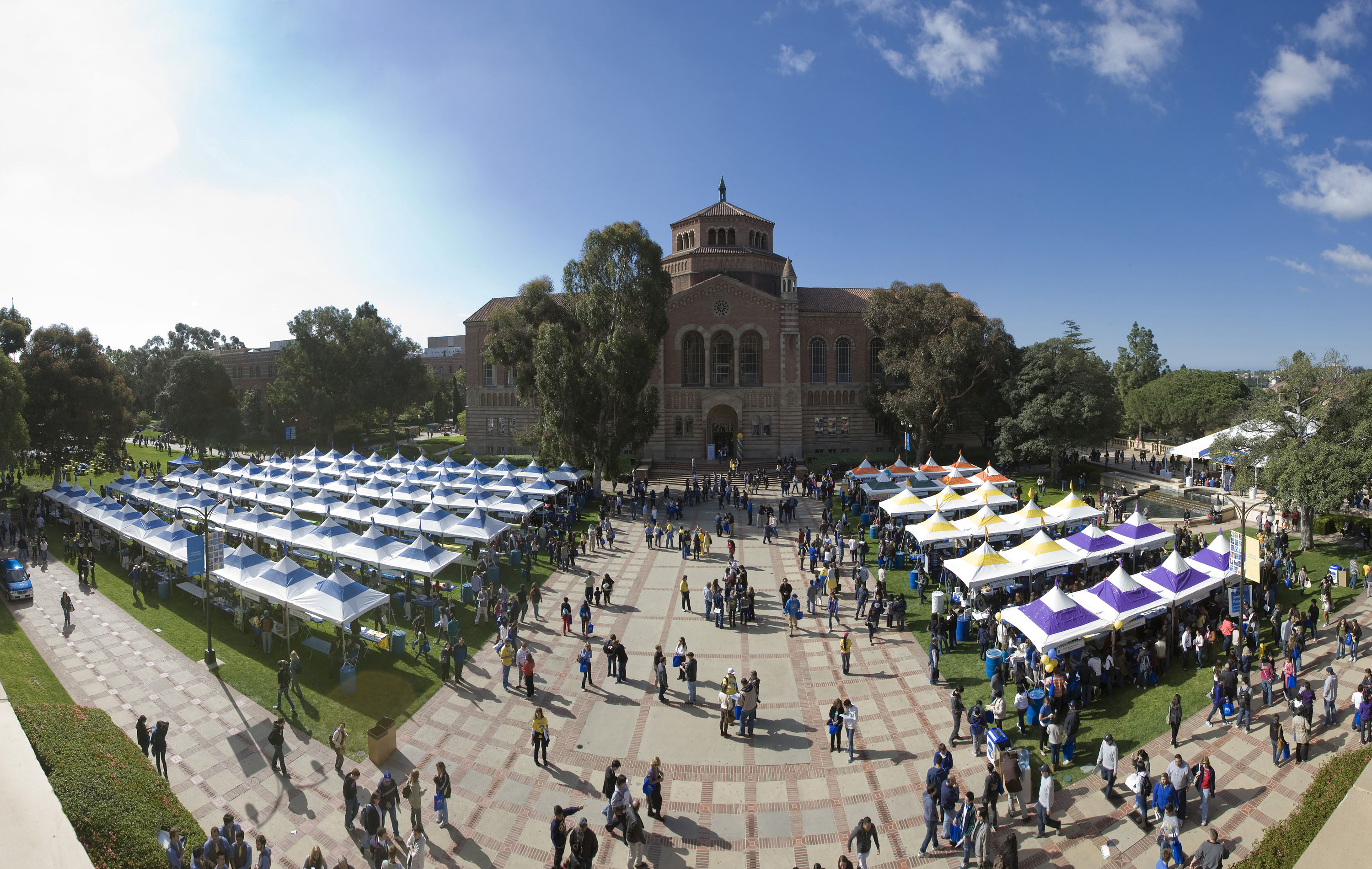


 This most recent volume in the Spectrum: Multiview Books series covers the ever contentious topic of the relationship between faith and reason. It attempts to answer questions like “are philosophy and theology allies or foes?” “Can faith contradict reason?” “What comes first reason or faith?” “Does one have priority over the other?” Steve Wilkens provides a brief but helpful introduction to this topic. He sets the stage for three philosophers – Carl Raschke, Alan Padgett, and Craig Boyd – to make their best case for how faith and reason relate to one another.
 CWoznicki Think Out Loud