We cannot be Christians, followers of Christ, we cannot even know what it is to be a Christian unless the gospels give at least an approximately correct account of Christ’s teachings. And if the Gospel account is even approximately correct, then it is perfectly clear that according to that teaching many men are irretrievably lost… It is less clear, I admit, that the fate of the lost according to that teaching is to be endless misery rather than ultimate destruction. But universalism is not a live option for Christians. – Peter Geach (Providence and Evil)
The Mystical View of Prayer
A few weeks ago James Gordon from Wheaton College came to visit us at our weekly Analytic Theology seminar. He presented an insightful paper title “Th e Mystical View of Prayer: Friedrich Schleiermacher in Dialogue with Analytic Theology.” Yes you may be wondering…. Schleiermacher and Analytic Theology? What the!?!? But yes James showed that the two are not as incompatible as one may think. Regardless, here are my notes from his lecture.
You can follow him on twitter at: @JRGordon13
- Methodology of Prayer
- Challenge 1 – Impracticability of Analytic Theology
- Does AT have nothing to contribute to piety?
- To talk of prayer through AT is to attempt to get clarity on the act itself and what one is doing
- Challenge 1 – Impracticability of Analytic Theology
- What about Novice prayer and prayer without belief? What’s going on there?
- Challenge 2 – Improvement upon Scripture… does AT attempt that?
- Some genres of scripture are narritival and AT attempts to reduce to propositions
- We can use Theological Interpretation of Scripture in order to address this objection
- Challenge 3 – Choosing a Starting point
- Prayer from Below
- Takes the on the ground practices of the church as basic and works backwards towards God to make sense what we know about God in prayer.
- Take Wolterstorff’s Liturgical Theology as an example
- Liturgy is a fully legitimate source for doing theology
- There is a God who is a hearer… what is the understanding of God in our liturgy?
- Take Biblical Theology
- Looks at Biblical examples as a starting point – healing for prayers àhealing, etc.
- Takes these biblical examples and concludes something about God and prayer
- Constructs account of prayer AFTER not before active prayer
- Prayer from Above
- One begins not with practices, but with account of God’s being, then what can be said about prayer can be fit subsequently with what one can say about God
- e. why petition an omnipotent, omniscient God?
- Prayer seems to be an afterthought after what we already know about God
- Starts w/ what we know about God then moves to how we can understand prayer
- One begins not with practices, but with account of God’s being, then what can be said about prayer can be fit subsequently with what one can say about God
- A Third Way: Schleirmacher’s Alternative Method
- The Mystical Account of Prayer
- Looks like “From below” – starts w/ concept of God based of religious consciousness/experiences that all people supposedly have
- Gordon suggests he has a third way, not above or below, but a mystical account (Christological/Soteriological Method)
- The Mystical Account of Prayer
- Prayer from Below
- What does he mean by Mystical? Not what we mean typically… He means: Lies between magical view and empirical view
- Magical – Prayer affects God… But If prayer affects God, it’s a lapse into magic
- Empirical – Prayer doesn’t do anything… But No. Just No. He rejects a therapeutic account of prayer.
- Mystical – supernatural does become natural in the person of Christ, but just b/c it doesn’t bring about divine intervention, that doesn’t mean that prayer is ineffective. Prayer in other words does something – in and through human agency in the natural system of nature.
- To say Schleiermacher rejects magical and empirical doesn’t mean he rejects the effectiveness of prayer. Prayer is not a tool to be used like a magic wand nor is it something that one can just forego entirely since God’s ends come about not because of our prayer
- Schleiermacher’s Sermon on Prayer – The power of prayer in relation to outward circumstances
- Begins w/claim – to be a religious man and to pray are one and the same thing
- Prayer creates existential angst – if a person petitions God to heal someone, they may be healed or not. On the former outcome, the temptation is to see it as a mark of divine favor, on the later, the temptation is to have one’s peace disturbed
- He appeals to the prayer of Christ himself – if answering to petitionary prayer is proof of one’s prayer then you would think all of Christ’s prayers were answered! But what about Christ in Gethsemane?
- S urges them to not feel as though what you ask must necessarily take place because of your prayer. We shouldn’t assume our petitions made in faith will by necessity be answered.
- True prayer comes only when it is done in the name of Christ
- Ends sermon by saying petitionary prayer is not the mark of true piety, entreating prayers are dictated by weak human heart, and a sign of an underdeveloped God-consciousness
- Schleiermacher’s Dogmatic Account of Prayer
- The fact that humans experience God-forgetfulness – it characterizes the community’s consciousness as a whole and individuals will experience God-forgetfulness as a society – thus one is born into a web of “God-forgetfulness” and it needs someone outside of this web to pull us out
- Jesus communicates his God-consciousness to the redeemed (for example see how he does it with the 12 disciples – its not just teaching propositions, its communication of his Spirit)
- Prayer is the means through which one integrates one’s self-consciousness to God-consciousness
- Since the church is an imperfect community it vacillates between SC and GC
- One’s ceaseing to pray is expressed in the complete integration between SC and GC
- Praying in the name of Jesus = praying the concerns of Jesus in his Spirit and Consciousness
- Remaining Challenges
- What does “I will pray for you?” mean in this account. Typically we think this means that I am petitioning God for a particular effect, but if this isn’t the case then why say this?
- Schleiermacher may say… the sense that we are praying carry’s on GC onto others in the community. So far from superfluous, it has a person and community forming function.
- Novice prayer – Kid saying the Lord’s prayer, etc.
- Schleiermacher allows for Novice prayer…
- (It seems he is saying that Novice prayer creates some philosophical problems. But What’s the problem with Novice prayer?)
- What does “I will pray for you?” mean in this account. Typically we think this means that I am petitioning God for a particular effect, but if this isn’t the case then why say this?
Books Read in 2015
I know this is super late! Every year, right at the beginning of the year I post a list of all the books I read that year. However the end of last year was a bit crazy. I was gone in Africa for half of January, then I jumped right into a theological method seminar which kept me really busy, then the baby came! All that to say here are the books I read in 2015, my list of best books of 2015 will be posted soon!
January
- Giving Blood – Leonard Sweet – 1/2/15
- Reformed Catholicity – Michael Allen & Scott R. Swain 1/6/15
- Space, Time, and Resurrection by T.F. Torrance 1/19/15
- God the Peacemaker: How Atonement Brings Shalom 1/21/15
- Two Views on the Trinity by Jason Sexton 1/24/15
- Speaking to Teenagers by Doug Fields & Duffy Robbins 1/28/15
- Exodus: Kregel Exegetical Library Commentary by Duane Garrett 1/31/15
February
- Total Church by Tim Chester & Steve Timmis 2/2/15
- The Happy Christian by David Murray 2/6/15
- Introducing Paul by Michael Bird 2/11/15
- Shepherding God’s Flock by Benjamin Merkle and Thomas Schreiner 2/13/15
- Retrieving Doctrine: Essays in Reformed Theology by Oliver Crisp 2/16/15
- Surprised by Grace by Tullian Tchividjian 2/18/15
- A God Entranced Vision of All Things by John Piper & Justin Taylor 2/24/15
- Scary Close by Donald Miller 2/25/15
- Studies in the Pauline Epistles: Essays in Honor of Douglas J. Moo 2/26/15
- The Paleo Chef by Pete Evans 2/28/15
March
- The Pastor’s Ministry by Brian Croft 3/4/15
- Nonviolent action by Ronald Sider 3/6/15
- Rejoicing in Christ by Michael Reeves 3/7/15
- The Challenge of Jesus by N.T. Wright 3/12/14
- Faith, Freedom and the Spirit by Paul Molnar 3/23/15
- The Mission of Preaching by Patrick Johnson 3/27/15
- Treatise on Grace & Other Posthumously Published Writings by Jonathan Edwards 3/29/15
- Teams that Thrive by Ryan Hartwig & Warren Bird 3/31/15
April
- Advancing Trinitarian Theology by Oliver Crisp & Fred Sanders 4/1/15
- Spiritual Friendship by Wesley Hill 4/3/15
- Confronted by Grace: Meditations of Theologian by John Webster 4/3/15
- Recovering Classical Evangelicalism by Greg Thornbury 4/6/15
- Jonathan Edwards’ Theology: A Reinterpretation by Kyle Strobel 4/11/15
- The Real Scandal of the Evangelical Mind by Carl Trueman 4/13/15
- Edwards and the Christian Life by Dane Ortlund 4/15/15
- The Story that Chooses Us: A Tapestry of Missional Vision by George Hunsberger 4/21/15
- Called to the Life of the Mind: Some Advice for Evangelical Scholars by Richard Mouw 4/23/15
- Encountering Romans by Douglas Moo 4/24/15
- The Lord and His Prayer by N.T. Wright 4/27/15
May
- The Bees by Laline Paull 5/7/15
- The Kuyper Center Report (Vol 5): Church and Academy by Gordon Graham 5/11/15
- The Divine Mentor by Wayne Cordeiro 5/17/15
- Theology and California by Jason Sexton and Fred Sanders 5/19/15
- Ordinary Hero by Neil Cole 5/30/15
June
- The Insanity of Obedience by Nik Ripken 6/1/15
- A Fellowship of Differents by Scot McKnight 6/7/15
- F. Torrance: An Intellectual Biography by Alister McGrath 6/15/15
- Reading Barth with Charity by George Hunsinger 6/16/15
- The Holy Trinity Revisited: Essays in Response to Stephen R. Holmes by Thomas Noble and Jason Sexton 6/19/15
- Dietrich Bonhoeffer: A Spoke in the Wind by Renate Wind 6/23/15
- Life Together by Dietrich Bonhoeffer 6/29/15
July
- Paul’s Theology of Preaching by Duane Liftin 7/5/15
- Defending Substitution by Simon Gathercole 7/6/15
- Joy in the Journey by Steve Hayner 7/7/15
- Ethics by Dietrich Bonhoeffer 7/14/15
- Hearing Her Voice: A Biblical Invitation for Women to Preach by John Dickson 7/15/15
- Discipleship by Dietrich Bonhoeffer 7/15/15
- Paul’s Divine Christology by Chris Tilling 7/30/15
- Preaching by Tim Keller 7/31/15
August
- Letters and papers from Prison by Dietrich Bonhoeffer 8/1/15
- The Tangible Kingdom Primer by Hugh Halter and Matt Smay 8/6/15
- Romans 1-7 For You by Tim Keller 8/10/15
- Teaching Romans: Unlocking Romans 1–8 for the Bible Teacher by Christopher Ash 8/11/15
- Paul and the Trinity by Wesley Hill 8/18/15
- Exploring Christology and Atonement by Andrew Purves 8/29/15
Septmember
- Which Trinity? Whose Monotheism? By Thomas McCall 9/7/15
- The Trinity (De Trinitate) by Augustine 9/10/15
- The Trinity by Karl Rahner 9/15/15
- Unburdened: The Christian Leader’s Path to Sexual Integrity 9/17/15
- When Helping Hurts by Steve Corbett and Brian Fikkert 9/23/15
- A Commentary on the Manuscripts and Texts of the New Testament by Phillip Comfort 9/28/15
October
- The Trinity by Karl Rahner 10/5/15
- The Trinity and the Kingdom by Jurgen Moltmann 10/8/15
- Renew Your Life by Kai Mark Nilsen 10/19/15
- The Christian Doctrine of God by T.F. Torrance 10/25/15
- The Triune Identity by Robert Jenson 10/26/15
November
- The God We Worship by Nicholas Wolterstorff 11/8/15
- Which Trinity? Whose Monotheism? By Thomas McCall 11/9/15
- Metaphysics and the Tri-Personal God by William Hasker 11/14/15
- One God in Three Persons by Bruce Ware and John Starke 11/15/15
- Apostolic Church Planting by J.D. Payne 11/17/15
- God, Sexuality, and the Self: An Essay on the Trinity by Sarah Coakley 11/30/15
December
- Theology and the Mirror of Scripture: A Mere Evangelical Account by Kevin Vanhoozer and Daniel Trier 12/3/15
- Reordering the Trinity by Rodrick Durst 12/8/15
- Theology as Discipleship by Keith Johnson 12/15/15
- Crossing Cultures with Jesus by Katie Rawson 12/20/15
- Becoming the Gospel: Paul, Participation and Mission by Michael Gorman 12/22/15
- The Ecumenical Edwards by Kyle Strobel 12/24/15
- People to Be Loved by Preston Sprinkle 12/27/15
- Pioneering Movements by Steve Addison 12/27/15
- Introducing Paul by Michael Bird 12/28/15
The Uncontrolling Love of God – Lecture Notes
On 3/8/16 Thomas Jay Oord came to Fuller to give a presentation based on his new book: The Uncontrolling Love of God. The presentation was followed up with a very interesting dicussion in which participants who sympathized with Oord’s position and those who did not were both able to ask questions and press him on some issues with his proposal.
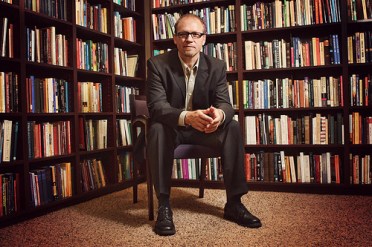
Below you can see my notes from his presentation:
The Uncontrolling Love of God:
- Most Christians want to believe God is lovingly providential, but evil and chance make this difficult…
- Problem of evil – asks why a powerful and loving God doesn’t prevent genuine evil
- GE – event that makes the world worse than it might have been if some other event would have occurred instead
- The problem of chance and randomness – asks how God can be providential if genuine chance and randomness occur
- Christians typically address chance, evil, and other matters in the doctrine of providence: 7 models represent ways Christians think about God’s activity
- God is omincause
- God empowers and overpowers
- God is voluntarily self-limited
- God is essentially kenotic
- God sustains as a steady state force
- God is initial creator and current observer
- God’s ways are not our ways
- Is God culpable for failing to prevent evil?
- Under Essentially Kenotic view – no, he is not because God’s loving nature is incapable of intervening
- There is something about the servanthood of Jesus that gives us some revelation about God’s nature.
- God expresses self-giving, other-empowering love. Most theologians say God is voluntarily kenotic.
- Oord – God necessarily expresses self-giving, other-empowering love. This love is logically primary in God’s nature and God “cannot deny himself.”
- Love comes logically prior to election, sovereignty, power, etc.
- Essential Kenosis says
- God necessarily gives freedom to all creatures complex enough to express it. Consequently God cannot withdraw, override, or fail to provide freedom to a free perpetrator of evil.
- God necessarily gives agency and/or self-organization to simpler creatures and entities. Consequently God cannot withdraw, override, or fail to provide agency to these creatures either.
- God’s love generates both regularities and random events in nature. God cannot interrupt law-like regularities.
- Although creatures sometimes can use their bodies to prevent evil, God can’t b/c he is Spirit.
- Example: mermaids cannot run marathons because leglessness is an aspect of mermaid nature. Similarly an essentially Kenotic God cannot control others, b/c uncontrolling love is an aspect of God’s nature.
- God won’t or God can’t?
- Wont
- God could prevent evil, but God voluntarily wont do so.
- Can’t
- There is some sort of external force constraining God, so God can’t prevent evil.
- Can’t
- God’s love necessarily gives freedom – so God can’t prevent evil
- Biblical Witness
- The God of essential kenosis is not weak. God is creator, provider, even source of miracles. This God is almighty
- Mightier than all others
- God is the one who exerts might upon all existence
- God is the ultimate source of might for all others
- Miracles
- As unusual and good events that involve God’s special action in relation to creation.
- This special action does not require God to control others
- Miracles do not require interrupting law-like regularities of existence
- There is always some contribution on the part of the agent in the miracle
- See Phil 2:13
- Summary
- Essential Kenosis affirms that God’s self-giving, others empowering love is logically first in God’s nature
- Because this love comes first in God, God necessarily gives freedom, agency, and self-organization to creatures and creation
- God’s controlling love consistency gives existence to all, making possible both chance events and evil
- God is not culpable for failing to prevent genuine evil or evil producing randomness
- The God of essential kenosis is not weak. God is creator, provider, even source of miracles. This God is almighty
- Wont
Happy St. Patrick’s Day
In honor of St. Patrick’s Day…
I’m a Father!
On March 9th at 3:22pm my beautiful baby daughter was born! Her mom – my wife – started getting contractions during the YoungLife club that she serves at. But she didn’t really know what it was, just that it hurt and that she didn’t feel well. When she got home, she told me that she thought the baby was going to come soon. Of course I doubted it. I thought she was having false contractions, so I told her to relax and go to bed. Well, she knew better. She said we should pack our bags, and reluctantly I did. I didn’t even pack anything to sleep in because I figured they would send us back home due to a false alarm. (I mean common, you have to give me credit, my wife was due April 4th!) 
We tried to go to sleep, well she tried, and I actually did sleep. And then at 3 am she woke me up saying she thinks this is it. We both shower, because you want to be fresh for labor! And she was right, when we got to the hospital they said she was in fact in labor. A few hours, and no pain med or epidural, later my wife gave birth to our baby girl!

Today she is one week old, but already I’m feeling changed. I never thought I could love someone the way I love my daughter. She is so precious to me and makes my heart melt. I’ve heard people say there is nothing like the love of a parent, but I never really understood that. Now, a week later, I think I’m starting to get it. To think – I love my daughter so much, and God the Father loves the Son even more, and was willing to give him up for our sake! Having a child of my own makes me appreciate the gospel that much more.

Analytic Theology and Traditional Theology
An analytic approach to theology may not be the only approach worthy of consideration by the theologian. But it does provide a mode of doing theology that looks a lot like much traditional theology, and which may find in these historic resources a rich vein of ideas which can be mined, and already are being mined, by those interested in such theology and an analytic sensibility. In this way, Analytic Theology may also demonstrate its credentials as a theology of retrieval, using historic discussions of particular topics to resource contemporary reflection on particular doctrines. Such a prospect is a far cry from the ahistorical logic chopping with which some analytics have been charged. It offers a rich, variegated way of pursuing matters doctrinal that is historically sensitive, using methods adopted from analytics to fructify the theology of tomorrow with the ideas of the past. – Crisp (Expository Times)
I’ve Decided Where I’m Doing My PhD

Although both schools are fantastic, I have finally decided where I will be doing my PhD. I will be going to….
Fuller Theological Seminary!
Although St. Andrews has a lot of things going for it: 1) amazing Faculty (Torrance, Webster, Holmes, N.T. Wright), 2) awesome visiting fellows (Rae, Evans, van Inwagen), and 3) the fact that its Scotland (scotch, the highlands, golf, monarchy) – I have decided that the best place for me and my family is right here in Pasadena.

Here at Fuller I’ll be able to be a part of a top notch team that is trying to make a case for Analytic Theology.
Prayer, Love, and Human Nature: Analytic Theology for Theological Formation is a multi-million dollar initiative funded by the John Templeton Foundation at Fuller Theological Seminary in Pasadena, California. We are a team of theologians working on deepening and thickening out Analytic Theology, as well as applying it to the practice of Christian churches.
The team is a top-notch team. Led by Oliver Crisp, it includes two post-docs (Jordan Wessling and James Arcadi), an administrator and a 2 PhD Students (one of which is me!).
Here in L.A. I will have access to may resources, including UCLA, USC, and Biola. All of which are top-notch resources for philosophy and theology.
I will be able to continue serving in my current ministry.
I will be close to family, and my family will not have to move.
I will be in the city I love – LA!
I will be able to focus on my studies instead of having to worry about how I’m going to support a family in a foreign country. (I.e. Fuller offered a living stipend whereas St. Andrews did not).
I will be able to focus more on publishing articles.
Most importantly, its where I feel the Lord was calling us to stay.
So having said that…. I will be at Fuller for the next 3-4 years!
I’m Doing a PhD!
So in the last 2 days I got some HUGE news…
I have been accepted into both Fuller Seminary and the University of St. Andrews for their newly formed programs in Analytic Theology. Both schools received very large grants from the Templeton Foundation in order to see how Analytic Theology may help us make sense of prayer, love, and human nature. As a part of those grants, both schools made some space for new PhD Students. Fuller created 2 new positions and St. Andrews created 6. Both schools are among the best schools in theology. Both are cutting edge when it comes to Analytic theology. It is such a blessing to be accepted into both of these great schools.
I’ll be announcing which school I’ve decided to go to really soon!
The Uncontrolling Love of God
The Tsarnaev brothers set off a bomb at the end of the Boston Marathon, dozens of innocent bystanders were either hurt or killed. Eliana Tova, an infant, is born with an extremely rare medical condition. Zamuda Sikujuwa was brutally raped during a village raid in Africa. Elie Wiesel was forced to watch a young boy hanged in a Nazi concentration camp. The world is full of evil. Sure there is much good and beauty in it, but at times it feels like the evil outweighs the goodness. So it makes sense when people wonder, Where is God in all of this?
If God is perfectly good, God will want to prevent genuine evils right? If God can control creatures or circumstances totally, God would be able to prevent genuine evils. Right? Yet evil, and what philosophers call, gratuitous evil, still exists. How can we reconcile this with our understanding of God’s power and God’s goodness? Thomas Jay Oord offers a solution in his new book, The Uncontrolling Love of God.
Various philosophers and theologians provide different models for thining about divine providence. One one end of the spectrum there is theological determinism and on the other end there is a form of Deism. Somewhere along the middle is the view that God is voluntarily self-limited. This is the sort of model that those like Clark Pinnock, William Hasker, and John Sanders advocate for. According to Oord what makes this view distinctive is that it places God’s power and authority as logically prior to his love. i.e. He could control, but his love compels him not to. The problem with this is that it fails to answer the crucial question – why doesn’t a powerful and loving God prevent evil. Oord provides what he takes to be a more compelling view:
God’s loving nature requires God to create a world with creatures God cannot control.
Much like mermaids cannot run marathons because a mermaid’s nature includes leglessness (Oord’s example not mine), God cannot create controllable creatures because nature is uncontrolling love.
One of the strengths of this book is that it certainly attempts to keep Scripture central. Oord provides scriptural arguments for his argument and potentially shows that it is at least not incompatible with certain parts of scripture. However there are certainly some shortcomings in this book. First, is that his “uncontrolling love” thesis isn’t compatible with classical theism. Those who want to hold to classical theism, with good reasons, will not be satisfied with this solution. Secondly, it seems to me that Oord gives too much weight to our intuitions about how love ought to function. It seems suspect to me to base our doctrine of God on something like “this is how we feel that love works.”
Despite these objections The Uncontrolling Love of God is a worthwhile read. It helps bring even more clarity to open-relational theologies. And in my opinion does a good job (though unintentionally) of showing that the open theologies of Sanders and the like don’t actually address the problem of evil. However, the solution that Oord provides to those problems aren’t entirely satisfying.
 CWoznicki Think Out Loud