A century after his death, William Poole excluded Calvin from his 1669 Synopsis Criticorum because supposedly Calvin was overly practical. Although in some ways Poole was off the mark with this critique, there is some truth in Calvin’s reputation as a pastor, primarily concerned with practical matters. Calvin’s practical and pastoral concerns emerge in his doctrine of baptism — specifically, as we will see, in and around two loci: the benefits of baptism for the Christian life and the benefit of baptism in the face of death. 
Calvin begins his discussion of baptism by defining it as “the sign of initiation by which we are received into the society of the church, in order that, engrafted in Christ, we may be reckoned among God’s children.” The fact that his first line in the baptism chapter begins by speaking of the communal benefits of salvation seems to indicate that the “means of grace” aspect of this sacrament is secondary. However, he counters this possibility when he says that it is given to believers “first, to serve our faith before him,” and second, “to serve our confession before men.” (Calvin, 1304) Thus in explaining the reasons we are given baptism he places the “means of grace” aspect first. This is followed by discussion of three ways in which God’s grace is manifested to us through this particular sacrament.[1]
The first way baptism serves as a means of grace for believers is that it gives them proof that they are cleansed of their sins. Their sins are “abolished, remitted, and effaced that they can never come to his (God’s) sight, be recalled or charged against us.” (Calvin, 1304). As a sacrament, baptism does not actually cleanse believers of their sin; rather it gives certainty and knowledge of the fact that believers have been given this gift. In other words, baptism gives the believer assurance of the fact that they are cleansed of their sins. Anyone who serves in some pastoral capacity knows that a lack of assurance of salvation and forgiveness is a common issue among parishioners. One way people deal with this lack of assurance is by attempting to make penance for their sins. Calvin mentions this problem as well. In Calvin’s context, as opposed to our current protestant context, some attempted to get assurance through the “fictitious sacrament of penance.” Baptism provides assurance that penance cannot. Calvin says, “there is no doubt that all pious folk throughout life, whenever they are troubled by a consciousness of their fault, may venture to remind themselves of their baptism, that from it they may be confirmed in assurance of that sole and perpetual cleansing which we have in Christ’s blood.” (Calvin, 1307) Thus baptism serves as a means of assuaging guilty consciences which in turn may doubt the assurance of their forgiveness.
A second pastoral concern, not unique to Calvin by any means, is that Christians quite often fail to live in such a way that shows they are dead to sin and alive to righteousness. In other words, Christian tend to slip back into carnal ways of thinking and living rather than Spiritual ways of living. Christians can fall back into sexual immorality, impurity, lust, evil desires, greed, anger, range, malice, slander, and idolatry. In other words, they fail to put to death whatever belongs to their earthly nature.[2] How does Calvin address this pastoral problem? By arguing that baptism shows us the reality of our mortification in Christ, and our new life in him. (Calvin, 1307) In being baptized we are baptized in his death, but we are also “aroused to righteousness by example of his resurrection.” Thus baptism acts as a sign of the reality in which the Christian’s sinful nature has been put to death in Christ, and that they have been raised to life in righteousness. The reminder of mortification helps believers know that despite their sins, which give them so much trouble, they ought not cease to struggle, to have courage, and to spur on to full victory. (Calvin, 1312). It reminds struggling believers that the mortification of their sin will one day day be fully accomplished.
Thirdly, baptism acts as a token of our union with Christ. In virtue of being united to Christ, Christians have all the benefits which are necessary and sufficient for living out the Christian life. According to Calvin in baptism we are “so united to Christ himself that we become sharers in all his blessings.” (Calvin, 1307) Christians are told they are children of God, they are cleansed by his blood, they have a mediator, regeneration, resurrection, sanctification, and the righteousness of Christ.
Thus far we have seen the “means of grace” type benefits of baptism. These pastoral benefits Calvin addresses are in line with his belief that the sacraments are given for the arousing, nourishing, and confirming of our faith. Baptism, which is received “from the hand of the Author himself” is given to Christians as a gift which will help them life which is pleasing to God.
In addition to stressing that baptism arouses, nourishes, and confirms God’s grace to believers, there is another pastoral element in Calvin’s baptismal theology. This appears in how he addresses what he takes to be wrong teachings about infant baptism. In this regard, Karen Spierling[3] does much to shed light upon what caused the rise of these teachings.
Spierling explains that baptism in Roman Catholic theology baptism was the rite by which an infant “was freed from evil spirits, purified of original sin, and sanctified in God’s promise of salvation through Christ.” (Spierling, 65) Given the high infant morality rate and theology which said that if a child had not been purified of original sin through baptism they would not receive salvation, one can imagine parent’s concern for ensuring that their child be baptized no matter what. Naturally, parents were worried about the fate of the soul of their child. For their child to miss baptism understandably brought much anxiety. For this reason, emergency baptisms were often performed by midwives when they believed the child would not survive before being baptized in the church. There were even instances of “resuscitation” that occurred in order that children who died before baptism could be baptized and thus “saved.” (Spierling, 79-80).
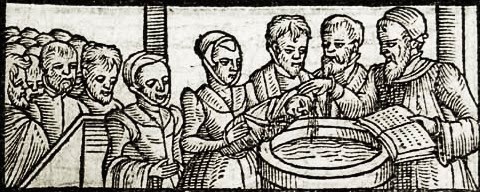
Given the fact that Roman Catholic theology about infant baptism was deeply ingrained into the minds of Christians who became reformed, its not surprising to hear that emergency baptisms continued in reformed and Lutheran cities. Spierling notes that in some areas, like Scotland, leaders allowed for the gradual adoption of “more thoroughgoing protestant doctrine” by allowing the “solace of emergency baptism” without “explicitly granting its theological underpinning.” (Spierling, 78) Calvin, however, was not so accommodating. He vehemently opposed the Roman Catholic understanding of infant baptism. Many of the reasons why he did so were pastoral. First, emergency infant baptism (not to mention resuscitating baptism) represented a reversion into the error of separating word from sacrament. In Calvin’s opinion, separating word from sacrament led to superstitious practices. Calvin wanted to avoid superstitious practices because people tended to put their trust in those practices rather than in Christ. Second, Calvin wanted to counteract the anxiety that Roman Catholic theology of baptism potentially brought to parents. In fact, Calvin believed that the reformed doctrine had greater potential to give parents confidence that their dead infant was saved. Spierling argues that “Calvin was not, however, so callous as to want to leave parents thinking that an infant who died unbaptized would be stuck in limbo or refused salvation. Instead he argued that baptism was important as a sacrament, yet not vital to salvation.” (70) Calvin declares that God adopts the babies of believers before they are born, thus parents of believers could be saved if the parents themselves were saved. This was supposed to assuage the anxiety suffered by parents whose children died unbaptized. Whether or not it actually provided comforting assurance to parents is questionable, nevertheless it was supposed to fulfill this pastoral function.
Confirming the fact that Calvin was truly a practical theologian we have seen that Calvin’s theology of baptism was intended fulfill the pastoral functions of encouraging believers, both in their Christian life and in the face of the death of their children. Whether Calvin’s theology accomplished this end in Geneva is questionable. Nevertheless, we can say at the heart of his baptismal theology was the notion that God has given the church this sacrament for the sake of its benefit.
[1] Concerning sacraments in general Calvin says, “They do not bestow any grace of themselves, but announce and tell us, and (as they are guarantees and tokens) ratify among us, those thing given us by divine bounty.” (Calvin, 1293)
[2] See Colossians 3:5-11.
[3] See Infant Baptism in Reformation Geneva, WJK 2005.



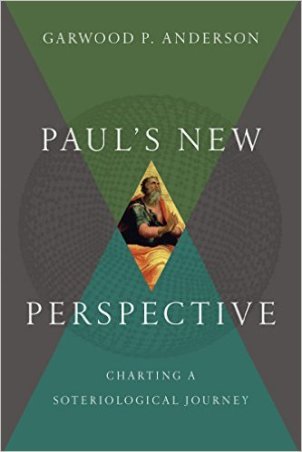
 of Paul’s letters, but Andersons’ thesis certainly does. This doesn’t necessarily mean that Anderson’s explanation is wrong. In fact, I would argue that it has a lot going for it! It breaks down some of the false dichotomies of the NPP/TPP debate, allows the church to incorporate the best of both perspectives, and has a lot of explanatory power. (His thesis even helps explain some of the concerns brought up by Apocalyptic readings of Paul!) But the fact that his whole argument is built upon the foundation of dates makes his foundation rather feeble. If one can decisively show his dating of Paul’s letters are wrong, his argument (in my opinion) falls apart.
 of somebody who is always strong, always has their stuff together, is never wrong, never wavers, and is extremely self-confident is the exact opposite of what Smith suggest Christian leaders should be like. Instead a Christian leader should be marked by vulnerability. Specifically, this vulnerability should recognize and understand our human constraints. Recognizing these constraints makes our ministry more sustainable “and guards us against disillusionment and burnout.”
 examining a booknote by Tony Lane, professor of Historical Theology at the London School, in a 2012 edition of Evangelical Quarterly (EQ 84.3, 280-1). He begins by noting that this book was birthed out of Canlis’ doctoral studies at St. Andrew’s and that it received the 2007 Templeton Award for Theological Promise. He lavishes praise upon the book when he says “it is easy to understand why” it won this award. His review of this book is relatively short. He notes that ascent of the soul is a concept generally greeted with suspicion in the Reformed tradition, but that Calvin has essentially “reformed” it from its Platonic and Neo-Platonic tendencies. He also mentions her comparison between Calvin’s doctrine and Irenaeus’s doctrine. He commends her for restraint in not citing direct influence, but wonders whether tracing out Irenaeus’s influence on Calvin would be an interesting topic for future study. In terms of critique, Lane rightly notes that “there is occasionally a tendency in her exposition of participation to swallow up other categories of Calvin’s thought.” This is a critique which appears in several other reviews as well. However, one might wonder, “If participation is the central theological theme of Calvin wouldn’t it make sense for all other categories to fall under this one category?” In order for this sort of defense to stick, however, one would have to prove that participation is Calvin’s central theme. The other review I examined was written by Sujin Pak, who is now the Assistant Research Professor of the History of Christianity at Duke Divinity school. Her review of Calvin’s Ladder can be found in Modern Theology (MT 27.4, 717-20). She begins by noting the trend in Calvin studies to focus on Calvin’s doctrine of union with Christ and participation in Christ and says that Canlis now adds an important and eloquent contribution to this topic. Like Lane she notes how Canlis persuasively shows that Calvin reforms the traditional theologies of Ascent. Despite being persuaded regarding ascent, Pak displays some hesitancy regarding Canlis’s understanding of Calvin’s theology of participation. She notes that it might not be as important as Canlis has made it out to be. She cites the fact that Calvin does not clearly make the connection between participation and election as evidence that it may not be as central as Canlis makes it out to be. She also wonders whether Canlis overlooks the forensic nature of participation in Calvin. As a minor point of critique Pak points out that Canlis doesn’t address commentaries on key passages that evoke participator themes, for example Romans 8. Despite these shortcomings she sees Calvin’s Ladder as a generally persuasive and eloquent rereading of Calvin’s understanding of salvation and sanctification. Of these two critiques by church historians one would expect significant attention to be paid to the historical claims Canlis makes, however both of these reviews are lacking in this area. Lane’s review completely lacks this feature, though he might be excused given the length of his review. Pak’s critique from a historical perspective is limited to her suggestion that Canlis should have read other texts. Neither critique is historically significant. One would expect more from church historians.
 CWoznicki Think Out Loud