Structured for Mission

The technological revolution, transformed economies, capitalism, globalization, decentralization, individualism, commodification, fragmented communities, fragmented identities, alienation….

At the end of the 20th century these transformations converged creating a radical shift in social culture. (94)

Many churches have tried to respond to these changes with a greater emphasis on programs, structures, and new initiatives. Yet time after time, these things seem to fail. According to Alan Roxburgh, structures aren’t the real issue, it’s the narratives that lie behind the structures that are the real issue. So what churches need is not to restructure (though that may need to happen), but what needs to happen first is that there needs to be a shift in the narratives by which these organizations are working with. We need to understand the stories and narratives that have shaped the changes around us and those that have shaped the structures we currently use. This will take greater use of our imagination and the greater use of experimentation. Without experimenting it will be hard to “discover” the new story lines that need to take place. But most importantly what we need is to follow the Spirit’s leading. Throughout the history of the church, the Spirit has helped to change hearts and reinvigorate imaginations, even when the church seemed to get stuck in a rut.

Part one of this Structured for Mission lays out the changes in society that the church is addressing and lays out a theory of structures and legitimating narratives that shape those structures. In part two, Roxburgh makes a case for the kinds of shifts that need to happen if the church is going to move in health into the future.

I think Roxburgh is on to something important, that may church leaders need to hear: the problems the church is facing cannot be changed by merely tinkering around with our programs and structures, a deeper change is needed. Hopefully many will heed these wise words of Roxburgh.

Paul’s Theology of Preaching

The argument of Paul’s Theology of Preaching can be broken up into two steps:

1)Begin by showing the distinctives of Greco-Roman rhetoric.

2)Show How Paul’s first four chapters in 1 Corinthians is meant to address preaching done in view of Greco-Roman Rhetoric.

The fundamental assumption behind Greco-Roman Rhetoric is that the audience + the speaker’s efforts can yield a fixed Result. The result or the goal in this equation is to convince the audience of a particular position. Classical rhetoric was utilitarian and goal oriented. Paul on the other hand insisted that the equation was not a fixed formula. Unlike the rhetorician Paul did not perceive his goal to be the convincing of an audience. He insisted that creating faith was the role of the Holy Spirit. To usurp the Spirit’s role, was to empty the cross of its saving power.

The first model is what Lifitin calls the natural paradigm, the second model is what he calls the Pauline paradigm. Under the natural paradigm the speaker is a persuader, but under the Pauline paradigm the speaker is a herald.
The Herald does not ask “What must I do/say to achieve a specific result?” Rather the question asks “What is God calling me to be and do?” Success is the goal of the former, whereas faithfulness is the goal of the latter.

This however does not invalidate the herald’s desire to speak with excellence. According to Lifitn there are 5 steps or levels within human persuasion (278): attention, comprehension, yielding, retention, and action. The herald is focused on the first two steps in the process: attention and comprehension. Thus even Paul understood and embraced the need of the herald to adapt in order to gain a hearing and communicate clearly the message he was entrusted with.

There are some practical implications to this Pauline model. The most important is that faithfulness is the primary role of the minister (whether a speaker or not a speaker). Or as Lifitn says about the Pauline model: “It asks not how can I achieve some preset result? But, What is Christ calling me to be and what is he calling me to do?…. The Pauline model is obedience driven.

Liftin presents a long and very detailed argument for his position. He devotes a substantial amount of text to classical rhetorical theories and a large amount of text to the exposition of 1 Corinthians 1-4. At the end he offers some of the practical implications of this study. Overall it is an insightful book, though it might better serve preachers if it were presented in a condensed form. For myself, it wasn’t a groundbreaking idea, though it was a good reminder that my call as a preacher is not to convince anybody but to work hard to communicate clearly and compellingly while letting the Holy Spirit do his work of changing hearts.

Joy in the Journey

I probably would have never picked up Steve Hayner’s Joy in the Journey on my own – but I’m really glad that IVP sent me a copy of it.

Joy in the Journey is a collection of entries from the CaringBridge website, written by Steve (president of Columbia Theological Seminary) and his wife Sharol, as they underwent the journey of losing Steve to cancer. Easter weekend of 2014 Steve was diagnosed with a malignant tumor. His battle with cancer lasted through the end of January of 2014.

Conversations about death and dying are often awkward in our culture. We want to think more positively, or more optimistically. We want to be encouraging. For people of faith there is often the feeling that to talk about death is the opposite of talking about hope, and we want to be people who offer hope. Our awkwardness around the subject of death keeps us from considering our own deaths, or planning our funerals, or even making sure we have written a will. – Steve (94)

The fact that conversations about death and dying are awkward is precisely the reason why you should pick up this book. Its hard to find someone who is very open about their process of passing away, but for someone in ministry like me (or likely you if you are reading this blog) seeing someone make the journey through sickness to death, all the while being faithful to Christ and seeing the hope of Christ even through death is an invaluable resource. Besides the fact that you will be encouraged by Steve and Sharol’s faith throughout it all, there is much to learn from here, especially if you are ministering to people who are sick or terminally ill.

Don’t shy away from this book, even though its about death. We rarely confront death in our culture, we avoid the topic, and this harms our ability to minister to those who are dying. For the sake of your ministry, take the time to read through this book, and see how death impacts a family, before you begin to deal with death in your own ministry.

To sum things up, I leave you with something John Ortberg said to Steve about his journey, it expresses my sentiments about this book so well:

God is shining and speaking so deeply in your words that I don’t know how to express it. Thank you for taking the time and the energy in this journey to all us to be a part of it, and to gain something of the gift of wisdom that is flowing through you with so much power in the midst of physical challenge. I will try to welcome this day. (55)

Note: I received this book courtesy of IVP in exchange for an impartial review.

Free Calvin e-books – Today Only!

Free Calvin e-books – Today Only.

HT: Jim West

John Calvin was born on this day in 1509. In honor of his birthday, Reformation Trust and Ligonier Ministries are making two John Calvin ebooks available free for 24 hours.

Via. The clock is ticking.

Eschatology and Sanctification

Among other things, Michael Allen writes about eschatology and sanctification in a blog post about is upcoming book New Studies in Dogmatics: Sanctification.

Other things surprised me, however, as I have prepared the volume. I did know that matters of creation and of eschatology would be crucial for defining the nature and purpose of creaturely holiness; biblical theology and redemptive history have been a major facet of Reformed dogmatics since its beginning, evident most obviously in the fostering of covenant theology in the sixteenth and seventeenth centuries and then in the emphasis upon Pauline eschatology in recent decades. Eschatology and ethics are wed together, and I foresaw that nexus of issues. But I had not appreciated the degree to which a theocentric eschatology marked by attention to the beatific vision would need to shape my account along the way, not just at the conclusion of the book but in a distributed manner throughout. Holiness is for seeing the Lord, after all, and the pure in heart are blessed with that gift above all (so Heb. 12:14; Mt. 5:8).

You can read the rest of his post at Common Places.

40 Questions about Christians and the Law – (Free Book)

Don’t miss out on this chance to expand your LOGOS Bible Software library for free. This month (July 2015) they are offering ‘40 Questions about Christians and Biblical Law’ by Thomas R. Schreiner (Kregel Academic, 2010). Order yours here: LINK.

About The Book:
This volume by Dr. Thomas R. Schreiner on the interplay between Christianity and biblical law is an excellent addition to the 40 Questions & Answers series. Schreiner not only coherently answers the tough questions that flow from a discussion about the Old Testament Levitical Law, but also writes clearly and engagingly for the student. The pastor, student, and layperson can easily understand Schreiner’s biblical theology of the Law.

The reader will enjoy the clarity and encouragement of 40 Questions About Christians and Biblical Law. The simple Q&A format allows readers to skip to questions of interest.

(HT: Bible Geek Gone Wild)

Ave Christus Rex!!!

HT: First Things Magazine

As the dust settles and the role that conscientious dissenters will have in our New Society is made clearer, we who pray “Thy kingdom come” need not be afraid. What is new is the unfortunate decision of five Supreme Court justices. What isn’t new is the call for Christians to live lives of peace, love, joy, freedom, generosity, kindness, and prayer. The Holy Spirit, as far as I know, hasn’t been overruled by the Supreme Court.

What better time to let our light shine before all mankind. We can be gracious in our legal defeat while remaining firm in our conviction that God made man, male and female, in his own image, and created man and woman to live together in fruitful harmony. We can still ask his unfailing mercy for ourselves, first of all, and for all those who do not know him.

Jesus is king. Amen. Alleluia. No civil authority can change that. What we owe him in obedience cannot be changed by any civil compulsion, full stop. Freedom is something so internal that external things cannot touch it. When civil society falters, each believer can check to see whether the foundation of his life was set on the rocky ground of God, or the sands of fickle earthly masters.

We realize anew today that the Constitution was written by mere human beings. The Word of God that is inspired by the Spirit and the teachings of the holy men and women who have preserved the faith remain unchangeable. The road ahead will be difficult. At the very least, over 100 million Americans still object to the judicial imposition of a false right on the Constitution of this country. That is not a number which can be summarily dismissed. But today, we reaffirm our faith in God, and ask him to guide us as we discern how to move forward to establish a just society, with laws that reflect human nature and promote the common good.

Ave Christus Rex!

Dominic Bouck, O.P., is a Dominican brother of the Province of St. Joseph and a summer intern at First Things.

The Government’s Mission is to Serve Christ

The title of this post seems ridiculous – especially in this post-Christian world. But its true.

The Government’s Mission is to Serve Christ.

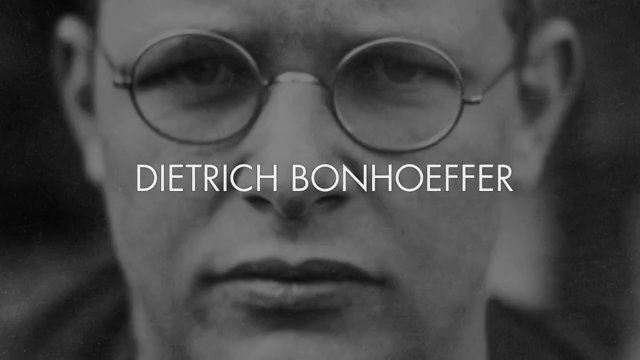
Dietrich Bonhoeffer, pastor, prophet, martyr, spy – gives the rationale behind this idea:

Dietrich Bonhoeffer

The mission of government to serve Christ is at the same time its inescapable destiny. Government serves Christ no matter whether it is conscious or unconscious of this mission or even whether it is true or untrue to it. If it is unwilling to fulfill this mission, then, through the suffering of the congregation, it renders service to the witness of the name of Christ. Such is the close and indissoluble relation of government to Christ. It cannot in either case evade its task of serving Christ. It serves Him by its very existence. – Ethics, 337

Whether the government knows it or not. Whether it wants to or not – the fact is that at the end of the day everything that happens in the realm of government serves to promote Christ’s goals and intentions for this world. The key thing to remember is that we may not have the eyes to see how the government serves Christ. Regardless of the how, the church’s call is to remain faithful to the one who is over all things, remembering that we serve Christ above all others.

The Eternal Subordination of the Son and Divorce in the Southern Baptist Convention

HT: Scot McKnight

Wade Burleson — I’ve seen very few willing to state the matter so boldly and to point the finger not only at false thinking but also at the condition of marriages in the SBC:

How can the divorce rate in every state in the union be declining while at the same time the Southern Baptist divorce rate is accelerating? Because divorce rates are in the culture at large are declining, if Southern Baptists were “accommodating culture,” then our divorce rate would be also declining.

Pay close attention to this categorical statement in the resolution:

“The acceleration in rates of divorce in Southern Baptist churches has not come through a shift in theological conviction…

I disagree. I propose one of the major reasons for the increasing divorce rate in the Southern Baptist Convention is precisely because of a shift in theological conviction during the 1990′s and early 2000′s.

Many of those who were in positions of leadership during those years promoted a doctrinal error called The Eternal Subordination of the Son.  Few Southern Baptist lay men and women even know what that doctrine is, but when you go to a church led by a Southern Baptist pastor who believes it, the emphasis of the teaching will be on “the authority of the husband” and “the subordination of the woman to her husband.” This pastoral demand that a Christian wife alone (not the husband) is called to be subordinate and submissive is based on the false belief that Jesus the Son is eternally subordinate and submissive to the Father.

The Word of God teaches a mutual submission of husband and wife to Jesus Christ–the creator God who became Man (Emmanuel)–and a mutual submission to each other (see Philippians 2:3, 5-7; and Ephesians 5:2 and 5:21).

When the emphasis in any Christian environment–be it a church, home, or ministry–is on one’s alleged superior authority and demand for another’s unconditional submission, a separation in relationship is imminent.

A desire to exert power, control others, and demand submission is unnatural to God’s design for His creation. …

Here’s the catch. Southern Baptist leaders have made the tragic error of believing that a husband should rule and a wife should be submissive because the Bible demands it. Truth be known, the Bible calls any desire to control and dominate–be it the husband or the wife– “the curse.” The divorce rate increases when Southern Baptists call “the norm” what the Bible calls “the curse.” When the first man (Adam) sought to rule over the first woman (Eve), Adam was manifesting a curse, not meeting a commandment (Genesis 3:16).

Jesus came to reverse the curse. Redemption causes curse-filled people to become grace-filled people. Those who seek to rule over others by exerting authority, when they come to see what Jesus says about life, will turn loose of trying to control other people and will only seek to love and serve, NEVER exerting any alleged authority. Again, Jesus said that “the Gentiles lord over others” and “exert authority,” but “it shall not be this way among you”(Matthew 20:24-26).

A Fellowship of Differents (A Primer on the Christian Life in Community)

This is the most important book you may ever read outside of the Bible…

At least that’s what Derwin Gray says about A Fellowship of Differents, Scot McKnight’s new books. Now I really respect Derwin Gray and I definitely try to snatch up any new book that Scot McKnight writes – but really? The most important book you will ever read? That’s a pretty bold claim – and a really hard description to live by.

Gray has gone too far. However I will certainly agree that it is a good an important book for any believer, especially those in ministry to read. Basically McKnight helps us answer the question –

What Would Paul say to the church today?

McKnight takes the teachings of Paul, specifically his major emphases like Grace, Love, Unity, Holiness, and Flourishing and applies those themes to church life today. McKnight takes his deep understanding of the New Testament and his love for the church and gives insight into what a church that actually lives by God’s word might look like today.

Yes the book contains many criticisms of the state of the church in the West, but its all written out of a love for the church in the West. Sometimes you need someone to call out your failings so that you may grow from them.

Favorite Quotes:

  • If we want our church to become holy, we need to learn to spend time in God’s presence, basking in the light of his holiness. (119)
  • To love a person means that together in our mutual indwelling we strive unto kingdom realities, or Christlikeness, or holiness, or love, or full maturity in Christ. (61)
  • If some said, you must be kosher to eat with us, Jesus said, eat with me and I will make you kosher. (135)
  • The ideal Christian life is not a life of “rules and regulations,” but rather a life of irresistible, Spirit-Shaped, new creation freedom to do all God calls us to be. (149)
  • Faithfulness is not our own strength muscled up by determination and discipline and grit; nor is it our strength combined with God’s strength. Faithfulness happens when God’s strength is unleashed in us as we look to, lean on, and love God. (161)

So if you are looking for a primer on how to walk the Christian life in the context of community then this book is for you.