John Calvin & the Four Nicene Marks of the Church

One theme that emerges throughout Calvin’s works as well as some Calvin biographies is the importance he places upon ecclesiology. We see this in various ways, for instance in his fight for the unity of the protestant movement, in his emphasis on the proper understanding of the Eucharist, and his constant attempts at establishing church discipline in Geneva, just to name a few examples. In this brief essay I will explain a few themes in Calvin’s ecclesiology by using the four marks of the church as they are put forth in the Nicene Creed. Understanding that this is not necessarily the way Calvin organized his ecclesiology, I believe it is a useful tool for explaining what he thought about the church.[1] Thus in this essay I will address what Calvin might understand what is meant when it is said that the church is “one, holy, catholic, and apostolic.”

St. Pierre Cathedral in Geneva - Calvin's
St. Pierre Cathedral in Geneva – Calvin’s “Home” Church

ONE

            The Nicene creed begins the section about the church by saying “I believe in one…. church.” The oneness of the church is something that Calvin insists upon throughout his career. This might seem to contradict the very nature of the protestant reformation, however in Calvin’s mind it does not present a contradiction, namely because Calvin saw the oneness of the true church as vitally important. This is a theme that emerges in Gordon’s biography of Calvin. Gordon claims that “Calvin understood his destiny to extend far beyond Geneva’s walls: he was a man of the Church, and its unity was his deepest passion.” (Gordon, Kindle Loc 35) One concrete example of how unity was at the forefront of Calvin’s mind can be seen in his attempted ecumenical work on the Eucharist. Calvin saw the dispute between Lutheran and Zwinglian understandings of the Eucharist as the major block towards church unity. Thus Calvin attempted to navigate a way between both positions, a way which could unite the church. He did this by signing the Augsburg Variata and the Consensus Tigurinus, as well as cultivating a relationship with Melanchthon. He even traveled extensively, journeying to Berne, Zurich, Basle, Frankfurt, and Strausbourg in order to cultivate unity. Sadly, the unity he desired was not achieved.

HOLY

            The Nicene creed continues by saying “I believe in one, holy… church.” Regarding the holiness of the church Bruce Gordon says “the power of Calvin and his fellow ministers lay not in their talent for excoriation, but in their ability to create a vision of a godly community.” (Gordon, Kindle Loc 3095) Though he may have done an excellent job of casting vision for what a godly community looked like, one cannot escape his “talent for excoriation.” One can take the incident with the excommunication of Philibert Berthelier as an example. Berthelier had been excommunicated by the Consistory but appealed to the Small Council in order that he may attend the Lord’s Supper. However, Calvin appeared before the council declaring that he would “rather die a hundred deaths than subject Christ to the disgrace of unworthy participation in the Lord’s supper.” (Gordon, Kindle Loc, 3069) However, at the end the city magistrates concluded that church discipline was in their hands and not in the hands of the consistory. This was a defeat for Calvin, who believed that “our Savior set up in his Church the correction and discipline of excommunication.” (Articles Concerning, 50). Nevertheless, Calvin instituted wide spread moral reform. Geneva was transformed from a city filled with immorality, even having a reputation for violence and sodomy, towards a slightly more moral society. Thus in Geneva we see Calvin’s belief that the church ought to be holy and pure.

CATHOLIC

            The third Nicene mark of the church is that it is “catholic.” Interpretations of what is meant by “catholic” are manifold but at the very least we can say that it can refer to that which has universally been believed by the church. A prime example of how Calvin sees protestant churches as being truly catholic (as opposed to the Roman Catholic church) can be seen in how he argues with Sadoleto. In his reply he defends his catholicity by saying “You are mistaken in supposing that we desire to lead away the people from that method of worshiping God which the catholic church always observed.” (Sadoleto, 6) He then claims that the church has always been governed by the Holy Spirit, which God has annexed to the Word, he supports this claim with Scripture and by appealing to Chrysostom. He then argues for the claim that the protestant church represents what has always been believed by appealing to the writings of Basil, Cyprian, Ambrose, and Augustine. Calvin then says “that it [the Church] is the society of all the saints, a society which, spread over the whole world, and existing in all ages, yet bound together by the one doctrine, and the one Spirit of Christ, cultivates and observes unity of faith and brotherly concord.” (Sadoleto, 7) Thus he emphasizes the catholicity of the church, even saying that protestants revere this church, the church which is truly Catholic, as its mother; but he rejects the Roman church as fulfilling this catholic definition of the church.

APOSTOLIC

            The final mark of the church is that it is “apostolic.” Here Calvin rejects apostolic succession in favor of succession of apostolic teaching. One see’s the importance Calvin puts upon apostolic teaching in the way he envisions his own vocation. In one sense we could say that Calvin saw himself as a defender of correct doctrine, this was part of his vocation.  Calvin says regarding this self understanding that “the welfare of this church…lay so near to my heart that for its sake I would not have hesitated to lay down my life.” (McKee, 62) One way he ensured the continuing welfare of the church is through his doctrinal and biblical writings. Much like so many other important figures in the history of the church, Calvin devoted much attention to Romans. There he lays out the Apostolic teaching of the church, especially when it comes to justification. But perhaps even more than in his commentaries or preaching we see Calvin’s understanding of the importance of defending apostolic teaching in the way in which he responds to heretical teaching. Chief among the examples of Calvin’s polemic against those who don’t follow the apostolic teaching is his treatment of Servetus’s work. In Calvin’s mind those who spare heretics and blasphemers are themselves blasphemers (Gordon, Kindle Loc 3157). Though it seems as if Calvin did not want Servetus to die, the Servetus incident shows how seriously Calvin takes the apostolic teaching of the church.

It should be noted that Gordon’s biography sheds light on each of these four marks, but Gordon’s strength in the area of ecclesiology is his contribution to our understanding of the apostolic nature of the church and the unity of the church. In particular, his chapter on Servetus sheds light on Calvin’s motivations to maintain the apostolic teaching of the church, especially within the context of contemporary political and theological thought, in how he treats heretics. Gordon does much to dispel the myth of a bloodthirsty Calvin out to get Servetus. Secondly, his chapter, “European Reformer,” shows how much Calvin did (at times unintentionally) to bring unity to the Reformed churches ranging from churches in Britain to Poland to the Low Countries and even to the Palatinate. Reformed churches throughout these lands were heavily influenced by Calvin and his reforms in Geneva. Many leaders in these countries wrote to Calvin for advice and some, including John Knox, even came to Geneva to learn from Calvin. Thus even though he never achieved the unity in the church he desired, his contributions went a long way towards establishing some sort of unity based upon his Reformed understandings of the faith and church polity.

CONCLUSION

            There are many ways to approach Calvin’s ecclesiology. We could define it in terms of the two marks he mentions (right distribution of the sacraments and the word properly preached), he views on the current state of the church vs. God’s intention for the church, or even his perceived role in building up the church, however we have chosen to examine his ecclesiology in terms of these loci classicus. Hopefully this heuristic has helped to shed light upon Calvin’s understanding of the church within a historical context.


[1] At least given our readings, and my prior knowledge of Calvin’s work I am not familiar with him organizing his ecclesiology in light of these four marks.

What’s it Like Doing Theology With a Room Full of Philosophers

The following is a guest post by a friend of mine Derek Saenz. Here he reflects upon his past experience as a theology student at Talbot Seminary (which happens to be FULL of philosophy students).

alnqfm8x


If you think that many seminary students look at philosophy students and think, “These guys are just a bunch of know it alls, gibbering on about a bunch of theoretical nonsense,” then you’d be right.

Why is this the case?  What is a philosophy student to do?

I’m glad you asked:

Many of us are fundamentally oriented toward more concrete thinking.

When we get some, “Really smart Philosophy guys,” in our classes we don’t know quite what to do with you all.

Sure, we can get a bit abstract with talk of different doctrines.  But the great simple truth of Christianity is that Jesus was a real man, who really lived, and really died – like physically.  And the resurrected and rose – again physically.  That’s the beauty of our faith, we can tell the story of Jesus to illiterate seven year olds anywhere in the world and they can rrock it.

Many of your non-philosophizing seminary classmates were those illiterate seven year olds.  And the sad truth is that many of us never gained a deeper understanding of our faith.

Which leads to my next point:

We come from fundamentally different backgrounds.

The last philosophy class I took was in my second year of junior college and it had to do with virtue ethics – and I was a little lost even then!  Philosophy folks eat this stuff for breakfast before pondering the deep significances of the Theory of the Analytic Whatever.

For many unwashed, dull, normal seminary students we come from the stale scent of old pizza and spilled soda from so many church youth rooms.  We love Jesus.  We got a Bachelor’s in something.  The sad thing is, our Bachelor’s degrees were focused on the retention of information.  Many times we were never pushed to question or truly understand what we were being taught.  We were incented to simply study the required information and bubble it in on a Scantron.

We do topical sermons based around the Ten Commandments.  We spend a week apiece on the different Fruits of the Spirit.  We are simple-minded.  We are concrete-thinkers.

Simply thinking concretely is dangerous because abstract ideas are actually the tool used in real life change.  You can tell a man to, “Be nicer to your wife,” but the real reason he is so terrible to her is that he is a misogynist who truly believes women are worth less than men.  You can’t combat this concretely, you must go to the magical land of abstract ideas – where real heart change happens.

Which leads to the greatest skills that all seminary students can learn from philosophy students:

We need to learn precision and tenacious curiosity from philosophy students.

I can’t tell you how many times a Master’s level student would say in class, “Well, I don’t get it!  But you know what, none of this has to do with real ministry anyway.”

Can I tell you a story from the aforementioned “real ministry” about why precision in language is important?

I recently started listening to a message from the senior pastor of a church I was trying to work at.  He was outlining his position on the roles women can hold in ministry.  I cannot tell you how confused this guy sounded in his own church, in front of his own people, talking about a subject that he was “very passionate” about.

He started discussing “how to really read the Bible,” yet he conflated genre and context when explaining hermeneutics to his people.  He was basically espousing a trajectory hermeneutic on stage, but he never used those words, he never even brought up to his people where he got the idea.*

At a church where nearly 500 people rely on this man to lead them in their pursuit of God, he was being more confusing than helpful.    I wasn’t convinced that he knew what he was talking about.  And in fact, it seemed like he was trying to hide that he didn’t really understand what he was saying by using common flowery preacher cliches.  He went on and on about the “beauty of this,” and “the gospel that,” oh, and my favorite, “the beautiful, broken story that God weaves throughout and scripture and our lives.”  These sayings can be used effectively, but if your main point is murky and all you can speak are these sayings, you’ve got trouble.

Here’s why this preacher was in trouble:

  1. He wasn’t precise in his language because he didn’t understand what he was talking about.
  2. He didn’t understand what he was talking about because he didn’t study enough.
  3. He didn’t study because he wasn’t really curious for the truth.

What can I do to help these poor, pathetic senior pastors to be?

Dear reader, I’m glad you asked:

Ask good questions, but don’t leave your classmates in the dust.

When you are in class, ask great questions of your professors.  Many of my, “Oh, I get it now,” moments in seminary happened when a really bright philosophy student would ask an incisive question.  The best questions brought clarity and precision to what the professor was trying to teach.  Many times I didn’t know that I was lost in a discussion until a philosophy student would ask a great question.  Remember, many of our undergraduate programs didn’t value questions or truly understanding material, they only valued the retention of information.

Philosophers, you are all experts in argument, logic, and the abstract.  Will you use your powers for good or for evil?  Will you shepherd those who are leading God’s people in their intellectual and spiritual pursuits?  Or will you tire of us and let us drown in the filth of our own incompetent, narrow-mindedness?

Grab lunch or coffee or vending machine goodies with your non-philosophy classmates.  Find a good blog or book that puts the Philosophy cookies on the low shelf for them.  Ask them thought provoking questions.  Teach and guide from a place of humility.

Because no one wants to listen to a know-it-all gibbering on about a bunch of theoretical nonsense.

*Slaves, Women, and Homosexuals, Webb.
Bio:  Derek Saenz went to Talbot and got an M. Div.  He has a wife, a daughter, and a cat.  He is too dependent on caffeine.  Follow him on Twitter @TheDerekSaenz

Book Giveaway – What is Reformed Theology?

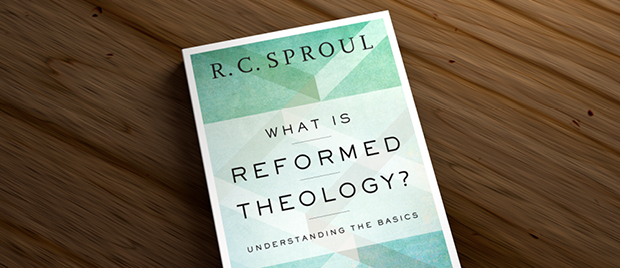
Its that time again, time to win a free book! This time around I am giving away a free copy of R.C. Sproul’s, What is Reformed Theology? You can read my review of the book here.

620x268_wirt_thirdpartyrelease_sep13a

To win a copy of the book all you need to do is one of the following:

  • Tweet out the link to this blog post or the review and mention @Cwoznicki
  • Retweet my tweet about the giveaway
  • Like this post on WordPress
  • Like this post on Facebook
  • Comment below on how this book would benefit you

You will get one entry for each of these things that you do.

I will be selecting one winner soon. Good luck!

Note: You need to live within the continental US to be eligible to win a copy of this book.

What is Reformed Theology?

 In some circles being “reformed” is a badge of honor, elsewhere bearing that name is enough to get you blacklisted.

So what does it mean to be “Reformed?” R.C. Sproul unpacks this in this 2016 edition of a theological best seller. In this book he contrasts “God-Centered Theology” and “Man-Centered” theology, claiming essential that Reformed theology is the most “God-Centered” theology there is, it is a theology driven by a particular understanding of the character of God.

620x268_wirt_thirdpartyrelease_sep13a

What is this sort of theology committed to? First, it is committed to being centered on God. Second, it is based on God’s Word alone (in a non-reductionistic sense). Third, it is committed to the doctrine of salvation by faith alone (though faith does not stand alone). Fourth, it is Christocentric. Finally it is structured by three covenants: 1)Works, 2)Grace, 3)Redemption. He does a fairly decent job of not just explaining Reformed doctrine but moreso giving a feel of the reformed mindset, which in my humble opinion is the best way into getting into what “Reformed” actually means. After he covers these 5 Reformed distinctive he moves on to TULIP. You know… THE DEFINITION of REFORMED THEOLOGY:

T: Total Depravity

U: Unconditional Election

L: Limited Atonement

I: Irresistible Grace

P: Perseverance of the Saints

What bothers me the most about this, isn’t that he believes in TULIP, it’s the fact that he makes TULIP the standard of Reformed theology. Not everyone who signs on to Reformed theology follows the cannons of Dort. At the very least there is certainly dispute over the L of limited atonement. Second, I believe that by defining Reformed Theology in light of TULIP,  Sproul rather reinforces certain stereotypes and a certain reductionist form of Reformed theology which boils it down to one doctrine, namely predestination. Reformed theology is certainly much more than this! I believe that if Sproul had ended the book after the first 5 chapters we would have gotten a pretty good understanding of what the Reformed Tradition as a whole is, but given that he chooses to use the stereotypical definition to define this tradition he ends up, at least in my opinion, reducing “Reformed” Theology to one particular brand of it.

Note: I received this book from the publisher in exchange for an impartial review.

When We Think About God

“When we’re talking about God we can’t afford to be sloppy.” As you probably know I am studying in a new field that seeks to revive an ancient form of theological reflection: analytic theology. This discipline that combines the rigor of philosophy with the wonder of theology, I work with Dr. Oliver Crisp, professor of systematic theology, and a team of visiting scholars to reflect carefully on prayer, love, and human nature. In the following video – directed and produced by Fuller Studio – I share my passion for theology, the dangers of muddled thinking, and my hopes for the church to be informed by good theology.

“Theology done well not only impacts people’s lives, says something to the world about who God actually is.”

You can see the original post on Fuller’s Analytic Theology Website.

On Religious Worth of Bodily Liturgical Action – Terence Cuneo

Earlier this year (I forgot I wrote this post, its been sitting in my drafts) Terence Cuneo the philosopher from The University of Vermont, best known for his work in metaethics and early modern philosophy, especially the work of Thomas Reid, came in to our Analytic Theology Seminar to give a paper on liturgical theology…..

  • Scripted movement-touching sequences: involve participant in the liturgy moving through space to approach some person or thing for the purpose of bodily engaging that person or thing by their touching it or touching some person or thing in its near vicinity
  • Why do these SMTS play such a prominent role in the performance of Eastern liturgies?
    • SMTS have religious worth
      • Instrumentalist view vs. non-instrumentalist view
    • Defends a variant of non-instrumetnalist view: Authorization-appropriation model
      • God authorized the composition of and appropriated the scripts that perescribe the performance of such actions


Against Instrumentalism

  • Two primary commitments of instrumentalist view
    • Proper role of scripted bodily liturgical action is for an agent who performs these actions to stand in some instrumental relation to religious attitudes
    • Religious worth lies wholly in the fact that the performance has ability o instill, evoke, express religious attitudes that are fitting in how we relate to God.
  • Concerns
    • Doesn’t fit so well with the text we have in the liturgies
    • Doesn’t handle some cases well – i.e. child who dies young, the performance of these bodily actions would not have any religious worth because they would fail to play the role that they were meant to play had the child grown up.
    • Paul on illicitly sexual activity – makes reference to the body as the temple


The Authorization- Appropriation Model

  • Task of the approach: ID a relation that God bears to liturgical participants such that their performing scripted movement has religious worth in virtue of their bearing this relation to God.
  • Proposal: having authorized and appropriated the liturgical scripts that prescribe these actions to these participants
  • Two parts to the model:
    • Authorization: Deputization and Delegation
      • The authorization to compose the church’s liturgies is a blend of the two
      • Three types of decisions: 1) scope, 2) which actions to prescribe, and 3) scope and normative force of the prescriptions
      • Criteria for selection: divinely required and fitting
    • Divine Appropriation
      • God doesn’t simply authorize, but appropriates the scripts as his own
      • In eastern tradition – there is a synergistic relationship between the church and God in the composition of liturgy
      • But this is not enough- appropriation and authorization must take place


Applying the Model

  • Most things in the liturgy are “fitting” not “required”
    • They are cultural expressions of love, awe, wonder, among other attitudes, etc.
  • Difference between an action expressing an attitude vs. an action which is expressive of an attitude
  • Prima Facie worth worth on the whole
    • Some actions have prima facie interpersonal worth, but they are easily defeated
    • Acts can be expressive of attitudes that are apt in one sense but lack interpersonal worth because they lack something
    • The authorization-appropriation model explains why MTS can have stable non-easily defeasible religious worth.


Conclusion

  • MTS have religious worth because they fittingly relate us to God. Being fittingly related to God consists not simply in mental states but in the way we use our bodies. Worth of MTS is not wholly determined by the attitudes agents are in, but by the attitude that God has to their performance.  This addresses the issue that there is supposedly something defective about ritualized activity which is by its nature “dead” – and says this objection is off because there may be things in which God delights in the way we use our bodies in worship.


Questions

How do you go about figuring out which actions are “authorized” or “fitting?”

  • Come up with some story for how taking communion with chocolate chip cookies and mountain dew expresses in some cultural form attitudes which are appropriate towards God?


Who is “authorized?”

  • Its clear on the story of President sending secretary of state, or a ceo having her secretary write a memo and send it out to the company.

A Storm is Brewing…

For those of you who aren’t privileged to be member of ETS, you may have not heard but there is a storm brewing on the horizon about gender and sexuality in relation to the society’s “Doctrinal Basis/Statement of Purpose.”

Below is the abstract to Stan Gundry’s open letter to members of ETS:

In the last business session of the 2015 national Meeting of ETS a set of four resolutions was moved and passed that affirmed human dignity and worth, marriage as a life-long union of one man and one woman, sexual intimacy as reserved for such marriages, and an affirmation of distinct traits of manhood and womanhood as an unchangeable gift that constitutes personal identity. In the aftermath some ETS members expressed dismay that any ETS member would vote against passage of the resolutions. Others, I among them, were shocked that resolutions of this nature would be proposed and passed by a substantial majority. In this open letter to ETS members, I explain the problems with the resolutions and the real issue at stake: Will ETS be true to is Doctrinal Basis and its Statement of Purpose? Hence, my open letter to ETS members, Whence and Whither ETS.


You can read the whole thing here.


With this and the Trinity debate looks like ETS is going to be a lot of fun this year!


Rational Faith

Is Christianity rational?

When most people are asked that question its not coming from a neutral standpoint; it’s a loaded question. In our day and age the question is loaded towards the “NO” side. A lot of people have done hard work over the years to show that the answer to that question is actually “YES!” One such person who has worked towards explaining that rationality of Christian belief is Claremont philosopher Stephen Davis. In his new book, Rational Faith: A Philosopher’s Defense of Christianity, Davis tackles some important questions that have been leveled at Christians in order to show the irrationality of faith.

Consider for instance:

  • Can we believe in God?
  • Isn’t truth relative?
  • Is the Bible’s portrayal of Jesus actually reliable?
  • Doesn’t evolution disprove Christianity?
  • Can’t religious experiences be explained by neuroscience?
  • Aren’t other religions as valid as Christianity?

Aimed at college students (and supposedly Christian professors as well), Davis tackles these sorts of questions and more.

For the sake of the review I won’t go into detail about how he answers these questions, rather I’ll point you to a few chapters that are especially pertinent in our cultural moment, the chapters on Cognitive Science and Religious Pluralism. Most Christians interested in Apologetics will be used to reading about truth/pluralism, the problem of evil, belief in God, gospel reliability, and the resurrection; but the two chapters on Cognitive Science and Religious Pluralism bring something unique to the table.

Cognitive Science

Neuroscientists have attempted to argue that religion is “natural.” In other words humans have a tendency to believe in a god or gods or at least supernatural beings who provide moral guidance and also issue rewards and punishments to humans. What Davis does 040412_1341_canthecogni14which is quite unique to the subject is that he doesn’t examine the findings of Cognitive Science of Religion (CSR) rather he distinguishes between meanings of the term “natural.” Natural can mean explainable, easy, or appropriate. Davis argues that Christian belief (unlike many other forms of religion) is not natural in the first or second sense. Here’s why: If critics of religion are correct in saying we created God rather than vice versa then the Christian God is not the sort of god we would create. A “god” made in our image would be legalistic, performance based, ritual based, maximally accepting and non-accusatory. However Christianity is neither of these, in fact Christianity is very costly, which has no evolutionary advantages that it bestows to its adherents. Davis argues that it is only natural in the third sense, i.e. it is appropriate, in the sense that it is rational.

Religious Pluralism

What should Christians make of other religions? Davis points out three views Christians have taken over the years: 1)Exclusivism, 2)Inclusivism, and 3)Pluralism. He goes on to point out some major flaws with (a John Hick inspired) pluralism. Davis then develops his own view which can best be described as a tolerant, non-imperialist exclusivism. His position is grounded in the concept that God loves all persons and wants all to be saved and that God is a God of justice. Davis says of holding these two points that we ought to hold them in eentions and “trust that God will be fair.” However what makes this chapter unique is that his criterion for a Christian view on religious pluralism is actually a very practical one, it is “evangelism.” He then makes a bold claim (which I applaud):

Any theory that in effect minimizes, belittles, discourages or rules out evangelism is to be rejected.

I have never heard this point made in a philosophical essay and I truly applaud Davis for making it. Given the fact that the Christian faith is evangelistic and grounded in Christ’s words in the great commission its surprising that such a simple criterion has been overlooked in many discussions of religious pluralism.

Recommendation

I teach undergraduates at a bible college and work in a college ministry so I’m always on the lookout for interesting books covering objections to Christianity. Though I’m not a huge proponent of Apologetics in the modernistic sense, I think apologetics is an important subject for Christians to cover mainly as a way to boost their faith. I.e. Apologe9780830844746tics is less for non-Christians and more for Christians. For that reason I recommend this book to most college students. Its filled with answers to questions they will likely hear in their General Education sociology, psychology, anthropology courses.
Congrats to Stephen Davis because he’s given us a book undergrads will find useful in many of their GE classes!

(Note: I received this exam copy thanks to IVP in exchange for an impartial review. It is an early review copy, and anything I say ought to be checked with the final version of the book.)

My Paper on EFS is Now up on the Evangelical Philosophical Society Website

An Examination of Recent Philosophical Responses to Thomas McCall’s Argument Against Eternal Functional Subordination

by Christopher G. Woznicki

Since Thomas McCall first published Which Trinity? Whose Monotheism? Philosophical and Systematic Theologians on the Metaphysics of the Trinity in 2010 numerous papers have been written responding to his philosophical arguments against eternal functional subordination.

Among recent philosophical responses to McCall’s position a paper co-written by Philip Gons and Andrew Naselli and another by Bruce Ware stand out as the most significant. Gons and Naselli argue that McCall’s argument conflates the term “essentially” with “belonging to the essence.” Ware puts forth a reductio ad absurdum argument against McCall and shows McCall’s logic entails a denial of homoousios.

This paper enters into this debate by examining Gons and Naselli’s argument. It engages with recent philosophical literature dealing with the meaning of the term “essence” in order to show that their argument against McCall is unfounded.

The paper then turns to Ware’s argument to show that he has made a category mistake in comparing the property of being eternally begotten and the property of being functionally subordinate in all time segments in all possible worlds. Having critically examined these recent philosophical responses to McCall we see that McCall’s argument still holds up against its objectors.

The full-text of this paper is available for FREE by clicking here.

6th Annual California Metaphysics Conference: Philosophy of Religion & Metaphysics

The University of Southern California will be hosting the 6th annual California Metaphysics Conference, January 20th-22nd, 2017.  This year’s topic is Philosophy of Religion and Metaphysics!

Speakers:

Attendance is open (and free) to all who would like to come, but you must register by emailing kleinsch [at] usc [dot] edu no later than December 15th, 2016.  Please include your full name and university affiliation in the email.  You will not receive a confirmation email, but your name should appear on the list of participants within 30 days.  Also, let Professor Kleinschmit know if you are a graduate student from outside CA and you are interested in being an assistant organizer!

dornsife

Note: This conference lineup looks so good that I can get set aside the UCLA vs. USC for a weekend. I guess….