The church is no stranger to theologies of ascent. Julie Canlis, lecturer at Regent College, suggests that Calvin’s voice ought to join the chorus of such theologies. In Calvin’s Ladder: A Spiritual Theology of Ascent and Ascension, Canlis argues that Calvin’s voice isn’t drowned out in this chorus but that it sticks out for various reasons, the primary reason being that his theology of ascent is grounded in the concept of participation in Christ.
Canlis suggests that Calvin’s understanding of Christian piety ought to be understood through the concept of Trinitarian koinonia. This koinonia begins with Christ. Christ makes  a double movement, that of descent and ascent. In Christ God has come as man to humanity to stand in our place and as man Christ leads us back to the Father. According to Canlis, “The entire Christian life is an outworking of this ascent – the appropriate response to God’s descent to us – that has already taken place in Christ.” (3) Whether one is talking about desire for God, prayer, obedience, vocation, or worship, or ascent, all has been accomplished for humanity vicariously through Christ. Canlis devotes six chapters to unpacking Calvin’s understanding of this vicarious ascent in Christ.
She begins with a survey of various theologies of ascent, including the works of Plato, Plotinus, Origen, Augustine, and Aquinas. These thinkers all tell the story of humanity’s self-empowered (though sometimes assisted by grace) journey towards the divine, in which the individual is the primary agent of ascent. Calvin breaks the mold, making Christ the primary agent of ascent: ascent is not something that fallen humanity does, rather it is something that humans participate in.
She expands upon the theme of participation by beginning with creation. creation’s existence is infused with relationality. In fact, “Communion is the groundwork of creation, the purpose of anthropology, and the telos toward which all creation strains.” (54) However, humanity has exchanged communion for independence. This is the essence of sin. The solution to the problem of sin would be to reestablish humanity’s existence in communion with God.
Following the chapter on creation, Canlis devotes a chapter to exploring how Christ’s double movement of descent and ascent addresses the problems of fallen humanity. The Son descends fully into humanity, in order that humanity may participate in him. He then ascends, taking humanity up into participation in God’s own life. How is this participation applied to humans? Her fourth chapter is devoted to showing that the appropriation of Christ’s ascent happens through union with Christ, which is enacted by the Holy Spirit. The Spirit not only makes that union objectively true, but the Spirit’s actions in the Lord’s Supper is also the means of grounding and reconstituting that union. (171) The Lord’s Supper is the concretization of the relationship of union and ascent between Christ and Christians.
The fifth chapter is devoted to putting Calvin in conversation with Irenaeus. She argues that neither Calvin nor Irenaeus presents a picture of participation in Christ as something in which humans become less than fully human; rather, through participation in the divine life, humans experience a more deeply human reality. She doesn’t argue for Irenaeus’ direct influence upon Calvin, but notes that there are many important similarities.
Canlis’ final chapter is dedicated to unpacking the implications of the idea that for Calvin “ascent was not ascent of the individual soul but humanity’s participation in the triune communion” which is opened up by Jesus’ ascent. (230) She suggests that Calvin’s theology might have much to contribute to ecumenical dialogue, that it might provide a robust pneumatology that has normally been lacking in Reformed theology, and it might serve as an antidote to the individualistic and reductionistic spirituality so prevalent in our day.
There is much to appreciate in this book. Canlis does a fine job of showing that the concept of mystical ascent into the life of God need not be foreign to Reformed Christianity. Simultaneously, she shows that Calvin’s theology makes a unique contribution to this strand of Christian spirituality. She has also done a fine job in showing how important participation in Christ is to the rest of Calvin’s theology. Calvin’s doctrines of creation, Christ, the Holy Spirit, the Eucharist, the Trinity, and Eschatology cannot be understood apart from the concept of participation.
To say that Canlis has succeeded in these areas is not to say the book does not have its shortcomings. First, one might wonder whether her understanding of the Christian life is too individualistic. Yes, the Christian life might be grounded in participation in Christ, but her interpretation of Calvin on this point does not require that a Christian be in communion with other Christians. The topic of communion with other Christians is surprisingly absent in her discussion of the Lord’s Supper. Second, we may wonder why Canlis doesn’t do more to address her indebtedness to Torranceian theology. Her understanding of the descent/ascent, vicarious humanity of Christ, and grace are explicitly Torranceian. Torrance’s reading of these concepts in Calvin are rather controversial (to say the least), yet she does not address this controversy at any point.
Despite these shortcomings, Canlis ought to be commended for writing a book that makes an important contribution to mystical spirituality from a distinctly reformed position.
Calvin’s Ladder: A Spiritual Theology of Ascent and Ascension by Julie Canlis (Grand Rapids, MI: Wm. B. Eerdmans, 2010), xii + 286 pp.
 lack of mercy, it is certain that it will not go unpunished. . . . We see how our Lord banishes from his kingdom all those who don’t share their goods liberally when seeing their neighbors need and offer no aid or assistance. If we do not show our gratitude for his benefits when faced with those who are destitute of this world’s goods, our action is not against a mortal being, but against the Son of God. . . . We have a general rule laid down for us by Paul, who not only shows us what the apostles did but also what all Christians must do if they want Jesus Christ to rule and have order in the church. The poor must be cared for.
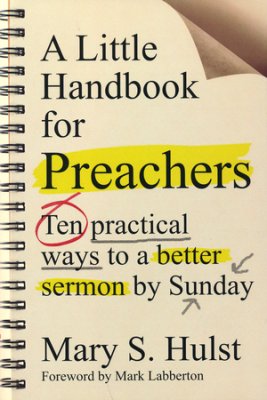 book: A Little Handbook for Preachers: Ten Practical Ways to a Better Sermon by Sunday I couldn’t help but be super skeptical. Nevertheless, I picked it up, thinking, what the heck, if I get one helpful idea from this book it will be worth reading it. In all honesty – I didn’t get one helpful idea from this book – I got so much more. In fact, as I’ve said before on my twitter account, this is officially one of my new favorite books about preaching.
 ly, who is Henri Nouwen? And is he really like the person that we meet when we read his published books? Well, if you want the answer to that question, you are in luck because a collection of his letters to friends, disciples, and just generally interested people has been published by Gabrielle Earnshaw.

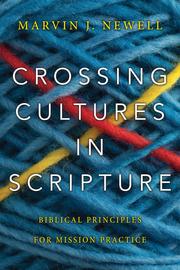 transnationalism, cross-cultural conflict management, and doxological diversity.
 opic. Each chapter also includes a “key facts” section which he lists some important and pertinent information. For example in the chapter on National Priorities you will find that the top issue of concern for Americans in 2015 was terrorism, followed by the economy and jobs. Republicans pretty much mirrored this trend. However democrats placed “improving the educational system” at the top of their concern list, followed by improving the economy and job situation. Finally each chapter includes an Outlook and Interpretation section, where Barna makes his own subjective interpretation of the data and predicts future trends.
 CWoznicki Think Out Loud