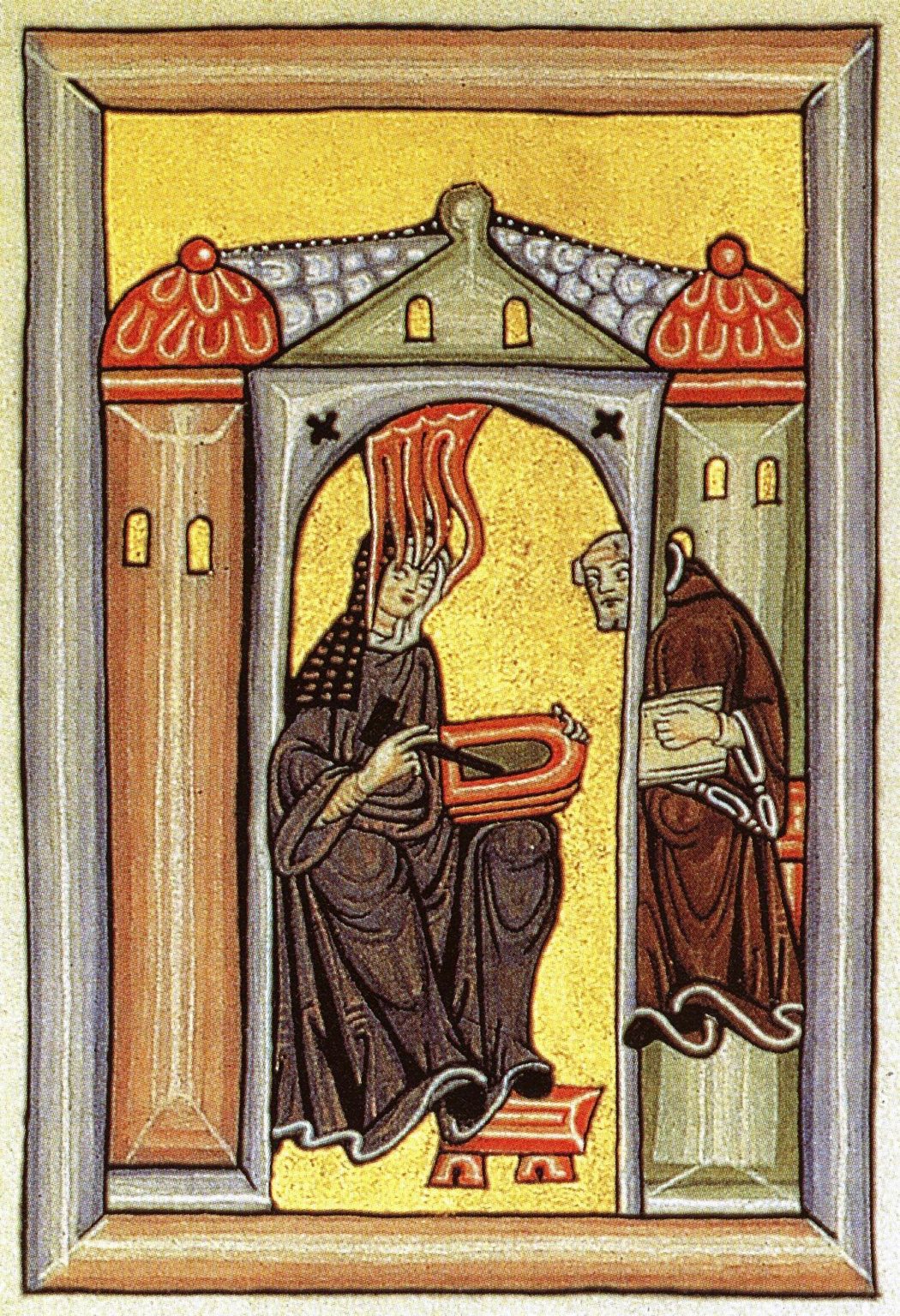
CFP: “Evolution, Original Sin and the Fall” Conference at Saint Louis University

Call for abstracts: Evolution, original sin and the Fall

Time and location: June 22-23 2020, Saint Louis University, Saint Louis, Missouri

Plenary speakers:

Hans Madueme (Covenant College)

John Teehan (Hofstra University)

Can the concepts of original sin and the Fall be interpreted in the light of evolution, and if so, how? There is an ongoing discussion in philosophy and theology on the implications of evolutionary theory for theism. This conference seeks to bring together philosophers, theologians, and other scholars who work on the intersection of science and religion to examine theological concepts in the light of evolution, with a focus on original sin and the Fall. This conference also welcomes papers on other topics in theological anthropology, philosophy of religion, and science and religion that discuss the relationship between evolution and theism, including from traditions outside of Christianity.

Please submit an anonymized abstract of about 500 words as a pdf or doc(x) attachment, with “Evolution and theism” in the subject line, to deeptimemorality@gmail.com

Deadline: 15 February 2020

Notification of acceptance/rejection: 15 March 2020

Organizers: Johan De Smedt and Helen De Cruz, Saint Louis University

This conference is funded by the John Templeton Foundation.

Call for Papers: Prize Competition, Feminist Analytic Theology 

Thanks to funding from the American Philosophical Association’s Diversity and Inclusiveness Fund, the editors of the Journal of Analytic Theology are pleased to announce a prize competition for the best paper in feminist analytic theology. We understand feminist analytic theology in a broad sense to also include intersectional perspectives.

Every eligible submission will be considered for the prize of US$500, and for inclusion in a special issue of the Journal of Analytic Theology. The special issue will contain the winning essay, as well as other essays that have received a positive evaluation. A board of experts with a broad range of specialisms in various theological traditions will evaluate the entries.

To compete for this prize competition, please send your paper to diversityjat@gmail.com with the subject line “Diversity APA prize competition” by October 1st, 2020. By submitting your paper, you agree that:

1.     Your paper will be considered for a special issue on feminist analytic theology.

2.     Your paper has not been published before and is not under consideration elsewhere for the duration of the assessment period of this prize competition.

Papers submitted after October 1st, 2020 will not be considered for the prize or special issue (but can still be considered for other issues of the Journal of Analytic Theology under the normal refereeing channels).

Eligibility:

Everyone, regardless of academic rank (e.g., graduate student, tenured, or tenure track faculty), seniority, or discipline (e.g., theology, philosophy, religious studies), geographic area, etc. can submit a paper. We particularly welcome and encourage people from groups who have been underrepresented in analytic theology to submit a paper.

We ask that there is no more than one entry per applicant. Co-authorship also counts as an application, and if co-authors win the prize, it will be split among them equally.

To be eligible, a paper must be 9,000 words or fewer and analytic. Analytic theology is an interdisciplinary subfield that explores traditional theological topics and questions (in diverse religious traditions) in conversation and methodological continuity with the analytic-philosophical tradition.

Review procedure:

Papers will be checked for being on topic and for basic quality. Papers that do not meet the criteria will receive a desk reject notice. Other papers will be refereed and the board of experts will decide on the winning entry. Given the anticipated number of submissions we do not anticipate that the board will provide feedback on rejected papers, though they may do so at their own discretion.  The winner will be announced by December 15th 2020.

For more details see: https://blog.apaonline.org/2020/01/23/competition-feminist-analytic-theology/

My Rule of Life – 2020

Instead of a New Year’s Resolution I have decided to share my Rule of Life with you. Recall,  a “Rule of Life” is simply “intentional pattern of spiritual disciplines that provides structure and direction for growth in holiness. A Rule establishes a rhythm for life in which is helpful for being formed by the Spirit, a rhythm that reflects a love for God and respect for how he has made us.”  I’ve been working on this for a while so here it is!


Prologue: General Vision

The gospel is the good news that God has rescued us from the dominion of darkness and brought us into the kingdom of the Son he loves (Col 1:13). As the kingdom of priests and saints (Rev 1:6), God has called his people to bear witness to this good news of redemption. One way that believers bear witness to this redemption is by carrying out the good works which God has prepared in advance for them to do (Eph 2:10). As such, each individual believer, if she or he is to bear witness to the good news of the Gospel, ought to discern the best way to live out this call. One way ensure that this call is actually lived out is prioritize spiritual formation. A Rule of Life can facilitate the formation necessary for doing the good works prepared for us in advance. A rule of life, Ruth Haley Barton, explains seeks to respond to the questions: “Who do I want to be? How do I want to live?”[1] When these two questions are brought together, a Rule of Life addresses the question: “How do I want to live so I can be who I want to be?”[2] Barton’s question is instructive, yet, I believe it ought to be adjusted to be more theologically precise. Our vocation is not something that we come up with or find. Our vocation is something that God has for us and he reveals. Thus, my own Rule of Life seeks to address the question: “In this season, how should I live so I can be who God wants me to be?”[3]

Prologue: Particular Vision

In this current season I sense a call to dive deeper into my role as an “equipper.” My vocation is shaped by Matthew 13:52, “He said to them, ‘therefore every teacher of the law who has become a disciple in the Kingdom of heaven is like the owner of a house who brings out of his storeroom new treasures as well as old.” I am called to be a person who draws upon the Christian tradition and employs it for the purpose of equipping Christians to live out the gospel in a faithful manner in their contemporary context. Phrasing in slightly different way, I am called to equip the church for the sake of gospel faithfulness by turning its attention to the church’s rich tradition. In order to cultivate this calling, and in order to become the kind of person who can fulfill this calling, I have discerned the following practices as being especially helpful.

Rhythms

Daily

  1. Start the day with God, as opposed to starting it with technology.
  2. Read the Bible to my daughters, Shiloh and Abigail, every night and intentionally talk through a spiritual resource with my wife, Amelia.

Weekly

  1. Attend weekly worship and a LifeGroup at The Church at Rocky Peak.
  2. Go on a weekly hike/walk with God.
  3. Partake in physical training five times per week.
  4. Post a blog on a topic that is either theological, biblical, or discipleship oriented at least once per week.
  5. Journal, once per week or more, examining where God has been throughout the course of your week.

Consistently

  1. Consistently go through some tool or book which helps cultivate a rhythm of spiritual formation.
  2. Work through a classic theological/pastoral/spiritual text in all seasons.
  3. Take part in academic reading and/or writing groups.
  4. Serve at Rocky Peak; accept every teaching/preaching opportunity I am presented with unless my spiritual advisors deem it unwise.


Triannually and Yearly

  1. Take a six to eight hour retreat of solitude with God three times a year.
  2. Take an overnight retreat to be in solitude with God at least once per year.


Ordinary Matters:

  1. Do not check your phone for email or social media in the morning until I leave the house.
  2. Prioritize sleep. On regular nights aim to get seven hours of sleep, because a lack of sleep adversely affects my spiritual attentiveness.
  3. Pack a complete lunch five days a week, unless I plan on meeting with someone for lunch. Spending money to eat alone is a waste of financial resources that could be stewarded more wisely.
  4. Aim to eat lunch with someone else—besides family—at least two days per week. This cultivates genuine relationships and pushes me against my introvertedness.
  5. Minimize caffeine intake. Enough sleep and working out should make it so that I do not need to rely on caffeine to be alert for my daily tasks.


Inner Matters: Habits and Characteristics

  1. Develop a habit of prayer.
  2. Develop the ability to “be still.”
  3. Prioritize discipleship of myself and of others.
  4. “Equip” his family first.
  5. Be involved in the life of his church.
  6. Drink deeply from the wisdom of others.
  7. Allow authority figures to speak into my life.
  8. Develop professional skills as an academic.
  9. Do things that bring me joy or recharge me that are unrelated to my roles as an academic/teacher.

[1] Ruth Haley Barton, Sacred Rhythms: Arranging Our Lives for Spiritual Formation (Downers Grove: IVP, 2006), 147.

[2] Barton, Sacred Rhythms, 147.

[3] A Rule of Life ought to take into account the particular season the “rule follower” finds themselves in. Thus, before making a rule it is beneficial to “take stock of your desires, natural rhythms, limits and times of closest connection to God.” Adele Calhoun, Spiritual Disciplines Handbook: Practices that Transform Us (Downers Grove: IVP, 2015), 38. Additionally, one ought to take into account one’s temperament. Stephen Macchia, Crafting a Rule of Life: An Invitation to the Well-Ordered Way (Downers Grove: IVP, 2012), 33.

Books Read in 2019

By now it’s a tradition: at the end of each year I post all the books that I finished reading during year.  Here are all the books I read in 2019. Some are brand spanking new books. Others are older books. The books published in 2019 are marked by an asterisk. There were a total of 13 in this category.


January

  1. The Christian Frame of Mind – T.F. Torrance
  2. Divine and Contingent Order – T.F. Torrance
  3. Communion with the Triune God – Dick Eugenio
  4. Thomas F. Torrance and the Church Fathers – Jason Radcliff


February

  1. The Theological Anthropology of Thomas F. Torrance: A Critical and Comparative Exploration – Wei Jing
  2. Union with Christ: The Way to Know and Enjoy God – Rankin Wilbourne


March

  1. Paul: A Biography – N.T. Wright
  2. A Disruptive Witness – Alan Noble
  3. Jesus: The End and the Beginning – Telford Work*


April

  1. The Color of Compromise – Jemar Tisby*
  2. In Search of Ancient Roots – Kenneth Stewart
  3. Pictures at a Theological Exhibition – Kevin Vanhoozer
  4. Reader Come Home: The Reading Brain in a Digital World – Maryanne Wolf


May

  1. Christ and the Created Order: Perspectives from Theology, Philosophy, and Science – Andrew Torrance and Thomas McCall
  2. It Keeps Me Seeking: The Invitation from Science, Philosophy, and Religion – Andrew Briggs, Hans Halvorson, Andrew Steane
  3. The Logic of Evangelism – William Abraham
  4. Redemption Accomplished and Applied – John Murray
  5. Four Views on the Historical Adam – Matthew Barrett
  6. Becoming Dallas Willard: The Formation of a Philosopher, Teacher, and Christ Follower – Gary Moon


June

  1. None Greater: The Undomesticated Attributes of God – Matthew Barrett*
  2. Human Rites: The Power of Rituals, Habits, and Sacraments – Dru Johnson*
  3. The Ground and Grammar of Theology – T.F. Torrance
  4. Union with Christ: John Calvin and the Mysticism of St. Bernard – John Tamburello
  5. Partakers of the Divine Nature: The History and Development of Deification in the Christian Traditions – Michael Christensen and Jeffery Wittung
  6. State of Resistance: What California’s Dizzying Descent and Remarkable Resurgence Means for America’s Future – Manuel Pastor
  7. Persons, Divine and Human – Christoph Schwöbel and Colin Gunton
  8. Judaism: Revelation and Traditions – Michael Fishbane


July

  1. The Cosmic Mystery of Jesus Christ – Maximus the Confessor
  2. Theosis in the Theology of Thomas Torrance – Myk Habets


August

  1. The National Parks – Dayton Duncan and Ken Burns
  2. Abraham’s Promise: Judaism and Jewish Christian Relations – Michael Wyschogrod
  3. Los Angeles in Civil War Days, 1860–1865 – John Robinson
  4. In Search of Christ in Latin America – Samuel Escobar*
  5. Jews and Christians: People of God – Carl Braaten and Robert Jenson


September

  1. The Naturalist: Theodore Roosevelt, a Life Time of Exploration, and the Triumph of American Natural History – Darrin Lunde
  2. Seven Theories of Human Nature – Leslie Stevenson
  3. I and Thou – Martin Buber
  4. The God of Israel and Christian Theology – R. Kendall Soulen
  5. A Practical Primer on Theological Method – Glenn Kreider and Michael Svigel*
  6. The Call to Personhood: A Christian Theory of the Individual in Social Relationships – Alistair McFadyen
  7. John Calvin: A Pilgrim’s Life – Herman Selderhuis
  8. Personhood: What Philosophers Say About You – Warren Bourgeois


October

  1. The Apostles Creed – C.E.B. Cranfield
  2. Learning Theology – Amos Yong
  3. Being and Communion – John Zizioulas
  4. Communion and Otherness – John Zizioulas
  5. The Victory of the Cross: Salvation in Eastern Orthodoxy – James Payton*
  6. Baptist Theology – Stephen Holmes
  7. Original Sin – Peter Martyr Vermigli*


November

  1. Persons in Communion – Alan Torrance
  2. Trinitarian Personhood: Investigating the Implications of a Relational Definition – William Ury
  3. Paul and the Person – Susan Eastman
  4. Persons in Relation – John MacMurray
  5. Hot Protestants: A History of Puritanism in England and America – Michael Winship


December

  1. The Culture of Theology – John Webster*
  2. Tertullian, Cyprian, and Origen on the Lord’s Prayer – Tertullian, Cyprian, and Origen
  3. The Mosaic of Atonement – Joshua McNall*
  4. The Word Made Flesh: A Theology of the Incarnation – Ian McFarland*
  5. Seeking Church: Emerging Witnesses to the Kingdom – Darren Duerksen and William Dyrness*
  6. The Mirage Factory: Illusion, Imagination, and the Invention of Los Angeles – Gary Kirst
  7. The Lord’s Prayer: A Guide to Praying Our Father – Wesley Hill*


Midi-Chlorians and Cognitive Science of Religion

Midi-Chlorians. I know a lot of people who hate the introduction of midi-chlorians in the Star Wars cannon in The Phantom Menace. There’s that famous scene where Qui-Gon Jinn takes Anakin’s count:

Qui-Gon: I need a midi-chlorian count.
Obi-Wan: The readings are off the chart. Over 20,000. Even Master Yoda doesn’t have a midi-chlorian count that high.
Qui-Gon: No Jedi has.

In case you don’t remember what midi-chlorians are, they are microscopic organisms that inhabit the cells of all creatures, and they are especially high in those who are force-sensitive. Now some people complained that the midi-chlorians de-mystified the force, it turned the Force into a “natural” phenomenon, explainable by science. After all, those with more mid-chlorians are more attuned to the force than those who aren’t. So obviously one’s “force powers” are caused by the presence of midi-chlorians. This is the wrong way to think about the relationship between midi-chlorians and force sensitivity. An analogy that is helpful to see why comes from the relationship between Cognitive Science of Religion and the existence of God.

Cognitive Science of Religion

According to Cognitive Science of Religion our cognitive structures have evolved in such a way that they are correlated to religious experience. For example, a number of cognitive scientists of religion have pointed out that from an early age children are cognitively predisposed to assign agency to non-agential objects or attribute God-like powers to their parents. Even more famously some cognitive scientists of religion have shown that certain parts of the brain correspond to religious experiences. Thus, some make the move saying that these natural phenomenon are the cause of religious beliefs and experiences. Theologians and philosophers have rightly critiqued this view explaining that if we take out emobdiedness seriously we would expect physical correlates to religious experiences. Thus, CSR doesn’t prove or disprove the existence of God. It doesn’t do either. All CSR says is that there are physical correlates to these experiences – whether these experiences are real or not.

I think the same could be said about midi-chlorians. Midi-chlorians don’t naturalize the Force. If the creatures of the galaxy really are embodied then we would expect physical correlates to the Force. Just like humans have cognitive structures that correlate to religious experiences, we would expect midi-chlorian structures that correspond to experiences of the force.

All that to say… Midi-Chlorians don’t naturalize the force or prove the force is real in the Star Wars universe. The presence of midi-Chlorians doesn’t settle that kind of question. That is actually a question for the philosophers to think about not the Midi-Chlorian Scientists of Religion.

So stop complaining about midi-chlorians.

Upcoming Society of Christian Philosophers Conferences and CFP

There are two upcoming regional SCP conferences.

The 2020 Eastern meeting of the SCP will take place at the University of South Florida in Tampa, Florida from January 23-25.  The theme of the conference is “Philosophy and the Public Sphere,” and the website includes all details of the conference, including a full program.  Please direct all questions and kudos to Professor Dolores Morris at dgmorris@usf.edu.

The 2020 Mountain-Pacific meeting of the SCP will take place at Trinity Western University in Langley, British Columbia from May 8-9. The theme of the conference is “Philosophy and the Sciences.” Details on the CFP, keynote speakers, etc. are available on the website.  The conference will include panel sessions on “Teaching and Philosophy” and “Faith and Philosophy.”  Note that there is a new deadline for submissions: January 15, 2020.  All submissions should be either a Word or PDF file, prepared for blind review, and sent to myron.penner@twu.ca by the deadline.

Rule of Life – On How to Write One

As this year comes to a close I am starting to work on a “Rule of Life.” A “Rule of Life” is simply “intentional pattern of spiritual disciplines that provides structure and direction for growth in holiness. A Rule establishes a rhythm for life in which is helpful for being formed by the Spirit, a rhythm that reflects a love for God and respect for how he has made us.” Here are some selections from Adele Calhoun’s, Spiritual Disciplines Handbook, on how to write a Rule of Life


Developing a “rule for life” is a way of being intentional about the personal rhythms and guidelines that shape our days.

The rule offered disciplines that made space to attend to the supernatural presence of the Trinity at work in and among them.

A rule of life is a simple statement of the regular rhythms we chose in order to present our bodies to God as our ‘spiritual act of worship.’ Each rule, or rhythm, is a way we partner with God for the transformation only he can bring.

Don’t be afraid to experiment with a rule; it can easily be changed and revised, but should not be subject to whims.

Before making a rule, take stock of your desires, natural rhythms, limits and times of closest connection to God.

Writing a Rule

  1. When and where do you feel closest to God? How do you enter most deeply into an awareness of his love for you?
  2. What is most important to you?
  3. What do you currently do to realized your goals and longings? Work? Study? Pray? Network? Socialized? Diet? Work out? Which of these things hinder and which help your spiritual journey?
  4. What practices suit your daily, monthly, and yearly rhythms and cycles?
  5. Where do you want to change? Where do you feel powerless to change?
  6. Choose several disciplines that arise from your desire for God’s transforming work and that suit the limits and realities of your life.

Rule of Life – Roles and Gifts

As this year comes to a close I am starting to work on a “Rule of Life.” A “Rule of Life” is simply “intentional pattern of spiritual disciplines that provides structure and direction for growth in holiness. A Rule establishes a rhythm for life in which is helpful for being formed by the Spirit, a rhythm that reflects a love for God and respect for how he has made us.” Here are some selections from Stephen Macchia’s book, Crafting a Rule of Life, on how our “roles” and our “gifts” fit into our Rule of Life.


Roles

Your personal rule of life is discerned and framed within the context of your primary relationships and your spiritual community, lived out in service to others.

List all your key relationships (names) and the role you play in each (father or mother, brother or sister, boss, colleague, student, friend).

What is the overall state of your personal relationships? What do you hope to focus on as a result of your individual reflections on this matter?

Prayerfully consider how God might be inviting you to focus on your top roles and key relationship during this seasons of your life. Are there specific issues you need to attend to within your particular roles or relationships at this time?

Gifts

Your personal rule of life is discerned and framed through the discovery of your spiritual gifts, natural talents, and temperament.

All of us have spiritual gifts and natural talents. When our talents are used for the glory of God and the building up of his church, they are enhanced by the ministry of God’s Spirit.

What are the top three to five activities in your life that are most life-giving to you? In contrast, what activities are most life-draining? In what ways does this reflect your self-awareness of the temperament God has created deep within you?

As you review your list of activities, gifts and talents, in what ways does your temperament factor into how you utilize or underutilize each of these?

How will you lean into the joy of developing these talents for your own enjoyment and the benefit of others?

A Rule of Life – Sacred Rhythms

As this year comes to a close I am starting to work on a “Rule of Life.” A “Rule of Life” is simply “intentional pattern of spiritual disciplines that provides structure and direction for growth in holiness. A Rule establishes a rhythm for life in which is helpful for being formed by the Spirit, a rhythm that reflects a love for God and respect for how he has made us.” Here are some selections from Ruth Haley Barton’s Sacred Rhythms on the “Rule of Life.”


Christian tradition has a name for the structure that enables us to say yes to the process of spiritual formation day in and day out. It is called a rule of life. A rule of life seeks to respond to two questions: who do I want to be? How do I want to live? Actually it might be more accurate to say that a rule of life seeks to address the interplay between these two questions: How do I want to live so I can be who I want to be? (147)

I prefer the language of rhythm because it speaks of a regularity that the body and soul can count on, but it also speaks of ebb and flow, creativity and beauty, music and dancing, joy and giving ourselves over to a force or power that is beyond our selves and is deeply good. (147-148)

Our rhythm of spiritual practices also needs to be ruthlessly realistic in view of our stage of life… If we do not take into account a realistic assessment of our stage of life we are doomed to fail. (149)

One of the great temptations of the spiritual life is to believe that if I were in another season of life, I could be more spiritual. The truth is that spiritual transformation takes place as we embrace the challenges and opportunities associated with each season of our life… Our expectations about ordering our life during the different seasons need to take into account what’s real and what can’t be changed; otherwise we set ourselves up for frustration and failure. (149)

The process of beginning to cultivate our own rhythm of spiritual practices begins with attending to our desire, noticing what words, phrases and prayers seem to most consistently capture our sense of longing for God. (151)

CFP: Theology and Spider-Man, Lexington Books/Fortress Academic (Proposal Due November 30, 2019)

Call for Papers: Theology and Spider-Man
Volume Editor: George Tsakiridis, PhD
Abstract and CV Due: November 30, 2019
Final Paper Due: May 1, 2020

He’s the classic superhero of the Marvel age: Spider-Man. Marvel comics wouldn’t be the titan of content it is without him. He’s been portrayed in multiple comic books, television series, and movies. His marketing is ubiquitous. There are few superheroes of the last fifty years that match his prominence. Spider-Man is a perfect match for the Theology and Pop Culture series.

Spider-Man has always been a fun superhero. He exemplifies youthful innocence combined with deep love and loss. This volume will explore themes of identity, happiness, and relationship, as well as look at bioethical issues. After all Peter Parker is a scientist at heart, and bioethics and science are interwoven into the narrative and the villains in ways far greater than other superheroes of his prominence. Salvation and anthropology will be central also, as most all superhero explorations are. The nuance and flavor changes, but the key themes remain the same. In complement to a themed volume, I encourage essays that look at individual presentations of Spider-Man and the theology contained therein. For example, looking at the theology of the multiple cartoon series, the comic books, and many multiple series of movies.

Some potential topics will include:

-Bioethics in Spider-Man (I can foresee more than one entry on this topic given the fact that science and experiments are such a central part of the series, i.e. Lizard, Doctor Octopus, Spider-Man, etc.).

-Harmatiology/Soteriology in Spider-Man

-Theological Anthropology in the Villains of Spider-Man (and Spidey himself!)

-Identity as a Theological Construct in the Various Incarnations of Spider-Man

-Theology and Religious Themes in the 1967 Cartoon Series

-Theology and Religious Themes in Television and Movies

-An Iconography of Spider-Man: Toys and Marketing

-The Icon of Spider-Man: Differing Portrayals by Different Artists – The Visual Theology of Steve Ditko to Todd McFarlane and Beyond

-Feminist Theology and the Women of Spider-Man: Mary Jane, Gwen Stacy, and The Black Cat (to name a few)

-J. Jonah Jameson: An Examination in (not so much) Care for the Other

-Applying Theological Categories to Spidey in Video Games.

-Spidey in Two-Natures: The Symbiosis of the Black Suit and Peter Parker (and Venom)

Other topics, theses, and overall great essay ideas are welcome, but the predominate focus should be on the portrayals of Spider-Man in various media forms and the theological categories that transcend those forms.

Abstracts should be between 500 and 750 words and should present a basic outline of your potential contribution to the volume and potential methodology. If you make the initial cut, you will be contacted by Dr. Tsakiridis to discuss and finalize your contribution to the volume. Send an abstract and a CV to theologyandspiderman@gmail.com. Final drafts will be approximately 5,000 to 8,000 words, but exact word counts for each article will be discussed at the time of acceptance.

Contact Info:
Dr. George Tsakiridis
South Dakota State University


For the Full announcement see: https://popularcultureandtheology.com/2019/09/06/call-for-papers-theology-and-spider-man/