Lately I have been reading through Veli-Matti Karkkainen’s A Constructive Christian Theology for the Pluralistic World: Christ and Reconciliation for a book review that I am supposed to write. The book really is a one of a kind book, its rooted in the thought that systematic theology, or what Karkkainen calls “constructive theology,” needs to be in dialogue with non-traditional – that is contextual – theological voices. Also, constructive theology needs to be in dialogue with other world religions. The fact that he wants to engage contextual theologies and other world religions might worry some people that he has bought a bit too much into pluralism; but there is nothing to worry about here, Karkkainen’s views are thoroughly evangelical.
Amid his discussion of contextual Christologies, Karkkainen takes up the topic of Black Christology. Within this section he mainly enters into dialogue with James Cone, Albert Cleage, Tom Skinner, and J. Deotis Roberts.
On one end of the spectrum you have “Black Christology” like that of James Cone who believes that “the norm of all God-talk which seeks to be black talk is the manifestation of Jesus as the black Christ who provides the necessary soul for black liberation.”
Like Cone, Albert Cleage takes up Christology as a way to promote social and political activism. Yet unlike Cone, Cleage makes the radical claim that Jesus of Nazareth was literally black. He argues that Jesus was a part of the ultranationalistic Zealot movement committed to bringing about a black nation of Israel.
On the other end of the spectrum, there is Tom Skinner. Skinner believes that Christ is liberator but does not identify with any particular color of people. Jesus’ only allegiance was to his Father and to the Kingdom of God.
What do both of these positions leave us with? Well it leaves us with two rather uncomfortable options – one option that over-identifies Jesus with one particular color (Jesus is Black), the other option under-identifies Jesus with the particularities of race (Jesus does not identify with any particular color of people). Both of these positions are unsatisfying.
Is there a way forward? (If there wasn’t I wouldn’t have asked…) Why yes there is! I think that J. Deotis Robert’s position brings some helpful insights to this conversation. According to Karkkainen Roberts believes that Christ is the Redeemer of all, but also of each specific group. He says that the “Black Messiah” is particular, while the Messiah of the Bible is universal.
Its important to understand that for Roberts there is a dialectical relationship between the particular (Black, White, Asian, Poor, Latino) Christ and the universal Christ. Accordingly, the universal Christ is particularized for the sake of a particular group of people. Quite simply this means that Jesus is the Messiah for humanity in a general way, yet he is Messiah for Blacks, Whites, Asians, Latinos in a particular way. Christ redeems humanity as a whole – dealing with the issues of humanity: sin, death, and Satan. Yet Christ is also the redeemer of theses particular groups – dealing with the particular issues of Whites, Blacks, Asians, Latinos. So in one sense, we can call Jesus the “Black Messiah” because he is the Messiah for blacks. We can call Jesus the “Latino Messiah” because he is the Messiah for Latinos. Yet his Messianic status is not limited to Blacks or Latinos, etc. Christ is first and foremost humanity’s messiah.
This is an important insight, primarily because it follows the Bible’s theology of race, which neither over emphasizes nor ignores the particularities of race, tongue or tribe.
Within Scripture the categories “race, tongue, and tribe” are never erased or blended together, but they aren’t made primary identity marker either.
At the end of the day, those who have submitted to the Messiah and chosen to follow him are identified first with being in Christ – i.e. being a part of the Kingdom – and then their cultural particularities are used to aid in their worship of God. That is because God values diversity in race, tongue, and tribe.
I recently found out that a dear (ergh..) friend of mine has moved on to a better place. For many years, me and my (ergh…) friend spent time hanging out, going on hikes together, working together, writing together, driving around town together. We even (ergh…) sang (screamed?) on stage together. It has been a long while since I last spent quality time with this friend, probably like 5 years, and it pains my heart that I will never spend time with this friend again (at least in person). I have pictures to remember my friend by, and I definetly have recordings of my friends voice – but it just will never be the same.
Let’s be honest for a minute – on a scale of 1 to 10 – how honest and open do you think you are? How honest are you with yourself? Your own sins, your own baggage, your own issues, etc. How honest are you with others? Do you feel like you can share your mistakes, your shortcomings, and your junk with people at church? How does our lack of being honest with ourselves and our fear of being honest with other people hurt our relationships? These are all the sorts of the questions Rod Tucker addresses in Uncovered.
The Positive
Let me be honest with you – I loved this book. I loved Rod Tucker’s desire to see the church become more honest. I loved his desire to see the church become a haven of grace. I loved the fact that he points out that the gospel frees us up to be open. I love the fact that he challenges us to be more honest with ourselves and with our church community. I especially loved how he tied honesty in with maintaining our image and focusing on the American dream; it’s a lack of authenticity and honesty that leads us to consumerism in order to cover up our shortcomings.
There are some great chapters in this book, let me just highlight a few of those for you:
➢ Chapter 2: Self Protection – Rod shares about how we use dishonesty to protect our self-image.
➢ Chapter 3: Sewing, Hiding, Blaming – We resort to these three tactics (just like Adam and Eve) to cover up the things we are ashamed of.
➢ Chapter 15: Being a Safe Place – “We need to treat people exactly how God, because of Jesus, treats us.” The keyword is grace!
➢ Chapter 16: Why Honesty Matters – We can use excess and stuff as a way of hiding. This hinders our relationships.
➢ Chapter 18: Mirrors – A brilliant short story about a girl who all of a sudden discovers her reflection.
➢ Chapter 20: Reconciliation – God is in the business of bringing people back to himself. If we want to be a part of that, we need to be honest with ourselves and admit that we were once in a position of need, just like all the lost people out there.
I could see myself using this book as fodder for sermons but I could really see myself handing this book over to some church small group leaders, telling them to open it up and read certain chapters as a form of training. In other words this is a much needed resource for the church. We need to listen to a lot of what Rod Tucker is saying in this book.
The Negative
Again I will be honest with you – I loved this book – but there were some parts I didn’t like or agree with. 1)The chapter on homosexuality – while there was nothing in this chapter that I necessarily disagree with or reject, it seems as disjointed from the rest of the book. The chapter doesn’t really “fit,” so I am not sure why he included it. More importantly though… 2)His idea that “honesty is the point.” He says “honesty is not something to move past.” He argues against people who want to move past “simply being honest and figure out how to quit sinning” (56). Although I would agree with him, that “quitting sinning” is not the goal of our faith, simply being honest isn’t the goal either. Our goal is to be Christ-like, yes that includes honesty but when it comes to spiritual growth, honesty is a major tool for bringing the sin to the light and allowing Christ to transform us. What is a bit disappointing about this book is that he builds it off the premise that “honesty is the point.” It almost seems that for Rod Tucker, honesty is the silver bullet that will solve most if not all of the Church’s current problems. However honesty in and of itself certainly will not solve any of our problems, only Jesus can do that, thankfully Jesus has given us the grace to be honest, and that will definitely help the church grow into becoming Christlike.
Overall
This book was a short read. It was both provocative and challenging. As I read I felt the desire to grow in honesty with people in my life around me. Rod’s goal was to show us how to cultivate honesty within the church, having finished the book I can say that this book will certainly help in doing that.
As a bonus to you, the reader, I want to give you a free copy of this book. So Today only (April 7th) you can download the book on Amazon by clicking the link below. After that it will be on sale through amazon for only $2.99.
(Note: I received this book from Kregel in exchange for an impartial review.)
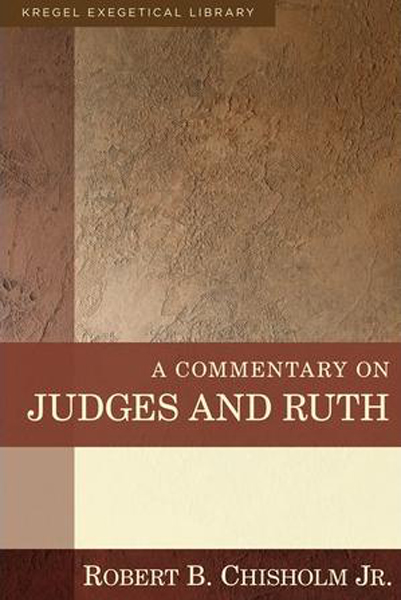
There are a few Old Testament scholars that I gravitate towards – Brueggemann, Block, Beale, (The B-Team), John Goldingay, and Robert Chisholm. When I venture into the strange world of the Old Testament, that is when I am asked to fill in for an OT class at EBC, I turn to these guys as dialogue partners. Since I really like what Chisholm usually has to say about the OT I figured that I should take a look at his latest commentary on Judges and Ruth.
Review
Let me just get this out of the way – this book is massive, its 697 pages long. Okay now that I got that off my chest let me talk a bit about the book.
Chisholm does some intense exegetical work in this book, he provides his own translation of Judges and Ruth, he breaks up the narratives into 1) mainline clauses, 2) offline clauses, and 3) discourse. This isn’t typical for a translation, but the benefit to doing this is that it helps him do exegetical work, it especially helps the reader appreciate the literary features of both of these books.
Chisholm’s approach is a “literary-theological method.” This is helpful for preachers and teachers. The days when people were doing source criticism (thankfully) are almost over. That way of doing exegesis is way too speculative. Because Chisholm refuses to play the source-criticism game, he can focus on the things that pastors are really concerned about – How is God speaking through this text (i.e. what is the theological message of this text?)
Chisholm claims that he has pastors in mind as readers of the text. The pastors who will probably benefit the most from the depth of exegesis Chisholm engages in aren’t many (scholars will greatly benefit from his nuanced discussion of the text), however Chisholm does step back and give a lot of big picture insight which will actually be very helpful for preachers/teachers.
He approaches each section of text through the filter of the following three questions:
What did the text mean in its ancient Israelite context?
What theological principles emerge from a thematic analysis of the text?
How is the message of the text relevant to the church?
The fact that he breaks the commentary up according to these questions is very helpful for people who are trying to preach. The most basic hermeneutic for preachers is 1-What did the text mean? 2-What is the theological message? 3-How does it apply to us? So in writing the commentary according to his three questions, he allows preachers to interact with answers to the questions that they are already asking themselves on a weekly basis.
Pros
Because of the purpose of this blog (and space constraints) there are too many nuanced arguments to interact with in any detailed sort of way. [For instance I disagree with his interpretation of why Mahlon and Killion have died in Ruth.] However there are many things that Chisholm should be commended for. First, unlike most conservative commentators he is well attuned to feminist issues present in the text. He devotes an entire section in the introduction to Judges to this very topic. It was honestly my favorite part of his discussion of Judges. Second, he catches interesting literary nuances that most people tend to miss. For instance, when discussing Naomi’s move from Bethlehem, he points out the fact that readers who are accustomed to Judges, know that bad things happen when people leave Bethlehem – the reader will expect tragedy when reading about Naomi’s move. However, he points out, that the narrator actually turns the “leave Bethlehem and experience tragedy” narrative on its head. In the story of Ruth, leaving Bethlehem (eventually) leads the to birth of king David. For a Jew, this is the exact opposite of tragedy; it’s the greatest blessing that could be bestowed upon a woman. Finally, the homiletical sections are organized clearly and are full of helpful suggestions for preaching Judges and Ruth. Within the introduction for both of these books, Chisholm includes “Major Themes” and the “Book’s Purpose” these two sections give a framework for his homiletical outlines. For the homiletical outline Chisholm goes section by section giving short, one or two sentence statements about:
The Exegetical Ideas
Theological Ideas
Homiletical Trajectories
Primary Preaching Idea
Every preacher could benefit from reading these short sections. Though concise, they are full of theological depth and practical application.
Concluding Thoughts
I haven’t read any of the other Kregel Exegetical Library Commentaries but if they are anything like this one then I am in love with the series. Chisholm does thorough exegetical work and gives plenty of homiletical help to preachers and teachers. What more do you need from a commentary?
If you are looking for a commentary to use in preparing a sermon series on Judges or Ruth you need to pick up a copy of this book.
(Note: I received this book courtesy of Kregel Academic in exchange for an impartial review.)
Let’s be honest for a minute – on a scale of 1 to 10 – how honest and open do you think you are? How honest are you with yourself? Your own sins, your own baggage, your own issues, etc. How honest are you with other? Do you feel like you can share your mistakes, your shortcomings, and your junk with people at church? How does our lack of being honest with ourselves and our fear of being honest with other people hurt our relationships? These are all the sorts of the questions Rod Tucker addresses in Uncovered.
I will be writing a full review of Rod Tucker’s book uncovered. As a bonus for you the reader I bestowing you some awesome things!
April 7th – Get a Free Download of “Uncovered: The Truth about Honesty and Community” by Rod Tucker
April 8th-13th – Get“Uncovered: The Truth about Honesty and Community” by Rod Tucker for only $2.99
You are going to click on a banner like the one below – so get ready to jump on this deal on April 7th!
(P.S. This might be an awesome book for your Life Group to study together!)
I have been getting a lot of feedback on my post –Noah: A Sin-Full Movie Review – so I figured that I would write up a follow up on it. However instead of responding to everybody, I figured I would point out what some other reviews are saying about this film.
Noah is another entry in this filmography. It asks big questions: Are humans worth saving? What is the place of justice and mercy in existence? How ought people relate to both powers greater than themselves and to the world in which they dwell?
It takes the right sort of liberties:
Even the most controversial of their narrative choices—something I won’t spoil for you—has echoes of other Bible stories in it; it’s probably not what happened, but things like it happened later, so it’s not inconsistent.
It drips with God’s presence
Aronofsky and Handel rightly intuited from the Scriptural account and tradition that, ten generations out from the creation, and before God reveals his personal name to man (which is not “God,” incidentally), it would make sense for people to think of God largely as “the Creator.”
The characters in Noah—all of them, including the bad guys—believe in God. This is not a world with atheists or agnostics. This is a world where people live a very, very long time, long enough to pass stories down to their children, and where the presence of the Creator is still felt very strongly.
It has a strong theology of creation
There is what seems to me a good, balanced sense that the earth was given to man to both live in and care for. (Remember, man was not given explicit permission to eat animal flesh until after the flood, and even then with the stipulation that they should not eat blood, or the life of the flesh—a stipulation that carries into the New Covenant and seems to indicate this activity was going on before the flood.)
Instead of suggesting that the earth ought to be left alone, Noah tells his son early in the story that we only pick those plants that we’re going to use, and we leave the others to grow. That seems like good creation care to me. And when God causes the earth to grow trees so Noah has something with which to build the ark, Noah and his family are happy to cut them down and make them into a boat—because they need the boat for survival.
“I just remember being scared… I remember thinking as a kid, ‘What if I’m not good enough to get on the boat? I have wickedness. I have sin. Would I actually get on the boat and what would it be like if I didn’t get on it?’”
Co-writer Ari Handel echoed Aronofsky and said that these questions were a starting point in their exploration of the Noah story: Who deserves to be saved? Who gets to be on the boat?
It simultaneously tells a story of mercy and justice:
As I reflect on that peaceful ark in the midst of the wails of death, I’m reminded of other biblical instances of God’s simultaneous mercy and justice. It makes me think of Moses parting the Red Sea for the Egypt-fleeing Israelites, followed by the waters crashing in on the pursuing Egyptian army. Again: horrific watery demise for many; safety for God’s chosen people. Or God’s people in Egypt during the Passover: safe inside the walls whose doorways were marked with a lamb’s blood, while outside the mothers wail over slaughtered first-borns.
Noah is a complex character:
One strength of Aronofsky’s telling of the Noah story, and Russell Crowe’s performing of it, is the complexity given to Noah’s character. Consistent with his frequent interest in characters plagued by obsession and/or mind games (see Pi, The Fountain, Black Swan), Aronofsky depicts Noah as a conflicted man faithfully endeavoring to do what he believes he is called to do, however traumatizing it may be for him and those closest to him. Crowe delivers one of his better performances as a man trying to listen for God’s direction, even if he at times misinterprets what God is doing.
It accurately portrays the fact that Noah was still a sinner, just like the rest of the human race:
After the fall, we are desperately in need of grace. All of us. Noah too. Here is Spurgeon in his famous 1863 sermon on Noah:
“There was nothing in Noah why God should make a covenant with him. He was a sinner — and proved himself to be so in a most shocking manner within a few days… He was one of the best of men; but the best of men are only men at the best, and can have no claim upon the favour of God. He was saved by faith as the rest of us must be, and we all know faith is inconsistent with any claim of merit.”
McCracken’s Conclusion:
Is Aronofsky’s Noah perfect? No. On a filmmaking level it sometimes seems confused about tone and genre. On a storytelling level it occasionally feels needlessly provocative in its attempts to defy audience expectations.
But Noah gets the theological heart of the story right. It shows that God’s wrath is entirely justified and his grace all the more graceful because of it. It beautifully depicts the struggles of faith and the mercy and justice of God.
It’s a film that does what too few films do anymore: it raises profound questions and demands a discussion. As such it will invite plenty of debate, especially within the ranks of the religiously devout (as it already has). But I also believe, and hope, that Noah will pique the interest of the irreligious and get them thinking and talking about God too.
I already said what I thought about the film, but my sentiments completely echo McCracken’s words – Noah is not perfect (ironically, that is the message of the movie too!), but it gets the theological heart of the story right, and it raises important religious questions for both Christians and non-Christians.
There are few worship songs that I keep going back to over and over and over again, but this one written and performed by Austin Stone’s worship band is one of those songs.
I love worship songs that elevate Jesus as Lord and King all while reminding us of the gospel and propelling us to proclaim our King to the world. It seems like Austin Stone is putting out a ton of those types of songs nowadays. I present to you one of their best songs off their new album “King of Love.”
We have no other King but Jesus Lord of all! Crown him Lord of All!
For all have sinned and fall short of the glory of God. – St. Paul
Without a doubt Aaron Aronofsky’s rendition of the Noah story falls short of the glory of its telling in the book of Genesis. At times it cheesy, at times its confusing, at times it doesn’t make sense, and at times it feels like I am watching a 1980’s claymation film (the Watchers were rendered horribly). However I (unlike many Christians writing about this movie) understand that Aronofsky and co-writer Ari Handel aren’t trying to stick with the biblical story. Both of these writers take creative liberties by including accounts from pseudepigraphal Jewish writings and on top of that they consider themselves to be engaging in the Jewish practice of Midrash while telling this story. All that to say, I don’t care if they added stuff, I care that they did a poor job carrying out some of these additions.
Most Christians out there are bashing this film. It seems like they really hate it. I on the other hand loved the movie. Was it biblically inaccurate? Heck yes! Was it theologically true? At its deepest core it was.
Noah is theologically accurate.
Let me go ahead and share with you two reasons why I think Noah theologically accurate and let me conclude by sharing why I think this film will actually do more for the sake of God’s mission than many Christian movies do.
Two theological truths that I think the film portrayed accurately.
All have sinned and fall short of the glory of God.
We evangelicals have done a good job of emphasizing this truth. Our liberal friends haven’t done such a great job – they tend to have a more positive view of human nature – and our secular friends, well…. They don’t have any conception of the innate sinfulness of human beings.
Throughout the movie, Noah tries to get people to understand that human beings really are sinful. He tries to show his family that we really have turned out back on our creator, that we really have decided to set ourselves up as kings and queens over and against the creator. Noah really understands the depths of our sins, even while his family refuses to see it. One key scene that shows this is when Noah refuses to rescue Na’el and lets her get trampled. Ham is understandably upset, because this girl was going to be his wife. He doesn’t understand how Noah could be such an evil man. He yells at Noah telling him “how could you let her die, I know her, she was good!” But Noah knows better, all have sinned. All are worthy of God’s wrath. None are good and none seek God. Even though she might not have been as blatantly evil as the rest of the humans, Na’el certainly was not good. She was sinful and she is part of the reason why God had to start over with the human race.
There is another scene that perfectly captures this truth. Naameh goes to Methuselah and asks him a favor (don’t worry I won’t spoil it for you). She pleads with Methuselah, telling him that her sons really are good, she can see it in them, yes they have some flaws, but deep down inside they are good people. Methuselah gives her a cryptic response to her request – essentially he tells her that she doesn’t know what good really is. Interestingly enough, Methuselah doesn’t call the kids evil, but he doesn’t call them good either.
(Spoiler Alert)
All have sinned and fall short of the glory of God. Noah knows this, he sees Romans 1:18-32 on full display when he goes into the human camp. And in a Black Swan type moment, Noah sees himself in the humans and their actions. This is a turning point in the movie, some want to say that Noah snaps and has gone crazy. I like to believe that he has seen the depths of our depravity and knows that the only thing we deserve is death. While on the Ark, Noah explains to his family that they all must die, he isn’t going to kill them, but once they land they must all bury eachother. Maters get complicated when Shem and Ila have twin daughters. As a result Noah believes that his responsibility is to kill the two girls. This is probably the most intense gut wrenching part of the movie. Noah seems crazy, the viewer begins to dislike Noah, he has gone from being a hero to being a villain who desires to kill babies. Much like Pharaoh or Herod the great, Noah has joined the ranks of those who practice infanticide. Naturally the audience will turn their back on him – babies are good, they haven’t sinned, they are innocent – yet Noah has seen something that everybody else has not yet seen, that evil lies within all of them. Naameh is selfish, Ham is disobedient, Japeth is covetous. Essentially, some people have their behaviors under control, but at our depths we are depraved. Original sin lies in all of us. And we deserve death. Yet something happens to Noah and he refuses to kill the two girls. Later on, he is asked why he didn’t kill them. How does he answer that question? Does he say that he finally realized that there was good in all of us? No. Does he say that he saw that they had not yet sinned? No. He says he felt love. Love! Love was the reason why he had mercy on them. It wasn’t because they deserved it. It wasn’t because they were actually good deep down inside. His love made them worthy of living.
Noah paints a beautiful picture of the gospel!
This is the gospel at its core! Humans are totally depraved, we are infected with Original sin, and we deserve to die. Yet God loves us and has mercy on us. Its God’s love for us, and his love alone that motivates him to rescue and redeem us. Sin still deserves death, but instead of us having to die. God sends his son to die in our place.
For God so loved the world that he gave his only begotten son that whoever would believe in him would not perish but have eternal life.
Mercy is the result of God’s love. Mercy is not based off anything within us. That is why God’s mercy is an act of grace.
(Spoiler Over)
We need to take care of creation.
I have heard some people complain that Noah was one long, big budget PETA add. Maybe they are right. But what is wrong with that? The director knows that evangelical Christians are going to flock to this movie – even if they don’t like it – here is his chance to speak to this particular audience, which traditionally has been averse to any sort of message that implies we ought to take care of creation. Sorry fellow evangelicals, but its true – thankfully it’s beginning to change, even Gospel Coalition is moving in this direction!
Throughout the film we are presented with two opposing camps – Noah and his family vs. Tubal Cain and the humans. They both hold to opposing ideologies – Noah thinks humanity’s purpose it to take care of and preserve the creator’s work. You see this in early in the movie, where Noah is collecting lichens and when he teaches his son not to unwisely pick the flowers. He mentions that the flowers aren’t simply there for our sake, they have inherent value. On the other hand Tubal Cain and the humans see creation as an endless bag of resources to be exploited and used. Everywhere they go, the humans strip the land clear of resources, making the land incapable of future production. Much like 18th and 19th century colonizers (even 20th century corporations) there is no regard for human life and human practices – the bottom like is “you have something we want” and we will get it at all costs, even if that means the destruction of another group of people’s way of life. Thankfully some people have drawn attention to these evil practices (at least when it comes to human beings) but companies continue to trample over other parts of creation in the name of development i.e. corporate greed. In the movie this ideology is most clearly articulated when Tubal Cain is having a conversation with Ham while on the Ark. Tubal Cain tells Ham that the Creator has commanded humans to “be fruitful and multiply and have dominion over the creation” – creation was created for humans, they must make creation submit to their purposes. In addition to this, Tubal Cain says that the creator has left humanity to fend for itself – Tubal Cain and his humans live in a deistic world.
I find it fascinating that Tubal Cain uses explicit biblical language – he quotes the cultural mandate – and he twists it be an excuse for the way they are treating the Creator’s work. I cannot count how many times I have heard Christians say similar things; creation was made for our sake, we need to take dominion, creation is unruly we must make it submit, etc. Honestly I believe that dispensationalism is one major reason why this sort of belief has flourished, but more importantly (and I think Aaronofsky really is on to something) it is a deistic and now atheistic worldview that set Christians up for a lack of compassion towards creation. I find it historically fascinating that the rise of deism coincided with the rise of colonization, exploitation of native peoples in the name of “civilizing” them, and the industrial revolution. In a world where there is no sense of responsibility towards God, in a world where we think God has left us to our own devices, everything become acceptable – the first thing that goes from our sense of morality is our duty and responsibility towards other parts of creation, the second thing that goes is a respect for human rights, the last thing that goes is belief in God.
All this to say, Aaronofsky and Ariel correctly interpret the cultural mandate – Creation was not made for humans, humans were made to take care of and cultivate creation so that all of creation might be offered up as a sort of “living sacrifice” bringing glory to God. As John Walton has pointed out, creation was one big cosmic temple, our job as priests and kings is to take care of that temple, making sure that it is developed in a way that brings God the glory he deserves.
The land animals make their way onto Noah’s Ark.
The Missional Implications of this Movie
Without a doubt culture in general has lost its belief in the concept of original sin. I venture to say that American culture in general has lost the concept of sin in general. Yes people make mistakes, people err, but deep down inside people are actually good. That seems to be the prevailing view of our culture. Even in preaching, some Christians refuse to use the word sin – they call sin being dysfunctional. (Sin is no less than dysfunction, but it surely is way more than just dysfunction). Noah is countercultural in this sense – American culture tends to believe that people really are good on the inside and that the most important thing is “love.” Noah destroys this worldview. In the movie there are three positions regarding sin –
Tubal Cain & the Humans who revel in their sin and see themselves as simply being humans. Their sin has almost reached an animal like state. They rape they pillage, they have no regard for human life or for creation. Their animal like state is graphically portrayed in the scene where they slaughter an animal and feast on it like a pack of rabid heyenas.
Naameh and her family who know that there is evil out there, but don’t seem themselves as a part of it. Naameh and her family believe that love is the bottom line, and that everybody has the capability to be good. This is the prevailing belief in our culture. Sadly though “love” is not the full orbed biblical sense of love, its more like feelings of benevolence. Naameh loves her children, but even then, her love for them is more about her than about what is best for her kids. In this worldview, the moral thing to do is the thing that is most kind (aka “loving”).
Noah who sees how low human beings can go when they pursue sin and when they forget their creator. As I argued for above, Noah has a biblical understanding of sin.
So what is the missional impact of this film? It vividly portrays human sinfulness. In a culture that has forgotten what sin is or has chosen to believe that sin is merely some outdated religious concept we need more art (film, books, stories, songs) that reminds us that sin is real and that the capability for doing terrible things lies dormant within all of us.
What Noah does, is that it opens up a conversation about sin with non-Christians. Non-Christians will be forced to ask themselves – why does Noah believe that even the kids are sinful? Is he some religious fanatic? Or are there reasons why he holds on to this strange belief? Are we capable of being like Tubal-Cain and the humans?
When they see the movie, Non-Christians might not understand why Noah takes such an extreme view regarding sin. Yet Non-Christians will certainly be moved by the scene where Noah enters the human camp. That scene is graphically brutal – it portrays how hideous human immorality (sin) really is.
All that to say, I think that the major value in this film lies in the conversation it creates about human sinfulness. This film is also capable of helping non-Christians believe in a concept of sin.
Finally, this film also has apologetic value. It shows that care for creation has a biblical basis. It shows that the destruction of creation is a distortion of biblical truth.
Conclusion
I know that this review was sinfully long, but I think we Christians need to do more than asses a movie based upon whether or not it is “biblically accurate.” When evangelicals think about the Bible they often stay very surface level (I immediately think of Wayne Grudem’s systematic theology), this means that they ignore deeper philosophical and worldview issues. We tend to do the same thing when thinking about cultural artifacts (movies, books, music, etc.) We need to do some deeper thinking – we can’t simply judge a film on whether it followed the biblical passage – we must ask ourselves “does this film portray something true about our Christian worldview?” If so then we must be open to admit that that film has some sort of value.
Nearly twenty percent of non-Christians in North America do not personally know a Christian. More than seventy-five percent of the Sikhs, Hindus, and Jains living in the U.S. do not know a Christian. The same is true for more than sixty-five percent of Buddhists, Shintoists, Taoists, Zoroastrians, and practitioners of Chinese folk religion. Even forty-two percent of Muslims acknowledge that they have no close Christian contacts.
I recently read an article by Ed Stetzer in which he quotes these statistics (the research was done by Todd Johnson), he rightfully points out the fact that there are people here in the US who have never heard the gospel and will probably never hear the gospel.
Consider this statistic, and let your mind get blown
In the U.S. alone, there are more than five hundred unengaged, unreached people groups.
Five hundred unengaged, unreached people groups! Five hundred. And that is in our own backyard. If we want to reach “all nations” we certainly must go “out there” but we mustn’t forget that to reach “all nations” we must also go – go outside of our door and bring the gospel to our unreached neighbors. They live in our neighborhoods, they go to our universities, they work alongside of us. The nations have come to us.
The Nations Have Come to Us – “Immigrants arriving at Angel Island c.1920”
 nstructive theology,” needs to be in dialogue with non-traditional – that is contextual – theological voices. Also, constructive theology needs to be in dialogue with other world religions. The fact that he wants to engage contextual theologies and other world religions might worry some people that he has bought a bit too much into pluralism; but there is nothing to worry about here, Karkkainen’s views are thoroughly evangelical.




 CWoznicki Think Out Loud